Category: For CTOs
-

UCP Middleware for Legacy ERP: Build Your Bridge
Your AI agent just sent an [inventory query. Your SAP ECC instance returned a timeout](theuniversalcommerceprotocol.com/?s=UCP%20AI%20Kill%20Switches%3A%20Emergency%20Stops%20for%20Autonomous%20Agents). The agent retried. Twice. Your ERP created [three duplicate purchase orders before anyone noticed
-
Architecting Agent Authentication Systems: Technical Implementation Guide for Agentic Commerce
Technical architecture guide for implementing cryptographic authentication and authorization systems in AI agent commerce platforms.
-
Architectural Patterns for Real-Time Inventory Consistency in Multi-Channel Commerce Systems
Design patterns and implementation strategies for preventing inventory race conditions when AI agents operate at machine speed across distributed commerce systems.
-
Architecting Auditable AI Commerce: Technical Requirements for Agent Compliance Systems
Build compliance-first AI agent architectures that generate legally defensible audit trails for regulatory requirements and risk management.
-
Building Stateful AI Agents: Architecture Patterns for Multi-Turn Commerce Systems
Technical blueprint for implementing robust state management in conversational commerce agents that handle complex multi-turn interactions.
-
Architecting Agent-to-Agent Commerce: Technical Challenges Beyond UCP
Building systems where AI agents negotiate directly creates new architectural patterns that existing commerce frameworks aren’t designed to handle.
-
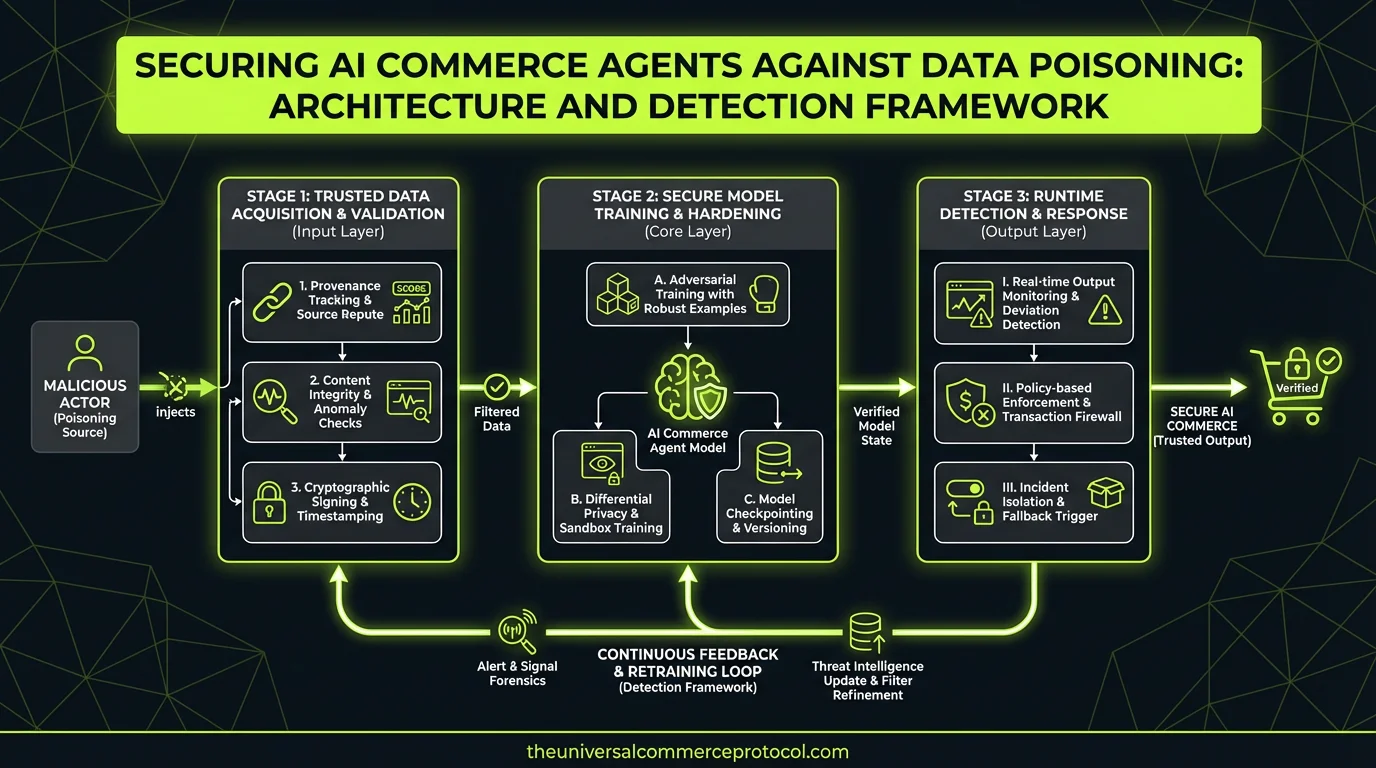
Securing AI Commerce Agents Against Data Poisoning
Data poisoning attacks on AI commerce agents exploit vulnerabilities in supply chain management systems, dynamic pricing engines, and inventory databases to inject malicious training data. Organizations must implement cryptographic integrity verification, input validation frameworks, and anomaly detection systems across procurement channels, price optimization models, and stock management platforms to prevent adversarial model degradation. Multi-vector defense…
-
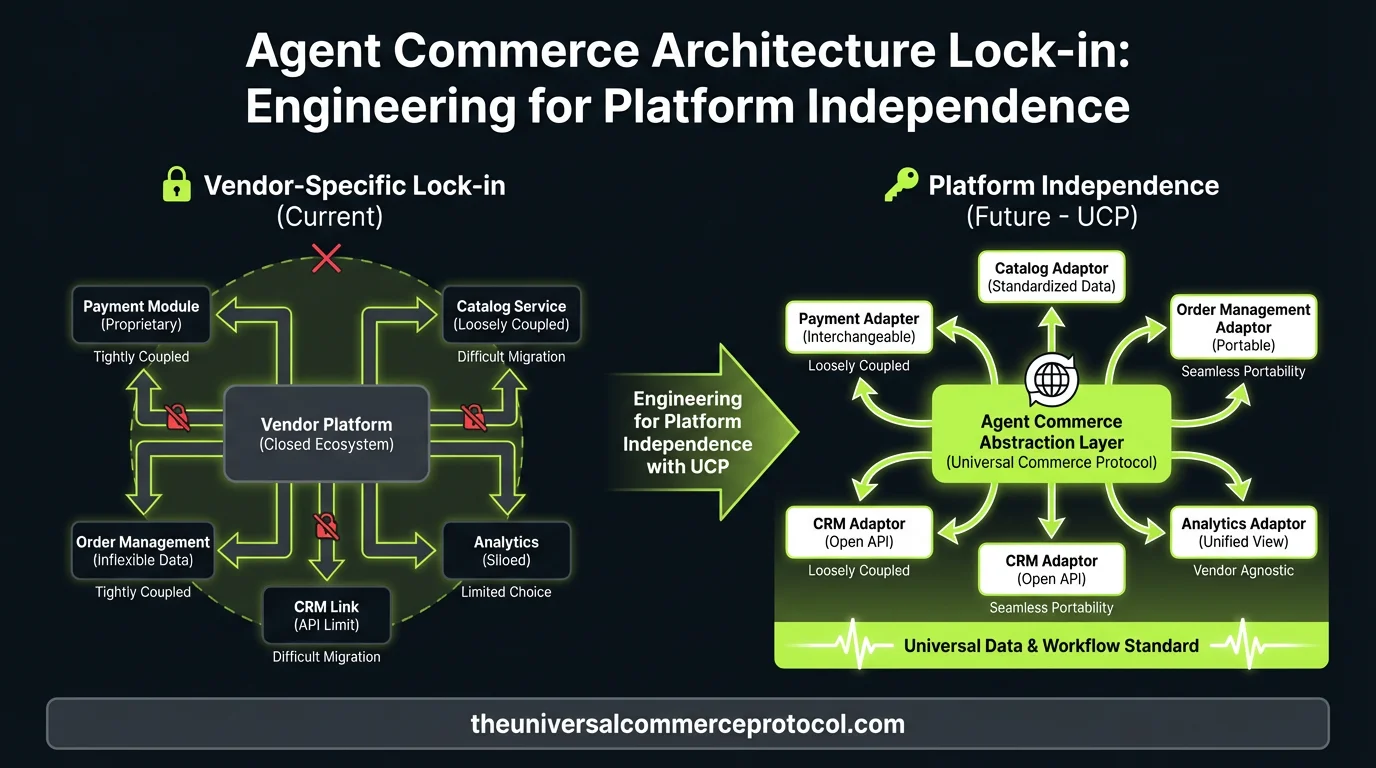
Agent Commerce Architecture: Avoiding Platform Lock-in
Agent commerce architecture requires implementing vendor-agnostic API abstractions and multi-LLM integration patterns to prevent platform lock-in with providers like OpenAI, Anthropic, and Google Cloud. Organizations should adopt containerized microservices deployed on Kubernetes, standardized message protocols (OpenAPI/AsyncAPI), and modular payment processor integrations (Stripe, Square, PayPal) to maintain system portability. This approach reduces switching costs and enables…
-
UCP Integration: Building Compliant Agentic Commerce Architecture
Technical framework for implementing UCP-based agentic commerce while maintaining regulatory compliance across jurisdictions and payment flows.
-
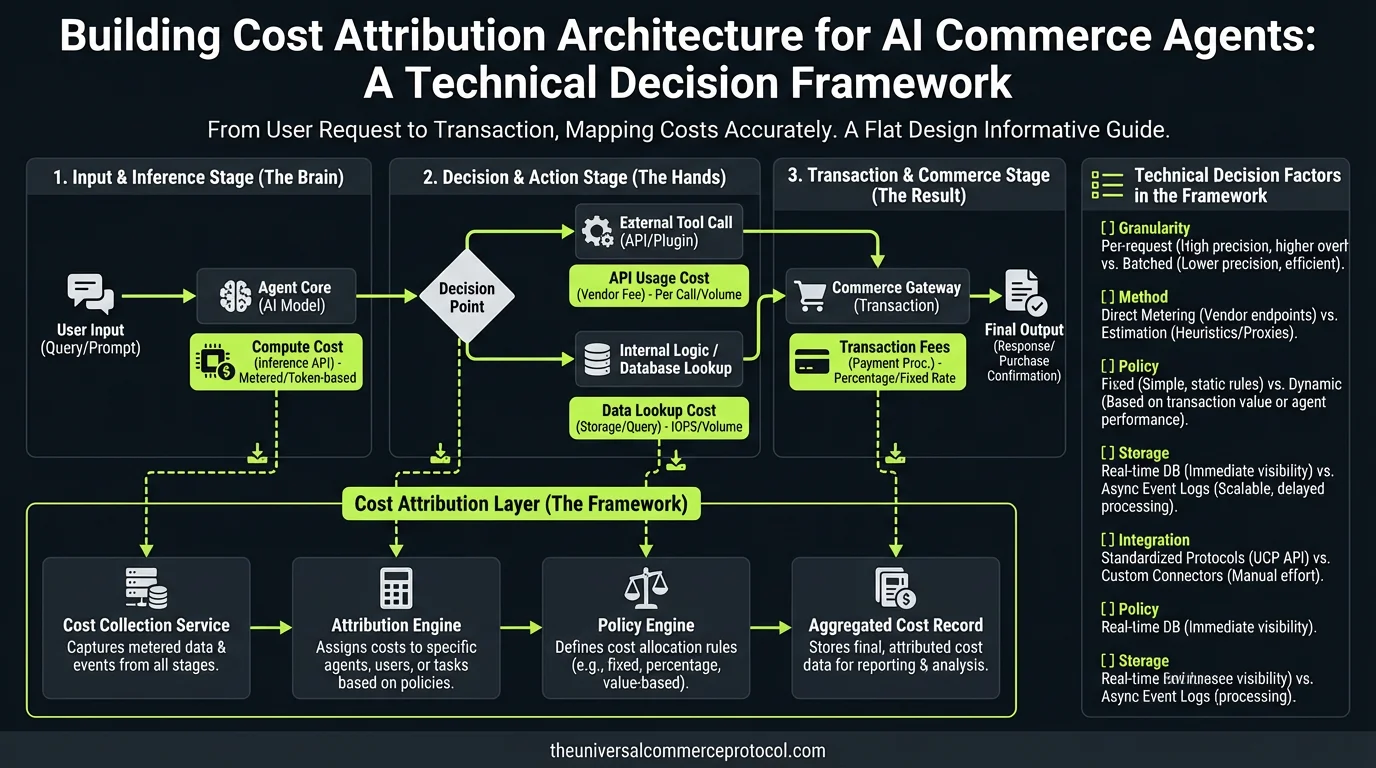
Building Cost Attribution Architecture for AI Commerce Agents: A Technical Decision Framework
Engineering teams need instrumentation patterns to track distributed AI agent costs across LLM APIs, vector stores, and payment flows.