Tag: AI agents
-

JPMorgan, Mirakl Partner on AI Agent Checkout
J.P. Morgan Payments and Mirakl Nexus are partnering to enable AI agent checkout.
-
UCP Integration: Building Compliant Agentic Commerce Architecture
Technical framework for implementing UCP-based agentic commerce while maintaining regulatory compliance across jurisdictions and payment flows.
-
Feature Engineering for Agent Cost Attribution: Building Predictive Models for Commerce AI ROI
How to engineer features, train models, and evaluate agentic commerce systems where cost per transaction varies by 40x based on interaction complexity.
-
The $2.4M Hidden Cost of UCP Compliance: What CFOs Need to Know About Agentic Commerce Risk
Agentic commerce introduces $2.4M in potential compliance costs and regulatory penalties that could derail digital transformation ROI.
-
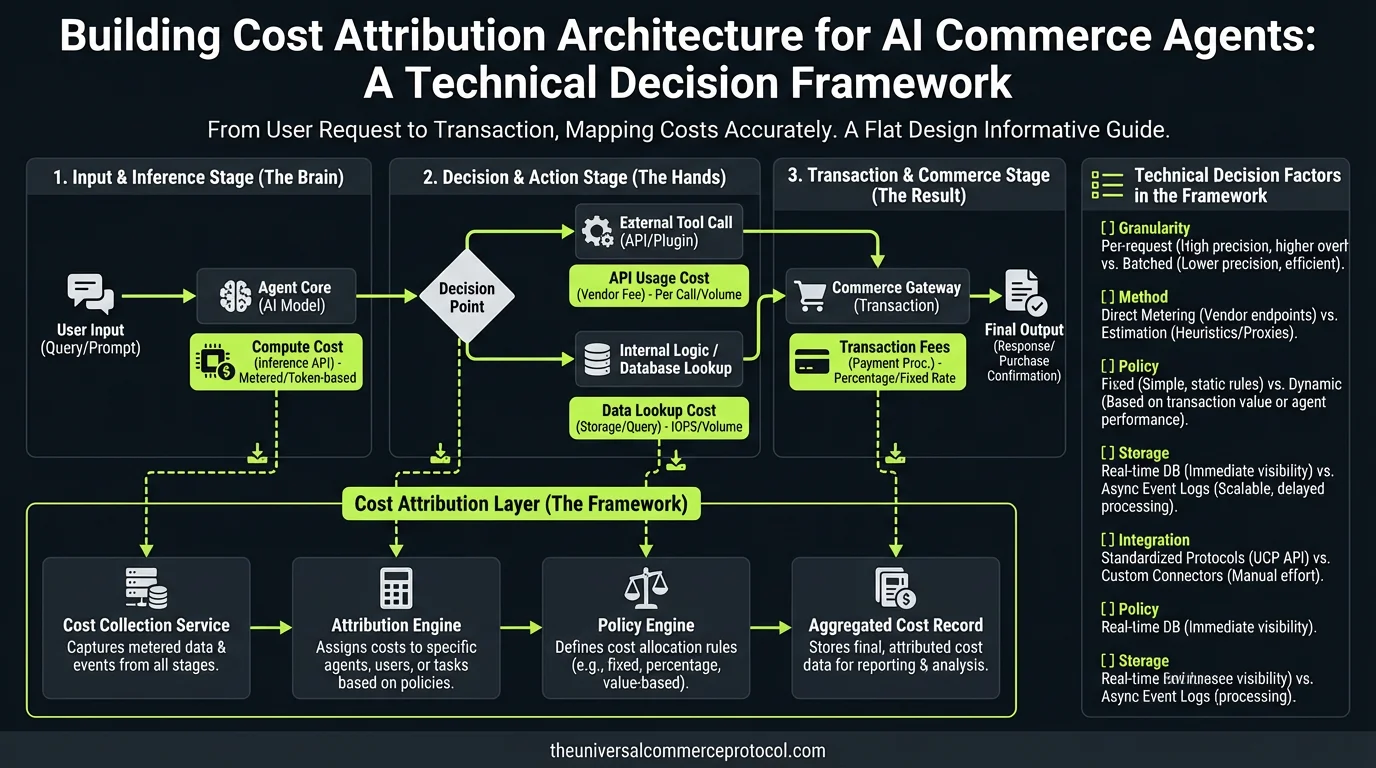
Building Cost Attribution Architecture for AI Commerce Agents: A Technical Decision Framework
Engineering teams need instrumentation patterns to track distributed AI agent costs across LLM APIs, vector stores, and payment flows.
-

Training Commercial AI Agents to Self-Monitor for Factual Accuracy: A Model-Centric Approach to Hallucination Detection
Building reliable commerce agents requires architecting confidence estimation, validation layers, and feedback loops into your ML pipeline.
-
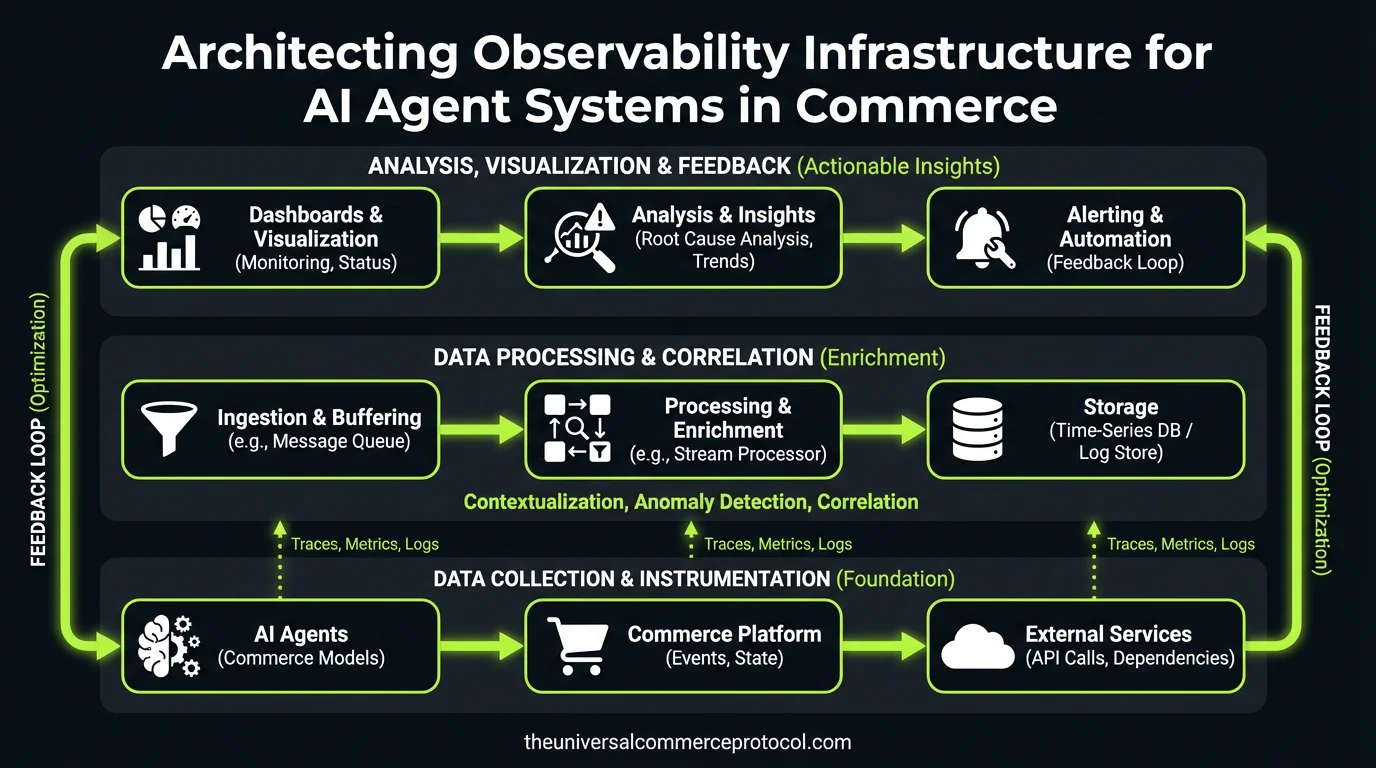
Architecting Observability Infrastructure for AI Agent Systems in Commerce
Technical blueprint for implementing comprehensive observability across distributed AI agent architectures in production commerce systems.
-
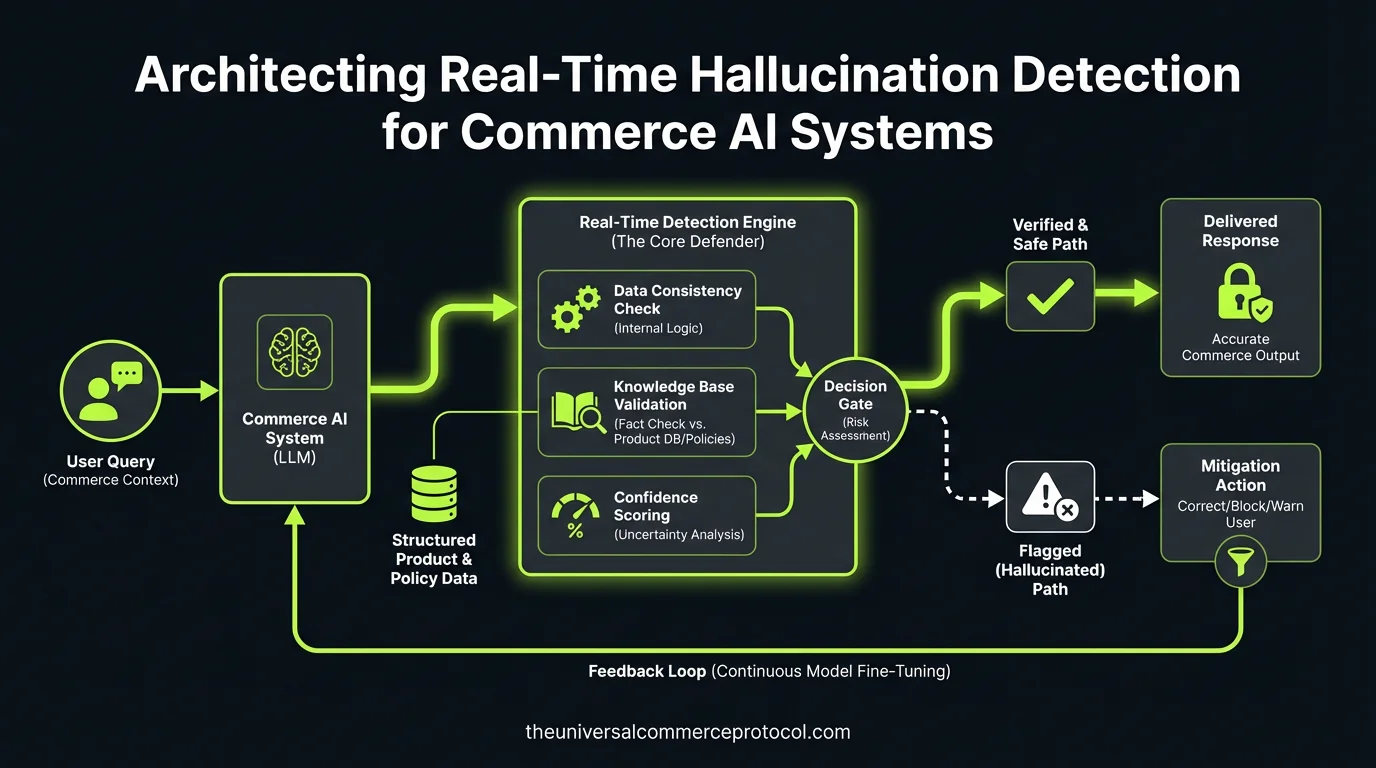
Architecting Real-Time Hallucination Detection for Commerce AI Systems
Technical blueprint for implementing three-layer hallucination detection in production commerce agents with
-
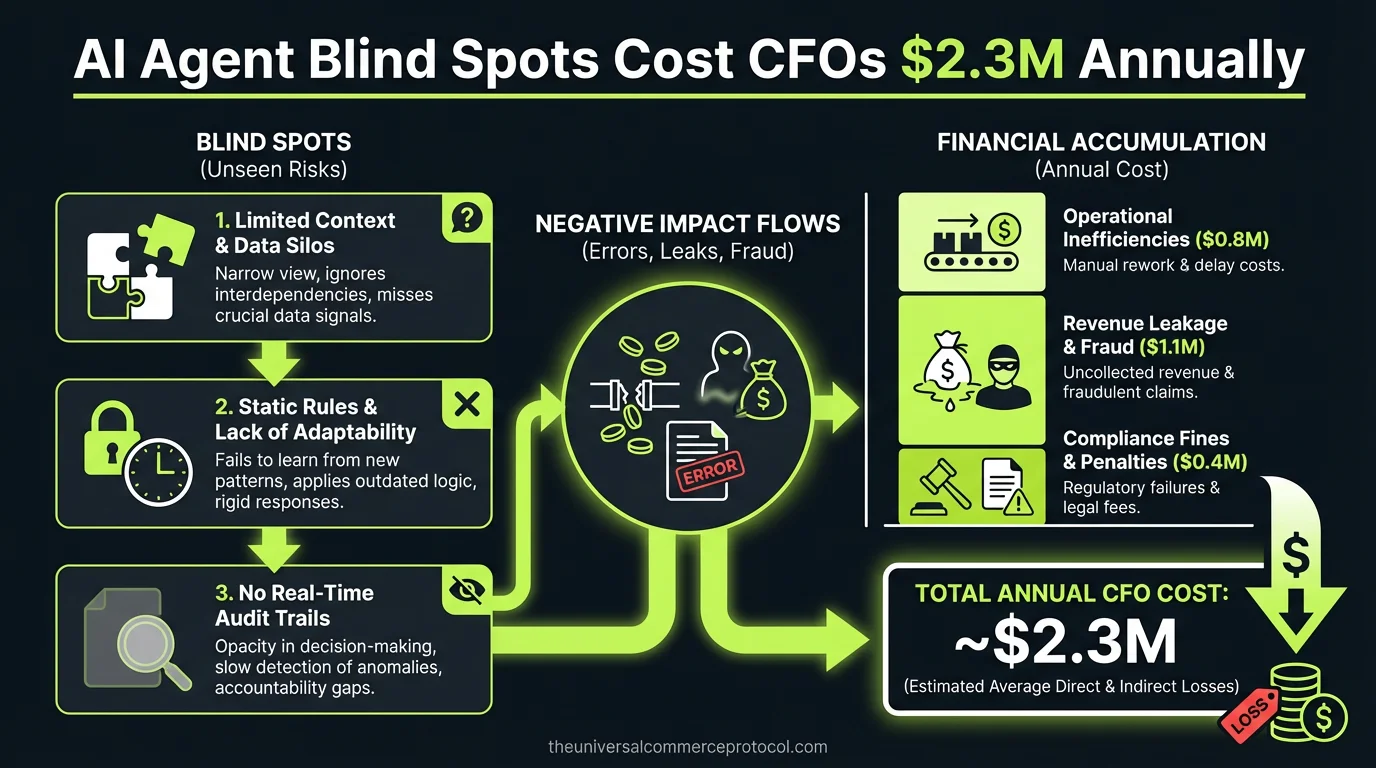
AI Agent Blind Spots Cost CFOs $2.3M Annually
According to enterprise financial technology research, AI agents operating in autonomous commerce decision-making environments without observability infrastructure accumulate average annual financial exposure of $2.3 million through undetected transaction errors, failed reconciliation processes, and systemic blind spots in audit trails. Chief Financial Officers implementing AI agent governance frameworks—including real-time monitoring, decision logging, and anomaly detection systems—can…
-
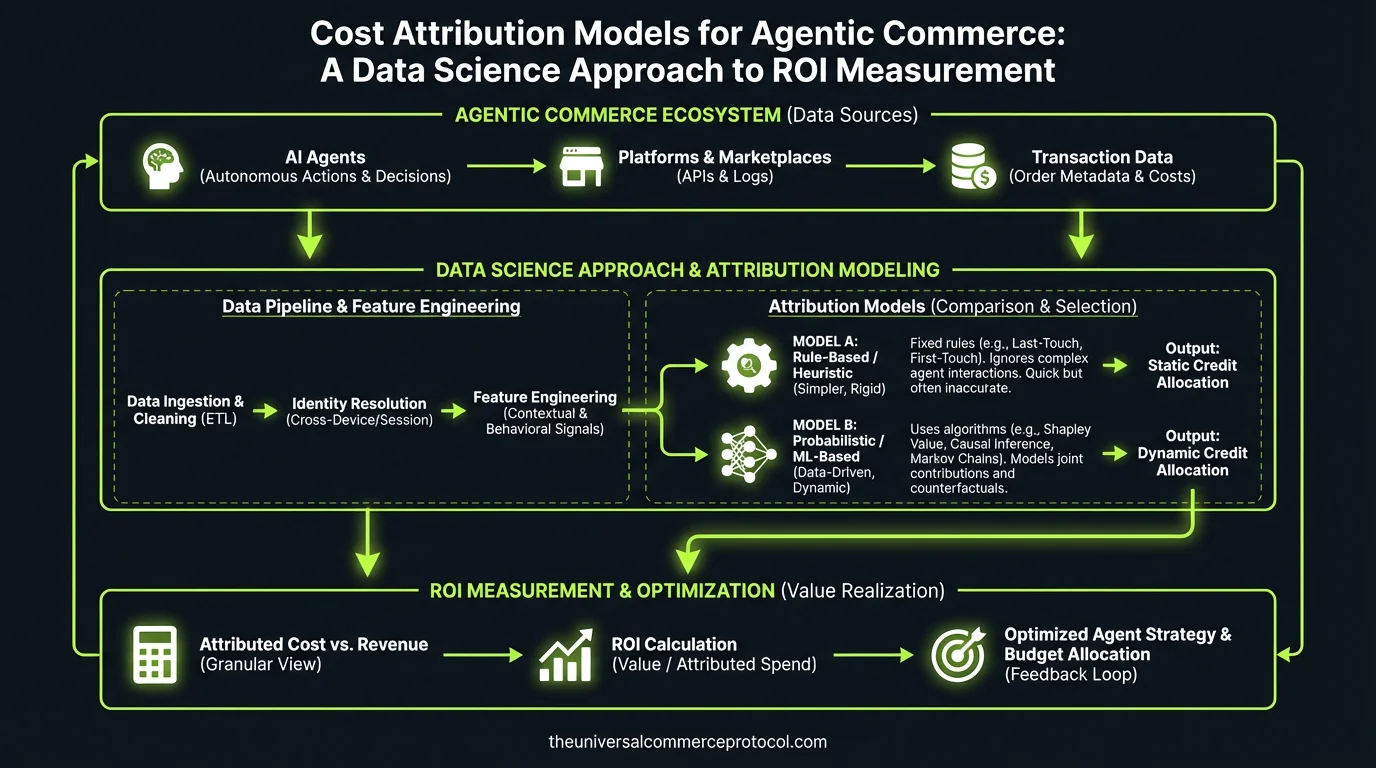
Cost Attribution Models for Agentic Commerce
Cost attribution models for agentic AI commerce quantify expenses across multi-step LLM inference chains—including token consumption, vector database queries, and API calls—where traditional transaction-level metrics fail to isolate individual agent decision costs. Data science approaches like shapley value decomposition and hierarchical cost allocation enable attribution of total cost of ownership (TCO) to specific customer journeys,…