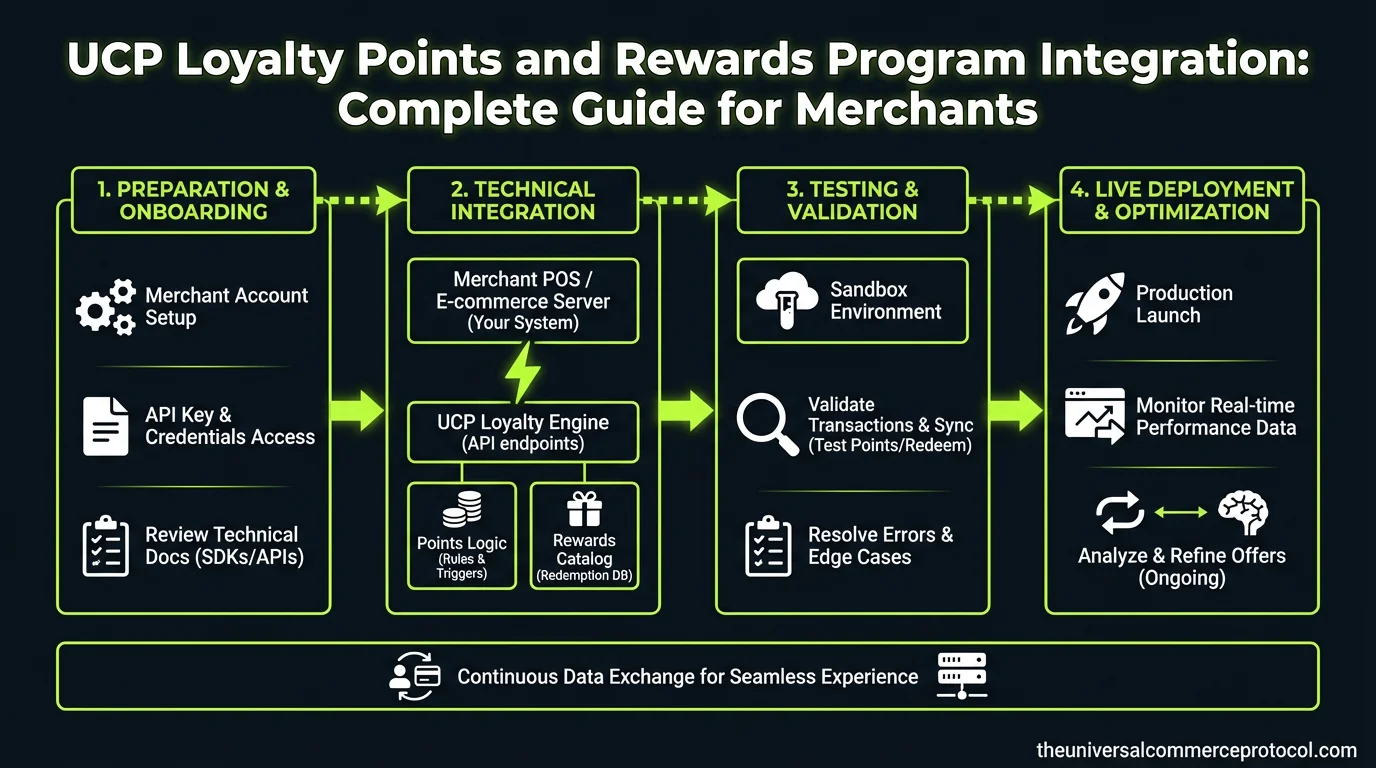
Understanding UCP Loyalty Points Integration
The Universal Commerce Protocol (UCP) provides a standardized framework for integrating loyalty points and rewards programs directly into commerce transactions. Unlike traditional loyalty systems that operate as separate silos, UCP loyalty integration creates a unified experience where points accumulation, redemption, and tier management happen seamlessly within the transaction flow itself.
This integration is particularly valuable for merchants operating across multiple channels—web, mobile, voice commerce, and agentic shopping assistants. A customer earning points through a voice commerce purchase can immediately redeem those points in a subsequent web transaction, all without manual reconciliation or account linking.
Related articles: UCP Shipping Carrier Selection & Rate Optimization • UCP Security Best Practices for AI-Driven Commerce
Why Traditional Loyalty Systems Fall Short
Legacy loyalty platforms typically operate as bolt-on systems, separate from the core commerce infrastructure. This creates friction points: customers must remember to provide loyalty numbers, systems require manual reconciliation between transactions, and cross-channel experiences suffer from data silos. When agentic commerce enters the picture—where AI agents autonomously complete purchases—these disconnected systems become problematic. An AI shopping agent cannot efficiently navigate fragmented loyalty systems or optimize purchase decisions across disconnected point balances.
UCP loyalty integration solves this by embedding loyalty logic directly into the commerce protocol layer, making it native to how transactions are processed rather than an afterthought.
Core Components of UCP Loyalty Architecture
Loyalty Account Abstraction
UCP treats loyalty accounts as first-class objects within the protocol, similar to how it handles payment methods or shipping addresses. Each customer has a standardized loyalty profile that includes:
- Current point balance across all loyalty programs
- Tier status and associated benefits
- Redemption history and preferences
- Program enrollment status across merchant networks
- Expiration dates and program-specific rules
This abstraction means merchants don’t need to maintain separate loyalty databases for each channel. A single UCP-compliant loyalty account synchronizes across web storefronts, mobile apps, voice commerce interfaces, and agentic shopping systems.
Points Calculation Engine
The UCP loyalty protocol includes standardized point calculation methods that support complex reward structures. Rather than merchants implementing custom calculation logic for each channel, UCP provides:
- Multiplier-based calculations: Points earned as multiples of transaction value (e.g., 1 point per $1 spent)
- Category-based bonuses: Different point rates for product categories, seasonal promotions, or customer segments
- Tiered acceleration: Higher-tier members earn bonus points on purchases
- Promotional overlays: Time-limited point bonuses that stack with base calculations
- Redemption mechanics: Fixed-value redemptions or variable rates based on point quantity
Developers implement these calculations once in UCP-compliant code, and they automatically apply across all commerce channels.
Real-Time Synchronization
UCP loyalty integration uses webhook-based architecture (similar to the real-time order update system) to maintain synchronized point balances. When a customer completes a purchase on any channel, the transaction immediately triggers:
- Point calculation and credit to the loyalty account
- Tier status re-evaluation
- Notification delivery to the customer
- Inventory updates for limited-quantity rewards
- Synchronization across all connected systems
This real-time approach ensures customers see accurate point balances within seconds of completing transactions, regardless of which channel they used.
Implementation Strategies for Merchants
Mapping Existing Loyalty Programs to UCP
Most merchants already operate loyalty programs. The migration path to UCP involves mapping existing program rules into the standardized UCP loyalty schema:
Step 1: Audit Current Rules Document all point earning rates, tier structures, expiration policies, and redemption options. Identify channel-specific variations that may need consolidation.
Step 2: Normalize Calculations Convert merchant-specific calculation logic into UCP-standard formats. For example, a program that awards “1 point per dollar plus 5 bonus points on Fridays” becomes a base multiplier plus a conditional promotional overlay.
Step 3: Define Redemption Catalog Create a structured catalog of redemption options compatible with UCP’s reward fulfillment system. This includes discount codes, exclusive products, tier upgrades, and experiential rewards.
Step 4: Establish Sync Protocols Configure webhooks and data synchronization between existing loyalty databases and UCP infrastructure. Many merchants maintain legacy systems during transition periods, requiring bidirectional sync.
Multi-Channel Point Harmonization
Merchants with separate loyalty programs for different channels face a critical decision: consolidate into a unified program or maintain separate tracks that sync through UCP. The unified approach generally provides better customer experience and simplified operations.
When consolidating, address these considerations:
- Point value parity: Ensure customers earn equivalent rewards regardless of channel. A purchase through voice commerce should yield the same points as an identical web purchase.
- Tier recognition: Make tier benefits consistent across channels. A VIP customer should receive VIP benefits whether shopping via mobile app or agentic assistant.
- Redemption flexibility: Allow points earned on one channel to be redeemed on another without friction or conversion penalties.
- Historical credit: Decide whether to credit existing loyalty balances from legacy programs into the unified UCP account.
Integration with Agentic Commerce
The most sophisticated UCP loyalty implementations leverage agentic commerce capabilities. AI shopping agents can:
- Automatically calculate optimal purchase timing to maximize point multipliers
- Recommend products that accelerate tier progression
- Identify redemption opportunities that deliver maximum value
- Suggest loyalty program enrollment to new customers based on purchase patterns
For this to work, merchants must expose loyalty program details through UCP-compliant APIs that agents can query. This includes current point balances, tier benefits, upcoming promotions, and redemption inventory.
Technical Implementation for Developers
UCP Loyalty API Endpoints
UCP-compliant loyalty integration requires implementing several standard endpoints:
GET /loyalty/accounts/{customerId} Returns current loyalty profile including point balance, tier status, and program enrollments.
POST /loyalty/transactions Records a new transaction and calculates points earned. Accepts transaction details and returns updated loyalty state.
POST /loyalty/redemptions Processes point redemptions, validates sufficiency, and generates reward fulfillment instructions.
GET /loyalty/catalog Returns available rewards, redemption rates, and inventory status. Used by shopping agents to present options.
PUT /loyalty/preferences Updates customer loyalty preferences including point expiration opt-ins, communication frequency, and tier tracking notifications.
Webhook Event Schema
Implement webhook listeners for loyalty events that trigger downstream processes:
{
  "event_type": "loyalty.points_earned",
  "timestamp": "2026-01-15T14:32:00Z",
  "customer_id": "cust_123456",
  "points_awarded": 250,
  "transaction_id": "txn_789012",
  "tier_before": "silver",
  "tier_after": "gold",
  "tier_changed": true,
  "new_balance": 5750,
  "source_channel": "voice_commerce"
}
This event schema enables downstream systems to react to loyalty changes—sending tier upgrade notifications, updating customer dashboards, or triggering promotional offers.
Data Consistency Patterns
Maintaining accurate point balances across distributed systems requires careful implementation:
Idempotent Transactions: Every points transaction must include a unique identifier. If the same transaction is processed twice, the second attempt should be rejected or recognized as a duplicate, preventing double-crediting.
Eventual Consistency: Accept that point balances may have slight delays propagating across systems. Implement eventual consistency patterns where all systems converge to the same state within seconds, not requiring perfect synchronization at every moment.
Reconciliation Processes: Run periodic reconciliation jobs comparing point balances across channels. When discrepancies occur, investigate and resolve them, crediting customers when the merchant is at fault.
Advanced Loyalty Features
Tiered Program Management
UCP supports sophisticated tier structures where customer benefits evolve based on spending or engagement. Implement tier calculations that consider:
- Annual spending thresholds
- Lifetime customer value
- Engagement metrics (purchase frequency, review submissions)
- Seasonal or promotional tier resets
Communicate tier status clearly and provide visibility into progress toward next tier. Customers are more likely to increase spending when they understand exactly how much more they need to reach the next tier.
Dynamic Point Valuation
Rather than fixing point value at redemption time, some merchants use dynamic valuation where point value fluctuates based on reward inventory. Scarce rewards might be valued at higher point costs, while abundant rewards cost fewer points. This creates natural demand management without requiring manual inventory adjustments.
Social and Referral Integration
UCP loyalty can integrate with referral programs, allowing customers to earn bonus points for successful referrals. Track referral relationships through the loyalty system and apply bonus point multipliers when referred customers make purchases.
Expiration and Burndown Policies
Implement point expiration strategically. Some merchants use rolling expiration windows (points expire 24 months after earning), while others use calendar-year resets. UCP supports both patterns, and merchants can offer loyalty members the option to extend expiration through engagement (e.g., making a purchase resets expiration clock).
Best Practices and Optimization
Transparency and Communication
Clear communication about loyalty benefits drives engagement. Implement:
- Real-time point notifications after purchases
- Personalized tier progress dashboards
- Expiration warnings before points lapse
- Promotional alerts highlighting bonus point opportunities
Performance Optimization
Loyalty calculations occur on the critical transaction path. Optimize performance by:
- Caching loyalty account data with TTL-based invalidation
- Asynchronously processing non-critical loyalty events
- Batching point balance updates during high-traffic periods
- Implementing circuit breakers so loyalty system failures don’t block transactions
Fraud Prevention
Monitor for loyalty abuse patterns:
- Rapid point accumulation followed by immediate redemption
- Unusual tier progression patterns
- Redemptions of high-value rewards to new accounts
- Cross-account point transfers through referral abuse
Implement rate limiting and manual review triggers for suspicious activity.
Measuring Loyalty Program ROI
Track key metrics to evaluate UCP loyalty integration effectiveness:
- Repeat Purchase Rate: Percentage of customers making multiple purchases, segmented by loyalty tier
- Customer Lifetime Value: Average revenue from loyalty members vs. non-members
- Point Redemption Rate: Percentage of earned points actually redeemed
- Tier Progression Velocity: Average time for customers to reach higher tiers
- Cross-Channel Engagement: Percentage of loyalty members using multiple commerce channels
Use these metrics to continuously refine point earning rates, reward offerings, and tier thresholds.
FAQ: UCP Loyalty Points and Rewards Integration
Can I maintain my existing loyalty program while implementing UCP?
Yes. UCP supports gradual migration paths. Many merchants run legacy loyalty systems alongside UCP for transition periods, with synchronization layers connecting both. You can migrate customer segments progressively, ensuring service continuity while testing UCP implementations.
How does UCP handle loyalty programs across multiple merchants?
UCP supports both single-merchant and multi-merchant loyalty networks. Single-merchant programs track points within one brand’s ecosystem. Multi-merchant programs (common in retail consortiums) use UCP’s federation model where multiple merchants contribute to a shared point pool. Customers earn points from any participating merchant and redeem across the network.
What happens if a customer’s point balance differs across channels?
UCP’s webhook-based synchronization should prevent discrepancies, but they occasionally occur due to system delays or failures. Implement automated reconciliation processes that run hourly, identifying and resolving discrepancies. Always credit customers when discrepancies are discovered—the cost of customer goodwill far exceeds the cost of a few extra points.
How do agentic commerce systems interact with loyalty programs?
AI shopping agents access loyalty information through UCP APIs to optimize purchase recommendations. Agents can identify when customers are close to tier upgrades, recommend high-point-earning products, or suggest redemption opportunities. Agents can also autonomously apply loyalty benefits to purchases, selecting the optimal redemption strategy for maximum customer value.
Are there compliance considerations for UCP loyalty programs?
Yes. Loyalty programs are regulated in many jurisdictions. Ensure compliance with regulations governing point expiration, disclosure of terms, and consumer protection laws. Document all program rules clearly, provide transparent point accounting, and maintain audit trails of all loyalty transactions. UCP’s standardized logging makes compliance reporting simpler than legacy systems.
What is UCP Loyalty Points and Rewards Program Integration?
UCP (Universal Commerce Protocol) Loyalty Points and Rewards Program Integration is a standardized framework that seamlessly integrates loyalty points and rewards directly into commerce transactions. Unlike traditional loyalty systems that operate separately, UCP creates a unified experience where points accumulation, redemption, and tier management happen automatically within the transaction flow across all sales channels.
How does UCP loyalty integration work across multiple channels?
UCP loyalty integration enables a unified experience across web, mobile, voice commerce, and agentic shopping assistants. Customers can earn points through a voice commerce purchase and immediately redeem those points in a subsequent web transaction without manual reconciliation or account linking, creating a truly omnichannel loyalty experience.
What are the main limitations of traditional loyalty systems?
Traditional loyalty platforms operate as bolt-on systems separate from core commerce infrastructure, creating several friction points: customers must manually provide loyalty numbers, systems require manual reconciliation between transactions, cross-channel experiences suffer from data silos, and integration with emerging commerce channels like agentic shopping becomes problematic.
Why should merchants choose UCP loyalty integration over legacy systems?
UCP loyalty integration provides merchants with seamless point tracking, automatic redemption capabilities, eliminated data silos, better cross-channel customer experiences, and simplified reconciliation processes. This standardized framework is especially valuable for merchants operating across multiple sales channels who want to provide a unified customer experience.
How does UCP handle loyalty point management across different commerce channels?
UCP provides a standardized framework where loyalty point management is integrated directly into the transaction flow. This means points are tracked and managed consistently whether customers shop via web, mobile, voice commerce, or agentic assistants, with all data automatically synchronized without requiring separate account linking.
Frequently Asked Questions
What is the Universal Commerce Protocol (UCP)?
The Universal Commerce Protocol (UCP) is an open standard developed to enable AI agents to autonomously conduct commerce transactions across any platform.
How does UCP enable agentic commerce?
UCP provides standardized APIs and protocols so AI agents can discover products, negotiate terms, and complete purchases without human intervention, working across any compatible commerce platform.
Why should businesses implement UCP?
UCP adoption reduces integration costs, opens revenue channels to AI-driven buyers, and future-proofs commerce infrastructure as agentic purchasing becomes mainstream.
Leave a Reply