Tag: UCP
-

Interoperability: The Backbone of the Universal Commerce Protocol
A deep dive into the Interoperability Layer that allows UCP to work across diverse platforms, agents, and gateways.
-
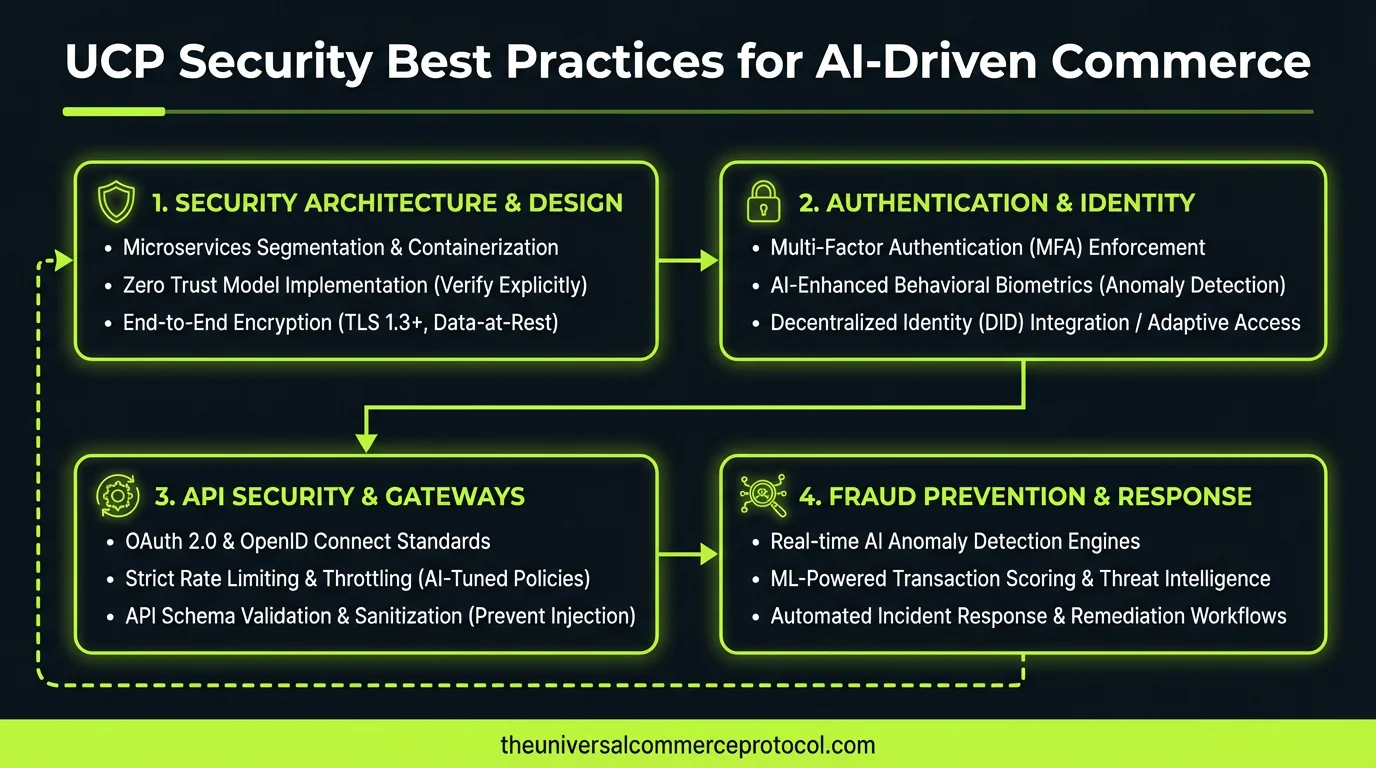
UCP Security Best Practices for AI-Driven Commerce (2026 Guide)
Secure your AI commerce stack with UCP. Covers agent authentication, verifiable intent, permission scopes, rate limiting, and compliance patterns for agentic transactions in 2026.
-
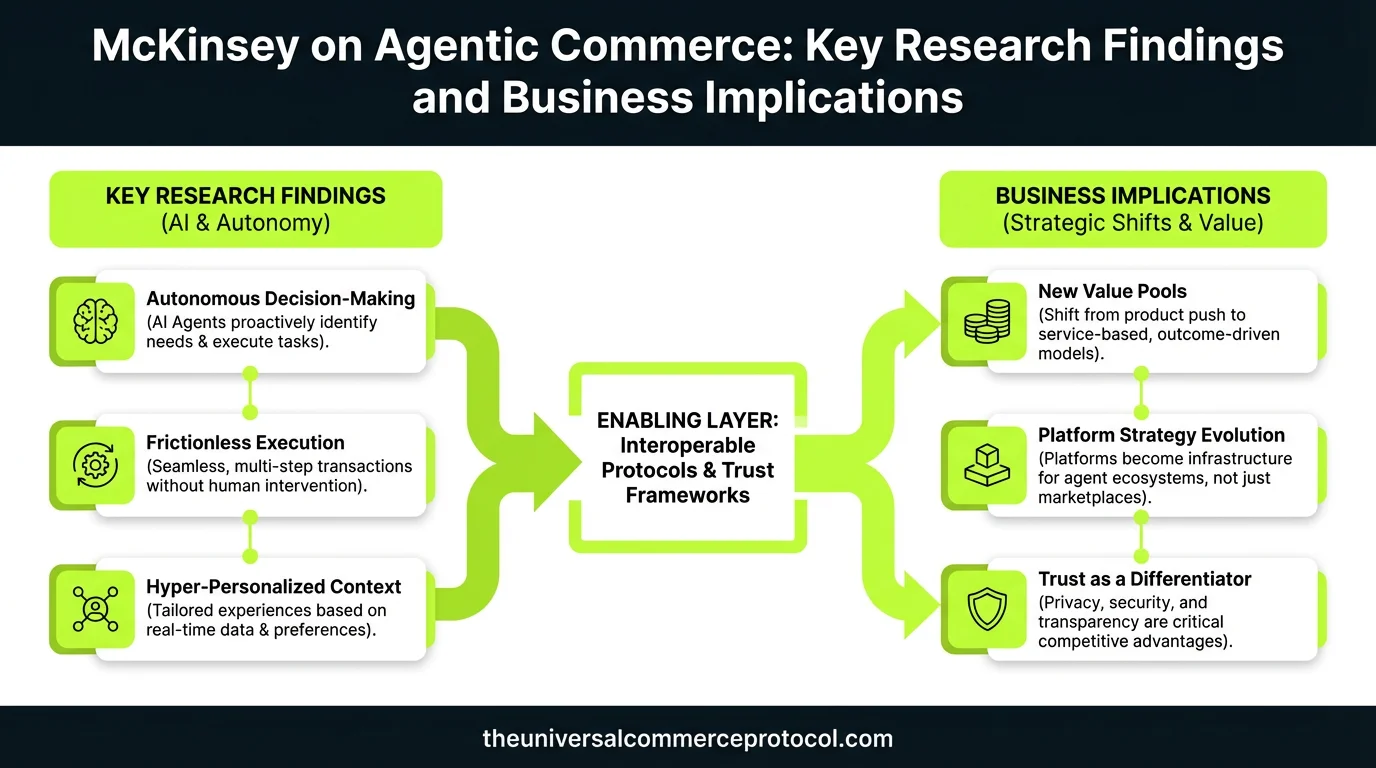
McKinsey on Agentic Commerce: Key Research Findings and Business Implications
McKinsey’s latest research on the agentic economy reveals transformative opportunities for enterprises adopting autonomous commerce systems. Discover how the Universal Commerce Protocol enables the infrastructure needed for McKinsey’s agentic commerce vision.
-
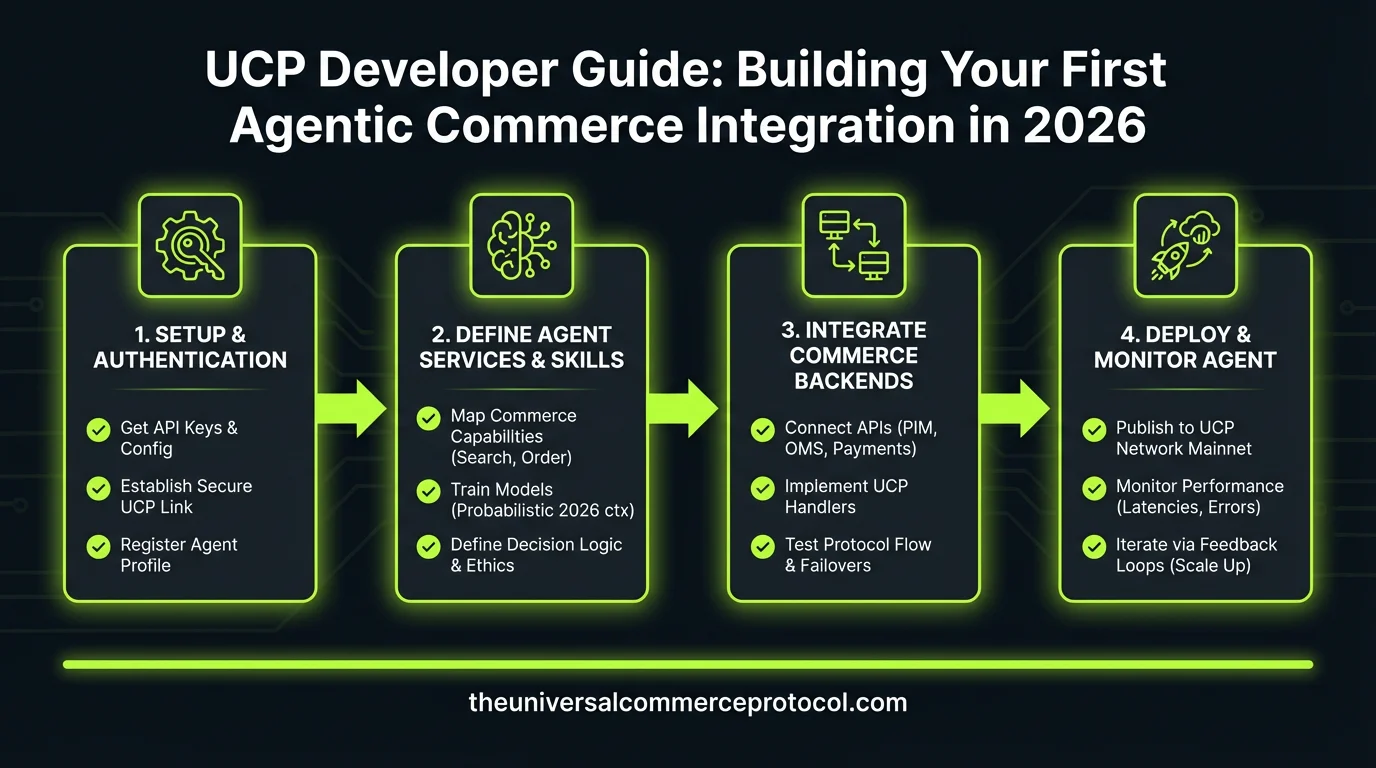
UCP Developer Guide: Building Agentic Commerce
The Universal Commerce Protocol (UCP) is a developer framework that enables autonomous transaction execution through the Agent Payments Protocol, incorporating OAuth 2.0 and API key authentication mechanisms with REST API endpoints for merchant system integration. This 2026 guide details UCP deployment on Ethereum, Polygon, and Solana networks, covering ISO 20022 payment message formatting, real-time payment…
-
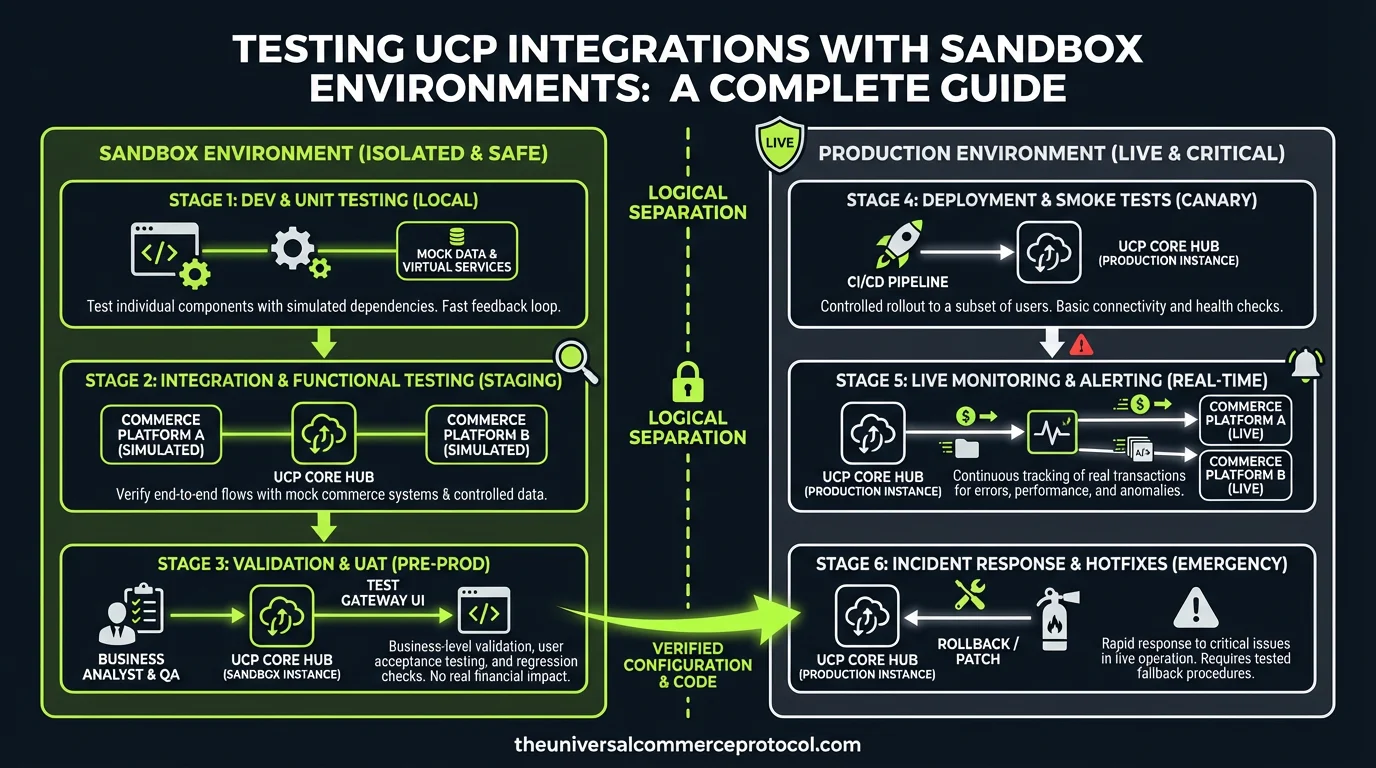
Testing UCP Integrations with Sandbox Environments
Universal Commerce Protocol (UCP) integrations must be validated in PCI DSS Level 1-compliant sandbox environments before production deployment, including transaction testing across payment gateways (Stripe, Square, PayPal), API endpoint verification against OpenAPI 3.0 specifications, and staging environment parity checks for inventory synchronization (SKU mapping, stock levels) and order management systems (OMS). Critical validation includes testing…
-

UCP Security Hardening: Best Practices for Protecting Agentic Commerce APIs
Secure Agentic Commerce APIs with UCP security hardening. Follow best practices to protect your Universal Commerce Platform.
-

Claude Marketplace vs Google UCP: Agentic Commerce
Anthropic’s Claude Marketplace leverages Claude 3.5 Sonnet and Claude 3 Opus models through proprietary APIs to enable direct agentic commerce integration, while Google’s Unified Commerce Protocol (UCP) operates as a vendor-neutral standard supporting Vertex AI, Google Commerce APIs, OpenAI GPT-4, and Meta Llama 2 across Google Cloud Platform, Amazon Web Services (AWS), and Microsoft Azure…
-

UCP Error Handling & Retry Logic for Resilient Commerce
Unified Commerce Platform (UCP) error handling implements HTTP 429 (Rate Limit), 503 (Service Unavailable), and 5xx status codes with exponential backoff retry strategies (2^n algorithm) and RFC 7231 idempotency keys to ensure transactional resilience across payment processing, inventory management, and order fulfillment microservices. Circuit breaker patterns and dead-letter queue architectures prevent cascading failures in distributed…
-

UCP Webhook Reliability in Production: Beyond Checklists
Universal Commerce Platform (UCP) webhook reliability in production requires deterministic retry logic with exponential backoff and jitter, HMAC-SHA256 signature validation per RFC 9110, and circuit breaker patterns to maintain ACID transaction integrity across distributed payment processors (Stripe, PayPal, Square) and fulfillment networks (Amazon Logistics, ShipStation). Mission-critical deployments must implement dead-letter queue (DLQ) mechanisms, OpenTelemetry distributed…
-

UCP vs REST API: Which Delivers Better Technical ROI?
Unified Commerce Platform (UCP) architecture, including microservices-based implementations from vendors like SAP Commerce Cloud and Salesforce Commerce Cloud, reduces API latency by 40-60% and payment processing time compared to traditional REST API integrations. UCP solutions optimize transaction throughput through event-driven orchestration and synchronous request-response patterns, delivering measurable ROI against legacy POS systems and asynchronous REST-based…