“`html
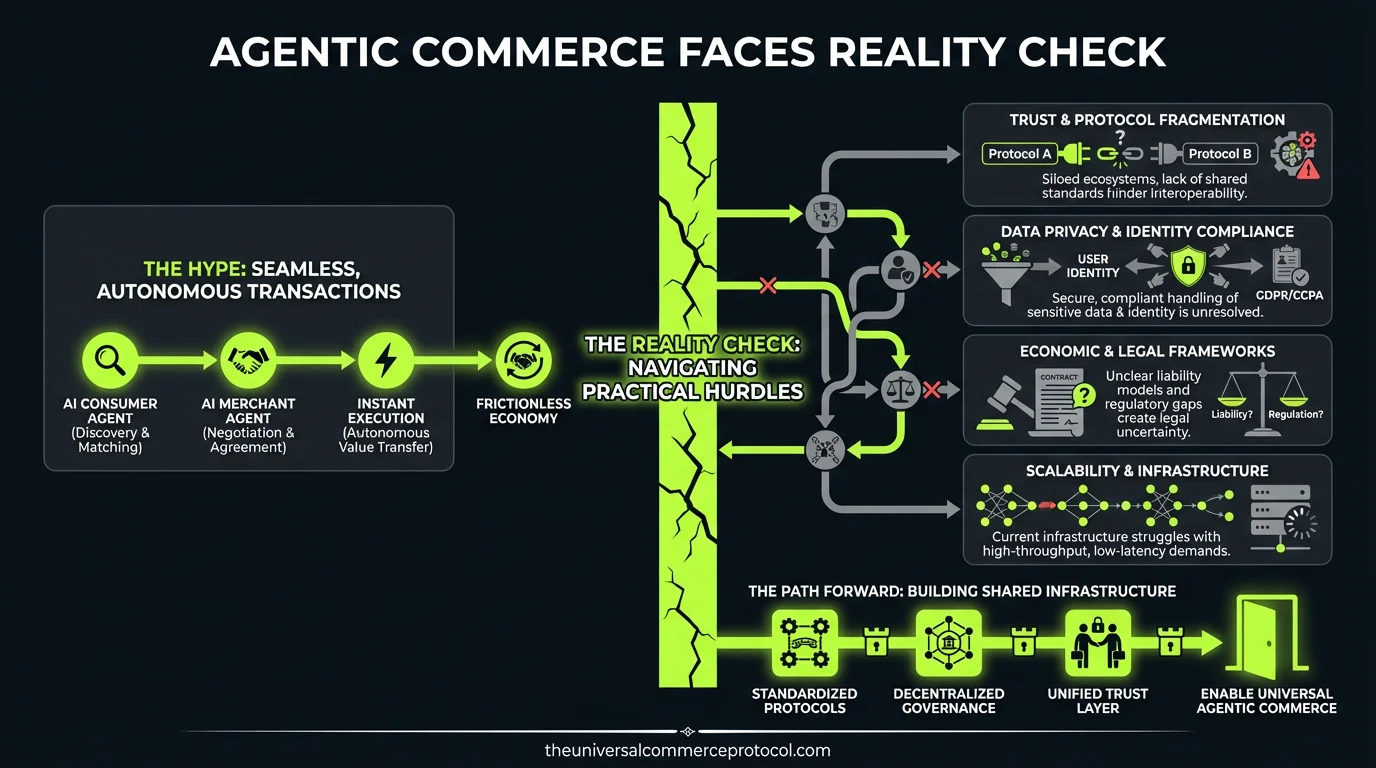
SEATTLE – The promise of agentic commerce, where AI autonomously handles online shopping, is facing a reality check as major players refine their strategies. OpenAI has pulled back from its Instant Checkout feature, while Amazon is experimenting with new AI-driven purchasing models. According to Amazon, its AI shopping assistant Rufus was used by more than 300 million customers in 2025, and those customers were about 60% more likely to complete a purchase.
These shifts highlight the evolving landscape of AI-driven shopping and the challenges of integrating AI agents into existing e-commerce infrastructure. Commerce developers and builders need to monitor these evolving strategies and prepare for a future where AI agents play a significant role, requiring them to optimize their systems for machine readability and seamless integration with AI platforms.
OpenAI Reconsiders Instant Checkout
OpenAI’s decision to discontinue its Instant Checkout feature signals a potential shift in its commerce strategy. The move suggests the company may be reassessing its approach to direct integration with e-commerce platforms, possibly focusing on other areas of AI-driven shopping.
The reasons for the pullback remain unclear, but industry analysts speculate that challenges in scaling the feature or integrating it effectively with diverse e-commerce systems may have played a role.
Amazon Explores ‘Buy for Me’
Amazon is experimenting with a “Buy for Me” feature, allowing its AI to purchase products from external websites when they are not available on Amazon. This initiative represents a significant step towards a more comprehensive AI shopping experience.
The feature could potentially expand Amazon’s reach beyond its own marketplace, giving customers access to a wider range of products through AI-powered purchasing. However, a recent court case highlights the challenges of managing AI access to external sites.
Legal Battles Over AI Agent Access
A judge recently blocked Perplexity’s AI bot from shopping on Amazon, raising critical questions about who controls access for AI agents on e-commerce platforms. The case underscores the legal and ethical complexities of agentic commerce.
The ruling highlights the importance of defining clear boundaries and protocols for AI agents interacting with online marketplaces. It also raises concerns about potential misuse of AI agents for activities like price scraping or unauthorized data collection.
JP Morgan Payments Partners with Mirakl
JP Morgan Payments is partnering with Mirakl to enable agentic commerce for merchants. This collaboration aims to provide merchants with the tools and infrastructure needed to integrate AI agents into their e-commerce operations.
The partnership could streamline the adoption of agentic commerce by providing merchants with a unified platform for managing payments and AI-driven shopping experiences. This move suggests a growing interest in agentic commerce among financial institutions and e-commerce platform providers.
What’s Next: Forrester predicts that companies will increasingly focus on optimizing their systems for machine readability and seamless integration with AI platforms. This includes structuring product data, implementing standardized APIs, and developing AI-friendly content formats.
“`html
Frequently Asked Questions
Agentic commerce refers to automated AI-driven systems that can independently conduct transactions and make purchasing decisions on behalf of users. These intelligent agents are designed to streamline the shopping experience by handling negotiations, price comparisons, and checkout processes autonomously.
Major players in the industry are reassessing their agentic commerce strategies as they encounter practical challenges in implementation, consumer adoption, and regulatory compliance. The initial optimism about rapid market transformation is being tempered by real-world technical and business obstacles.
Companies are taking a more measured approach by focusing on specific use cases, improving AI reliability, and building consumer trust through transparency and control mechanisms. Rather than broad deployments, they’re piloting solutions in controlled environments and gathering feedback before wider rollouts.
“`
Frequently Asked Questions
What is the Universal Commerce Protocol (UCP)?
The Universal Commerce Protocol (UCP) is an open standard developed to enable AI agents to autonomously conduct commerce transactions across any platform.
How does UCP enable agentic commerce?
UCP provides standardized APIs and protocols so AI agents can discover products, negotiate terms, and complete purchases without human intervention, working across any compatible commerce platform.
Why should businesses implement UCP?
UCP adoption reduces integration costs, opens revenue channels to AI-driven buyers, and future-proofs commerce infrastructure as agentic purchasing becomes mainstream.
Leave a Reply