Category: For Data Scientists
-

Measuring Success in Agentic Commerce: Data Analytics and KPIs for UCP Integrations
Measuring success in UCP-powered agentic commerce demands a specialized analytics strategy, moving beyond traditional e-commerce metrics to capture the…
-

UCP and Advanced Analytics: Measuring Agentic Commerce Performance
If you’re deploying UCP, you’re fundamentally shifting how commerce happens. That shift demands a complete overhaul of how you measure performance. Don’t…
-
Modeling Commerce Agent Decision-Making: The Multi-Objective Optimization Problem
Commerce AI agents face a complex multi-objective optimization problem balancing cost, timing, and demand uncertainty in procurement decisions.
-
Multi-Agent Negotiation Systems: Training AI for Autonomous Commerce Decisions
Agent-to-agent commerce creates novel ML challenges around negotiation strategies, multi-objective optimization, and measuring autonomous decision quality.
-

Feature Contamination in Commerce AI: A Data Science Framework for Agent Robustness
Data poisoning attacks exploit feature space vulnerabilities in commerce agents, requiring novel detection methods beyond traditional validation.
-
Feature Engineering for Agent Cost Attribution: Building Predictive Models for Commerce AI ROI
How to engineer features, train models, and evaluate agentic commerce systems where cost per transaction varies by 40x based on interaction complexity.
-

Training Commercial AI Agents to Self-Monitor for Factual Accuracy: A Model-Centric Approach to Hallucination Detection
Building reliable commerce agents requires architecting confidence estimation, validation layers, and feedback loops into your ML pipeline.
-
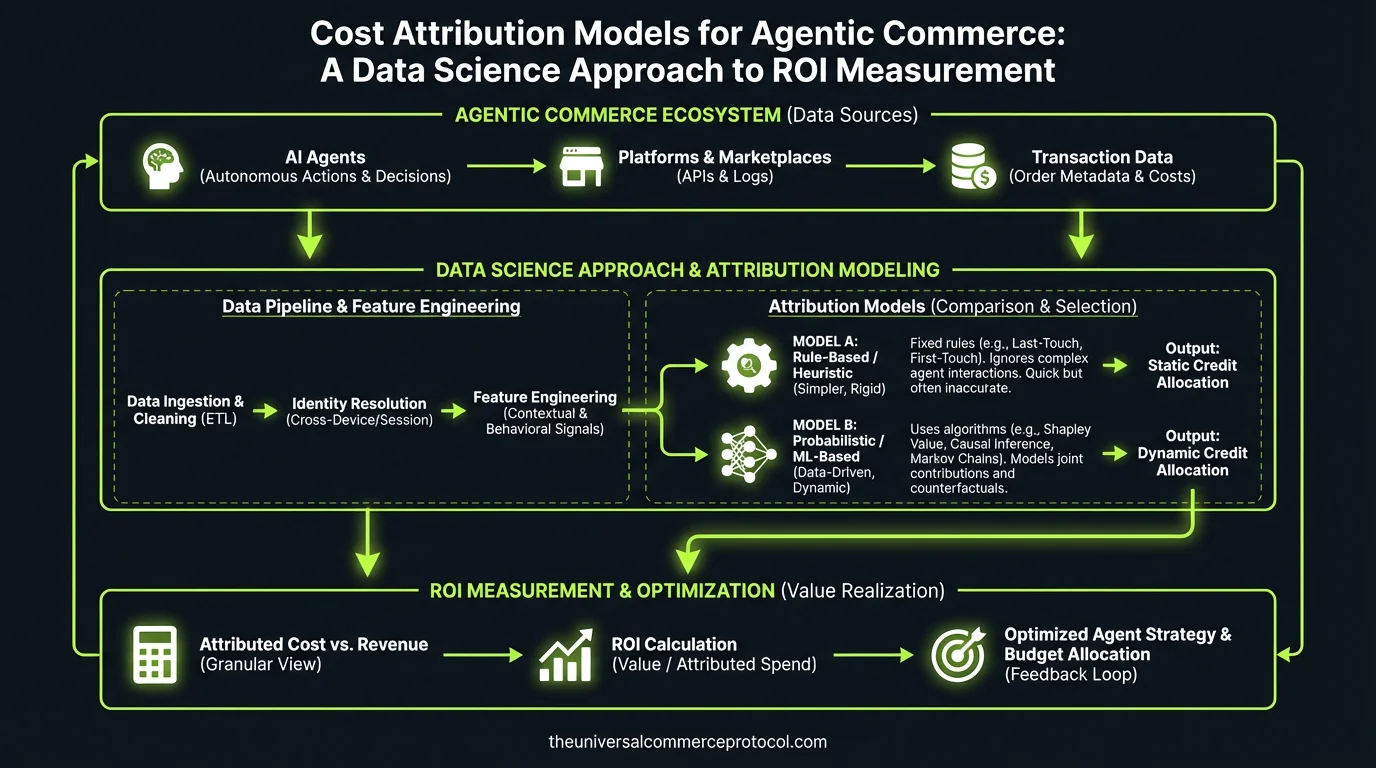
Cost Attribution Models for Agentic Commerce
Cost attribution models for agentic AI commerce quantify expenses across multi-step LLM inference chains—including token consumption, vector database queries, and API calls—where traditional transaction-level metrics fail to isolate individual agent decision costs. Data science approaches like shapley value decomposition and hierarchical cost allocation enable attribution of total cost of ownership (TCO) to specific customer journeys,…
-
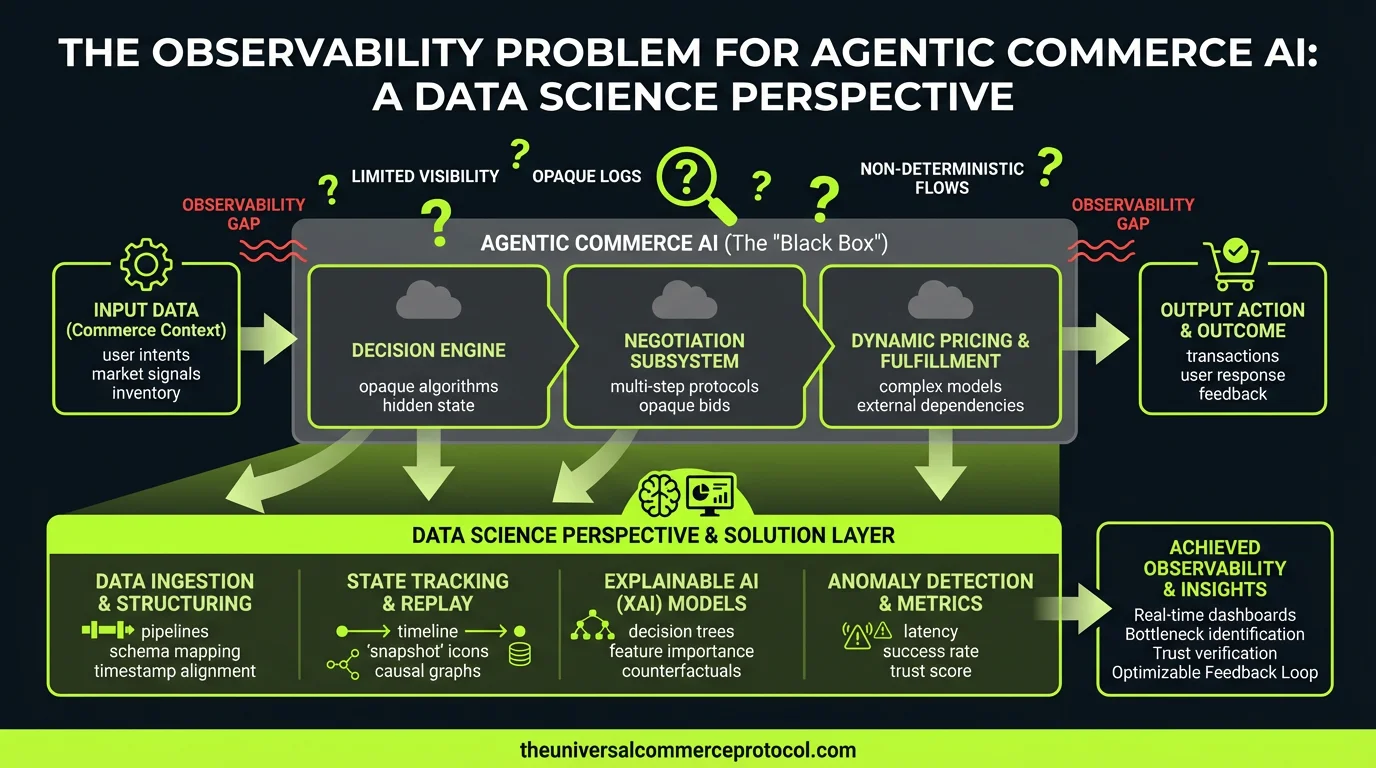
Observability Problem for Agentic Commerce AI
Agentic commerce AI systems processing high-volume transaction workflows require observability frameworks that move beyond traditional ML metrics like precision and recall to capture business-critical signals: transaction success rates, conversion funnel completion, fraud detection accuracy, and latency-induced revenue loss. Data science teams must implement causal inference methodologies and counterfactual analysis to validate decision-making quality across autonomous…
-
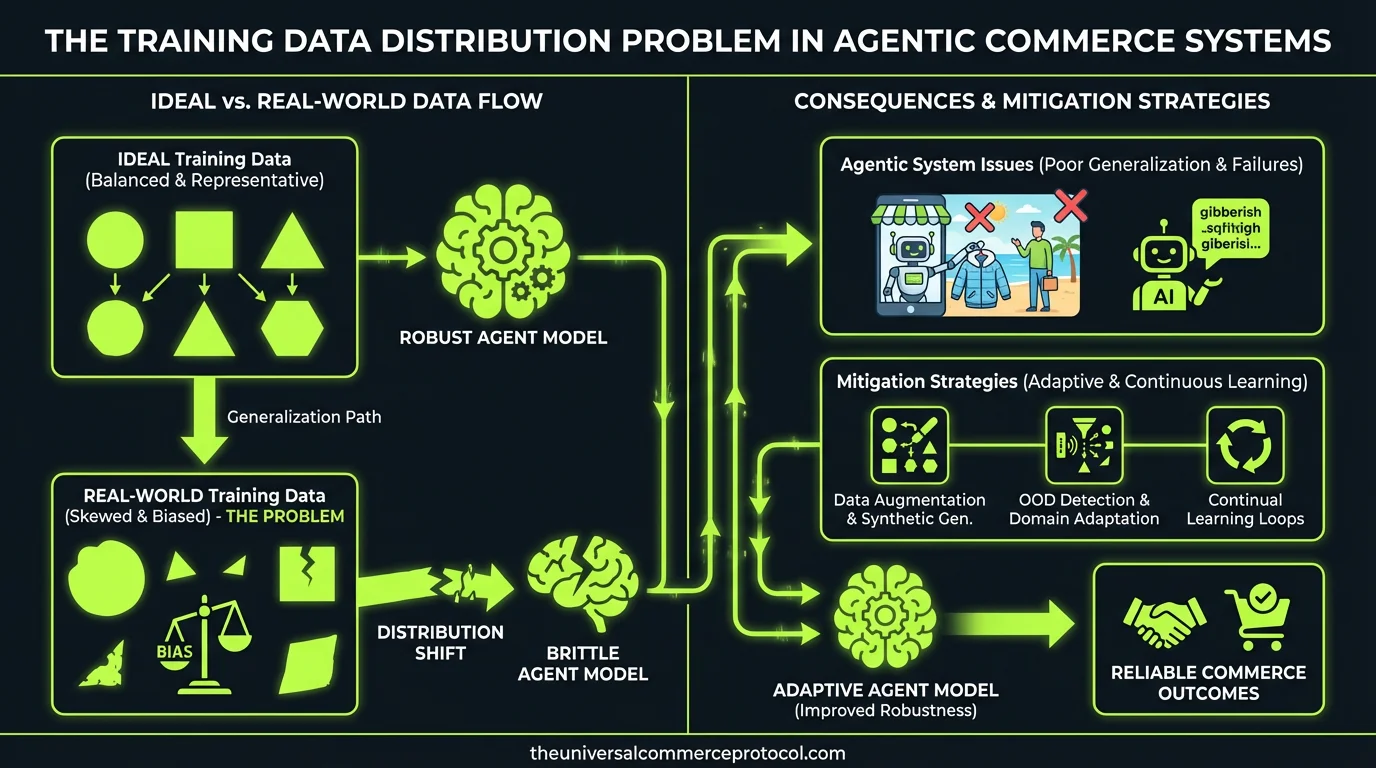
Training Data Distribution in Agentic Commerce Systems
Agentic commerce systems deployed on platforms including Shopify, SAP Commerce Cloud, and microservices architectures experience distribution shift when training datasets (synthetic or historical e-commerce data) diverge from production environments, causing inventory management failures and transaction errors across product categories, customer segments, and seasonal demand patterns. Mitigation strategies include real-time monitoring of prediction confidence scores, domain…