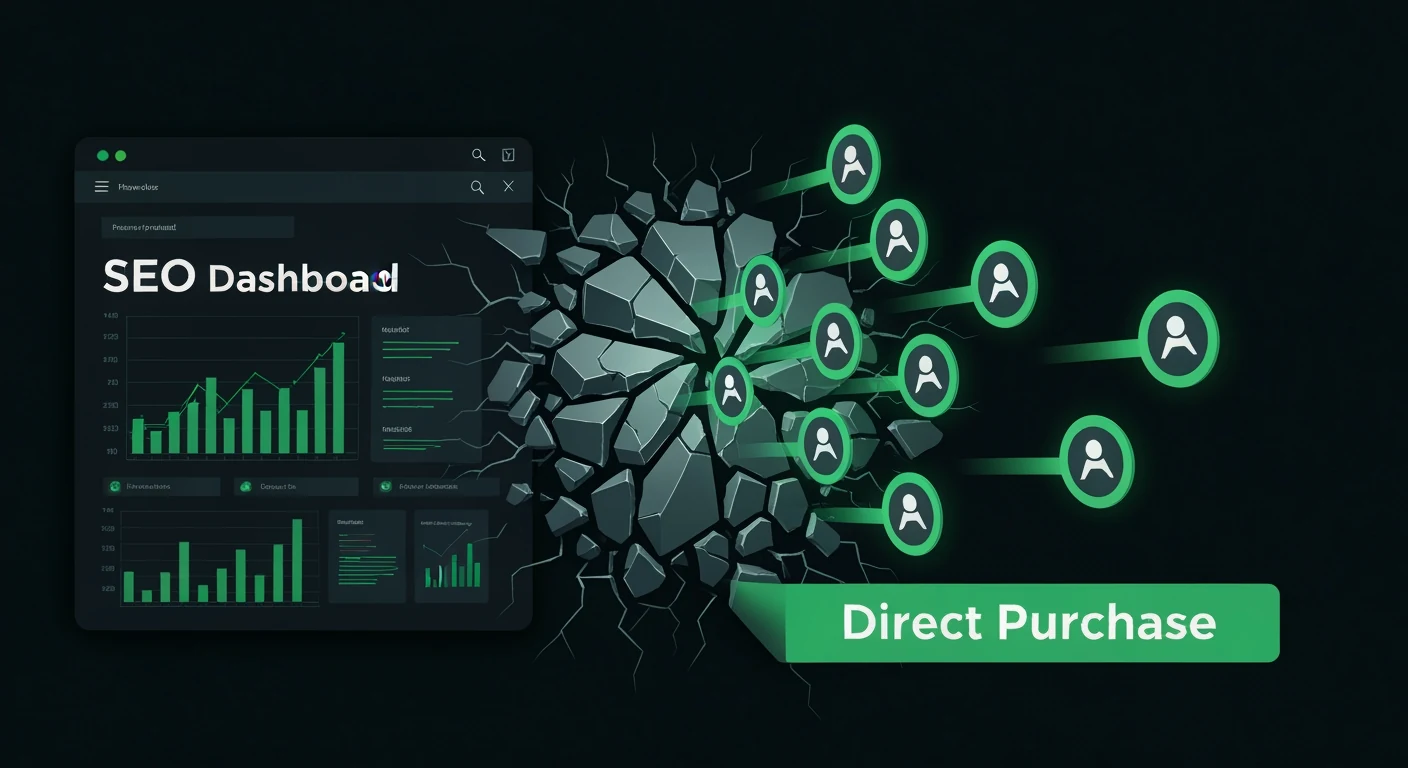
The landscape of product discovery is undergoing a profound transformation, moving beyond traditional keyword-driven search to a more nuanced, agentic paradigm. For merchants and developers, this shift means that established SEO strategies—heavily reliant on backlinks, keyword density, and search engine algorithms designed for human interpretation—are rapidly becoming insufficient. Google’s Universal Commerce Protocol (UCP) directly addresses this critical challenge by providing the structured, machine-readable data foundation necessary for AI agents to accurately understand, discover, and recommend products, making UCP optimization the new frontier for product visibility.
The Seismic Shift: From Keyword Queries to Agentic Intent Fulfillment
The core problem with applying traditional SEO principles to agentic commerce is a fundamental mismatch in how information is consumed and processed. AI agents don’t perform “searches” in the human sense; they fulfill intents. This distinction has profound implications for how products are discovered and presented.
The Limitations of Traditional SEO in an Agentic World
Traditional SEO excels at matching human-phrased queries to relevant web pages, largely by analyzing textual content, metadata, and link graphs. It’s about optimizing for a search engine’s indexing and ranking algorithms, which are often opaque and constantly evolving.
However, AI agents operate differently: Contextual Understanding: Agents interpret complex, multi-modal requests, often spanning multiple turns of conversation, rather than isolated keywords. They understand the why behind a request, not just the what*.
- Data-Driven Decision Making: Agents prioritize structured, unambiguous data that directly answers specific parameters (e.g., “find a durable, waterproof jacket under $200 with expedited shipping”). They don’t infer product attributes from prose; they consume explicit facts.
- Trust and Verification: Agents are designed to minimize “hallucinations” and prioritize authoritative, verifiable sources. Generic web content, even if well-optimized for traditional SEO, often lacks the explicit data points and trust signals an agent requires to confidently make a recommendation or complete a transaction.
UCP as the New Discovery Backbone
UCP is purpose-built to bridge this gap. It provides a standardized, extensible protocol for representing commerce data, enabling AI agents to interact with merchant inventories and capabilities programmatically. Think of UCP as the universal language for agentic commerce, allowing your products to be understood by any AI agent, regardless of its underlying model or platform.
By standardizing how product attributes, pricing, inventory, shipping options, and merchant policies are presented, UCP allows agents to:
- Semantically Understand Products: Agents can parse specific attributes like “color,” “material,” “size,” “certifications,” and “use cases” with high precision.
- Filter and Compare Effectively: Agents can confidently filter large product catalogs based on user constraints and compare offerings across multiple merchants using a consistent data structure.
- Verify Merchant Capabilities: Agents can confirm shipping times, return policies, accepted payment methods, and other critical transaction details directly through UCP interfaces.
UCP’s Pillars for Agentic Product Discovery
Effective Agentic SEO hinges on mastering specific aspects of your UCP implementation. These are the foundational elements that dictate how discoverable and recommendable your products will be.
Comprehensive & Structured Product Data (UCP Product Schema)
The bedrock of agentic discovery is the quality and completeness of your UCP product data. This goes far beyond a simple product name and description. UCP leverages and extends established schemas (like Schema.org) to provide a rich, machine-readable framework for every conceivable product attribute.
For Developers: Your UCP product payloads must be meticulously crafted. This means leveraging every relevant field in the UCP Product Schema and extending it where necessary using additionalProperty for domain-specific attributes that differentiate your products. Consider a jacket:
{
  "@context": "https://schema.org/Product",
  "@type": "Product",
  "productID": "JPK-001-BLK-M",
  "name": "Everest Expedition Parka - Men's",
  "description": "Our flagship parka, engineered for extreme cold. Features 800-fill power goose down, waterproof shell, and articulated fit for mobility.",
  "brand": {
    "@type": "Brand",
    "name": "Summit Gear Co."
  },
  "url": "https://summitgear.com/products/everest-parka",
  "image": [
    "https://summitgear.com/images/parka_front.jpg",
    "https://summitgear.com/images/parka_detail.jpg"
  ],
  "offers": {
    "@type": "Offer",
    "priceCurrency": "USD",
    "price": "599.99",
    "availability": "https://schema.org/InStock",
    "itemCondition": "https://schema.org/NewCondition",
    "seller": {
      "@type": "Organization",
      "name": "Summit Gear Co."
    },
    "shippingDetails": { // UCP-specific extension for agent interaction
      "@type": "OfferShippingDetails",
      "shippingRate": { "@type": "MonetaryAmount", "value": "0.00", "currency": "USD" },
      "shippingDestination": [
        { "@type": "DefinedRegion", "addressCountry": "US" },
        { "@type": "DefinedRegion", "addressCountry": "CA" }
      ],
      "deliveryTime": {
        "@type": "ShippingDeliveryTime",
        "businessDays": { "@type": "QuantitativeValue", "minValue": 3, "maxValue": 5 }
      }
    }
  },
  "color": "Black",
  "size": "M",
  "material": "Nylon, Goose Down",
  "gtin12": "123456789012",
  "review": [ / ... / ],
  "aggregateRating": { / ... / },
  "additionalProperty": [ // Critical for agentic differentiation
    {
      "@type": "PropertyValue",
      "name": "InsulationType",
      "value": "800-fill Power Goose Down"
    },
    {
      "@type": "PropertyValue",
      "name": "WaterResistance",
      "value": "Waterproof"
    },
    {
      "@type": "PropertyValue",
      "name": "TemperatureRating",
      "value": "-40°F / -40°C"
    },
    {
      "@type": "PropertyValue",
      "name": "Activity",
      "value": "Mountaineering, Winter Expeditions"
    }
  ]
}
For Merchants/Strategists: Invest in your product information management (PIM) systems to capture and maintain this rich data. Every attribute you can reliably provide in your UCP feed makes your product more discoverable for specific agentic queries. Think about the unique selling propositions of your products and ensure they are explicitly captured as structured data, not just marketing copy.
Agent Interaction Protocols & Capabilities
Beyond static product data, UCP defines protocols for dynamic interaction. Agents don’t just read product descriptions; they negotiate, compare, and verify. Your UCP implementation must be robust enough to handle these interactions.
For Developers: This involves implementing UCP API endpoints that allow agents to:
- Query and Filter: Agents will send specific requests to filter your catalog based on real-time criteria (e.g., “show me all men’s size L jackets in stock”).
- Check Availability and Pricing: Real-time inventory and dynamic pricing updates are crucial. Stale data will lead to agent frustration and lost sales.
- Understand Fulfillment Options: Agents need to know precise shipping costs, delivery estimates, and return policies for a given destination and product.
- Initiate Transactions: UCP facilitates the entire transaction lifecycle, from cart creation to payment and order fulfillment.
For Merchants/Strategists: Consider the common “intent chains” your customers follow. An agent might start with a broad query (“I need a new laptop”), narrow it down (“for graphic design, under $1500”), compare specific models, check stock, and then inquire about financing options. Your UCP data and API capabilities must support these multi-step interactions seamlessly to stay in the agent’s consideration set.
Trust, Reputation, and Brand Safety Signals
AI agents are designed to protect users and prioritize trustworthy merchants. UCP provides mechanisms for conveying these critical trust signals directly to agents.
For Developers: Ensure your UCP payloads accurately reflect:
- Verified Reviews and Ratings: Include
reviewandaggregateRatingschema properties. - Clear Policies: Link to and summarize
returnPolicy,paymentAccepted, andprivacyPolicywithin your UCP data where appropriate. - Security Certifications: While not directly in the product schema, the overall trust context of your UCP endpoint (e.g., HTTPS, authentication) and your merchant profile are paramount.
Crafting Your Agentic SEO Strategy with UCP
Moving from conceptual understanding to actionable strategy requires a deliberate, UCP-centric approach.
Semantic Enrichment & Contextual Relevance
Traditional SEO is about matching keywords. Agentic SEO is about matching meaning and context.
- Beyond Keywords: Instead of optimizing for “running shoes,” think about the attributes an agent would use to fulfill an intent: “shoes for trail running,” “lightweight daily trainers for road running,” “stability shoes for pronators.” Each of these implies specific product attributes and UCP data points.
- Leveraging UCP Extensibility: Use
additionalPropertyto capture highly specific, differentiating attributes that an agent can leverage. If you sell artisanal coffee, include attributes likeroastProfile,flavorNotes,processingMethod, andelevation. These are the semantic hooks agents will use to find your niche products.
Optimizing for Agent Capabilities & Intent Chains
Anticipate how agents will construct complex queries and interaction sequences.
- Multi-Attribute Filtering: Ensure your UCP implementation can handle requests like “show me a vegan, gluten-free protein bar with at least 20g protein and under 250 calories.” This requires precise attribute definitions and robust API filtering.
- Cross-Category Recommendations: Agents can connect disparate products. For example, if a user buys a camera, an agent might recommend compatible lenses, memory cards, or camera bags. Your UCP data should clearly link related products and accessories.
- Conditional Logic: Some agentic journeys involve conditional logic. “If the user is in California, show me products that ship within 2 days; otherwise, show standard shipping.” Your UCP
shippingDetailsanddeliveryTimemust support this granularity.
Dynamic Pricing, Inventory, and Fulfillment Data
Stale data is a death sentence in agentic commerce. Agents operate in real-time, and their recommendations are only as good as the most current information.
- Real-time Synchronization: Implement robust mechanisms to synchronize your inventory, pricing, and fulfillment data with your UCP endpoints instantly. Any delay can lead to agents recommending unavailable products or incorrect prices, damaging trust.
- API Performance: Ensure your UCP APIs are highly performant and can handle high query volumes with low latency. Agents will drop slow-responding merchants from their consideration set.
- Granular Shipping Options: Provide detailed
shippingDetailsincluding specific carriers, service levels (e.g., standard, expedited), and estimated delivery windows for various regions. This allows agents to fulfill complex delivery-time constraints. For more on this, see our guide on optimizing UCP shipping.
Implementation Best Practices: From Schema to Scalability
Effective Agentic SEO isn’t a one-time setup; it’s a continuous process of refinement and optimization.
Data Quality: The Foundation of Agentic Visibility
- Accuracy: Ensure every attribute, price, and availability status is 100% accurate. Inaccuracies will quickly lead to agents distrusting your data.
- Completeness: Fill out as many relevant UCP schema fields as possible. The more data an agent has, the better it can understand and recommend your product.
- Consistency: Maintain consistent formatting for attributes (e.g., “color: Red” vs. “color: crimson”). Inconsistencies make it harder for agents to parse and compare.
- Automated Validation: Implement automated checks for your UCP data feeds to catch errors before they impact agent discovery.
API Performance & Responsiveness
- Low Latency: Agents expect near-instantaneous responses. Optimize your UCP API infrastructure for speed and efficiency.
- Scalability: Design your UCP endpoints to scale with demand. As agentic commerce grows, so will the query volume.
- Error Handling: Implement robust error handling and clear error messages in your UCP API responses. Agents need to understand why a request failed to adjust their strategy.
Continuous Monitoring & Iteration
- Analyze Agent Interactions: While direct agent analytics may be limited, monitor your UCP API logs for common query patterns, successful transactions, and errors. This provides insights into how agents are interacting with your data.
- A/B Test Schema Variations: Experiment with different ways of structuring or enriching your
additionalPropertyfields to see which yields better agent discovery outcomes. - Stay Updated with UCP: The Universal Commerce Protocol will evolve. Stay abreast of new schema additions, API updates, and best practices to maintain optimal visibility.
Conclusion
The shift to agentic commerce is not just an evolution; it’s a paradigm change in product discovery. Traditional SEO strategies, while still relevant for human search, are increasingly insufficient for maintaining product visibility in an AI-driven world. Google’s Universal Commerce Protocol provides the definitive framework for this new era, enabling merchants to present their products in a structured, machine-readable, and actionable format that AI agents can understand and trust. By meticulously optimizing your UCP data, anticipating agent interaction patterns, and ensuring the highest standards of data quality and API performance, you can secure your competitive advantage and unlock unprecedented discovery for your products in the age of agentic commerce. Ignoring UCP optimization is akin to ignoring SEO in the early days of the web—a critical oversight that will lead to diminished visibility and lost opportunities.
FAQ
1. How is Agentic SEO fundamentally different from traditional SEO? Traditional SEO focuses on optimizing web content for human-driven keyword searches and search engine ranking algorithms, primarily to drive traffic to a website. Agentic SEO, enabled by UCP, focuses on providing structured, machine-readable product data and robust API interactions that allow AI agents to semantically understand, compare, and act upon product information to fulfill complex user intents directly. It’s about data clarity and actionability, not just discoverability.
2. What are the most critical UCP data points for agent discovery and recommendation? Beyond basic product identifiers, critical UCP data points include:
- Comprehensive
additionalPropertyfields: These are crucial for capturing unique, differentiating attributes that agents use for granular filtering (e.g.,InsulationType,TemperatureRating,Certifications). - Real-time
offersdata: Accurateprice,availability, andshippingDetailsare essential for agents to make actionable recommendations. -
reviewandaggregateRating: These convey trust and social proof, which agents prioritize for user safety and satisfaction. - Detailed
description: While agents prefer structured data, a well-written, concise description still provides context for complex natural language processing.
4. What’s the ROI of investing in UCP for agentic discovery? The ROI comes from increased product visibility, higher conversion rates, and access to new customer segments engaging with AI agents. By optimizing for UCP, you ensure your products are presented accurately and favorably by agents, leading to more qualified leads and completed transactions that might otherwise be lost to competitors. It’s an investment in future-proofing your commerce strategy and maintaining relevance in an evolving market.
5. How do I measure the effectiveness of my UCP-driven agentic SEO efforts? Measuring effectiveness requires a shift in analytics. Instead of tracking traditional keyword rankings or organic traffic, you’ll focus on:
- UCP API call volume and success rates: Track how often agents query your UCP endpoints and the completion rate of those queries.
- Agent-attributed conversions: Work with platforms that provide analytics on sales initiated or influenced by AI agents interacting with your UCP data.
- Product recommendation rates: Monitor how often your products are included in agent recommendations.
- Data quality metrics: Track the completeness and accuracy of your UCP data over time, as this directly correlates with agent trust and discoverability.
Leave a Reply