Tag: Agentic Commerce
-
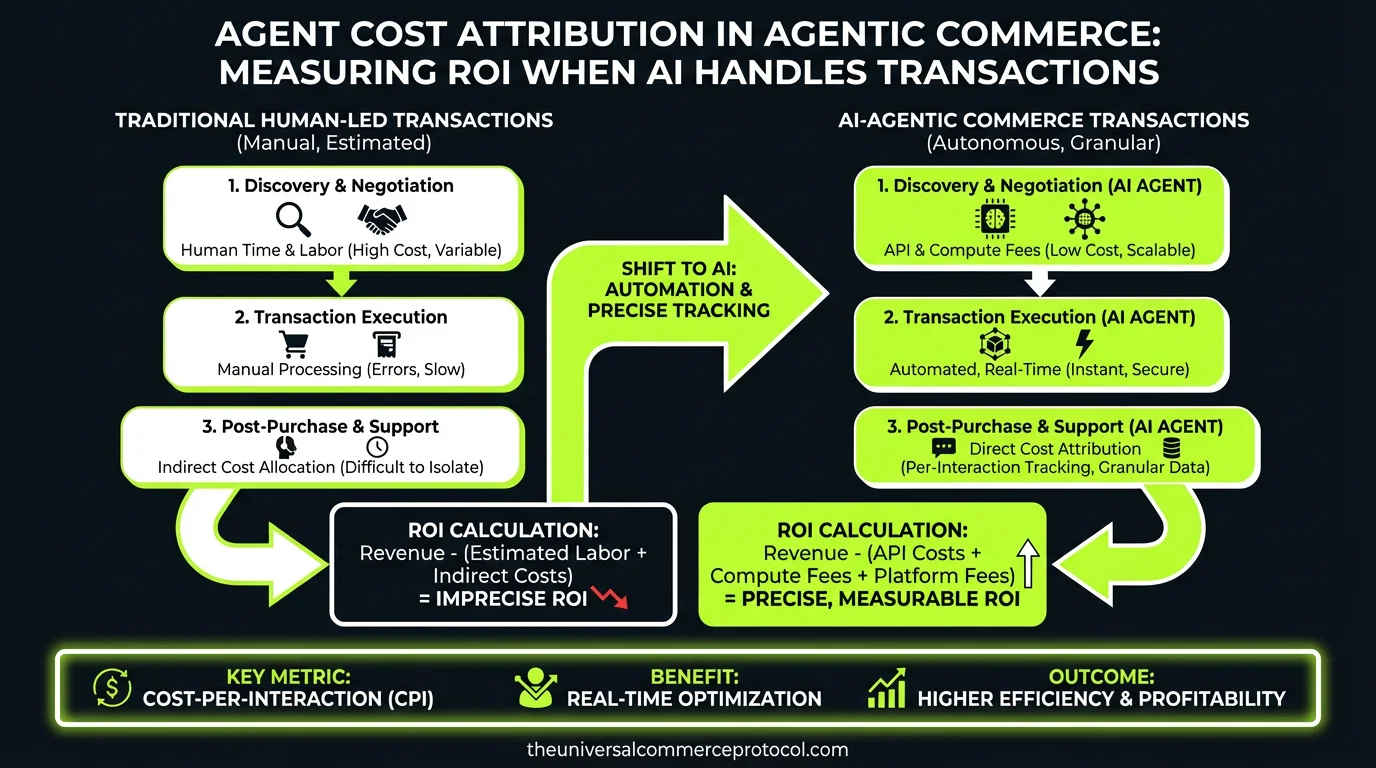
AI Agent Cost Attribution: Measuring ROI in Commerce
Agentic commerce platforms implement multi-dimensional cost attribution using real-time transaction telemetry to allocate LLM inference costs, GPU compute resources, and API licensing fees across web, mobile, and marketplace channels. Merchants measure AI agent ROI via cost-per-transaction (CPT), cost-per-conversion (CPC), and customer lifetime value (LTV) benchmarks, with attribution engines decomposing costs across LLM systems, computer vision…
-
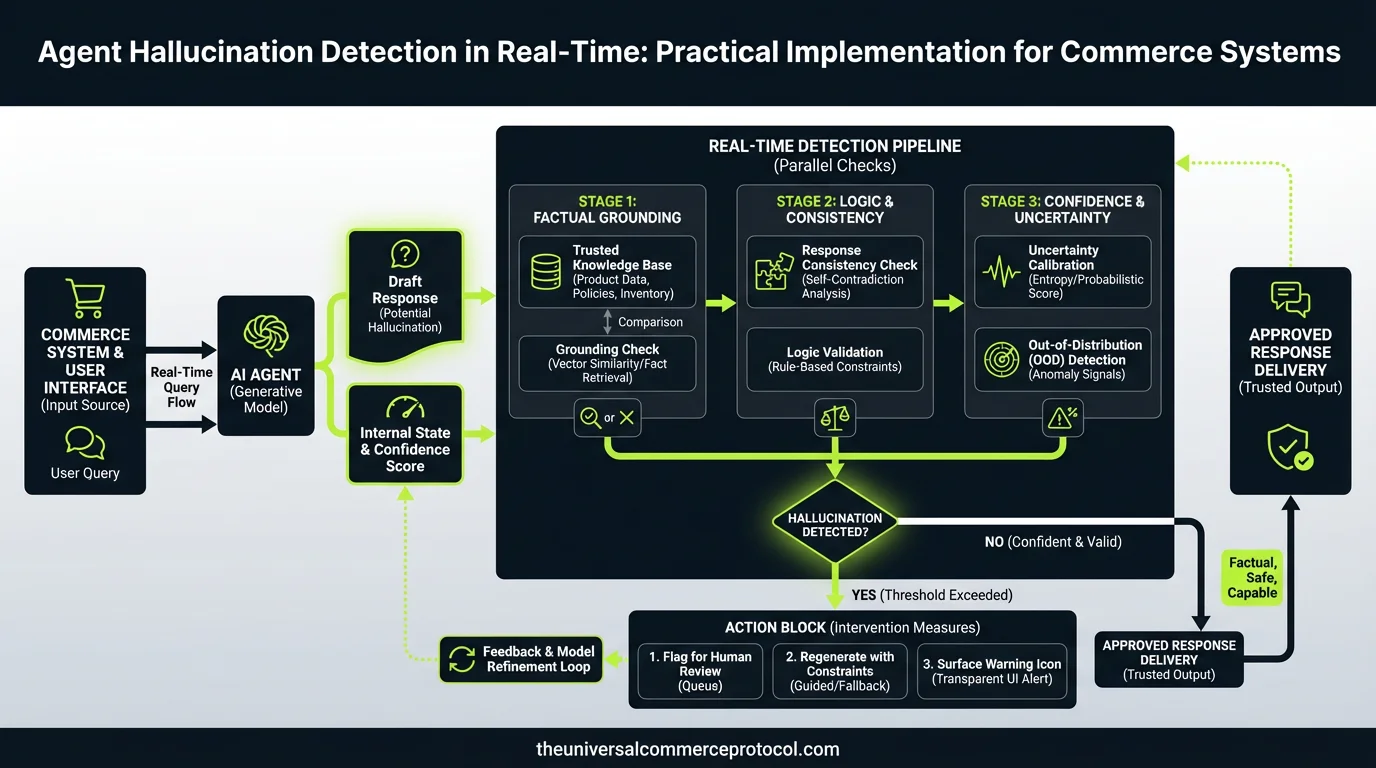
Real-Time Agent Hallucination Detection in Commerce
Real-time hallucination detection in e-commerce leverages Large Language Model (LLM) monitoring with Retrieval-Augmented Generation (RAG) verification, semantic consistency validation, and prompt engineering techniques to identify fabricated product claims across Shopify, WooCommerce, and REST APIs before publication. This detection framework mitigates Federal Trade Commission (FTC) violations, reduces chargeback disputes, and preserves data integrity across Product Information…
-
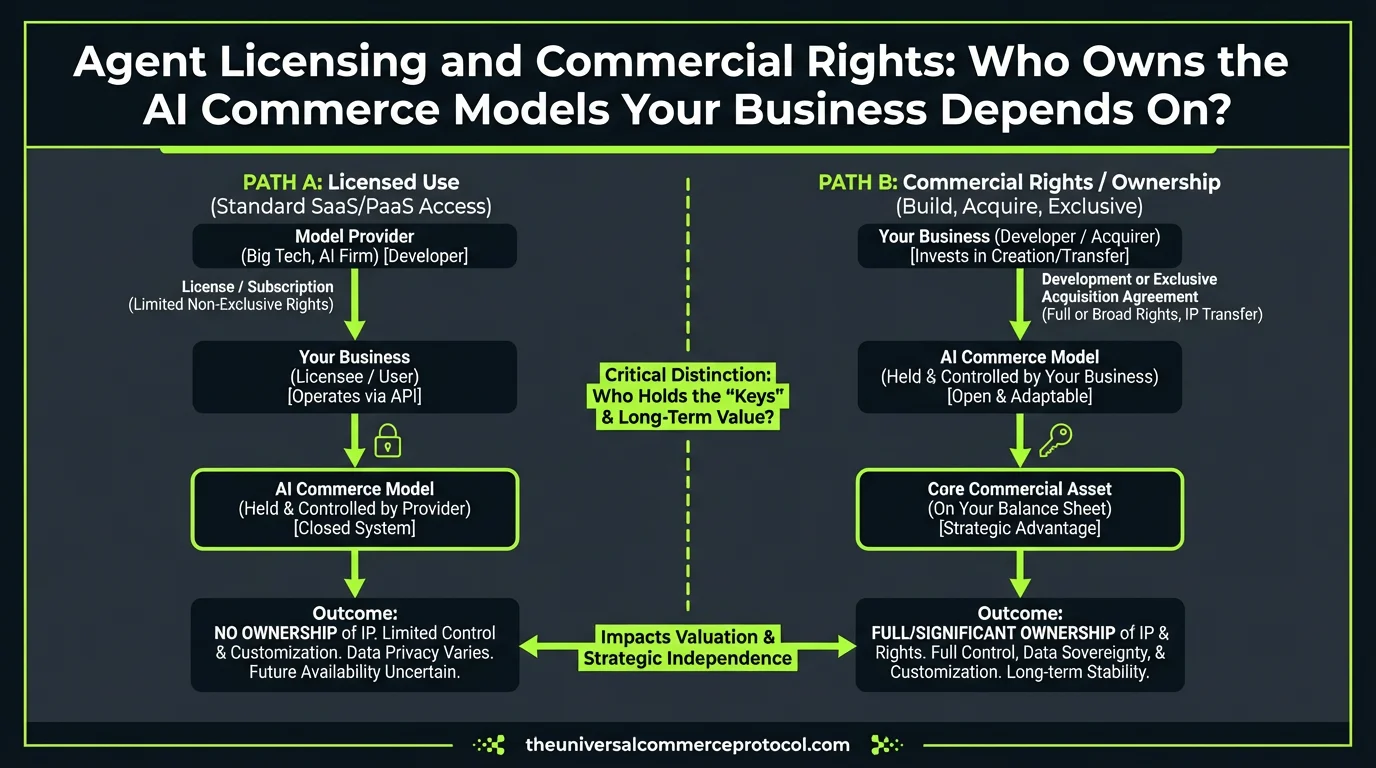
AI Commerce Licensing: Who Owns Your Agent Rights?
OpenAI’s API Terms of Service (Section 2.3), Anthropic’s Commercial License Agreement, and Meta’s Open Source License (OSSLv1.1) establish distinct permission boundaries governed by EU AI Act Articles 5-7, FTC Guidelines on AI Disclosure (2023), and NIST AI Risk Management Framework (SP 800-239). E-commerce merchants deploying GPT-4 Turbo, Claude 3 Opus, or Llama 2 commerce agents…
-
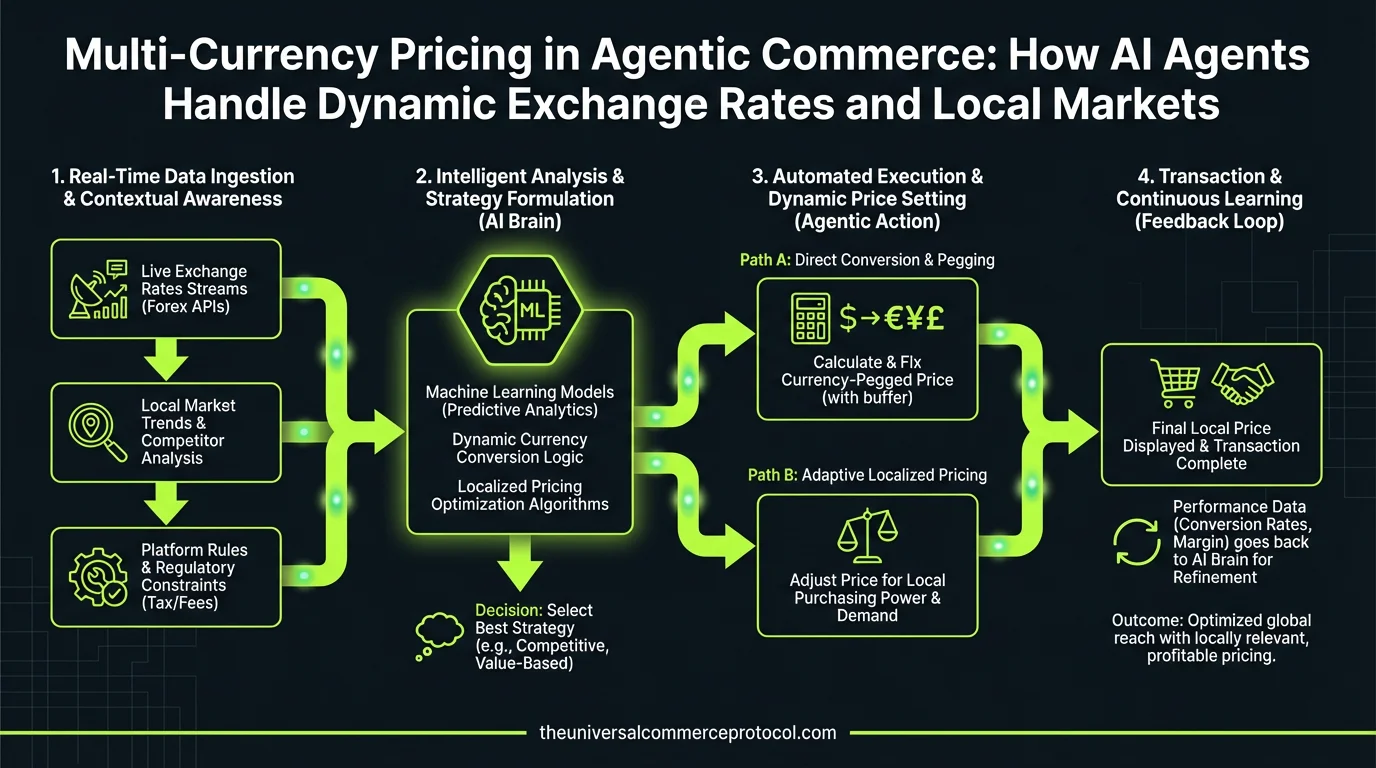
AI Agents & Multi-Currency Pricing: Dynamic Exchange Rates
AI agents in agentic commerce systems integrate real-time foreign exchange APIs—including OANDA, XE.com, and Bloomberg Terminal—to process dynamic currency conversion across major trading pairs (USD/EUR, GBP/JPY, AUD/SGD) while calculating jurisdiction-specific tax obligations such as EU VAT directives, UK VAT at 20%, German VAT at 19%, US Economic Nexus Framework sales tax, and Australian GST at…
-

Google’s UCP Powers AI Shopping in Search & Gemini
Google’s Unified Commerce Platform (UCP), overseen by Vice President of Google Ads Philipp Schindler, integrates merchant inventory, pricing, and product data across Google Search, Google Shopping, and Gemini AI to enable real-time product discovery and in-search transactions. Built on Google Cloud infrastructure, UCP employs machine learning to power comparative shopping, personalized recommendations, and direct purchasing…
-
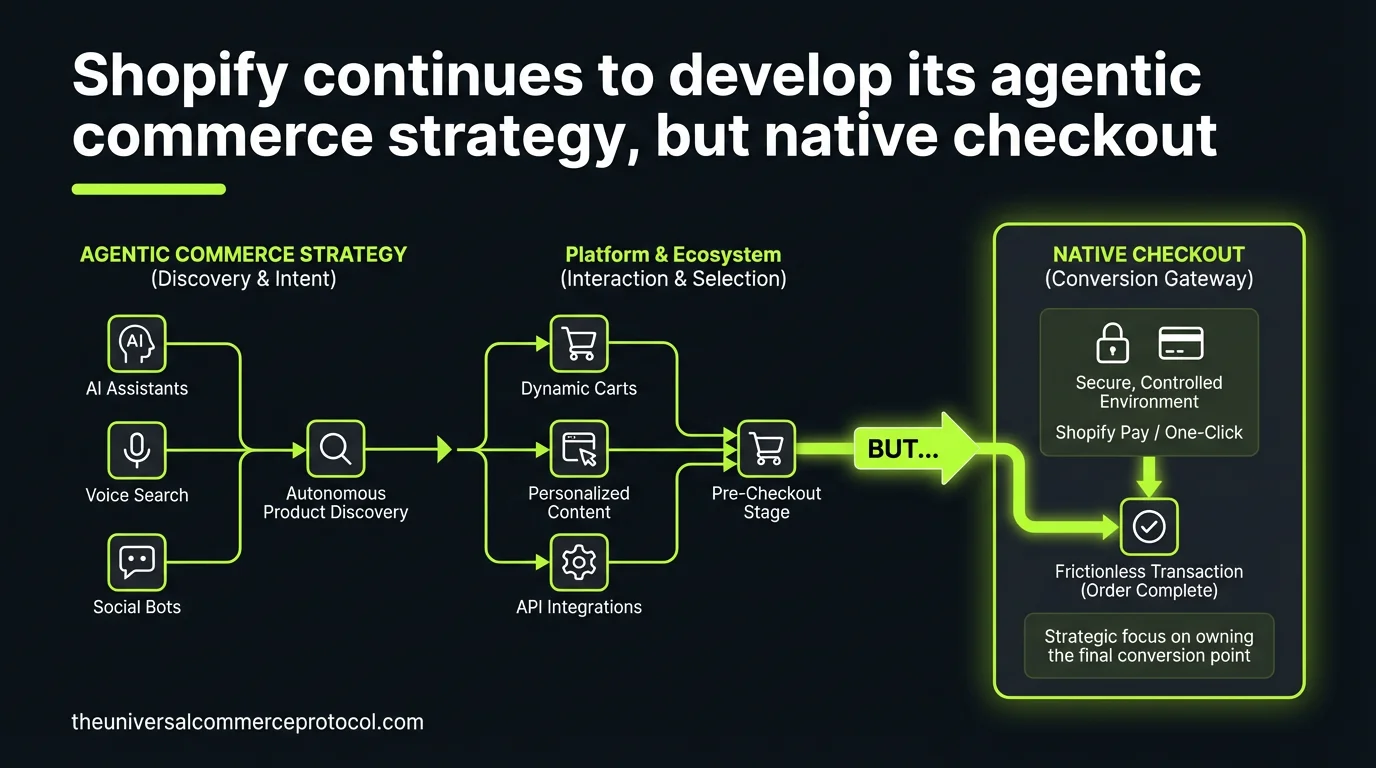
Shopify’s Agentic Commerce Strategy: ChatGPT Checkout Changes
Shopify, the Ottawa-based e-commerce platform, discontinued its native ChatGPT checkout integration in 2024 while pivoting its agentic commerce strategy toward proprietary AI tools and alternative partnership channels with AI assistants. The company continues advancing conversational commerce through its own generative AI infrastructure and select third-party AI integrations, moving away from direct embedding within OpenAI’s ChatGPT…
-

UCP Compliance & Regulatory Risk for Agentic Commerce
The Uniform Commercial Code (UCC) Article 2 governs sales contracts across all 50 U.S. states, but autonomous commerce agents must also comply with California’s Consumer Privacy Act (CCPA), Colorado’s Colorado Privacy Act (CPA), and the Federal Trade Commission Act Section 5, which prohibits deceptive practices and mandates algorithmic transparency, documented consent mechanisms, and immutable audit…
-

UCP Serverless Commerce: Build Scalable Agentic Apps
Universal Commerce Platform (UCP) enables serverless agentic commerce architectures by integrating autonomous AI agents with event-driven computing models, eliminating infrastructure management overhead. Organizations can deploy intelligent commerce agents across distributed cloud environments—including AWS Lambda, Google Cloud Functions, and Azure Functions—to deliver real-time personalization, dynamic pricing, and autonomous customer service workflows at scale. This serverless approach…
-

UCP Security Best Practices: Protecting Merchants and Buyers in Agentic Commerce
UCP security best practices protect merchants & buyers in agentic commerce. Learn how to secure transactions and prevent fraud.
-

UCP Adoption Checklist: Preparing Your Commerce Stack for Agentic Transactions
UCP adoption checklist: Is your commerce stack ready for agentic transactions? Prepare for seamless UCP integration now!