Category: News & Updates
-
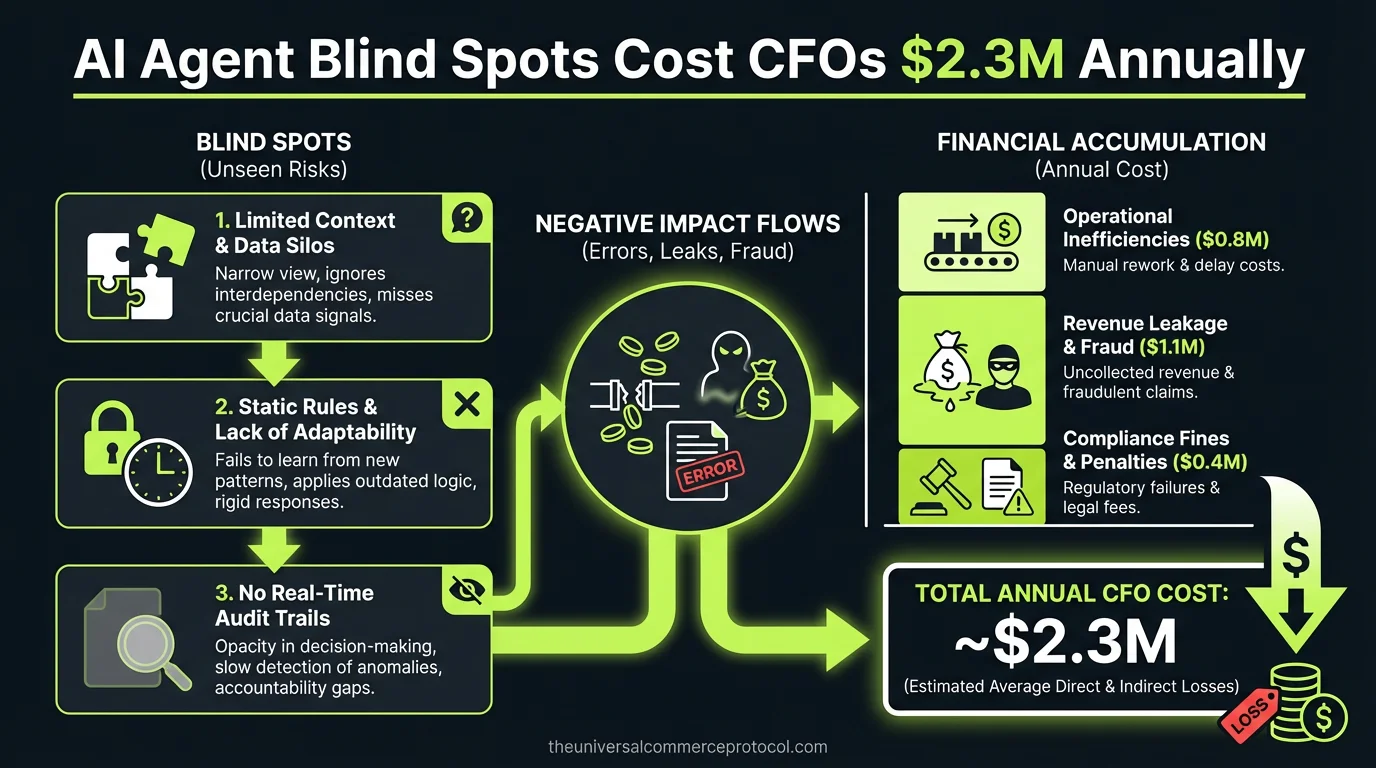
AI Agent Blind Spots Cost CFOs $2.3M Annually
According to enterprise financial technology research, AI agents operating in autonomous commerce decision-making environments without observability infrastructure accumulate average annual financial exposure of $2.3 million through undetected transaction errors, failed reconciliation processes, and systemic blind spots in audit trails. Chief Financial Officers implementing AI agent governance frameworks—including real-time monitoring, decision logging, and anomaly detection systems—can…
-
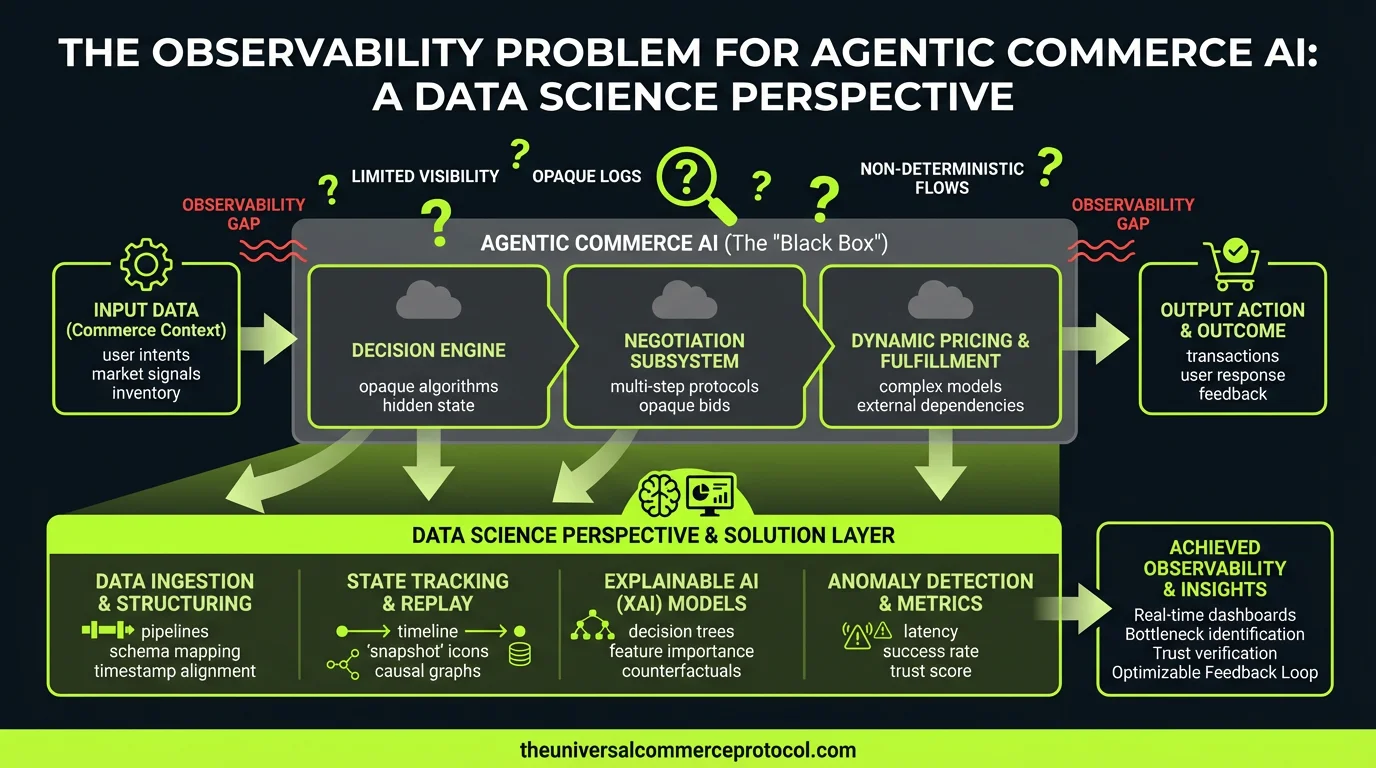
Observability Problem for Agentic Commerce AI
Agentic commerce AI systems processing high-volume transaction workflows require observability frameworks that move beyond traditional ML metrics like precision and recall to capture business-critical signals: transaction success rates, conversion funnel completion, fraud detection accuracy, and latency-induced revenue loss. Data science teams must implement causal inference methodologies and counterfactual analysis to validate decision-making quality across autonomous…
-
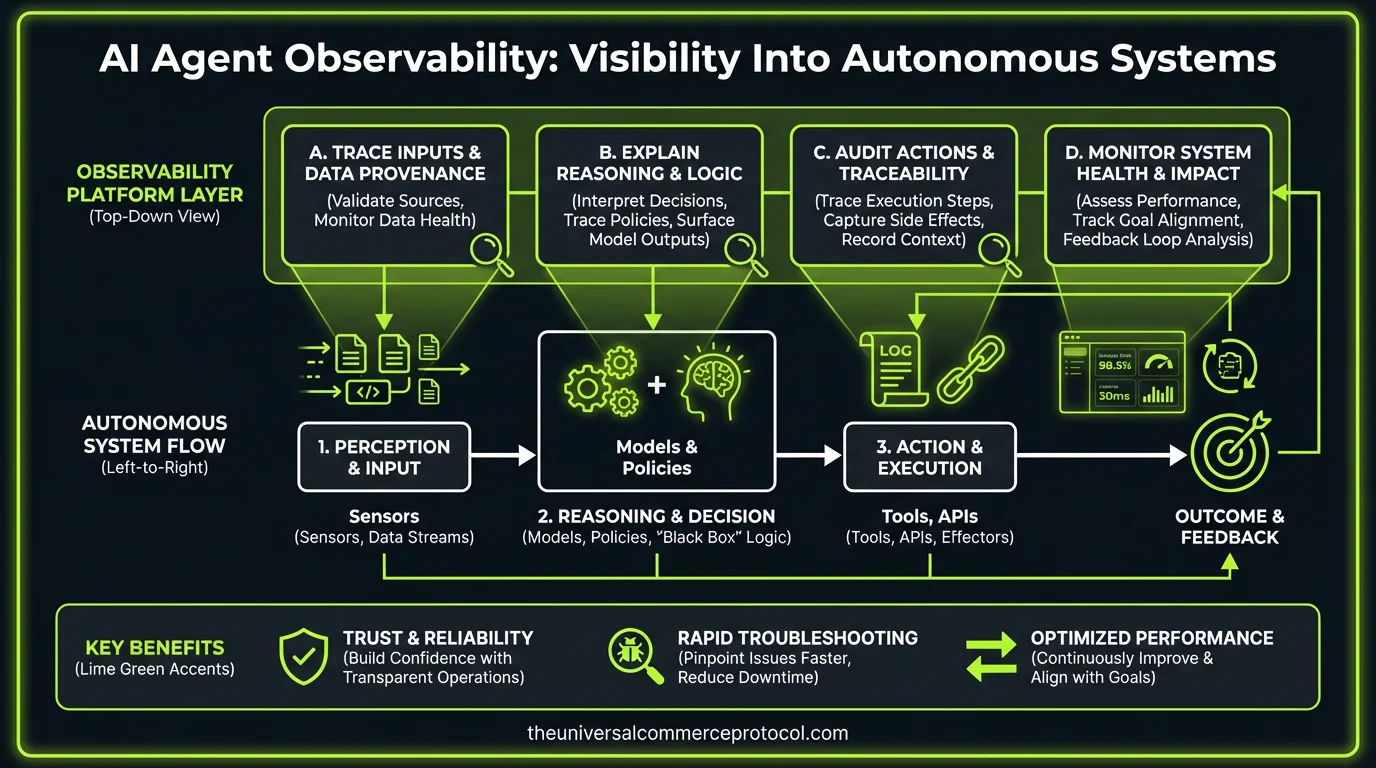
AI Agent Observability: Visibility Into Autonomous Systems
AI agent observability requires specialized monitoring architectures to capture decision-making traces, token consumption, and action sequences across large language models including OpenAI’s GPT-4 and GPT-4o, Anthropic’s Claude, and Meta’s Llama, since traditional APM platforms like Datadog, New Relic, and Dynatrace lack instrumentation for reasoning chains and ReAct pattern execution. Purpose-built observability platforms such as Langfuse,…
-
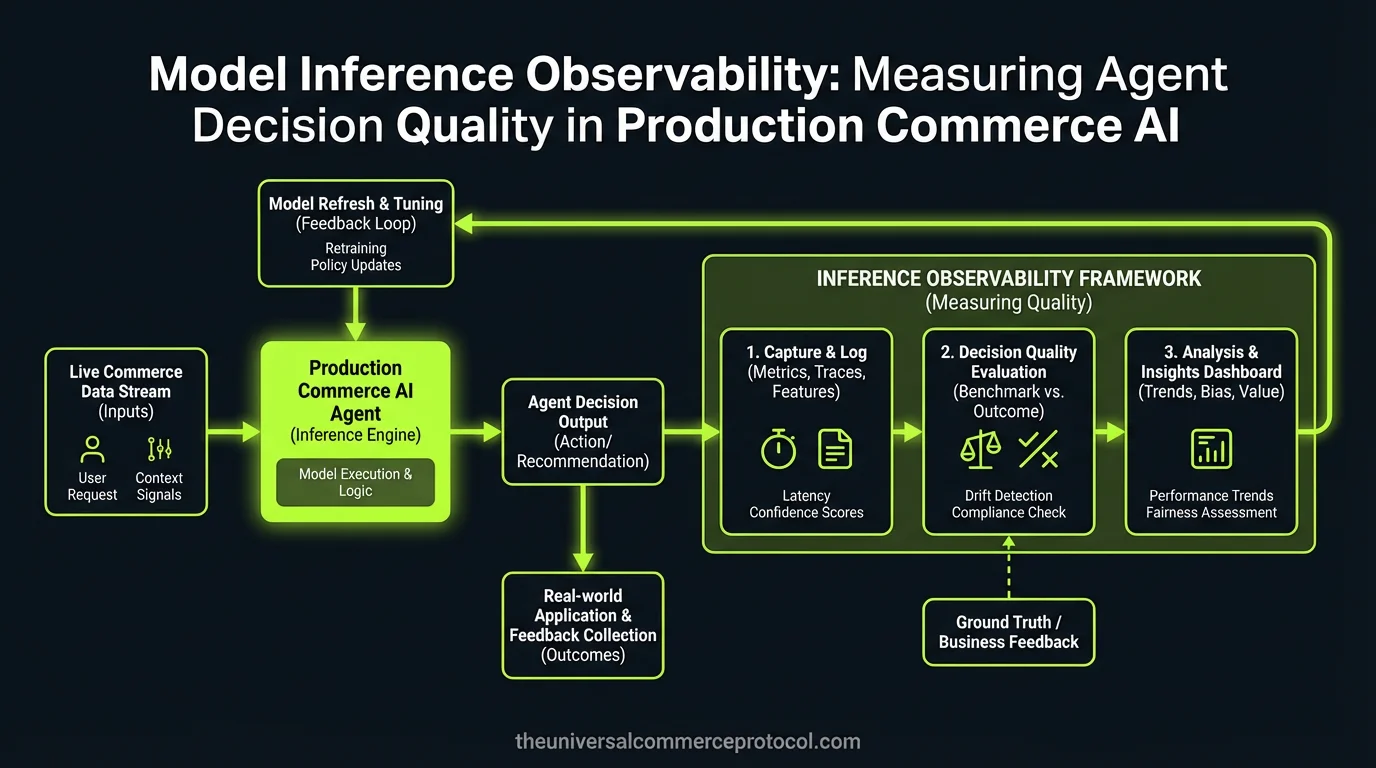
Model Inference Observability: Measuring Agent Decision Quality
Model inference observability encompasses semantic logging, latency measurement, and token-efficiency tracking for AI agents in production environments. Beyond infrastructure metrics like GPU utilization and request latency, decision quality measurement requires evaluation frameworks assessing hallucination rates, reasoning chain validity, and business outcome correlation. Organizations implementing comprehensive observability for large language model agents report 23-40% improvements in…
-
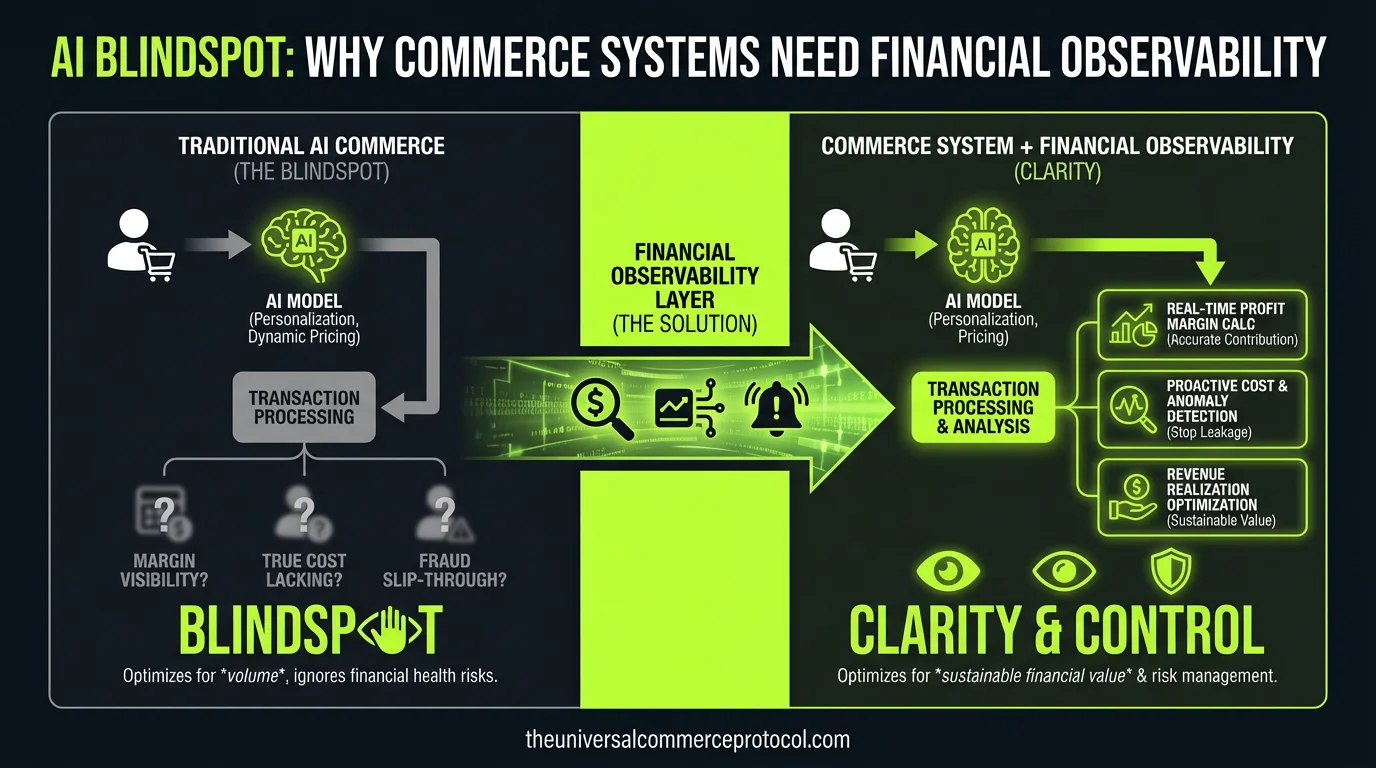
AI Blindspot: Why Commerce Systems Need Financial Observability
Enterprise CFOs implementing autonomous commerce agents on e-commerce platforms without financial-grade observability systems face estimated annual revenue leakage of $2,000,000 USD; mitigation requires real-time transaction monitoring, anomaly detection, and cryptographic audit trails aligned with FINOPS architectures and SOC 2 Type II compliance protocols. Financial services institutions employ AI governance standards to monitor agentic systems managing…
-
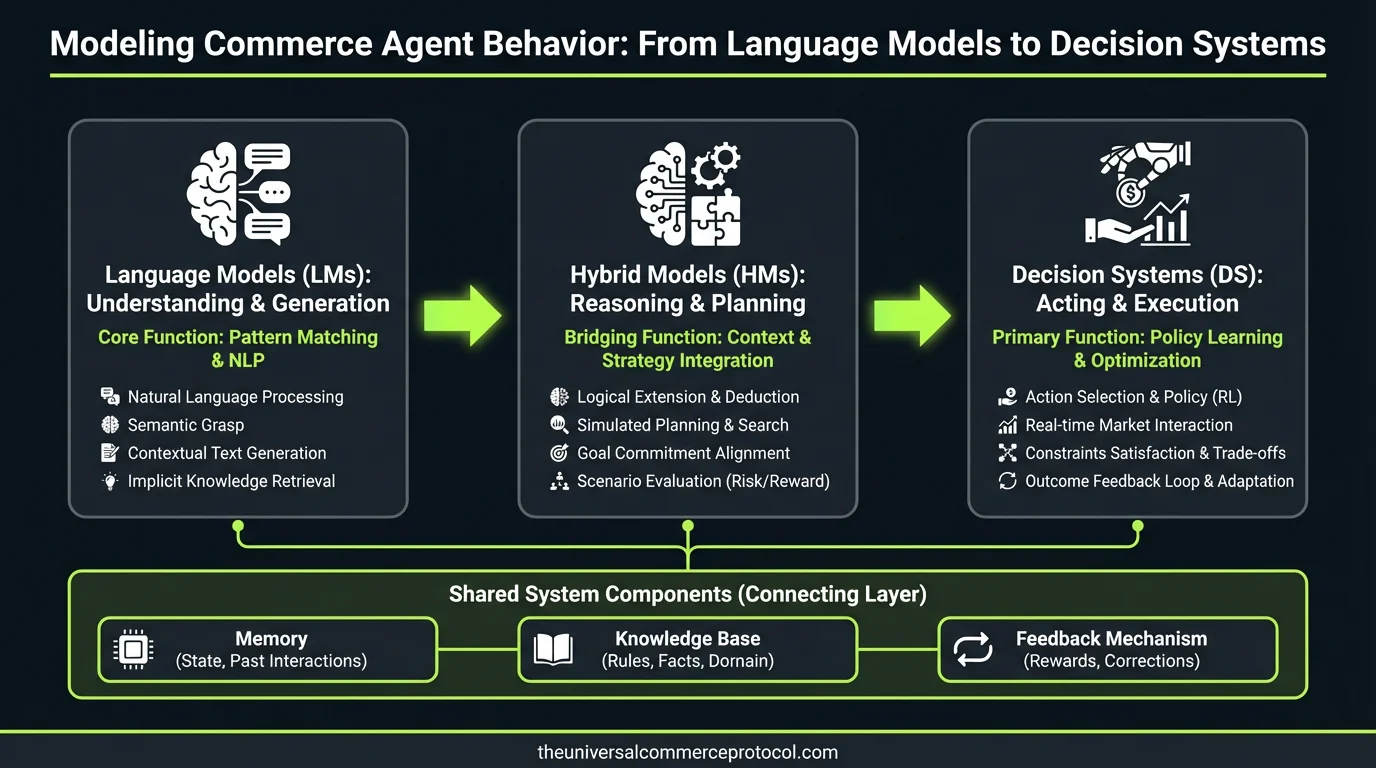
Commerce Agents: Language Models Making Purchase Decisions
Commerce agents leverage reinforcement learning with large language models (LLMs) such as GPT-4 and Claude to execute multi-objective optimization across e-commerce environments, balancing measurable KPIs including conversion rate, customer lifetime value, and inventory turnover while operating within constrained action spaces defined by platform APIs and business rules. These decision systems process real-time market signals, competitor…
-
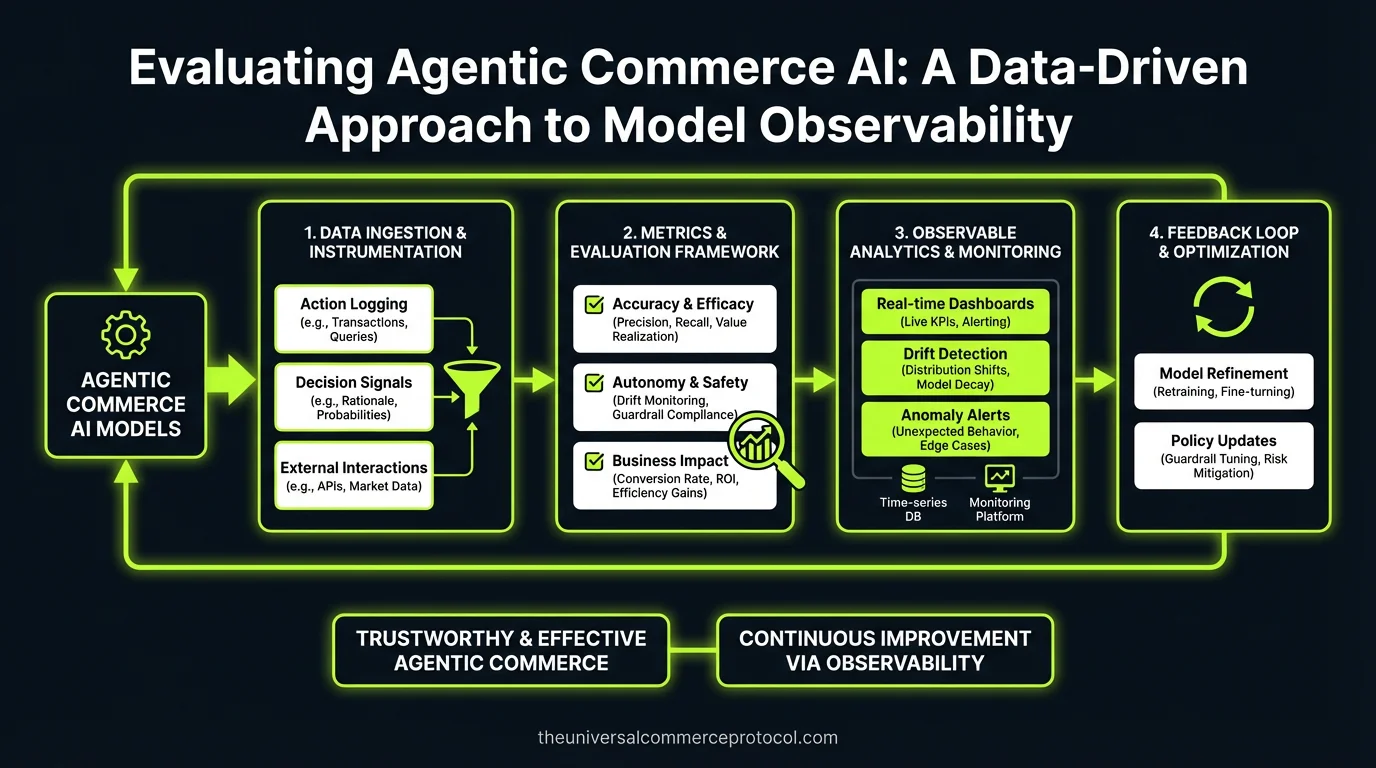
Agentic Commerce AI: Data-Driven Model Observability
Commerce AI agents processing 1,000+ daily transactions require continuous observability through data-driven monitoring frameworks employing drift detection algorithms, prediction confidence scoring, and behavioral anomaly analysis to identify machine learning model performance degradation in non-stationary e-commerce environments. Observability systems must track feature distributions, decision latency (measured in milliseconds), and conversion impact metrics—key performance indicators for maintaining…
-
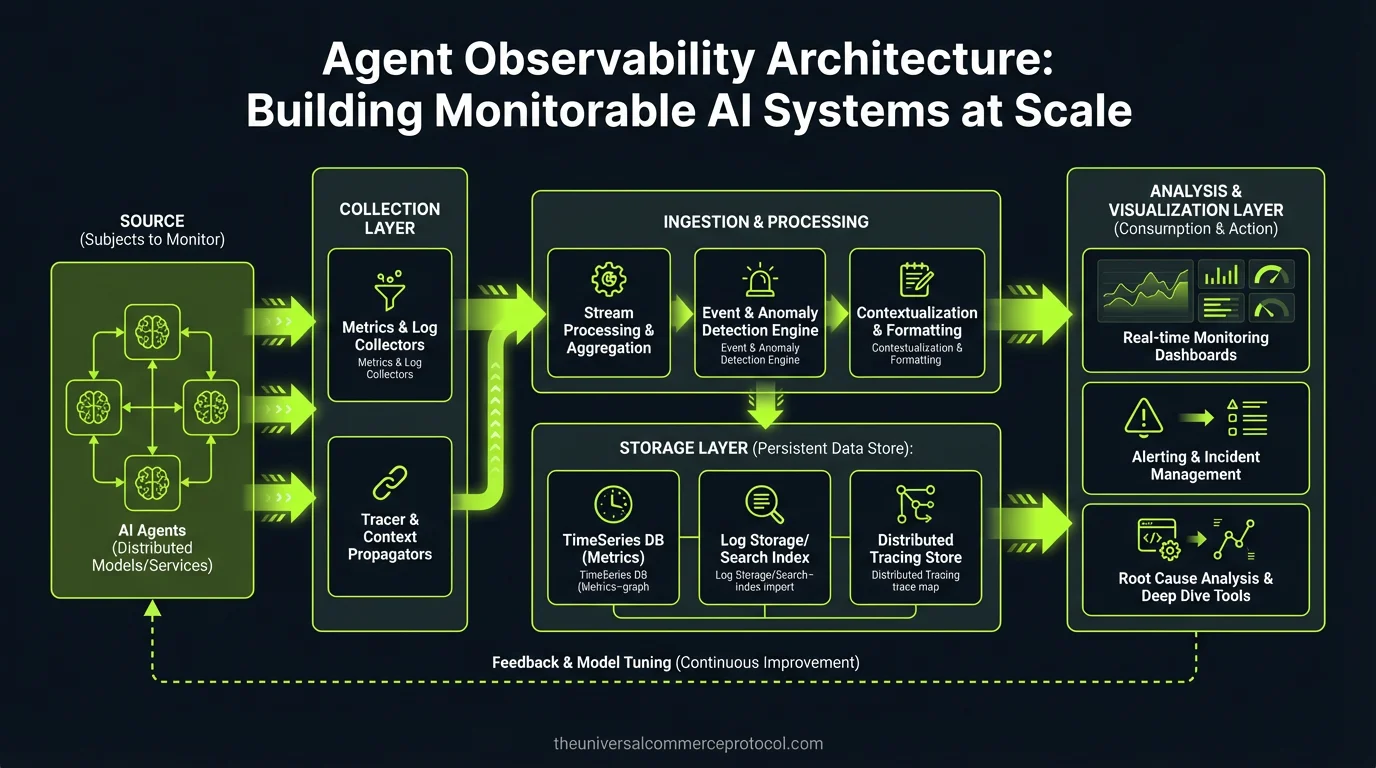
Agent Observability Architecture: Monitorable AI Systems
Enterprise AI agent systems operating in e-commerce, SaaS, and financial services sectors frequently lack comprehensive observability frameworks, forcing engineering teams at organizations like Anthropic, OpenAI, and AWS to implement post-deployment debugging practices for LLM-based decision trees and tool-use chains. Modern agentic architectures require structured logging of model invocations, token usage metrics, and tool call hierarchies…
-
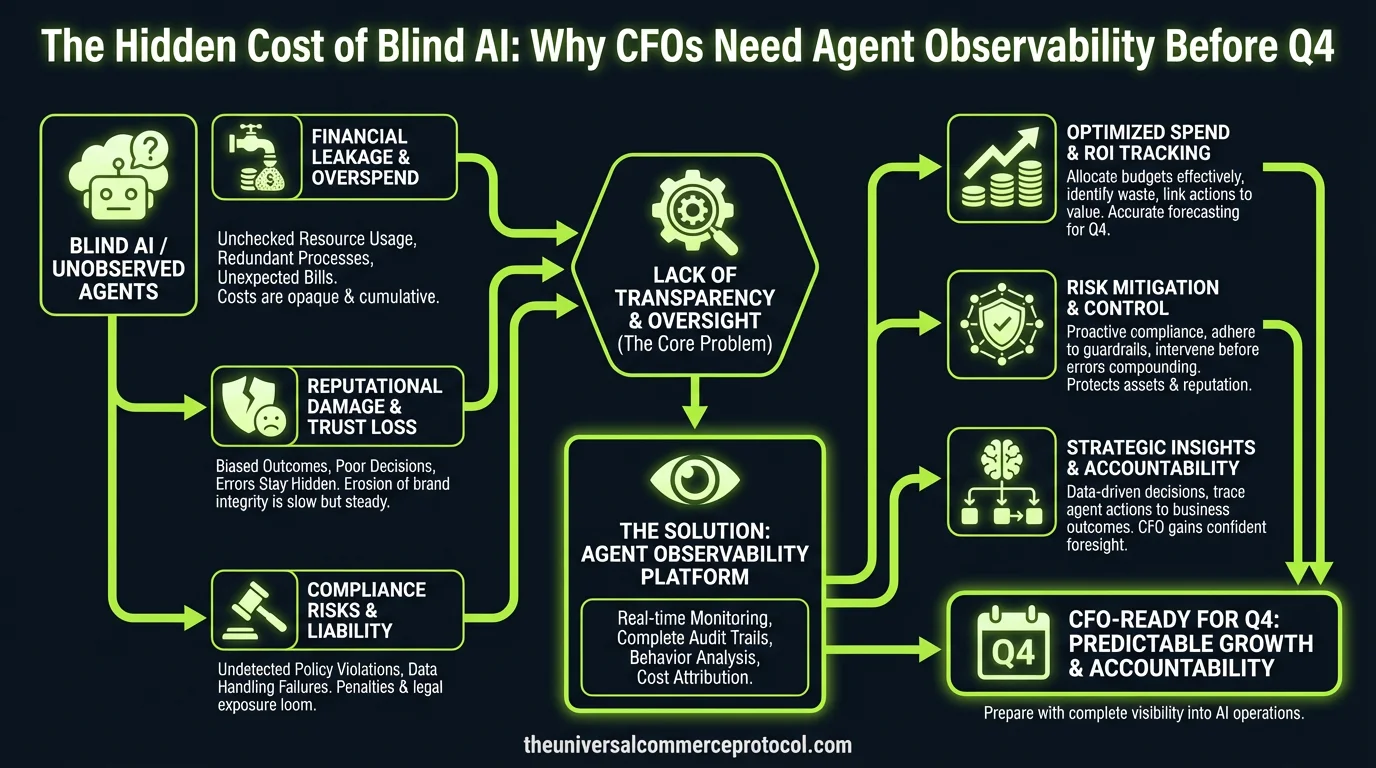
AI Agent Observability: Why CFOs Need Visibility Now
Fortune 500 organizations lose an average of $2.3 million annually from unmonitored AI agents due to undetected system failures, regulatory non-compliance, and operational anomalies, according to enterprise financial analysis. CFOs deploying agent observability platforms gain real-time monitoring of AI decision-making, comprehensive audit trails for SEC compliance, and predictive failure detection that materially reduces financial exposure…
-
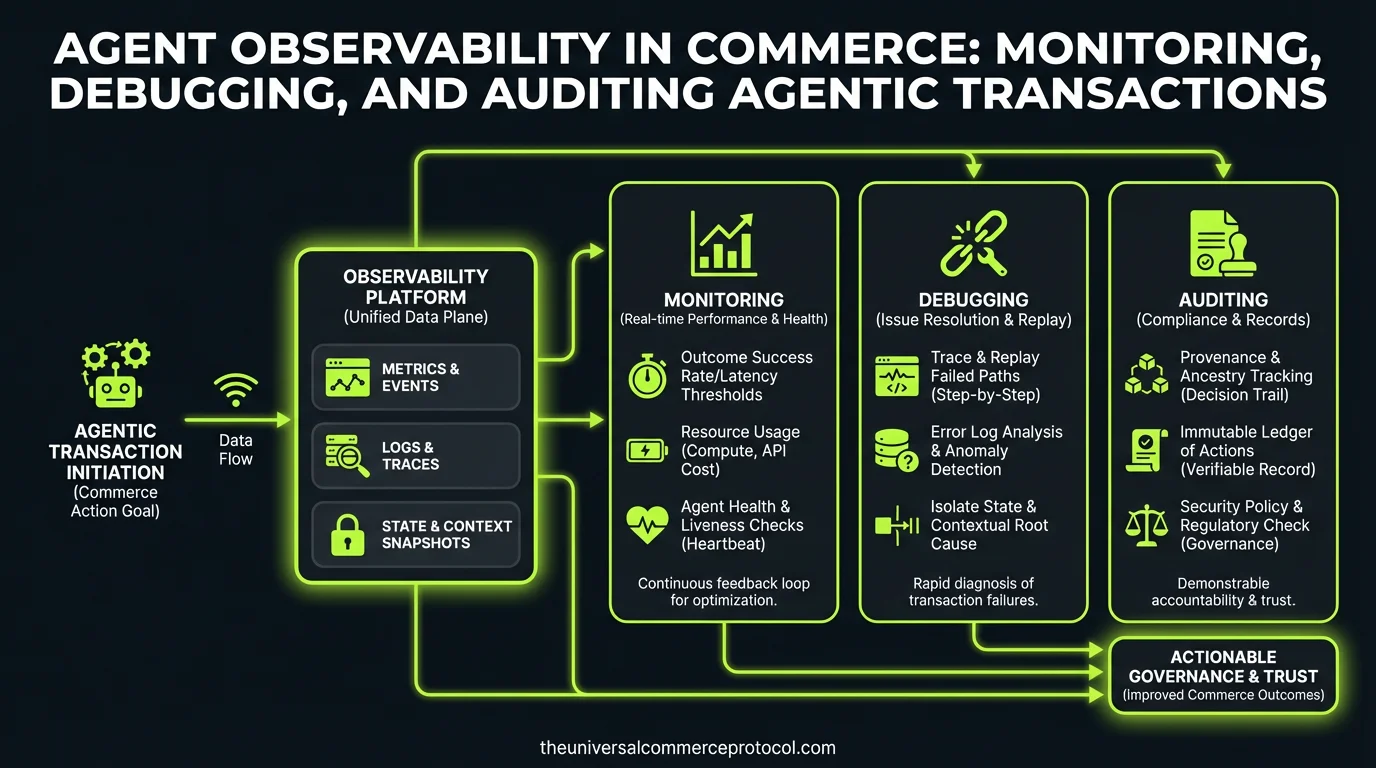
Agent Observability in Commerce: Monitor Agentic AI
Agent observability in e-commerce requires distributed tracing instrumentation using OpenTelemetry, DataDog, and LangSmith to monitor LLM interactions, API calls, and PCI DSS-compliant payment processing across multi-step checkout flows. Real-time monitoring of agent decision trees, latency metrics, and error rates enables root cause analysis while maintaining SOC 2 Type II compliance and regulatory audit trails for…