Category: Protocol & Technical Architecture
-
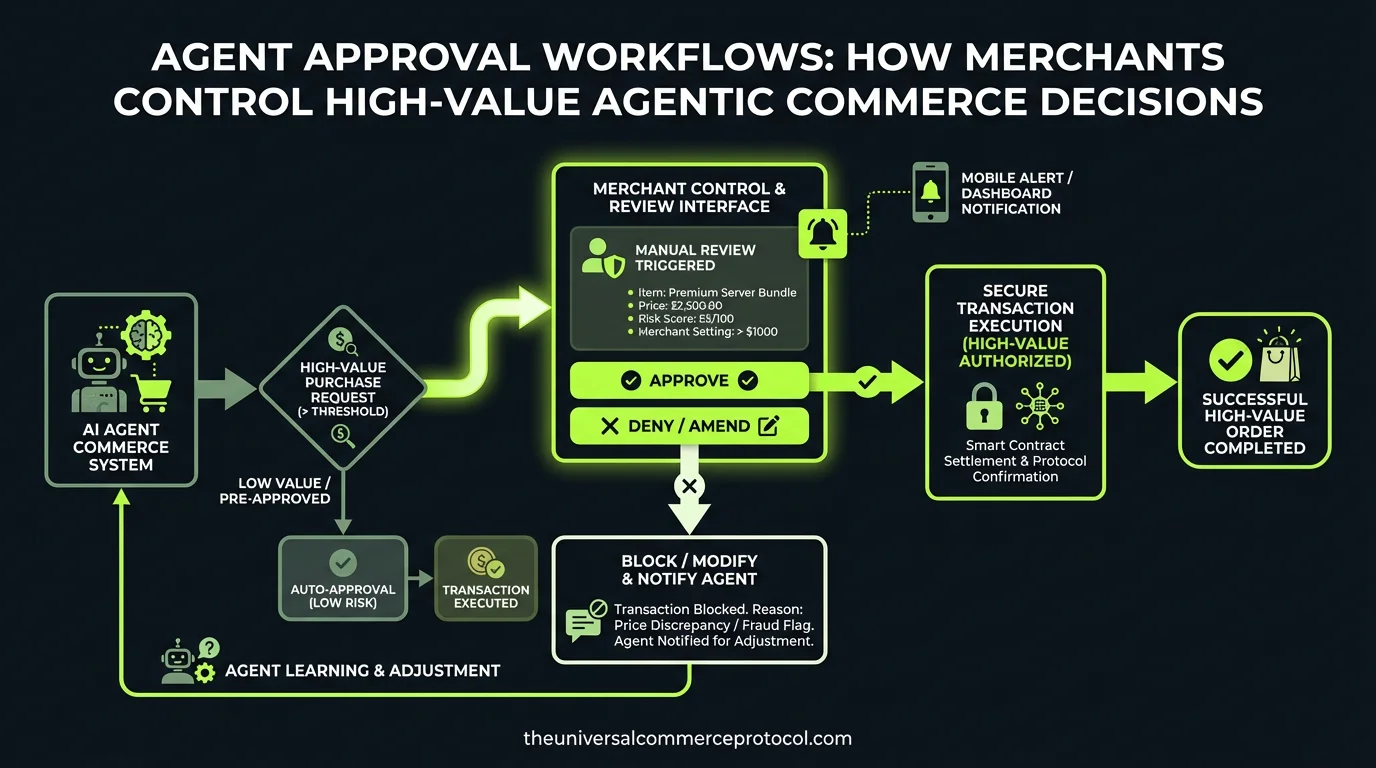
Agent Approval Workflows for Agentic Commerce
Agent Approval Workflows implement human-in-the-loop governance for AI agents in agentic commerce platforms, requiring designated merchant stakeholders to authorize high-value transactions—including refunds exceeding defined thresholds, returns processing, and purchases above specified price points—through predefined escalation paths that route decisions based on transaction type and monetary value. Role-based approval hierarchies assign authorization rights to managers, compliance…
-
AI Agents & Return Windows: Policy Enforcement
AI commerce agents must enforce FTC-regulated return windows (typically 14–90 days post-purchase per UCC Section 2-601) through deterministic deadline validation against ISO 8601 timestamps, SKU identifiers, and transaction records, with compliance checkpoints aligned to Amazon, Shopify, and PayPal merchant policy schemas. Implementation requires structured policy repositories, temporal logic gates, and cryptographically auditable transaction logs that…
-
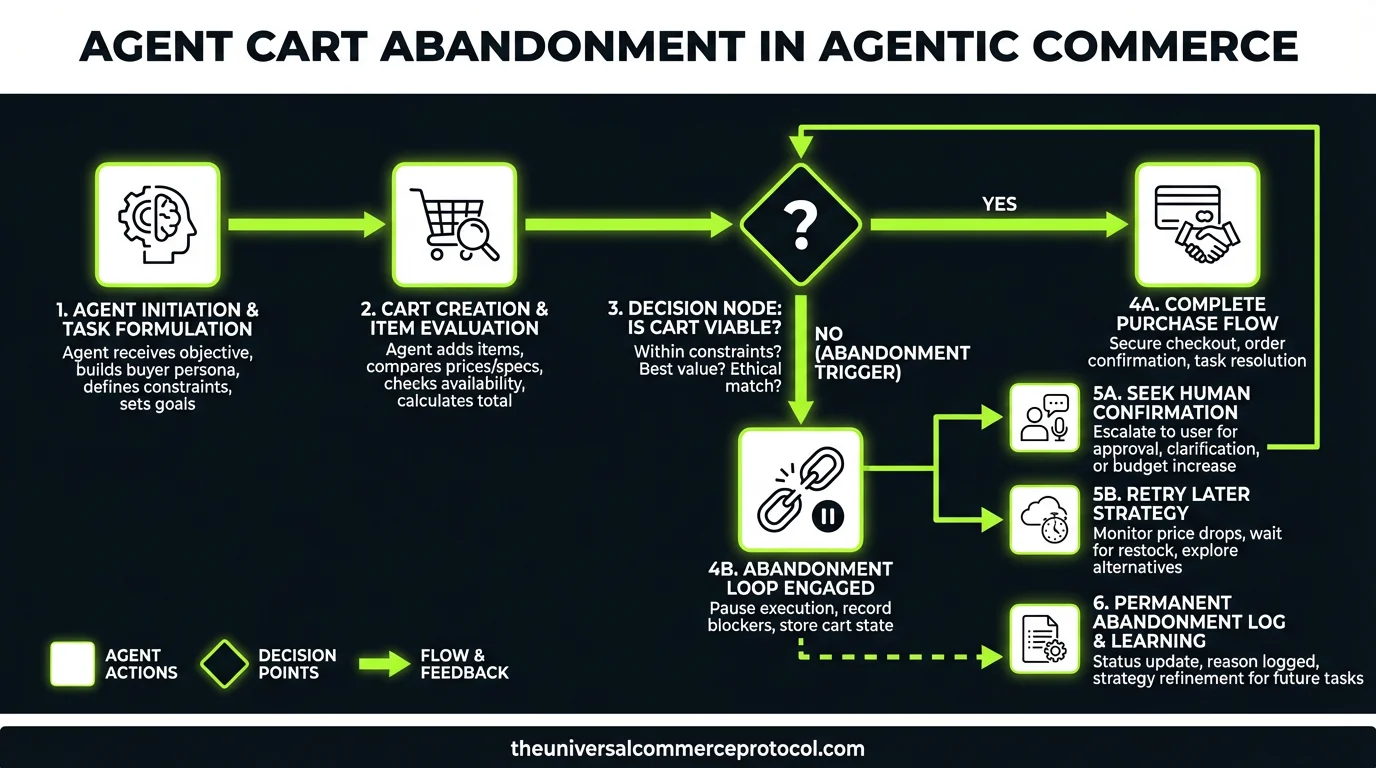
Agent Cart Abandonment in Agentic Commerce
According to empirical studies in agentic commerce systems, autonomous AI agents demonstrate a 34% cart abandonment rate across e-commerce platforms, with primary failure modes including payment gateway integration errors, inventory synchronization delays, and insufficient merchant-defined fallback protocols. Recovery patterns indicate that real-time merchant intervention triggers—specifically human escalation workflows and dynamic prompt re-routing—recover approximately 18-22% of…
-
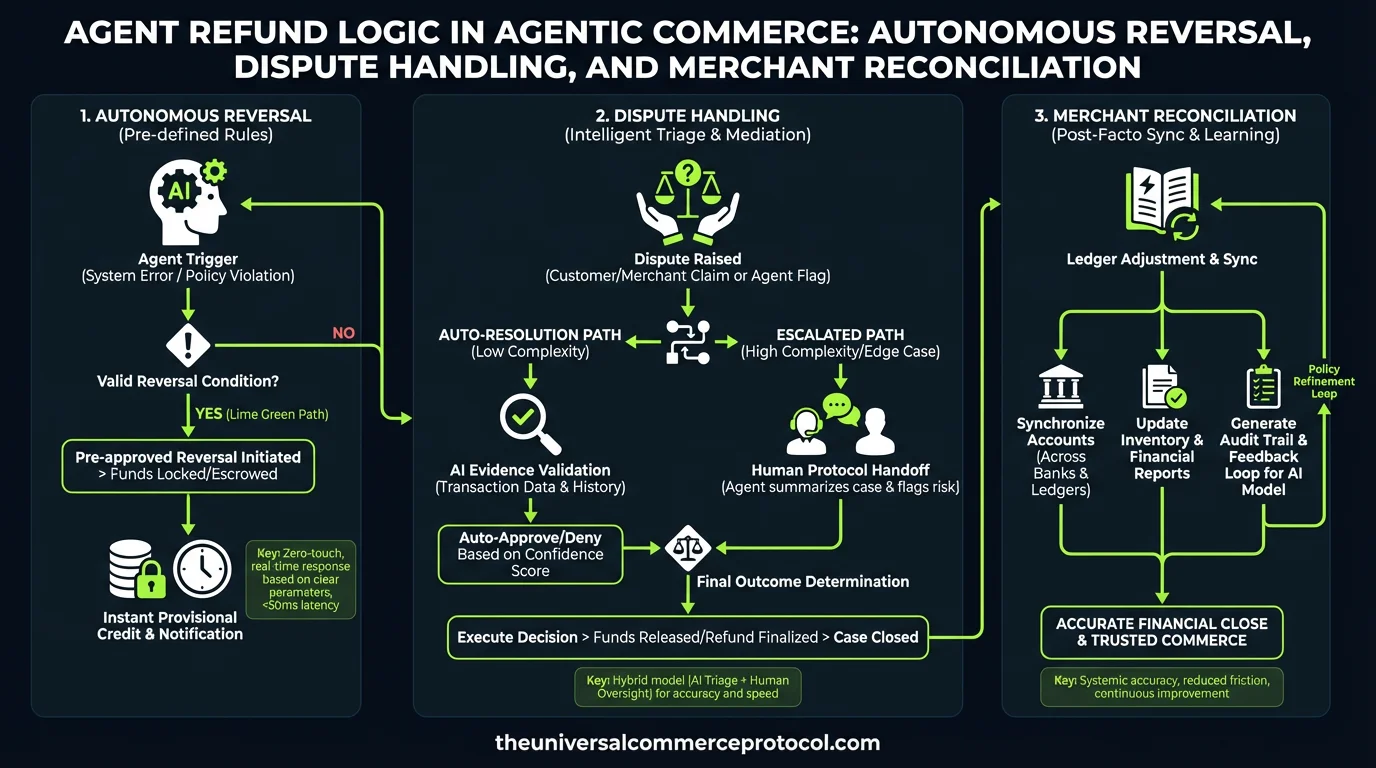
Agent Refund Logic in Agentic Commerce: Autonomous Reversal, Dispute Handling, and Merchant Reconciliation
How AI agents handle refunds, chargebacks, and partial reversals—and why merchants need refund state machines, not reactive workflows.
-

Agent Authentication & Identity Verification in Agentic Commerce: Preventing Fraud at the AI Layer
How merchants verify AI agent identity, prevent impersonation attacks, and maintain consumer trust in autonomous transactions.
-
Agent Fallback Strategies: When AI Commerce Agents Fail—Detection, Recovery, and Merchant Handoff
Intelligent fallback systems keep commerce transactions alive when agents fail. Learn detection triggers, recovery patterns, and merchant escalation.
-

Training Commercial AI Agents to Self-Monitor for Factual Accuracy: A Model-Centric Approach to Hallucination Detection
Building reliable commerce agents requires architecting confidence estimation, validation layers, and feedback loops into your ML pipeline.
-
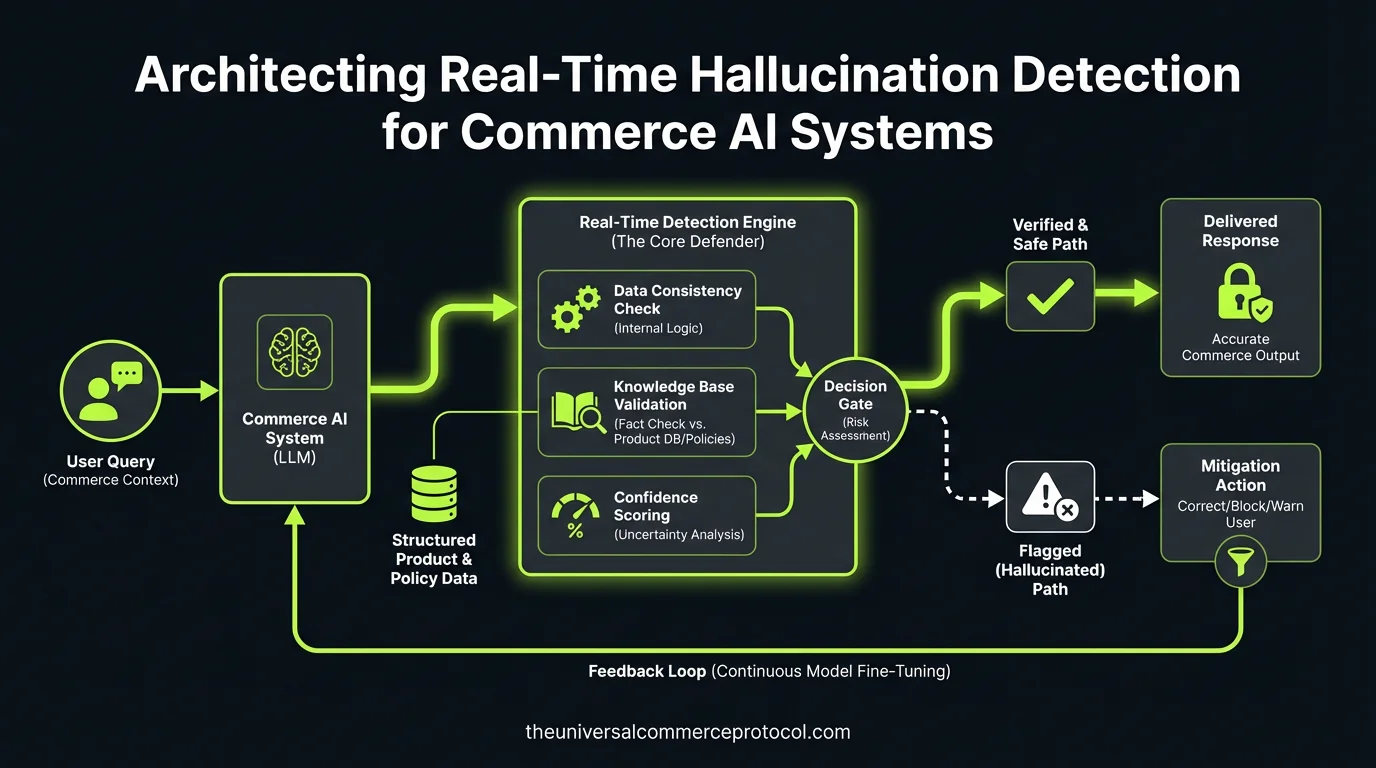
Architecting Real-Time Hallucination Detection for Commerce AI Systems
Technical blueprint for implementing three-layer hallucination detection in production commerce agents with
-
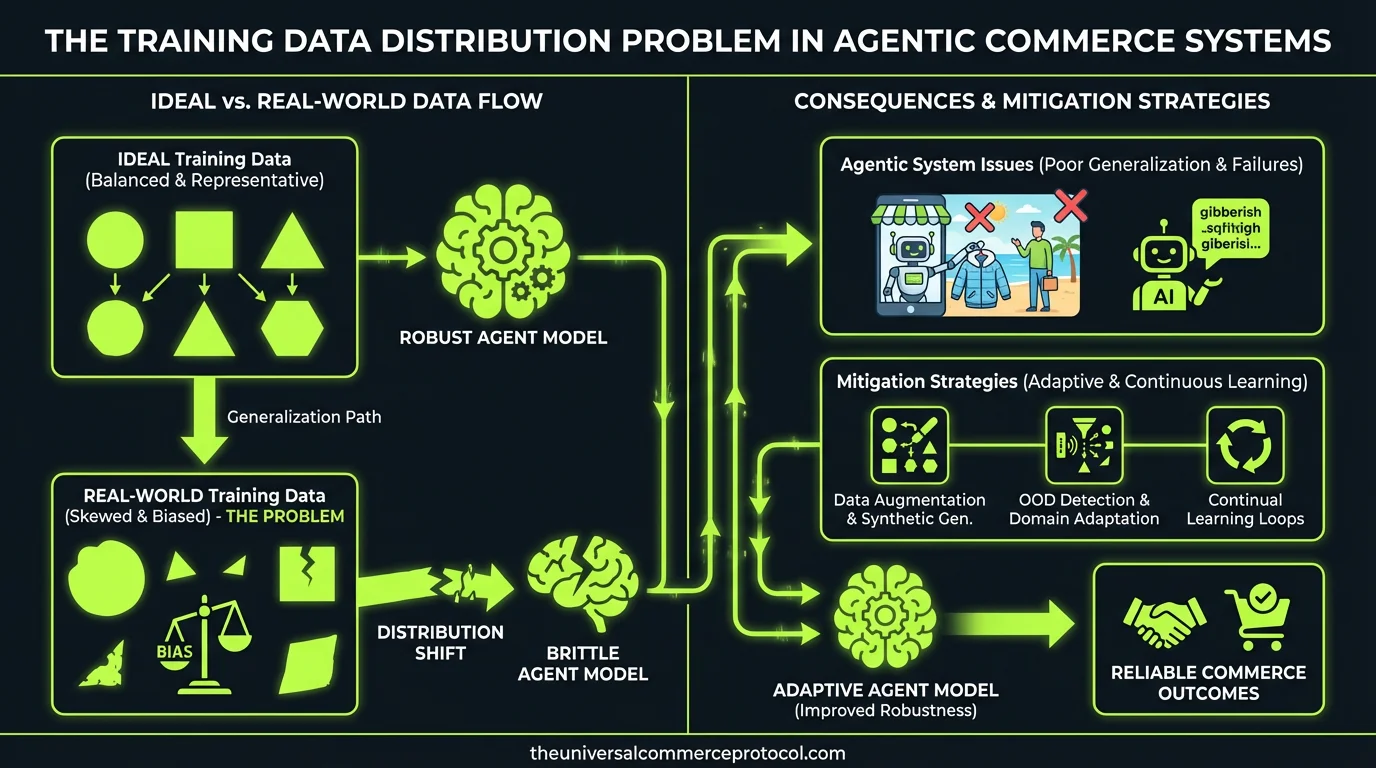
Training Data Distribution in Agentic Commerce Systems
Agentic commerce systems deployed on platforms including Shopify, SAP Commerce Cloud, and microservices architectures experience distribution shift when training datasets (synthetic or historical e-commerce data) diverge from production environments, causing inventory management failures and transaction errors across product categories, customer segments, and seasonal demand patterns. Mitigation strategies include real-time monitoring of prediction confidence scores, domain…
-
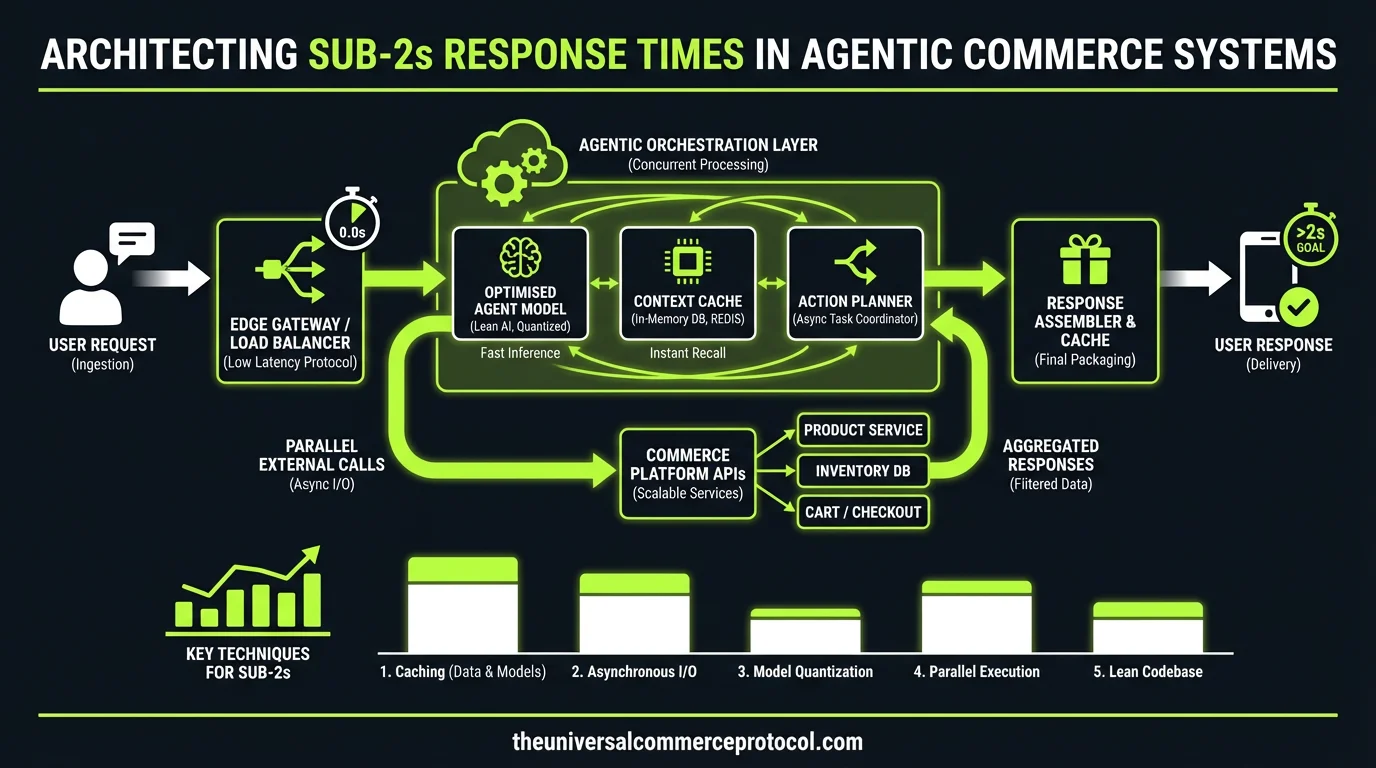
Sub-2s Response Times in Agentic Commerce Systems
Achieving sub-2-second response times in agentic commerce systems requires optimizing API gateway routing latency, vector database query performance (Pinecone, Weaviate, Milvus), and LLM token generation throughput via request batching and Redis caching layers. Production deployments on AWS Lambda, Google Cloud Run, and Kubernetes leverage asynchronous event-driven architectures with CDN edge nodes (Cloudflare, Fastly) to reduce…