Tag: Agentic Commerce
-
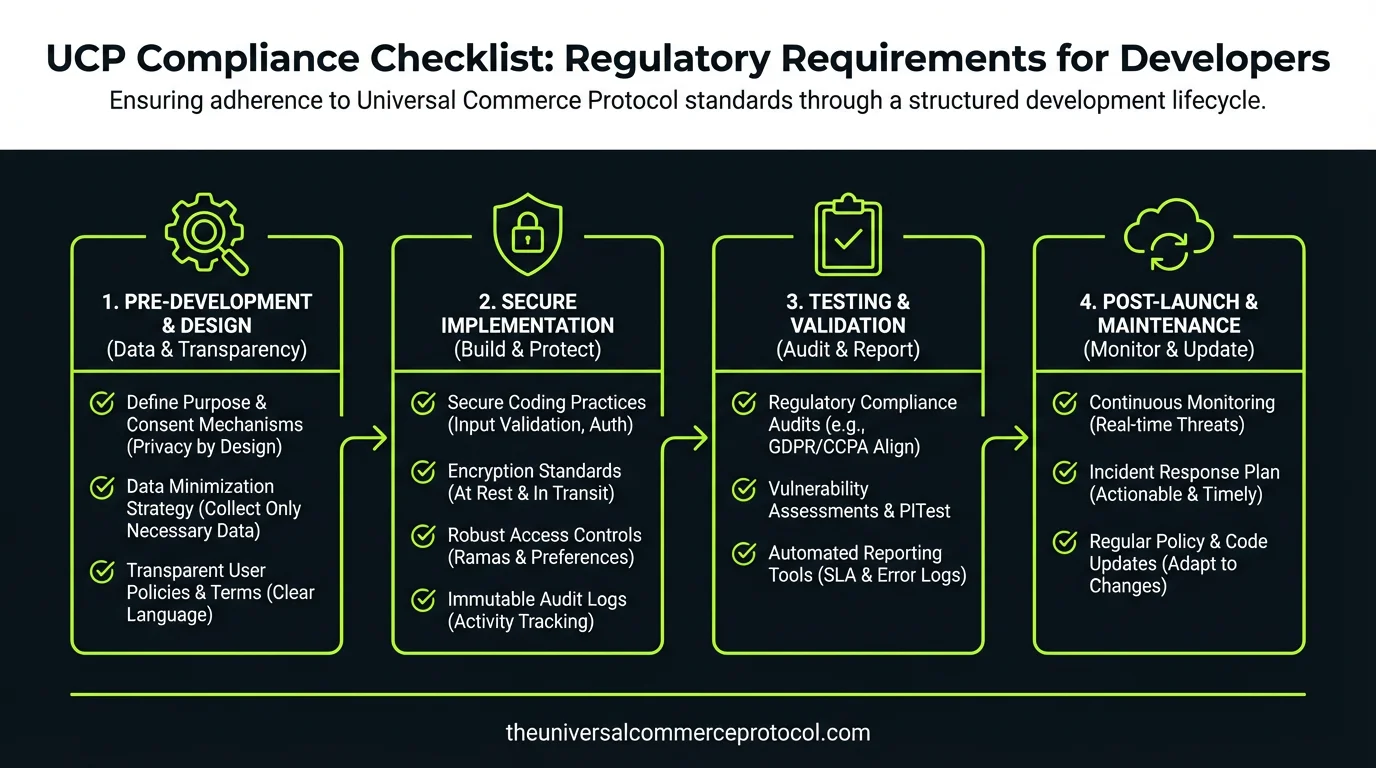
UCP Compliance Checklist: Developer Regulatory Requirements
UCP 500 compliance mandates PCI-DSS v3.2.1 cardholder data protection and GDPR Article 32 encryption, with jurisdiction-specific requirements: NACHA ACH and OFAC in North America, SEPA Direct Debit and PSD2 Open Banking in the EU, RBI Payment Systems Act 1998 in India, and MAS Payment Systems Act 1985 in Singapore. Developers must implement ISO/IEC 27001:2022 certified…
-

UCP Multi-Currency Commerce: Tax & Real-Time Conversion
Unified Commerce Platform (UCP) systems leverage real-time currency conversion across 180+ countries via Stripe, PayPal, and Wise APIs, with automated tax compliance for VAT in EU member states, GST in Canada and Australia, and sales tax across 50 U.S. states and territories. Localized payment integrations—including Alipay and WeChat Pay for APAC regions, SEPA Direct Debit…
-
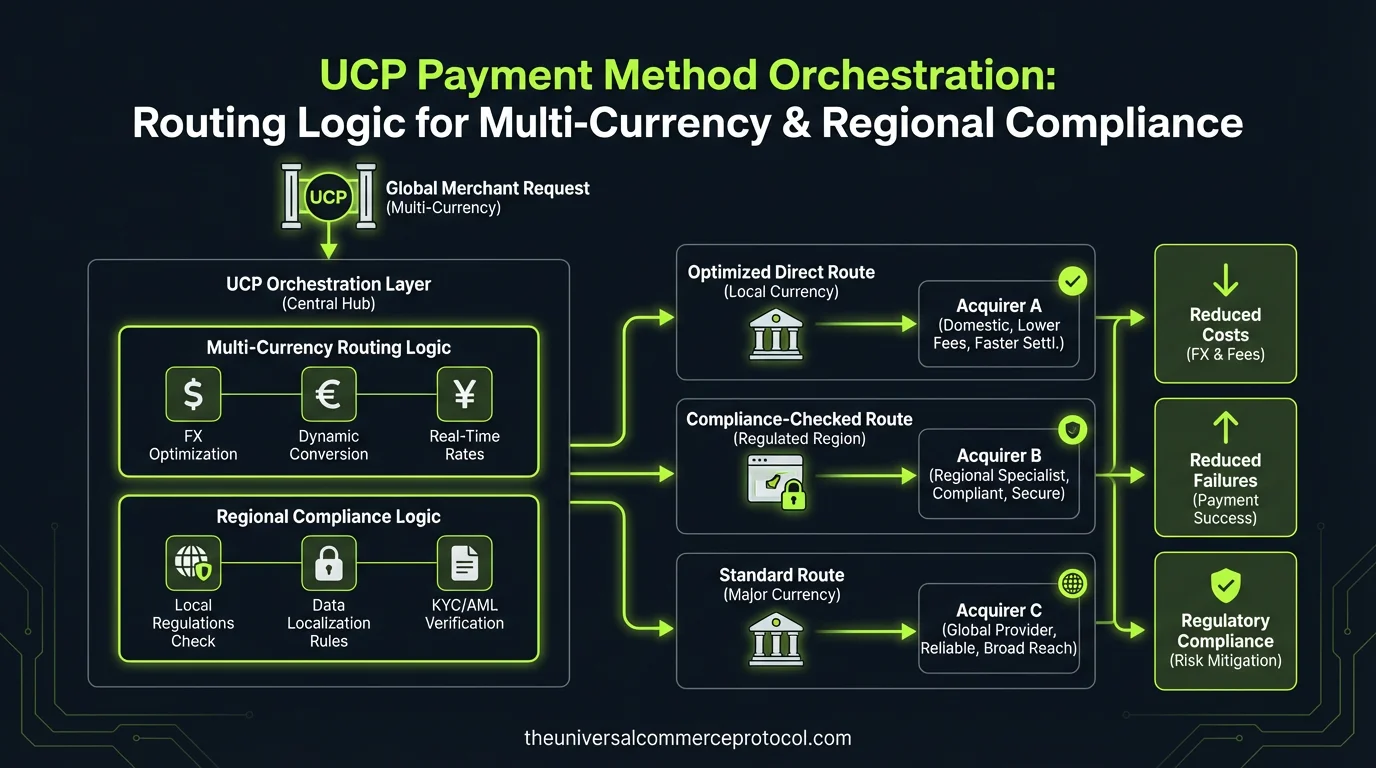
UCP Payment Method Orchestration: Smart Routing
Universal Commerce Platform (UCP) payment method orchestration dynamically routes transactions across Stripe, Adyen, and regional acquiring banks based on currency pairs, PCI-DSS Level 1 compliance certifications, and real-time approval rates across Visa, Mastercard, and American Express networks. The system maintains PSD2 regulatory compliance for EMEA jurisdictions, PCI-DSS certification adherence for North American processors, and APAC…
-

Google’s Universal Commerce Protocol Gains Major Traction
Google’s Universal Commerce Protocol (UCP), launched by Google Commerce in 2024, standardizes AI-driven checkout experiences through structured data interchange between Google Shopping, Google Merchant Center, and e-commerce platforms including Shopify, BigCommerce, and WooCommerce using schema.org markup. The protocol enables generative AI agents to execute transactions with improved accuracy and reduced checkout abandonment across merchant networks.…
-
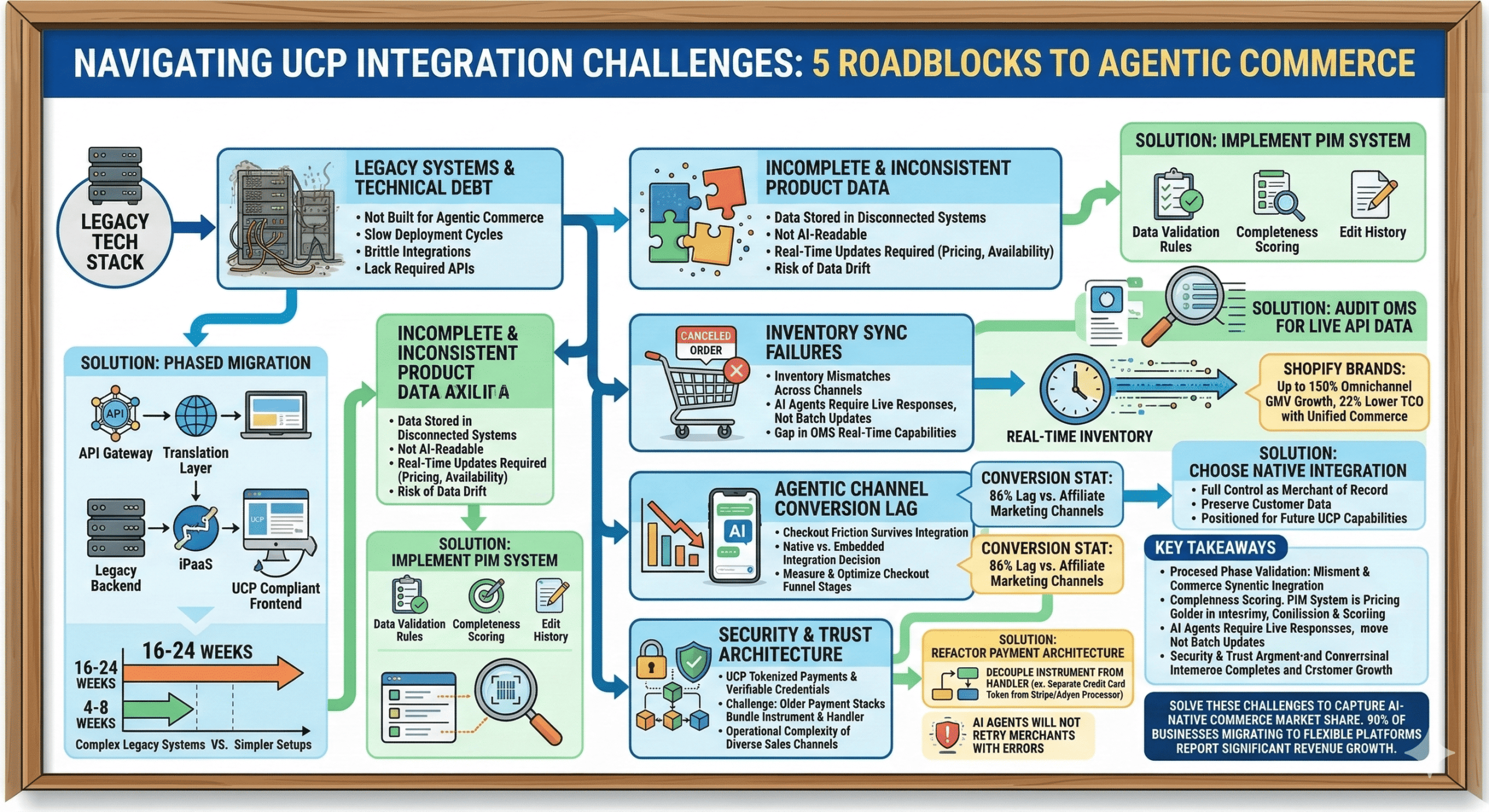
UCP Integration Problems? Top 5 E-Commerce Challenges
Universal Commerce Platform (UCP) integration failures across e-commerce retailers stem from five critical technical barriers: legacy Enterprise Resource Planning (ERP) systems incompatible with REST/GraphQL APIs, unstructured product data feeds unparseable by Large Language Models (LLMs) and AI agents, real-time inventory synchronization latency between Order Management Systems (OMS) and warehouse management software, agentic checkout experiences reducing…
-

UCP Inventory Management & Real-Time Stock Sync
Unified Commerce Platform (UCP) inventory management enables real-time stock synchronization across multiple sales channels through centralized stock deduction logic that executes when autonomous agents process orders. UCP systems maintain inventory visibility by updating SKU-level stock counts instantaneously across e-commerce platforms, point-of-sale (POS) systems, and fulfillment networks, preventing overselling and stockouts in agentic commerce workflows. Multi-channel…
-

UCP Error Handling & Retry Logic for Resilient Commerce
Unified Commerce Platform (UCP) error handling implements HTTP 429 (Rate Limit), 503 (Service Unavailable), and 5xx status codes with exponential backoff retry strategies (2^n algorithm) and RFC 7231 idempotency keys to ensure transactional resilience across payment processing, inventory management, and order fulfillment microservices. Circuit breaker patterns and dead-letter queue architectures prevent cascading failures in distributed…
-

Training Commerce Agents: UCP vs Claude Marketplace
Anthropic’s Unified Commerce Platform (UCP) implements deterministic API-based catalog integration for agent state representation, while Claude Marketplace employs vector embedding retrieval (similar to RAG architectures) for semantic product matching. These architectural approaches produce distinct reward functions and action spaces: UCP supports direct inventory state access for deterministic pricing and fulfillment decisions, whereas Claude Marketplace’s probabilistic…
-
UCP vs Claude MCP: Agent Architecture & Performance
Claude MCP (Model Context Protocol), developed by Anthropic, standardizes server-based tool integration for AI agents through protocol-compliant action spaces and context window partitioning to mitigate prompt injection risks. Unified Context Protocol (UCP) differentiates itself by optimizing stateful transaction handling across heterogeneous e-commerce platforms using unified context vectors that preserve transaction state across platform boundaries. Comparative…
-
UCP vs Claude Marketplace: Commerce Agent Architecture
The Universal Commerce Protocol (UCP) is an open-source integration standard that normalizes REST and GraphQL APIs across Shopify, WooCommerce, and BigCommerce platforms through vendor-agnostic JSON Schema definitions, while Claude Marketplace is Anthropic’s proprietary agent framework built on Claude 3 model variants (Opus, Sonnet, Haiku) accessible via the Anthropic API Console and constitutional AI training. UCP…