Tag: Checkout Session
-
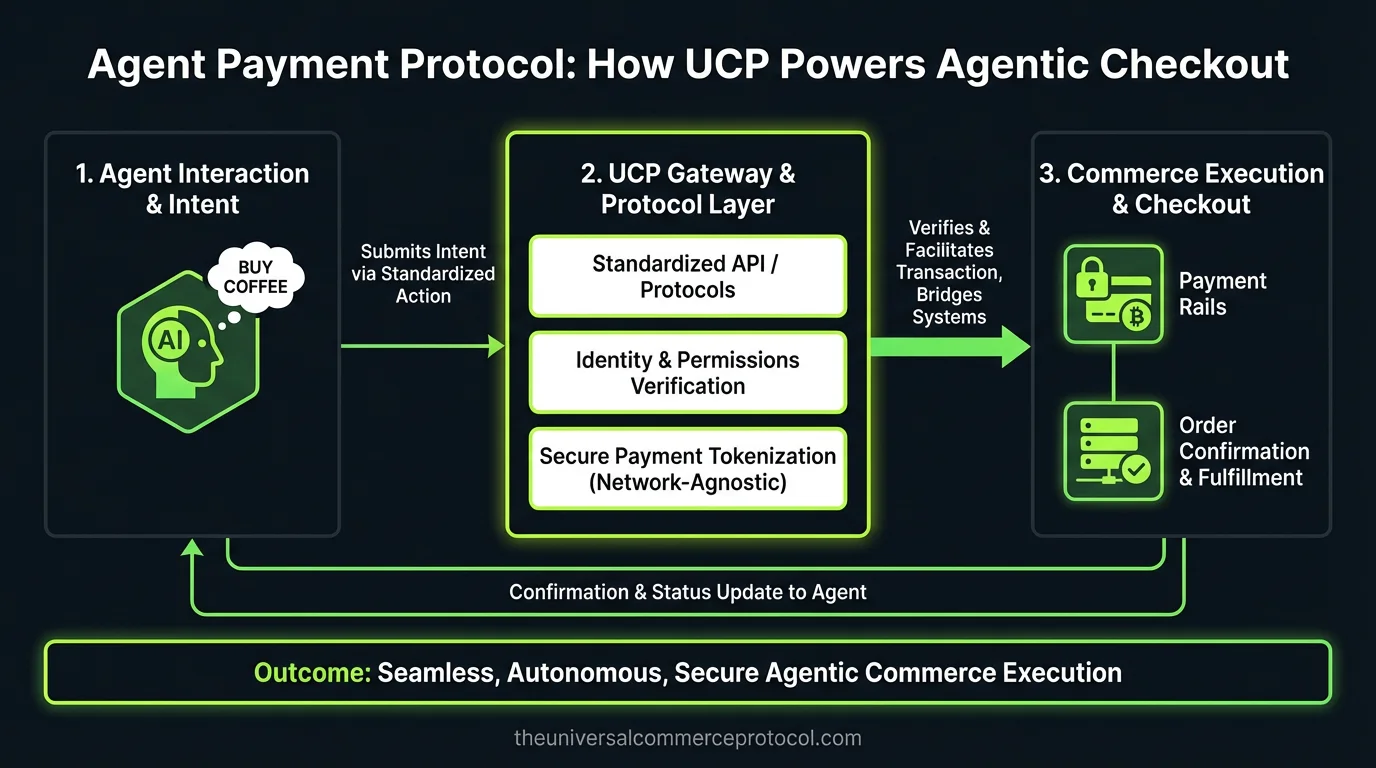
Agent Payment Protocol: How UCP Powers Agentic Checkout
Agent payment protocol enables AI agents to authorize and complete purchases autonomously. Learn how UCP, AP2, and Google Pay work together to power agentic commerce — and what merchants must do to be ready.
-
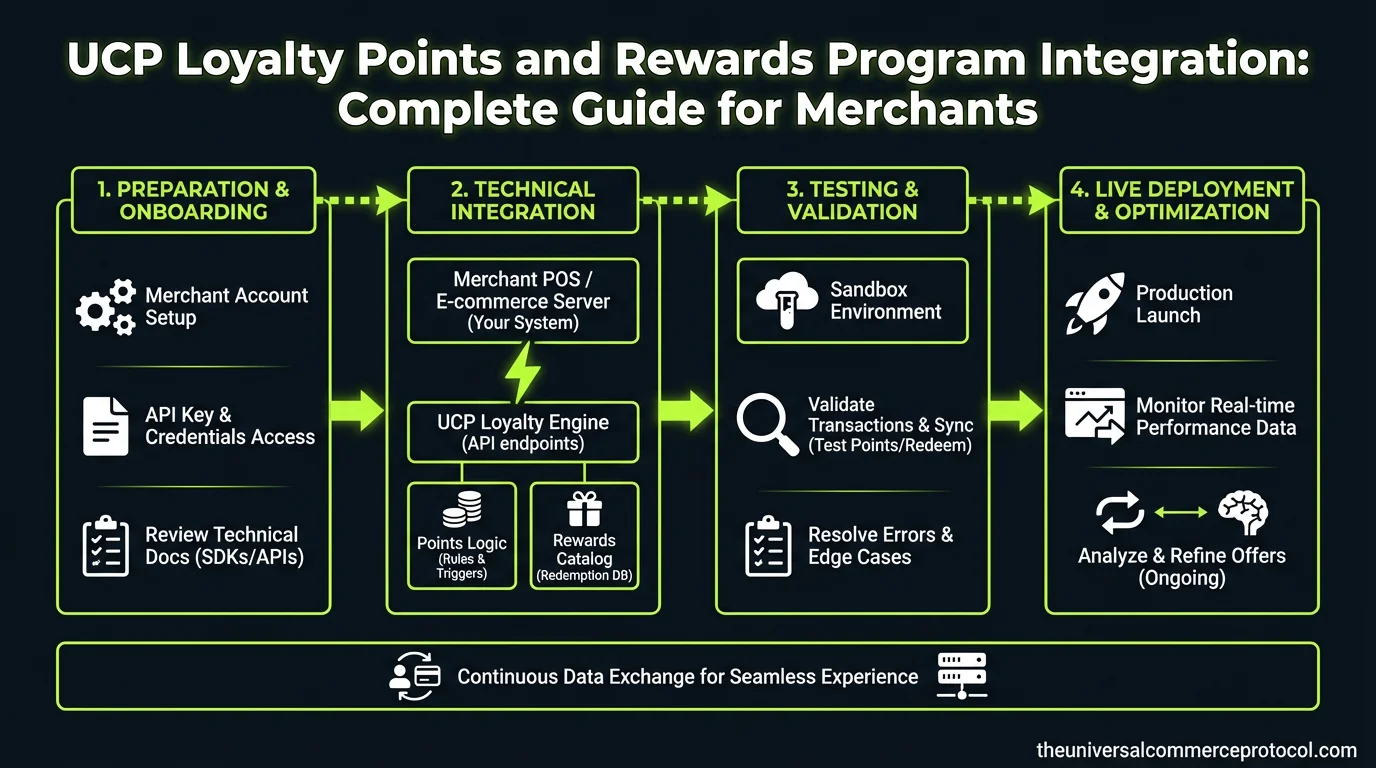
UCP Loyalty Points Integration: Complete Guide
Universal Commerce Protocol (UCP) standardizes loyalty points integration across omnichannel retail channels—including e-commerce platforms, point-of-sale (POS) systems, and mobile commerce applications—enabling real-time point accumulation, PCI DSS compliance for redemption workflows, and bidirectional customer data synchronization. UCP-compliant system integrations with enterprise CRM solutions such as Salesforce Commerce Cloud, HubSpot, and Microsoft Dynamics 365 enable centralized loyalty…
-

OpenAI Instant Checkout: How ChatGPT’s Purchase Flow Works
OpenAI Instant Checkout enables frictionless transactions directly within ChatGPT conversations using the Universal Commerce Protocol. This technical walkthrough covers merchant integration, payment routing, and real-world deployment patterns in 2026’s agentic commerce ecosystem.
-
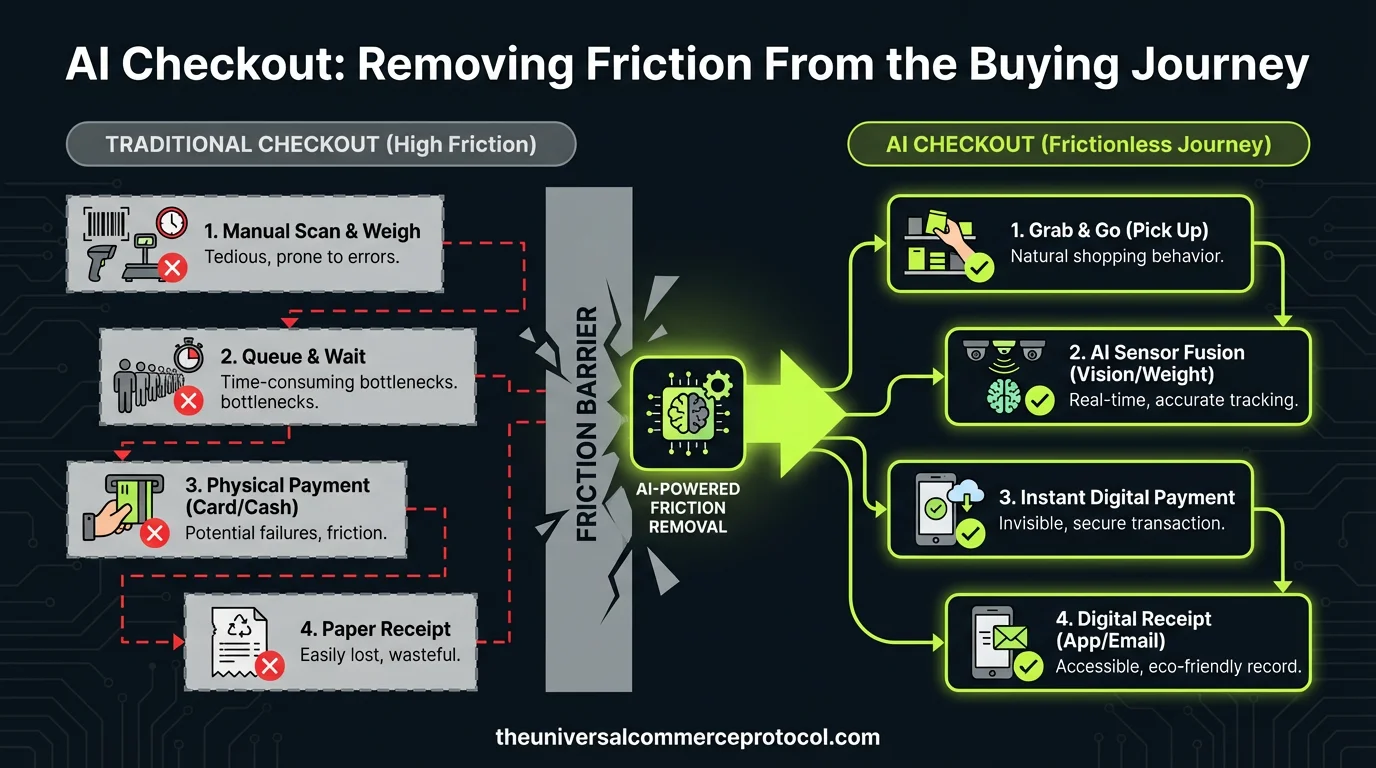
AI Checkout: Removing Friction From the Buying Journey
AI-powered checkout systems are transforming e-commerce by automating payment processing, predicting customer intent, and reducing cart abandonment rates by up to 40%. Learn how intelligent checkout technologies integrate with the Universal Commerce Protocol to create seamless, conversion-optimized purchasing experiences.
-
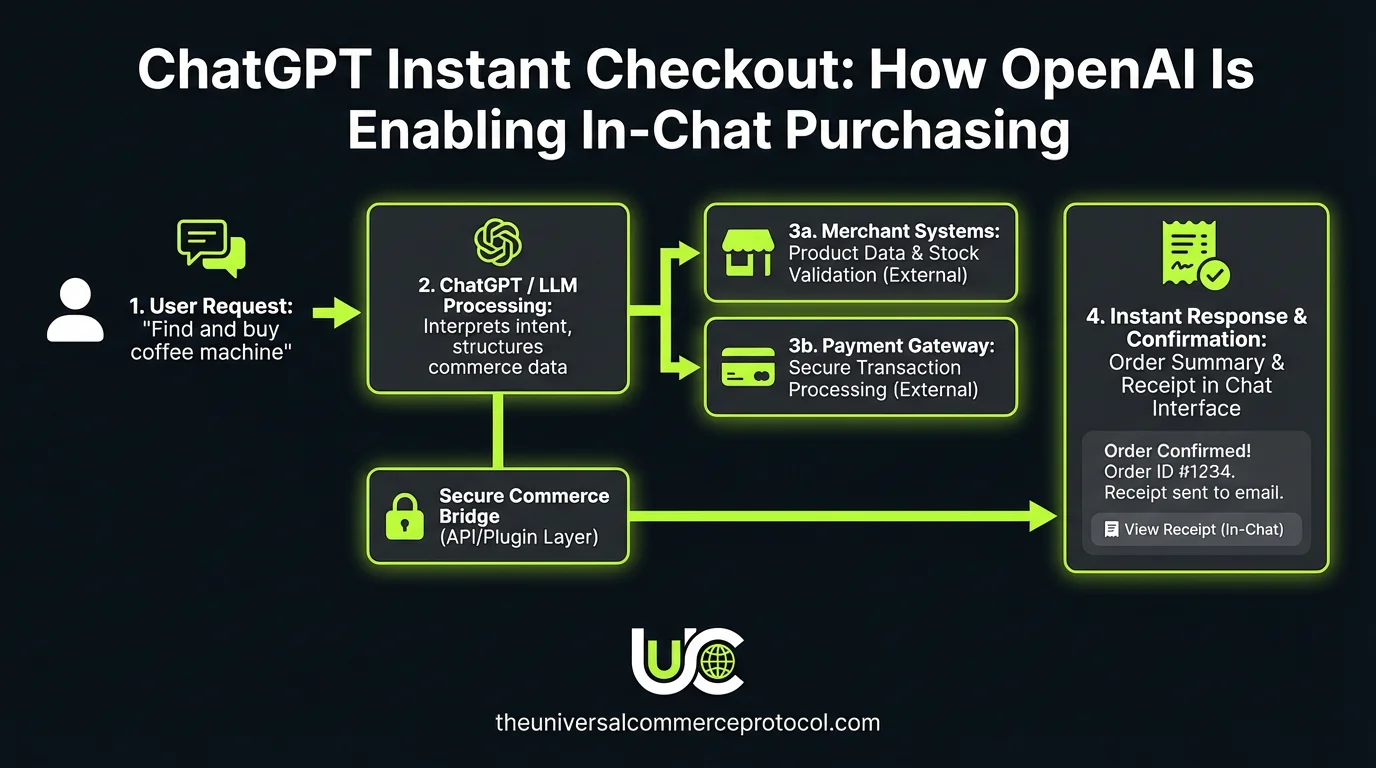
ChatGPT Instant Checkout: How OpenAI Is Enabling In-Chat Purchasing
OpenAI’s ChatGPT is integrating direct purchasing capabilities into conversations, allowing users to complete transactions without leaving the chat interface. This shift toward agentic commerce represents a critical evolution in how the Universal Commerce Protocol (UCP) standardizes frictionless, multi-channel shopping experiences.
-
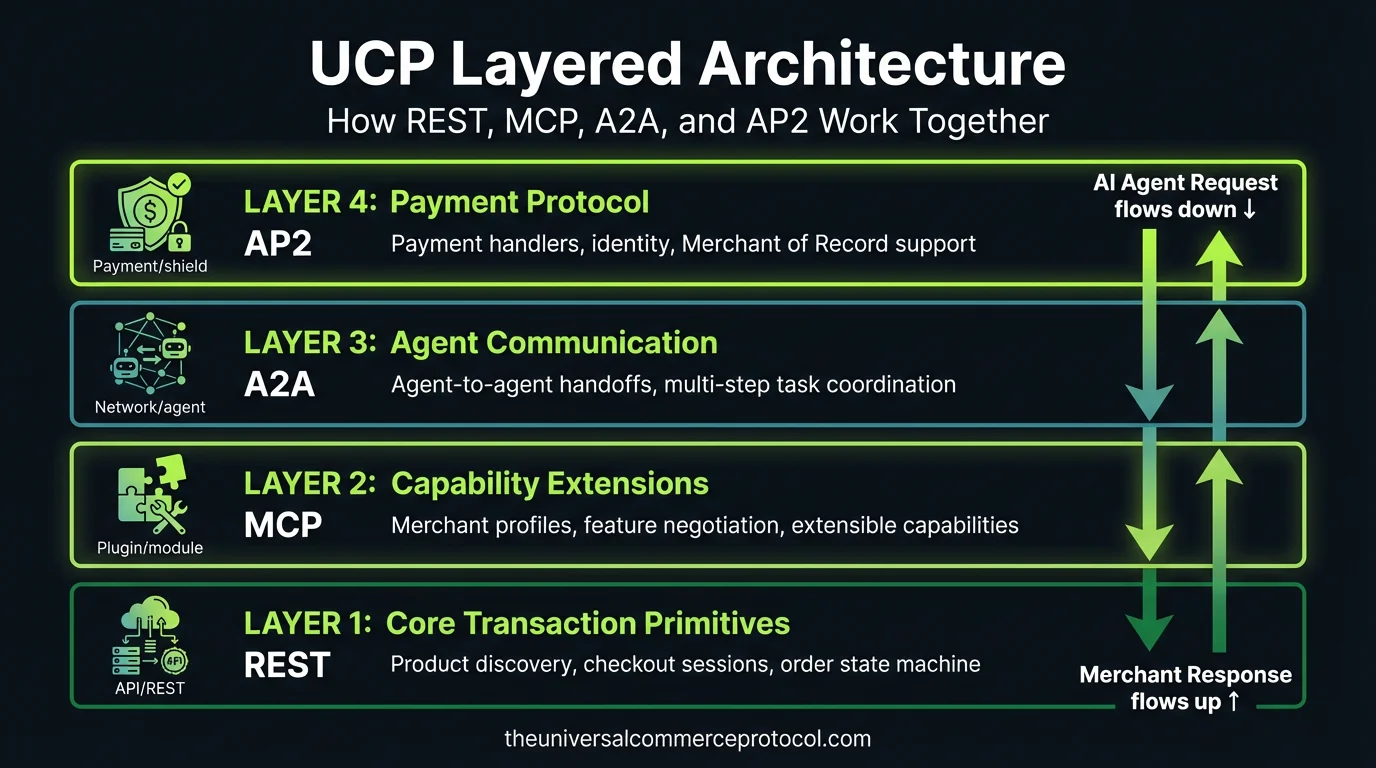
UCP’s Layered Architecture Explained: How REST, MCP, A2A, and AP2 Work Together
UCP’s layered architecture separates core transaction primitives from capabilities, extensions, and payment handlers — enabling the protocol to scale across millions of merchants and evolve without breaking existing integrations. This guide explains each layer, how merchant profiles and capability negotiation work, what the checkout state machine does, and how REST, MCP, A2A, and AP2 connect…
-
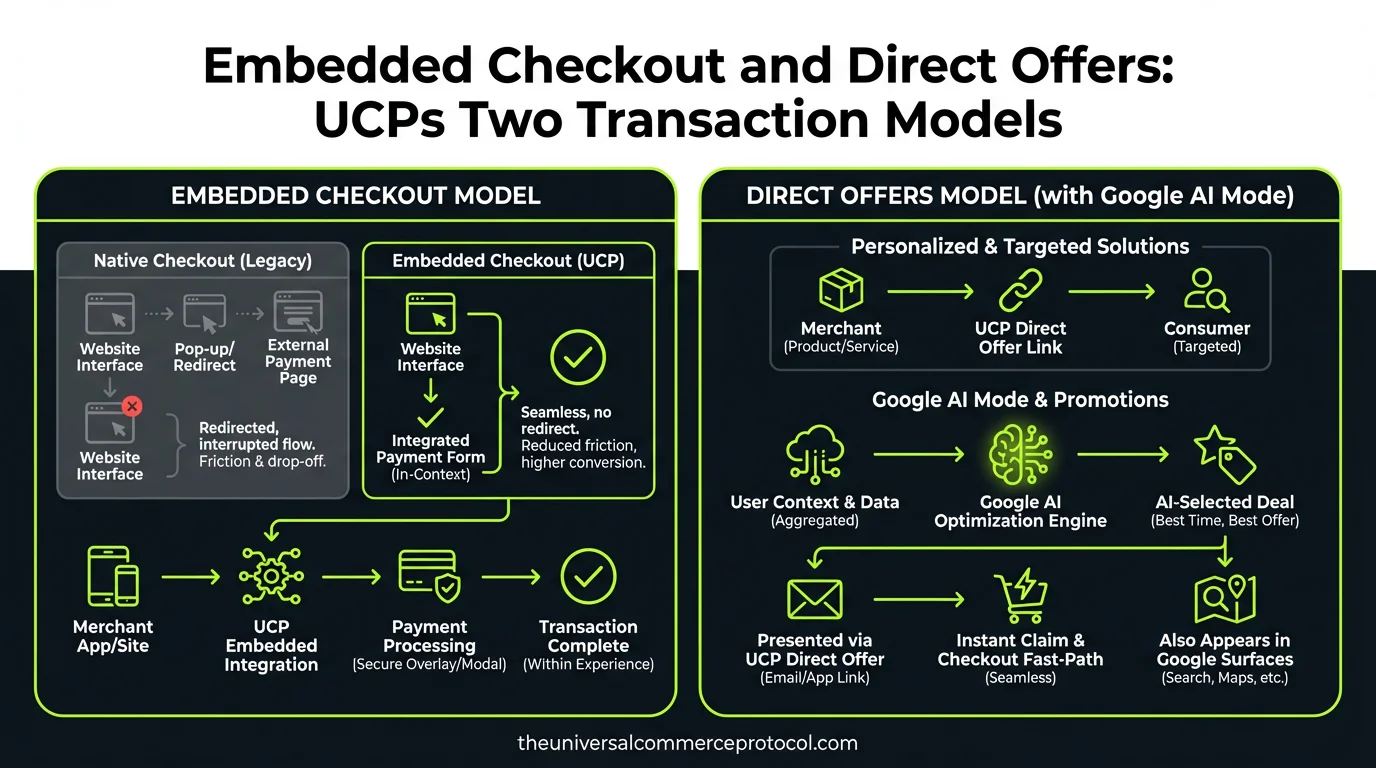
Embedded Checkout & Direct Offers: UCP’s Two Transaction Models Explained
Technical comparison of UCP’s Native Checkout and Embedded Checkout transaction models, plus how Google’s Direct Offers pilot enables exclusive in-conversation promotions within AI Mode.
-
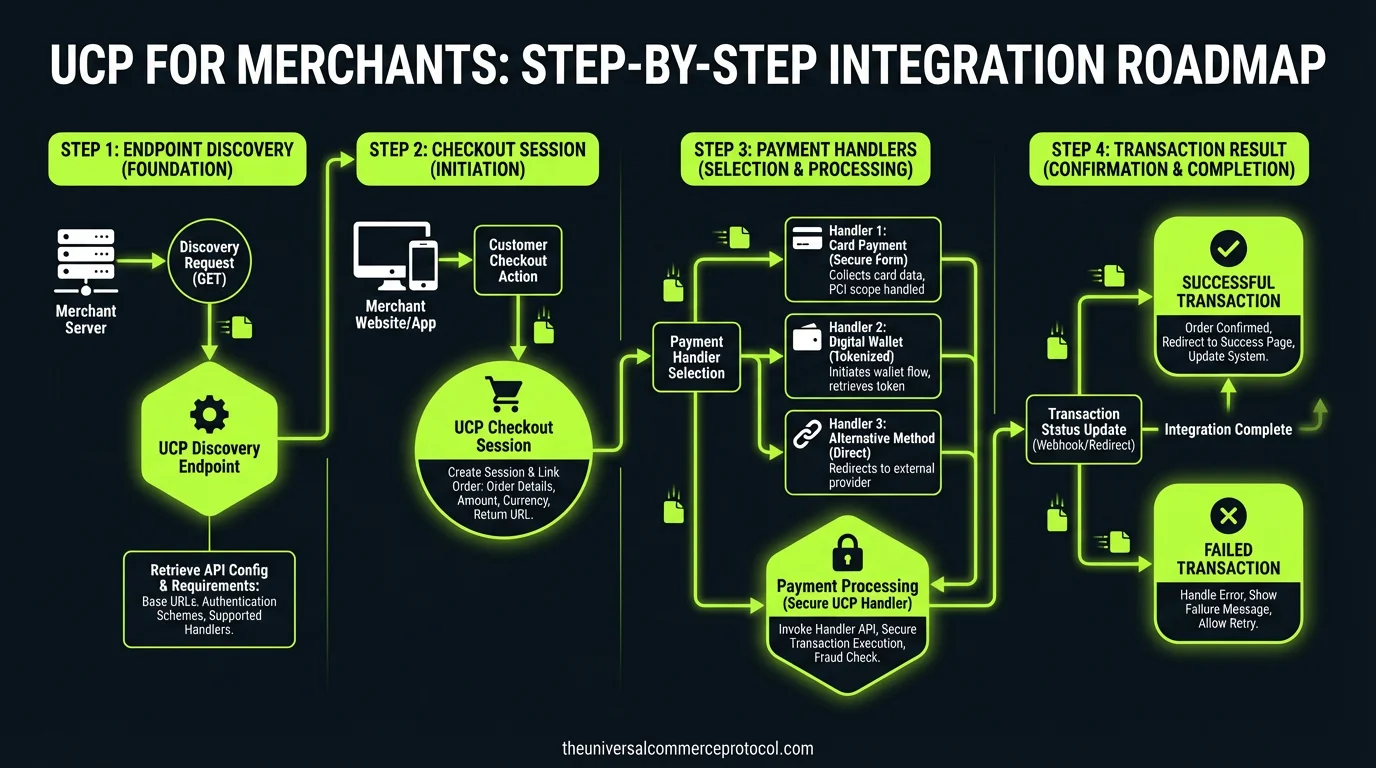
UCP for Merchants: A Step-by-Step Integration Roadmap from Product Feed to Native Checkout
Complete step-by-step guide for merchants to integrate with the Universal Commerce Protocol — from configuring the discovery endpoint and product APIs to implementing checkout sessions and payment handlers.
-
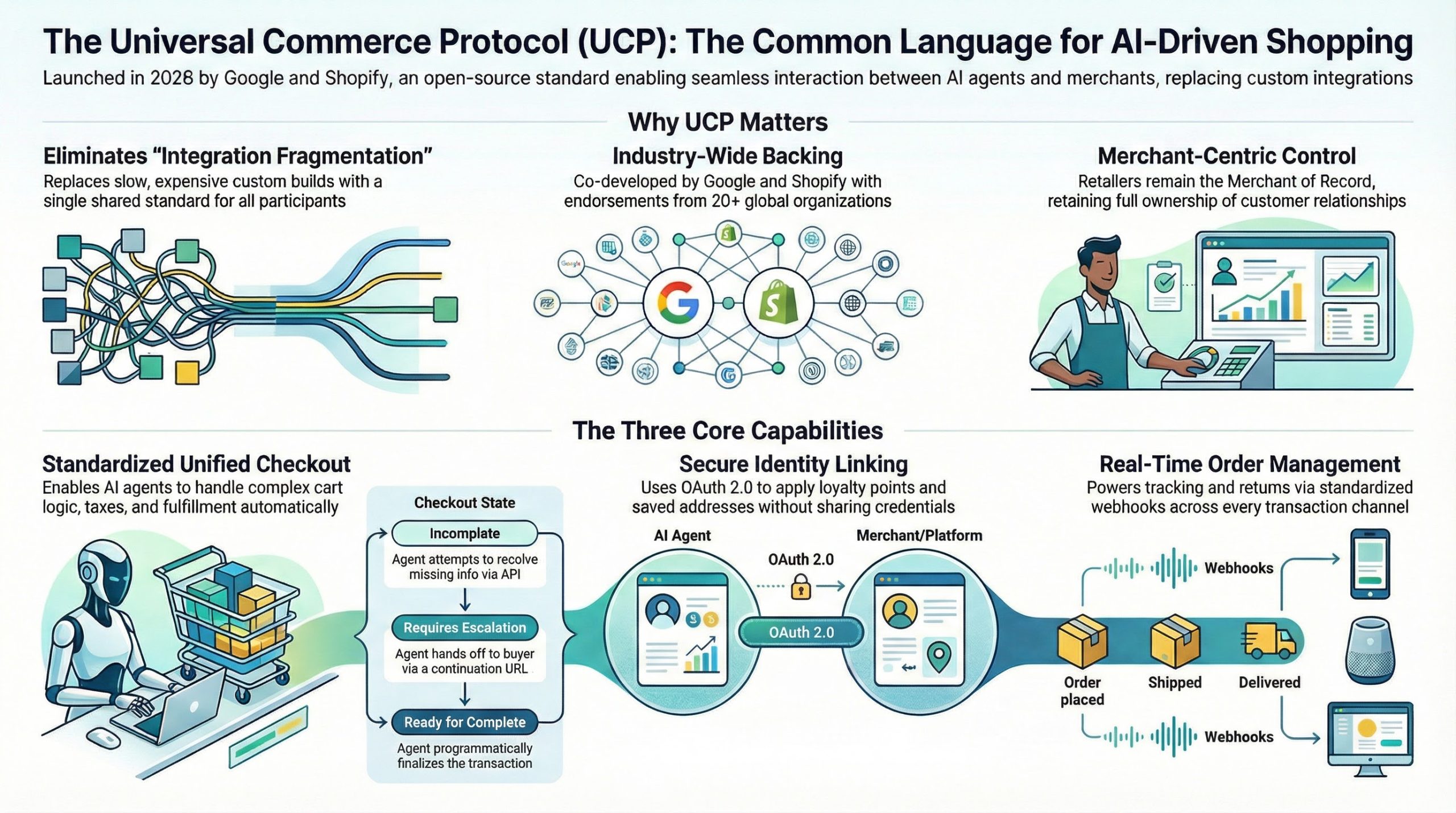
Universal Commerce Protocol (UCP): Google’s Open Standard
The Universal Commerce Protocol (UCP) is an open-source standard co-developed by Google and Shopify, announced on January 11, 2026, establishing a unified technical framework for agentic AI commerce transactions. UCP’s architecture comprises three primary functional modules: Checkout (payment processing), Identity Linking (cross-platform user authentication), and Order Management (transaction fulfillment), designed to enable interoperability across merchant…