Tag: Payment Handler
-
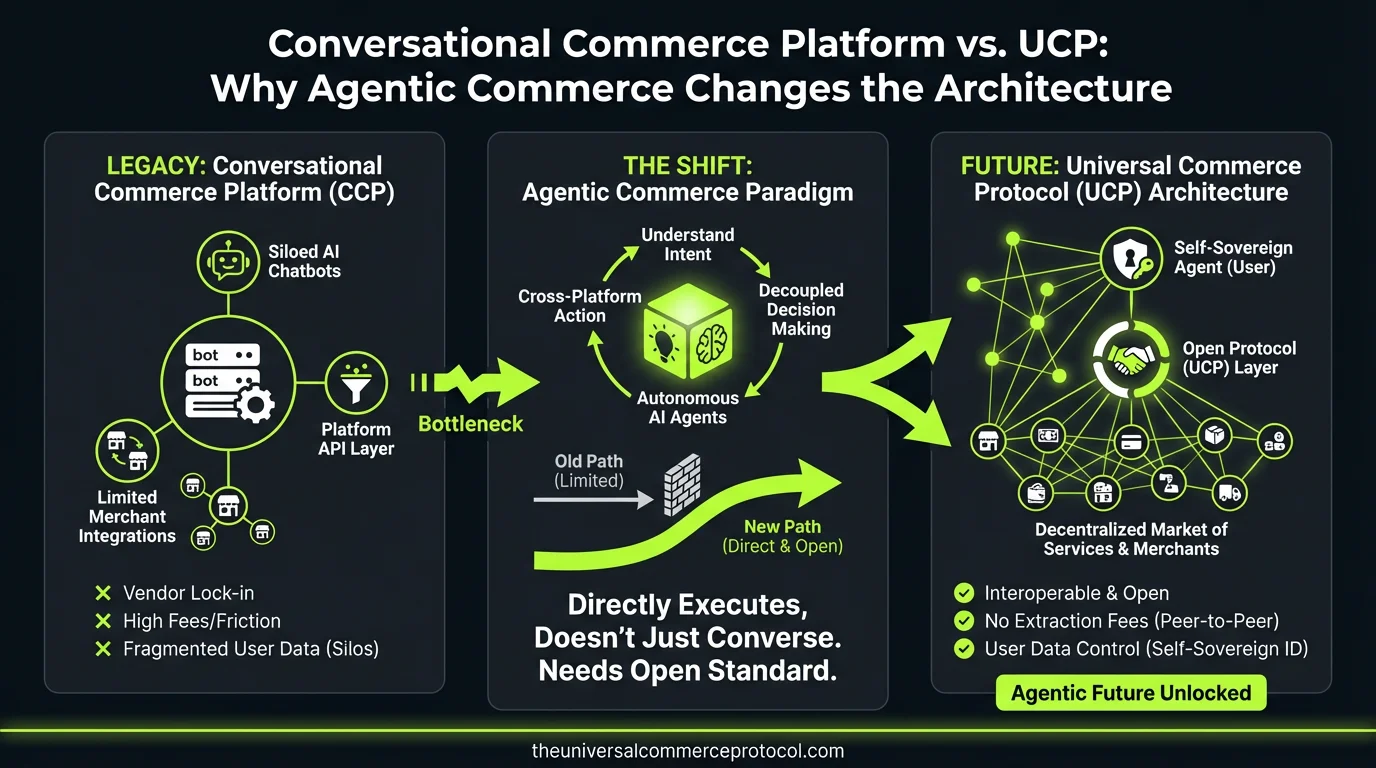
Conversational Commerce Platform vs. UCP: Why Agentic Commerce Changes the Architecture
Traditional conversational commerce platforms add a chatbot layer on top of checkout. UCP makes any AI surface — Gemini, ChatGPT, Alexa — a native commerce platform. Here’s what the architectural shift means for merchants.
-
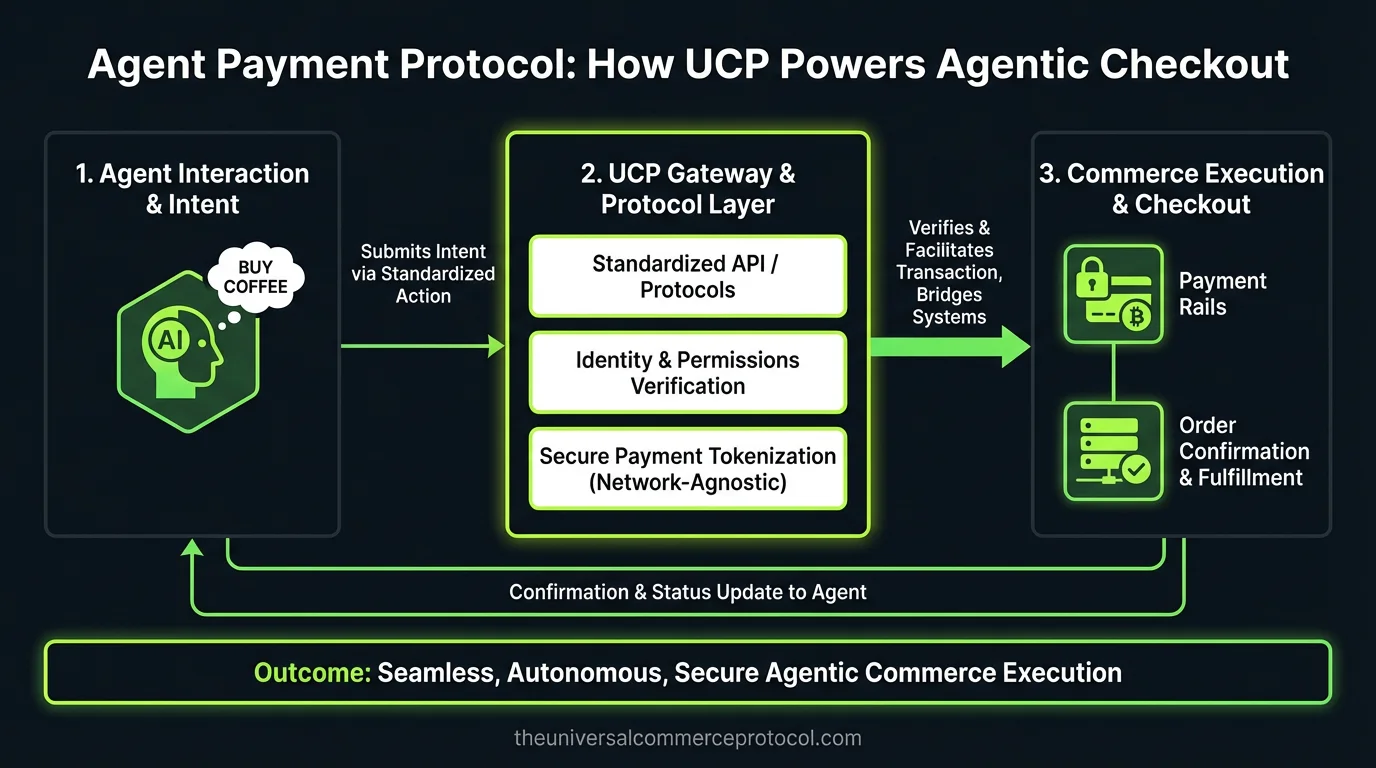
Agent Payment Protocol: How UCP Powers Agentic Checkout
Agent payment protocol enables AI agents to authorize and complete purchases autonomously. Learn how UCP, AP2, and Google Pay work together to power agentic commerce — and what merchants must do to be ready.
-
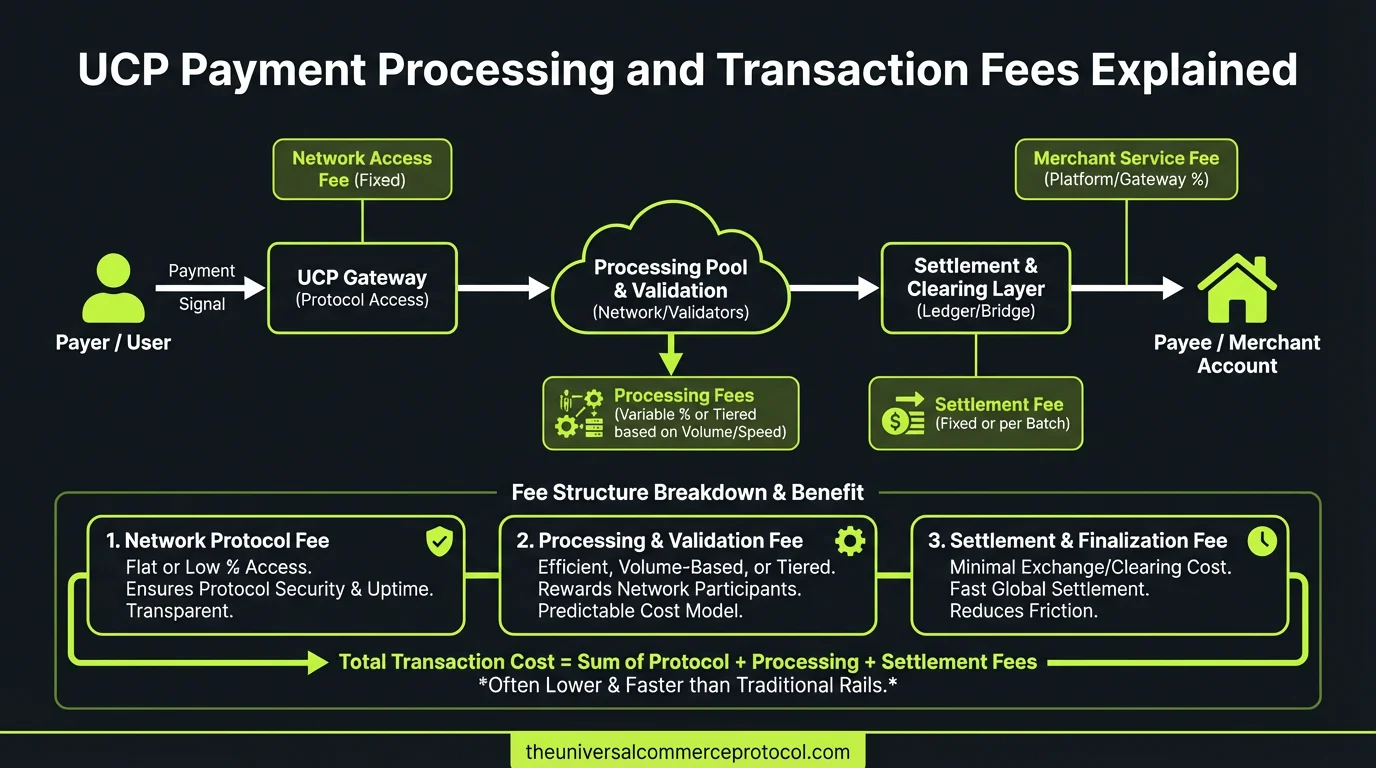
UCP Payment Processing & Transaction Fees Explained
Universal Commerce Protocol (UCP) standardizes payment processing with transaction fees ranging from 1.5–3.5% based on merchant category codes (MCC) and annual transaction volume, offering ACH or wire settlement within 24–48 hours. Platforms including Stripe Connect, PayPal Commerce Platform, and Adyen Enterprise implement UCP-compliant tokenization with PCI DSS Level 1 certification to reduce fraud and chargebacks.…
-
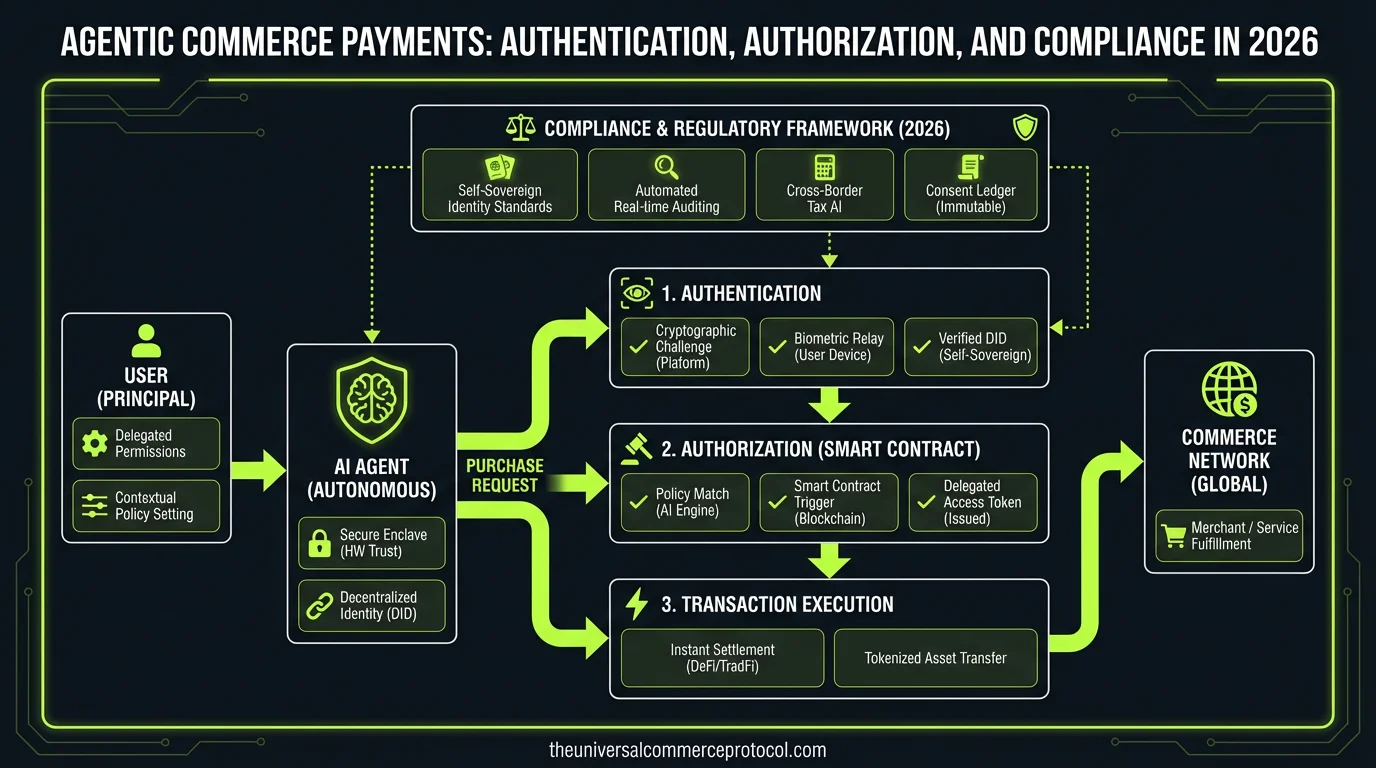
Agentic Commerce Payments: Authentication, Authorization, and Compliance in 2026
Agentic commerce payments require multi-layered security frameworks combining cryptographic authentication, real-time authorization protocols, and regulatory compliance mechanisms. As autonomous agents execute transactions at scale in 2026, enterprises must implement Zero Trust architectures and continuous compliance monitoring across payment ecosystems.
-
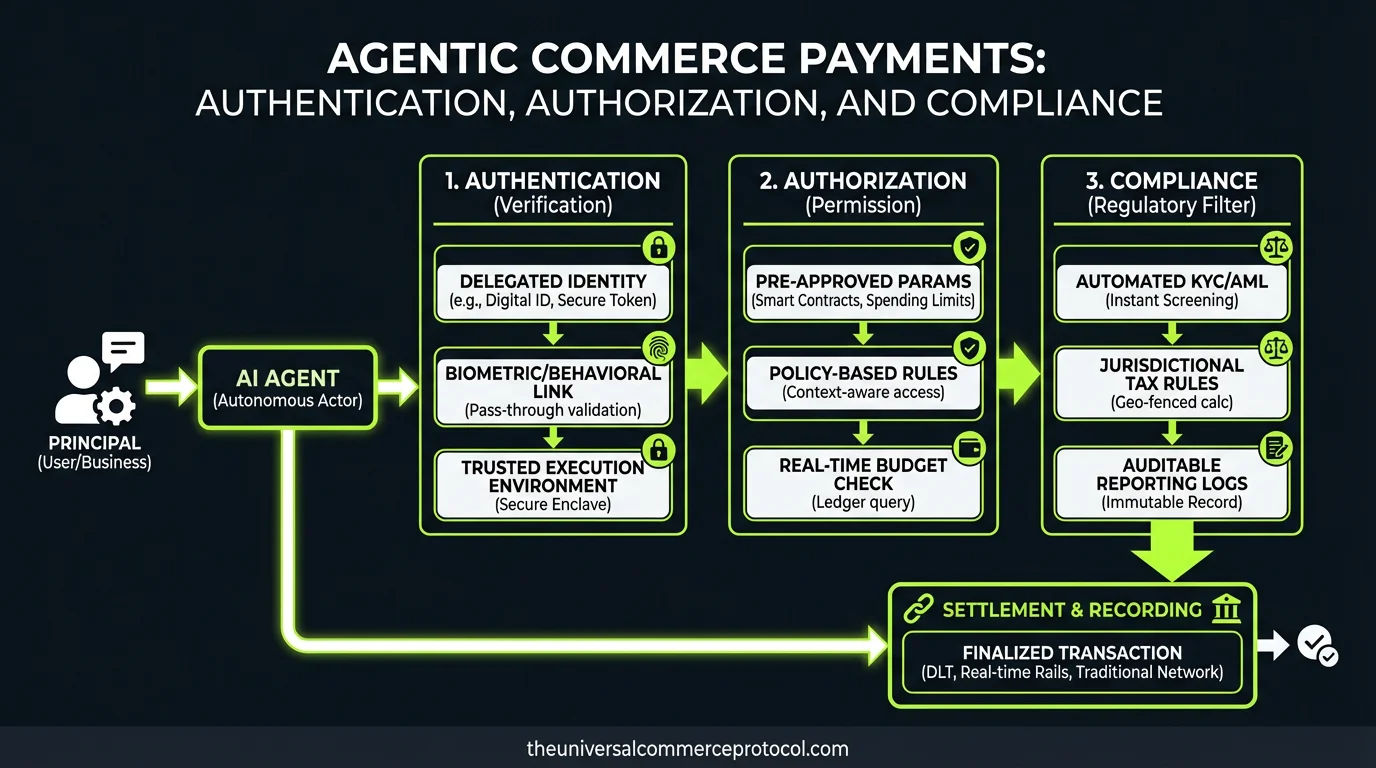
Agentic Commerce Payments: Authentication, Authorization, and Compliance
Agentic commerce payments require sophisticated authentication, authorization, and compliance frameworks to enable autonomous transactions while maintaining security and regulatory adherence. This guide explores the critical security layers and protocols that protect autonomous payment flows across distributed commerce networks.
-
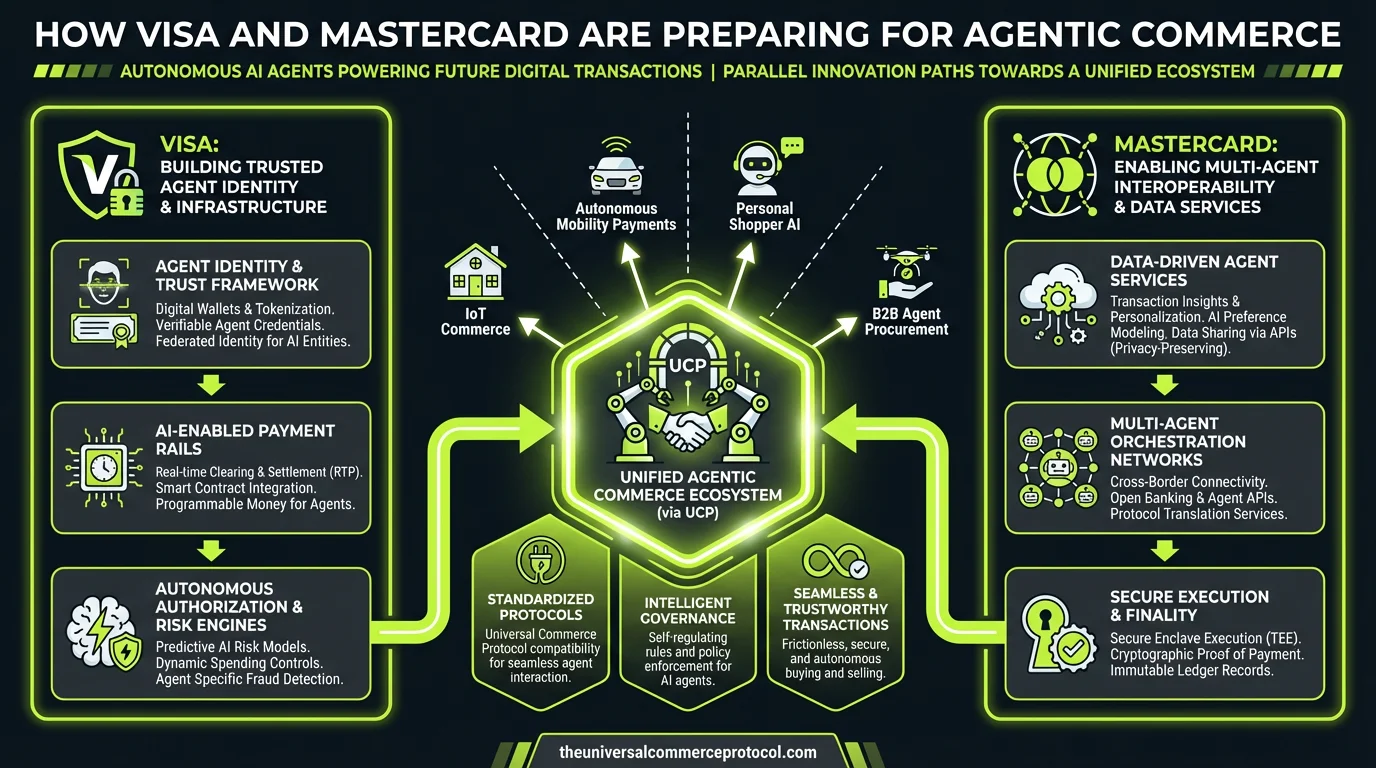
How Visa and Mastercard Are Preparing for Agentic Commerce
Visa and Mastercard are fundamentally restructuring their tokenization frameworks and liability models to accommodate autonomous agents making independent purchasing decisions. Their strategic pivot toward agentic commerce involves new authentication protocols, distributed authorization systems, and redefined chargeback mechanisms that shift risk allocation across the payment ecosystem.
-
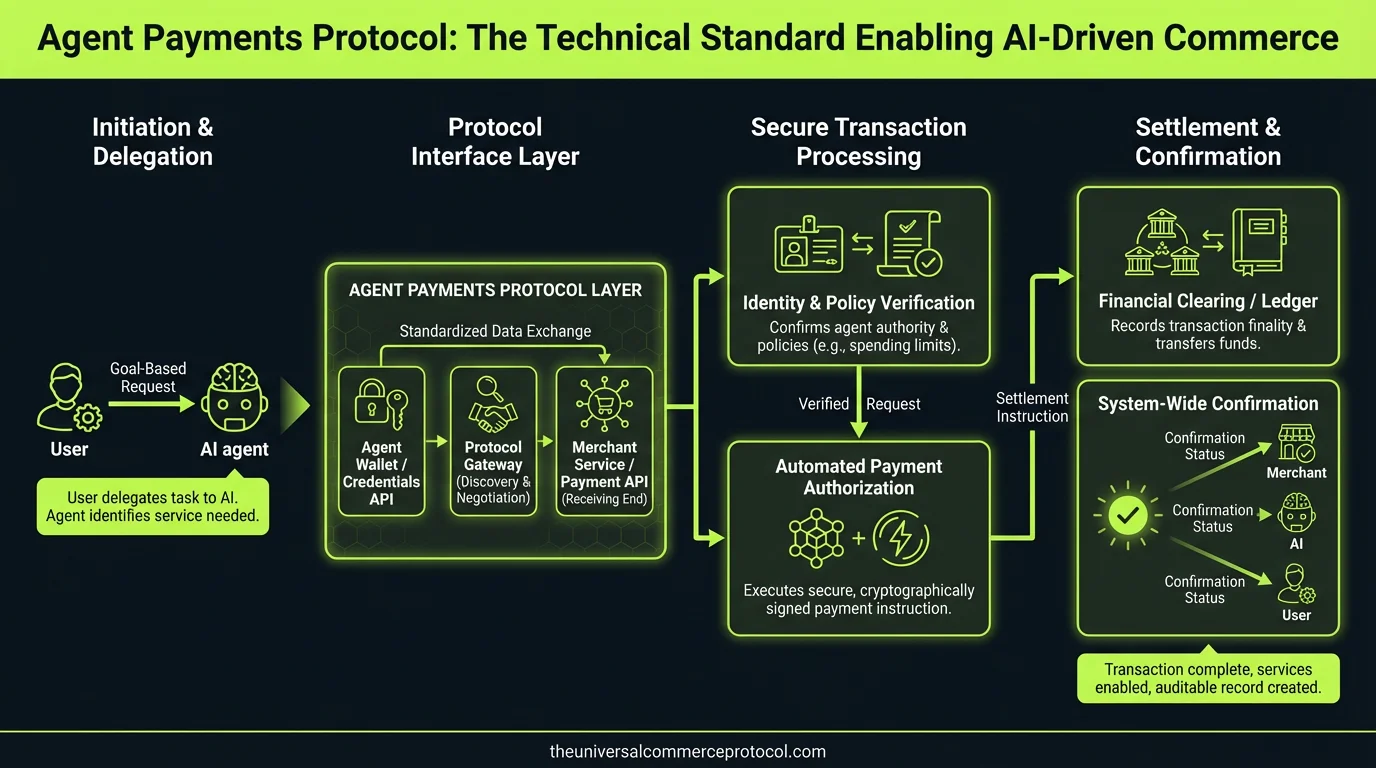
Agent Payments Protocol: The Technical Standard Enabling AI-Driven Commerce
The Agent Payments Protocol represents a critical layer in the Universal Commerce Protocol stack, enabling autonomous AI agents to execute transactions with cryptographic verification and settlement finality. This technical deep dive explores how UCP integrates payment standards, merchant acquiring, and agent authorization to create a trustless commerce infrastructure.
-
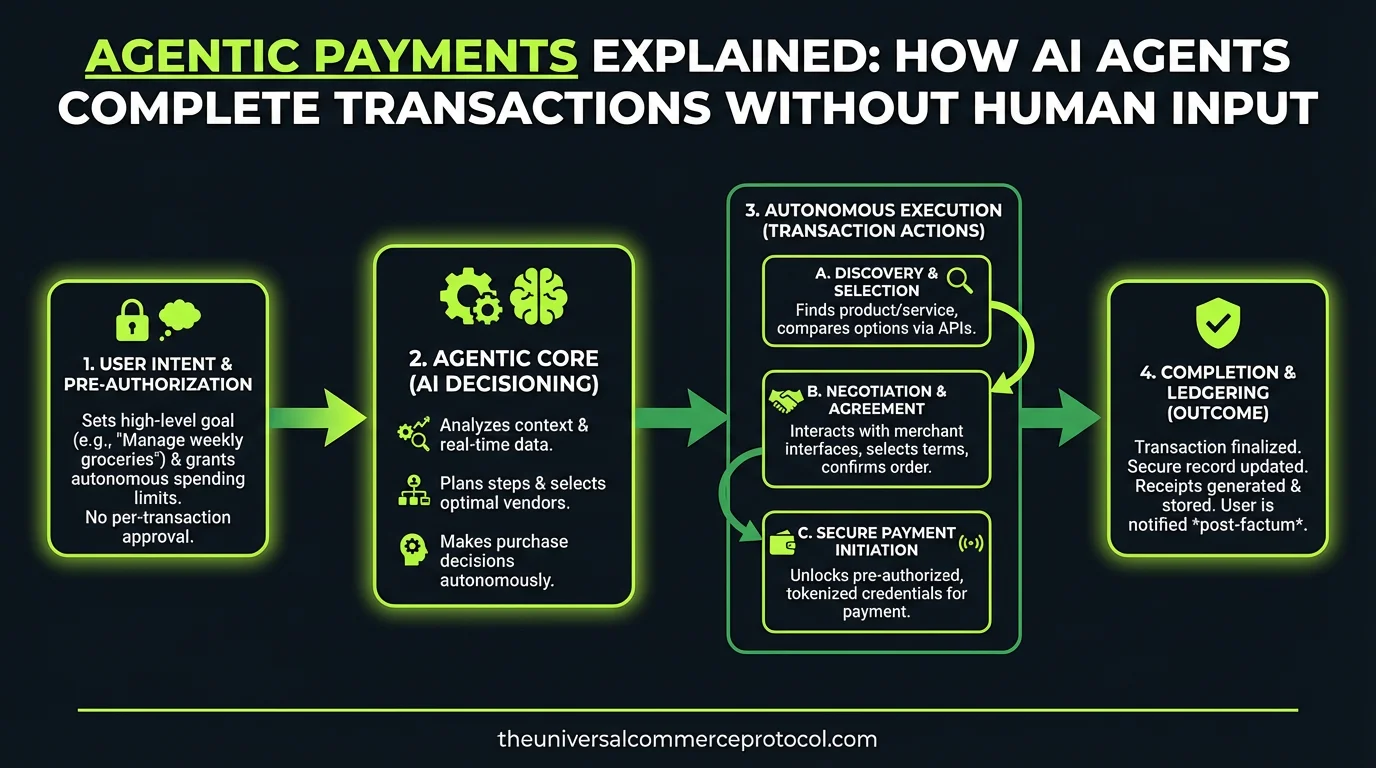
Agentic Payments Explained: How AI Agents Complete Transactions Without Human Input
Agentic payments represent a fundamental shift in commerce, enabling AI agents to autonomously execute transactions within predefined parameters and trust frameworks. Learn how the Universal Commerce Protocol enables secure, frictionless autonomous payment flows that power the next generation of digital commerce.
-
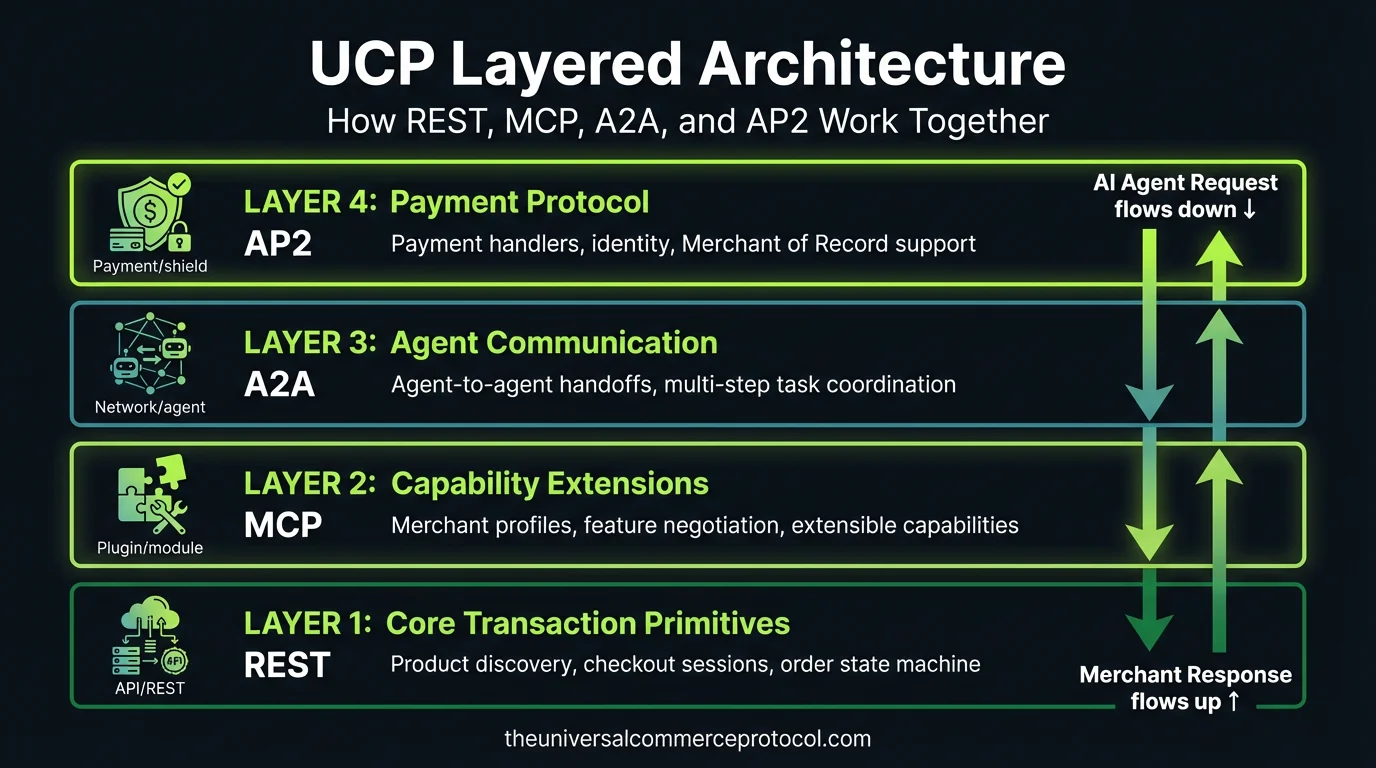
UCP’s Layered Architecture Explained: How REST, MCP, A2A, and AP2 Work Together
UCP’s layered architecture separates core transaction primitives from capabilities, extensions, and payment handlers — enabling the protocol to scale across millions of merchants and evolve without breaking existing integrations. This guide explains each layer, how merchant profiles and capability negotiation work, what the checkout state machine does, and how REST, MCP, A2A, and AP2 connect…
-
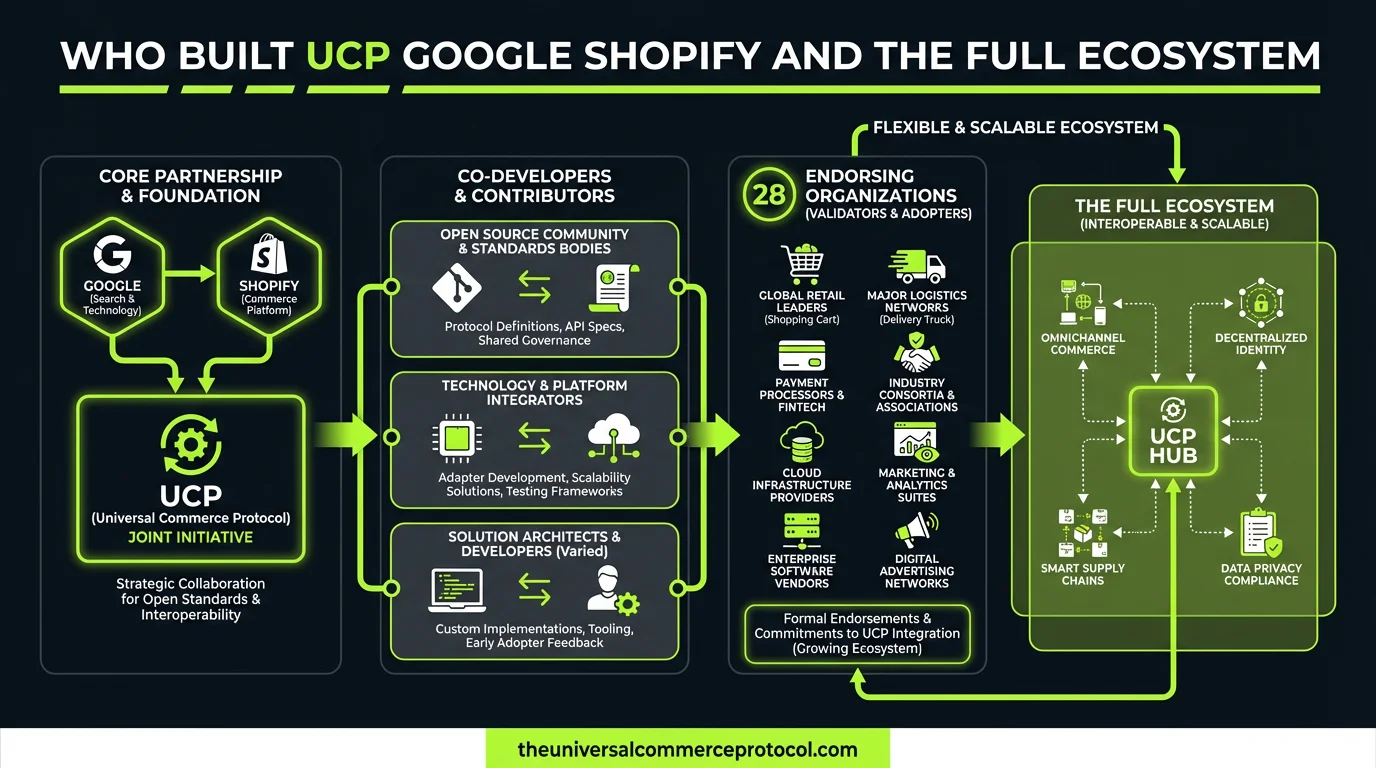
Who Built UCP? Google, Shopify, and the Full Ecosystem Behind the Universal Commerce Protocol
UCP was co-developed by Google and Shopify, with Etsy, Wayfair, Target, and Walmart as additional co-developers, and endorsed by 28 additional organizations at launch. This article covers every confirmed partner, what role each plays, and what their involvement means for the protocol’s breadth and credibility — verified entirely from official primary sources.