Tag: UCP
-
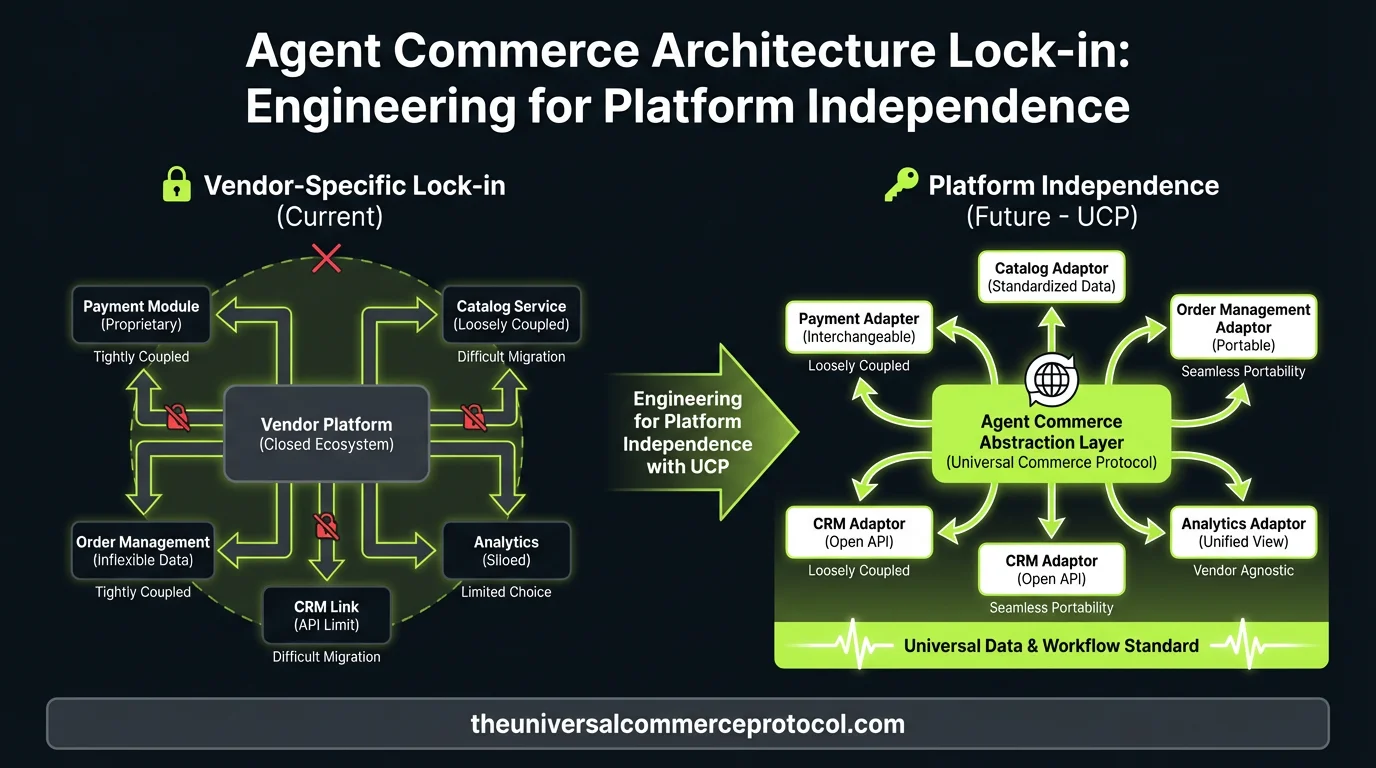
Agent Commerce Architecture: Avoiding Platform Lock-in
Agent commerce architecture requires implementing vendor-agnostic API abstractions and multi-LLM integration patterns to prevent platform lock-in with providers like OpenAI, Anthropic, and Google Cloud. Organizations should adopt containerized microservices deployed on Kubernetes, standardized message protocols (OpenAPI/AsyncAPI), and modular payment processor integrations (Stripe, Square, PayPal) to maintain system portability. This approach reduces switching costs and enables…
-
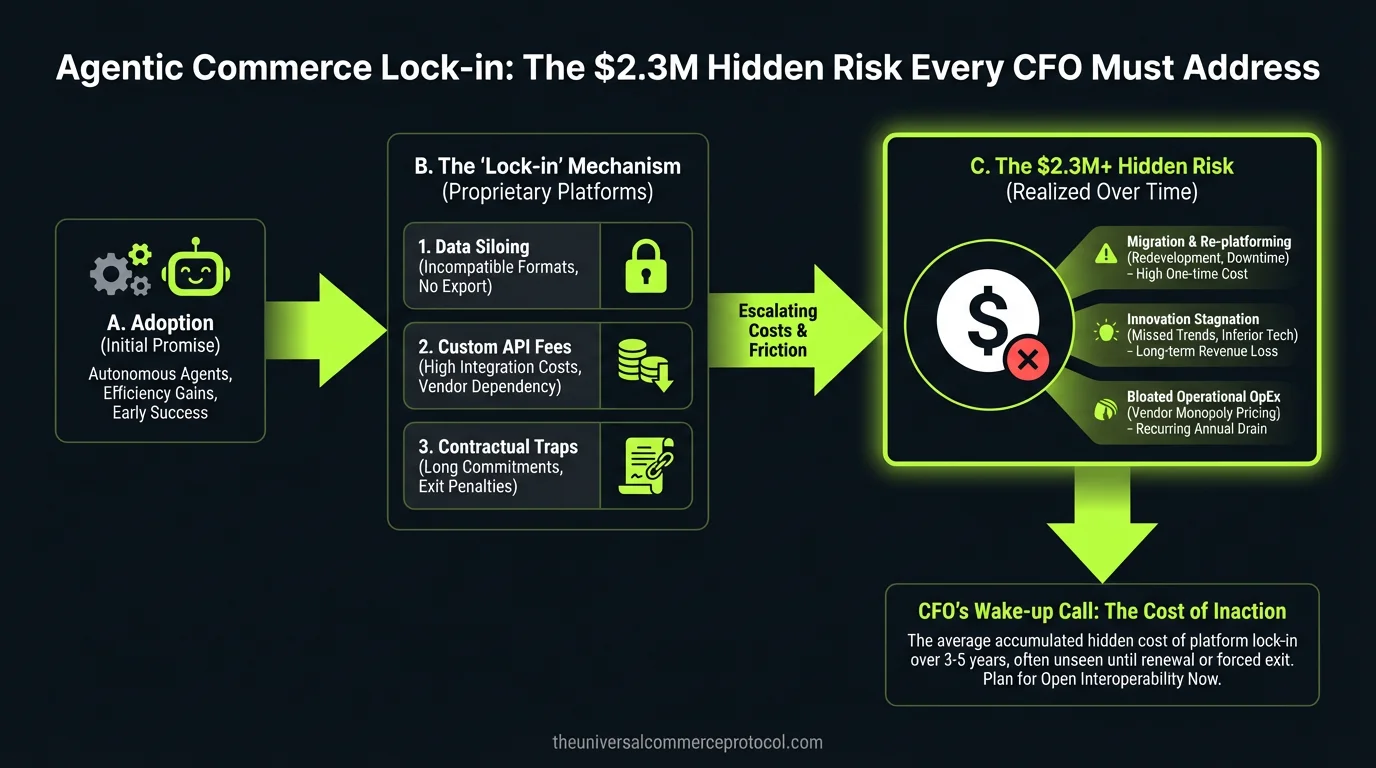
Agentic Commerce Lock-in: $2.3M CFO Risk
Agentic commerce platforms including Salesforce Einstein, Microsoft Copilot for Commerce, and custom LLM implementations impose switching costs exceeding $1.2M–$2.3M for mid-market merchants (annual revenue $50M–$500M), comprising retraining expenses, API integration rework, and operational downtime. CFOs face quantifiable vendor lock-in risk as proprietary agent frameworks become embedded across e-commerce, supply chain, and customer service operations. Organizations…
-
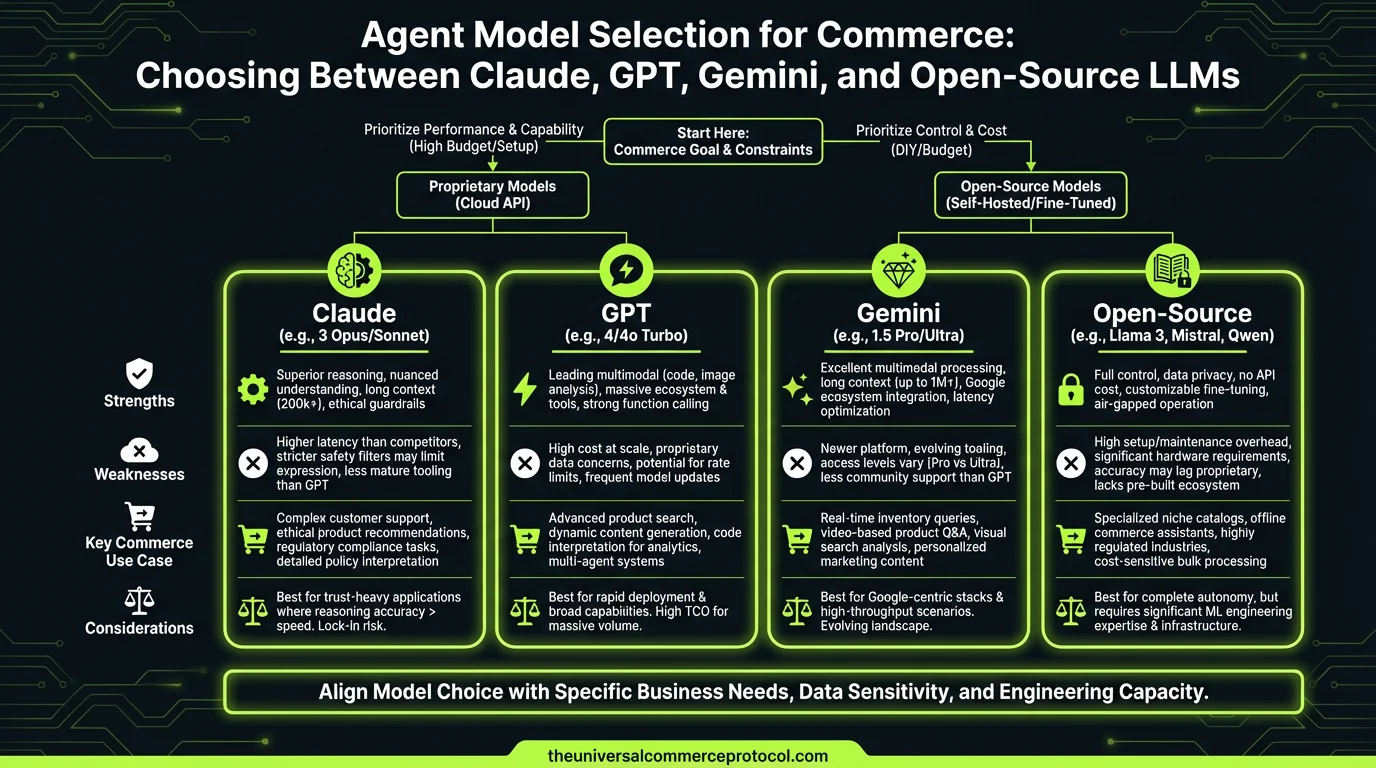
LLM Model Selection for AI Commerce Agents
Agent model selection for commerce requires evaluating Anthropic Claude (3.5 Sonnet, 3 Opus), OpenAI GPT-4 and GPT-4o, and Google Gemini (1.5 Pro, 2.0 Flash) across latency benchmarks, token pricing structures, and compliance frameworks including SOC 2 Type II and GDPR requirements. Open-source alternatives such as Meta Llama 3.1, Mistral Large, and Qwen achieve cost optimization…
-
Agent Consent & Privacy: Building Trust in AI Commerce
GDPR Article 7 and FTC Act Section 5 establish legal frameworks for e-commerce platforms to deploy consent management systems that require explicit opt-in authorization for AI shopping agents, including transaction categories, spending caps defined in USD/EUR, and product restrictions. Compliance requires disclosure of machine learning decision trees under FTC Guidelines on Algorithmic Transparency (2020), with…
-
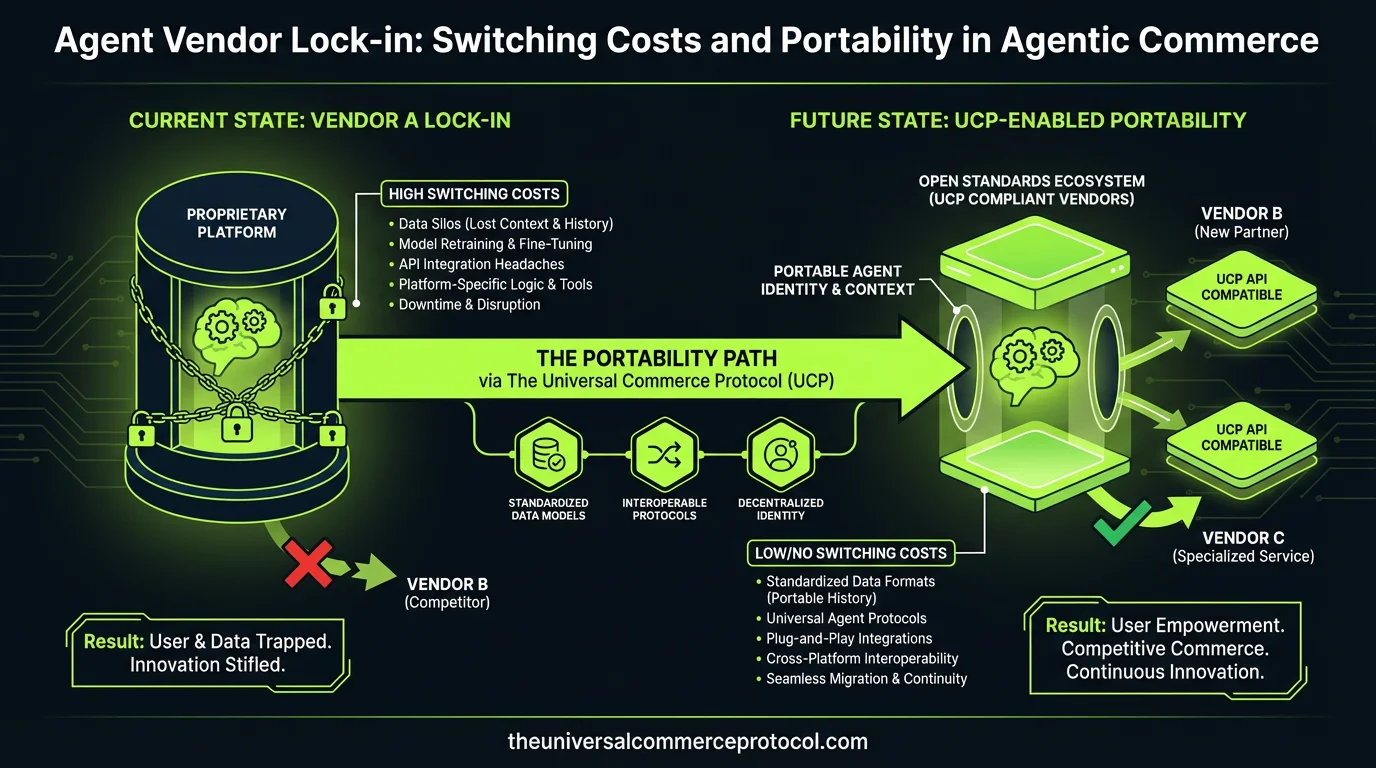
Agent Vendor Lock-in: Switching Costs in Agentic Commerce
Merchant adoption of AI agents from vendors including OpenAI, Anthropic, and specialized commerce platforms creates switching friction through proprietary APIs, closed data formats, and vendor-specific agent frameworks. Portable agentic commerce architectures require standardized interfaces such as OpenAPI 3.0 specifications, interoperable data schemas including JSON-LD and Schema.org markup, and abstraction layers that decouple business logic from…
-
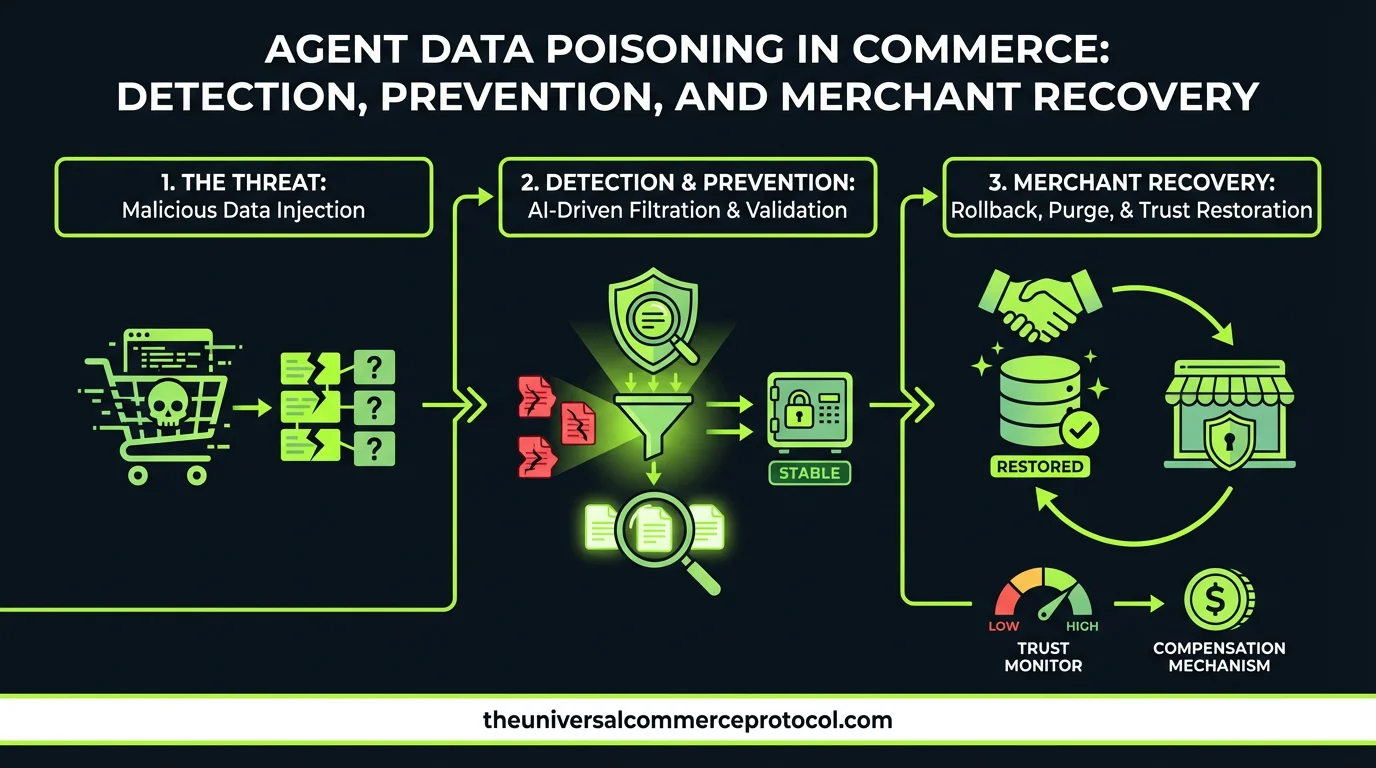
Agent Data Poisoning in Commerce: Detection Methods
Data poisoning attacks inject malicious training samples into machine learning datasets used by autonomous commerce agents, reducing decision-making accuracy by up to 40% according to the NIST AI Risk Management Framework (NIST SP 800-53B). Detection methods include statistical anomaly analysis, input validation layers, and continuous model behavior monitoring per ISO/IEC 42001 standards. Recovery protocols mandate…
-
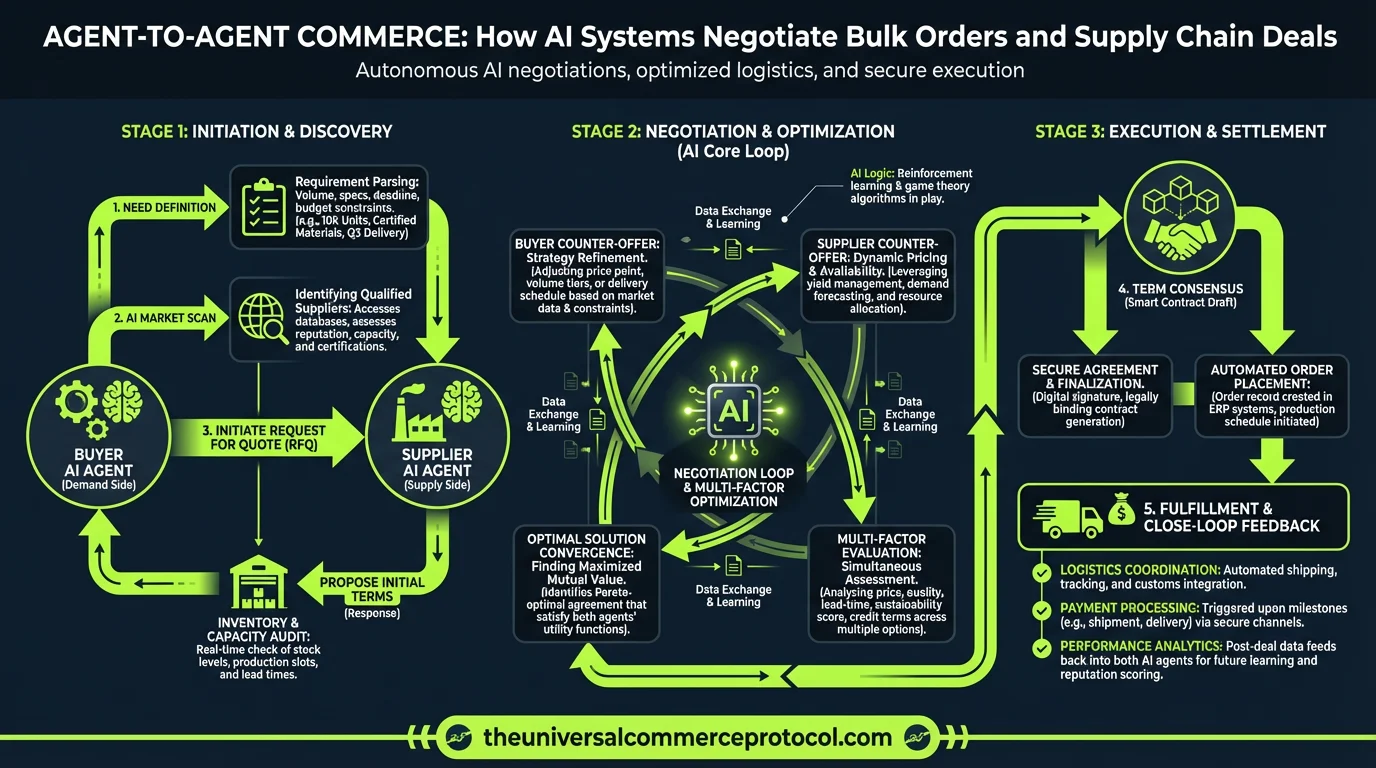
Agent-to-Agent Commerce: AI Systems Negotiating Deals
Agent-to-agent commerce enables autonomous AI systems to negotiate B2B procurement contracts using standardized protocols including FIPA ACL (Foundation for Intelligent Physical Agents Agent Communication Language) and REST APIs, with enterprise platforms such as SAP Ariba, Coupa, and Jaggr implementing multi-agent frameworks for real-time supply chain optimization. According to enterprise deployment case studies, autonomous negotiation systems…
-
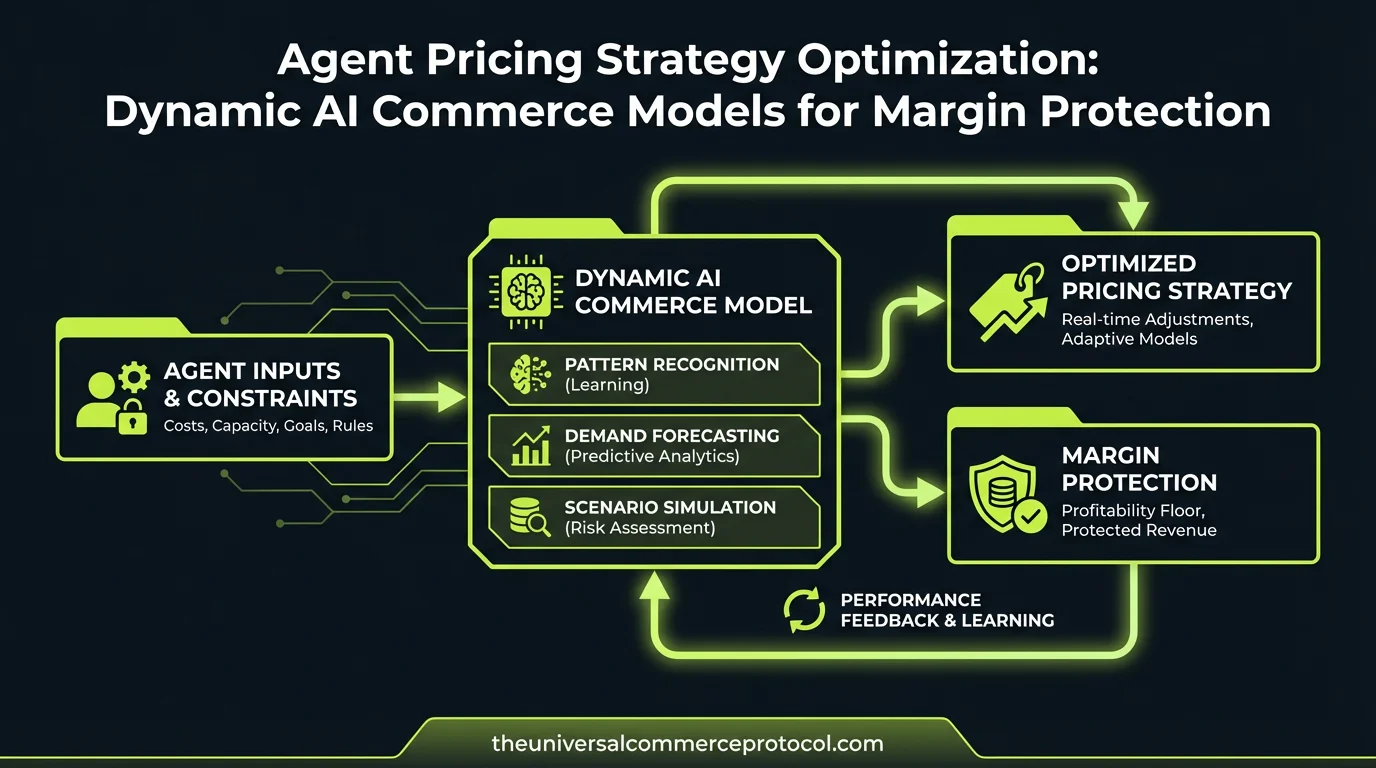
AI Pricing Strategy: Dynamic Agent Commerce Models
AI commerce agents integrated with Amazon, Shopify, and BigCommerce platforms execute dynamic pricing strategies by processing real-time competitive intelligence through machine learning models trained on historical conversion data, automatically adjusting SKU pricing within platform-specific category benchmarks while enforcing margin floors calculated from demand elasticity coefficients. Vendor API integration reduces manual pricing interventions by approximately 40%,…
-
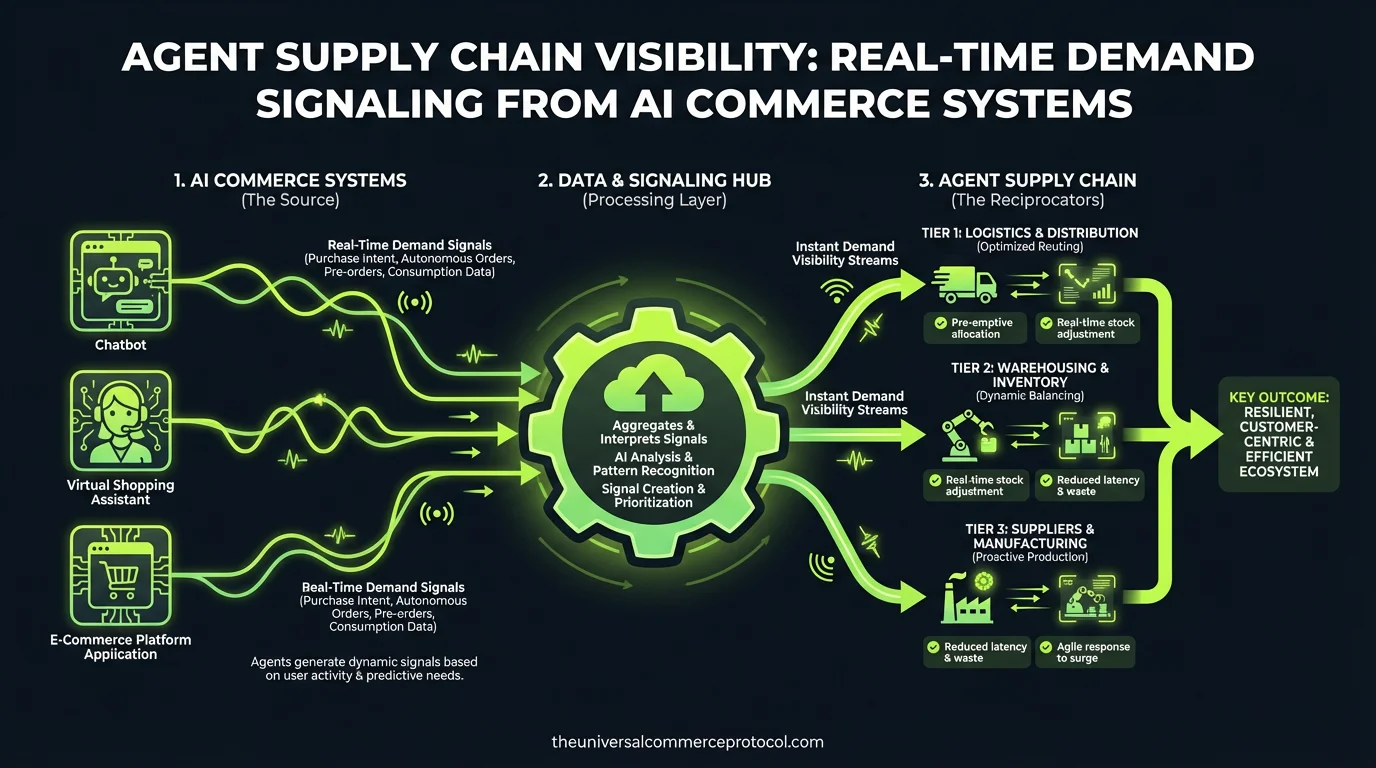
Agent Supply Chain Visibility: Real-Time AI Demand Signaling
Enterprise agentic AI systems deployed by Amazon, Shopify, Walmart, and Target leverage autonomous agents that integrate with Supply Chain Visibility (SCV) platforms, Order Management Systems (OMS), and 3PL networks via REST APIs and EDI protocols to generate real-time demand signals for just-in-time (JIT) replenishment. Mid-market retailers implementing AI-native demand sensing agents with predictive order orchestration…
-
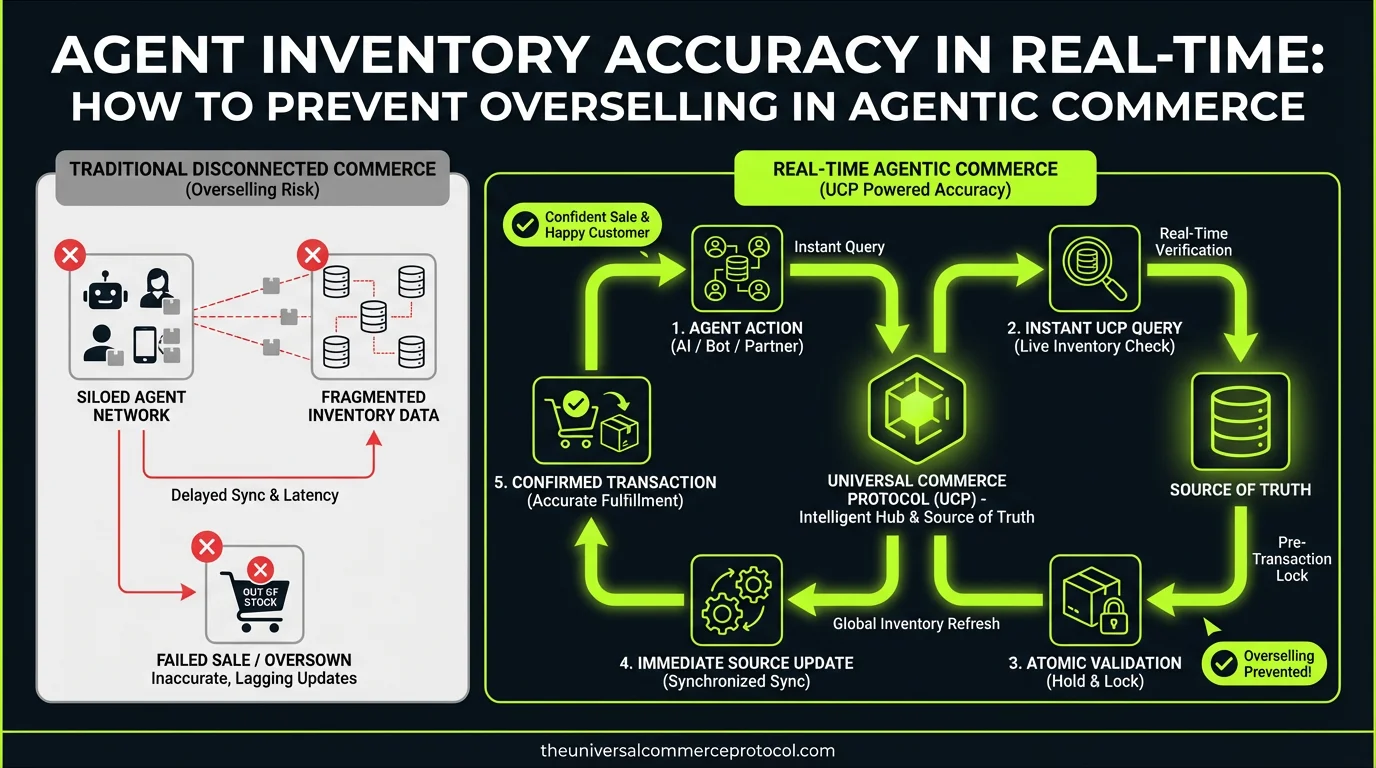
Real-Time Inventory Accuracy for Agentic Commerce
Real-time inventory accuracy in agentic commerce systems requires event-driven architectures leveraging Apache Kafka or AWS SQS message brokers integrated with ACID-compliant databases and optimistic locking protocols across Inventory Management Systems (IMS) and Order Management Systems (OMS) connected to Amazon, eBay, and Shopify. Distributed transaction coordination using two-phase commit patterns and saga choreography achieves sub-100-millisecond inventory…