“`html
Agentic commerce is gaining traction as companies race to establish standards for AI-driven shopping, with projections estimating that AI agents could account for between 15 and 25 percent of U.S. e-commerce sales by 2030 – a market worth roughly $300 billion to $500 billion, according to a Bain & Company report.
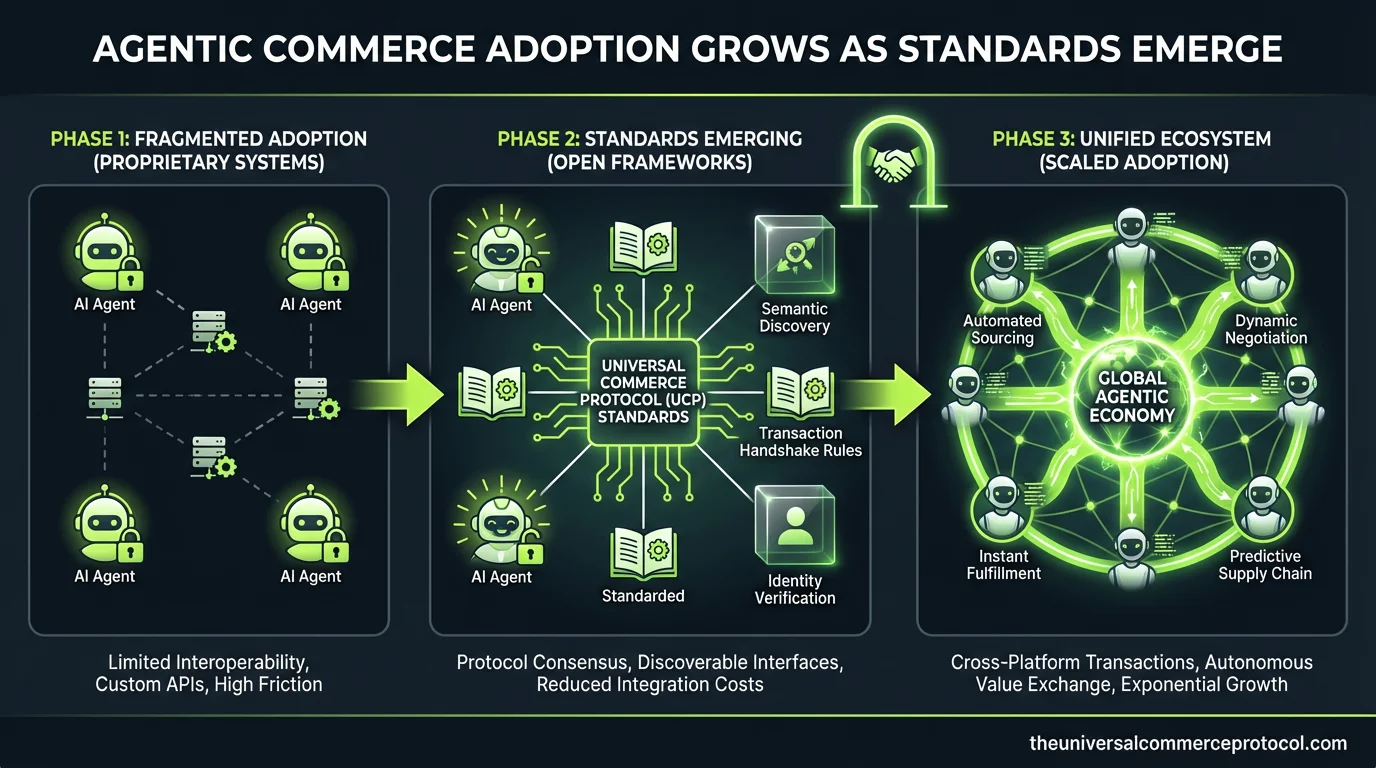
The push for standardization aims to create a more structured and brand-controlled environment for agentic commerce, where AI agents act on behalf of consumers to discover, compare, and purchase products. Developers are being urged to prioritize interoperability and accurate brand representation in these emerging AI-driven shopping experiences.
Azoma Unveils Agentic Merchant Protocol
Azoma recently launched the Agentic Merchant Protocol (AMP). The protocol is designed to empower retailers to retain control of their product catalogs as they are accessed and utilized by various AI agents.
AMP seeks to give merchants greater influence over how their products are presented and sold through AI-powered channels. This addresses concerns about brand integrity and accurate product information in the agentic commerce landscape.
Mastercard’s Verifiable Intent Standard
Mastercard, in collaboration with Google, has introduced Verifiable Intent. This open standard provides a tamper-resistant record of user authorization for transactions initiated by AI agents.
Verifiable Intent aims to enhance security and trust in agentic commerce by ensuring that transactions are authorized by the user and cannot be altered without detection. It’s an open standard, which should promote interoperability.
Shopify Highlights Universal Commerce Protocol
James Johnson of Shopify recently addressed the implications of the Universal Commerce Protocol (UCP) at Power Retail’s ShopForward 2026. Johnson emphasized the importance of open commerce protocols for fostering a level playing field in agentic commerce.
The UCP, along with protocols like the Agent Payments Protocol (AP2), seeks to standardize interactions between AI agents and merchants. Shopify’s involvement signals the growing recognition of these protocols as essential for the future of e-commerce.
Background: The adoption of AI checkout standards is viewed as crucial for ensuring secure and seamless transactions in the rapidly evolving agentic commerce space.
What is agentic commerce?
Agentic commerce refers to AI-driven shopping experiences where autonomous AI agents assist customers in discovering, evaluating, and purchasing products. These agents use artificial intelligence to understand customer needs and facilitate transactions on their behalf.
What percentage of e-commerce sales could AI agents represent by 2030?
According to a Bain & Company report, AI agents could account for between 15 and 25 percent of U.S. e-commerce sales by 2030, representing a market worth roughly $300 billion to $500 billion.
Why are companies establishing standards for agentic commerce?
Companies are working to establish standards for agentic commerce to create a more structured and interoperable ecosystem. Standardization enables better communication between different AI agents and platforms, improves customer trust, and ensures consistent quality across agentic commerce experiences.
How will agentic commerce impact the e-commerce industry?
Agentic commerce is expected to significantly transform the e-commerce landscape by automating the shopping process, improving personalization, and streamlining customer decision-making. This shift represents a major market opportunity worth hundreds of billions of dollars by the end of the decade.
What role do standards play in agentic commerce adoption?
Standards are crucial for agentic commerce adoption as they establish common protocols, data formats, and security requirements that allow different AI agents and retailers to work together seamlessly, accelerating industry-wide growth and consumer confidence in the technology.
Frequently Asked Questions
What is the Universal Commerce Protocol (UCP)?
The Universal Commerce Protocol (UCP) is an open standard developed to enable AI agents to autonomously conduct commerce transactions across any platform.
How does UCP enable agentic commerce?
UCP provides standardized APIs and protocols so AI agents can discover products, negotiate terms, and complete purchases without human intervention, working across any compatible commerce platform.
Why should businesses implement UCP?
UCP adoption reduces integration costs, opens revenue channels to AI-driven buyers, and future-proofs commerce infrastructure as agentic purchasing becomes mainstream.
Leave a Reply