Category: Merchant Integration
-
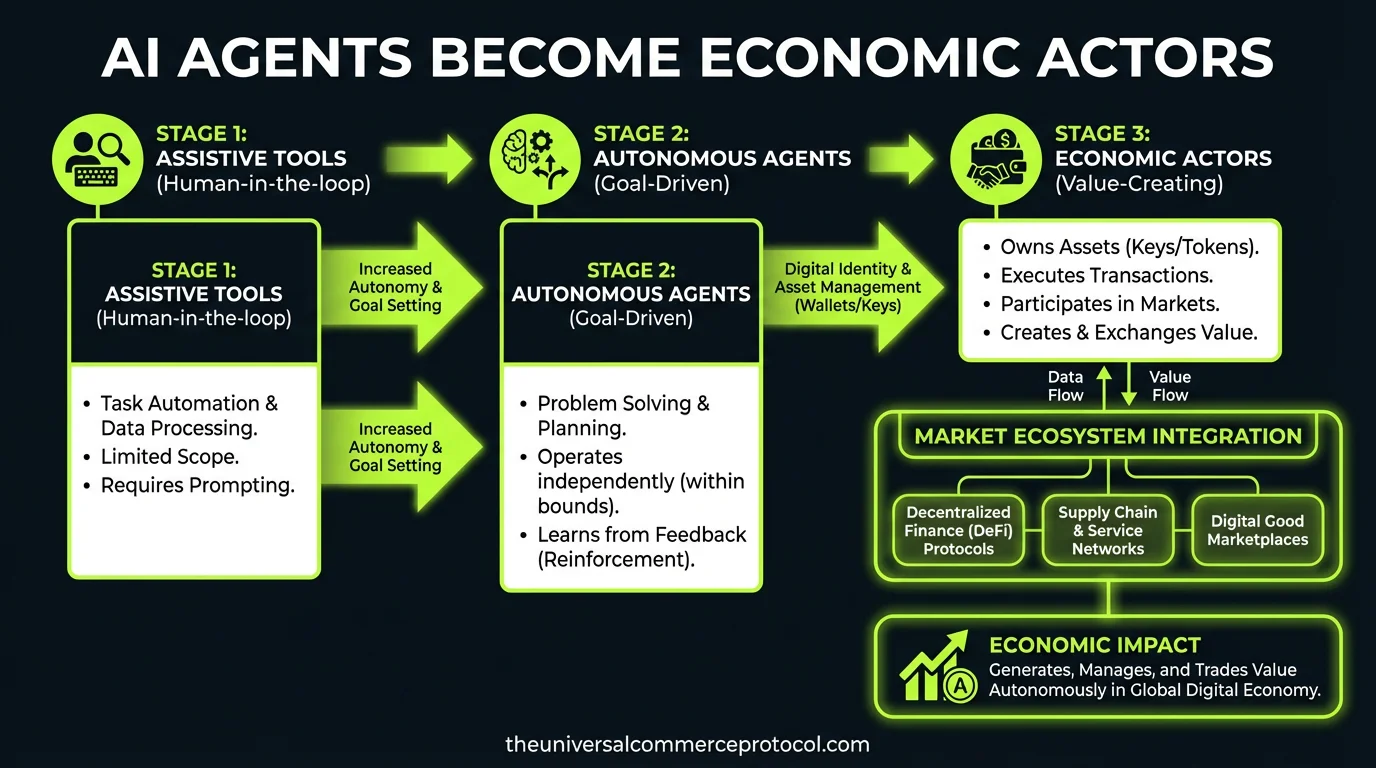
AI Agents Become Economic Actors
Mastercard and Santander completed Europe’s first live end-to-end AI-executed payment.
-

Agent Liability & Insurance: Who Pays When AI Makes a Bad Purchase Decision?
As AI agents autonomously execute transactions, merchants and platforms face unclear liability for errors, fraud, and consumer harm—and insurance markets are scrambling to catch up.
-
Agent Performance Benchmarking: How to Measure Conversion Rate, Speed, and Accuracy in Agentic Commerce
A practical framework for measuring agent success: conversion rates, latency SLAs, hallucination rates, and cost-per-transaction benchmarks.
-

Shopify Integrates Agentic Storefronts into ChatGPT
Shopify merchants can now have their products discoverable and purchasable inside ChatGPT through its new “agentic storefronts” feature.
-
UCP Integration: Building Compliant Agentic Commerce Architecture
Technical framework for implementing UCP-based agentic commerce while maintaining regulatory compliance across jurisdictions and payment flows.
-
Feature Engineering for Agent Cost Attribution: Building Predictive Models for Commerce AI ROI
How to engineer features, train models, and evaluate agentic commerce systems where cost per transaction varies by 40x based on interaction complexity.
-
The $2.4M Hidden Cost of UCP Compliance: What CFOs Need to Know About Agentic Commerce Risk
Agentic commerce introduces $2.4M in potential compliance costs and regulatory penalties that could derail digital transformation ROI.
-
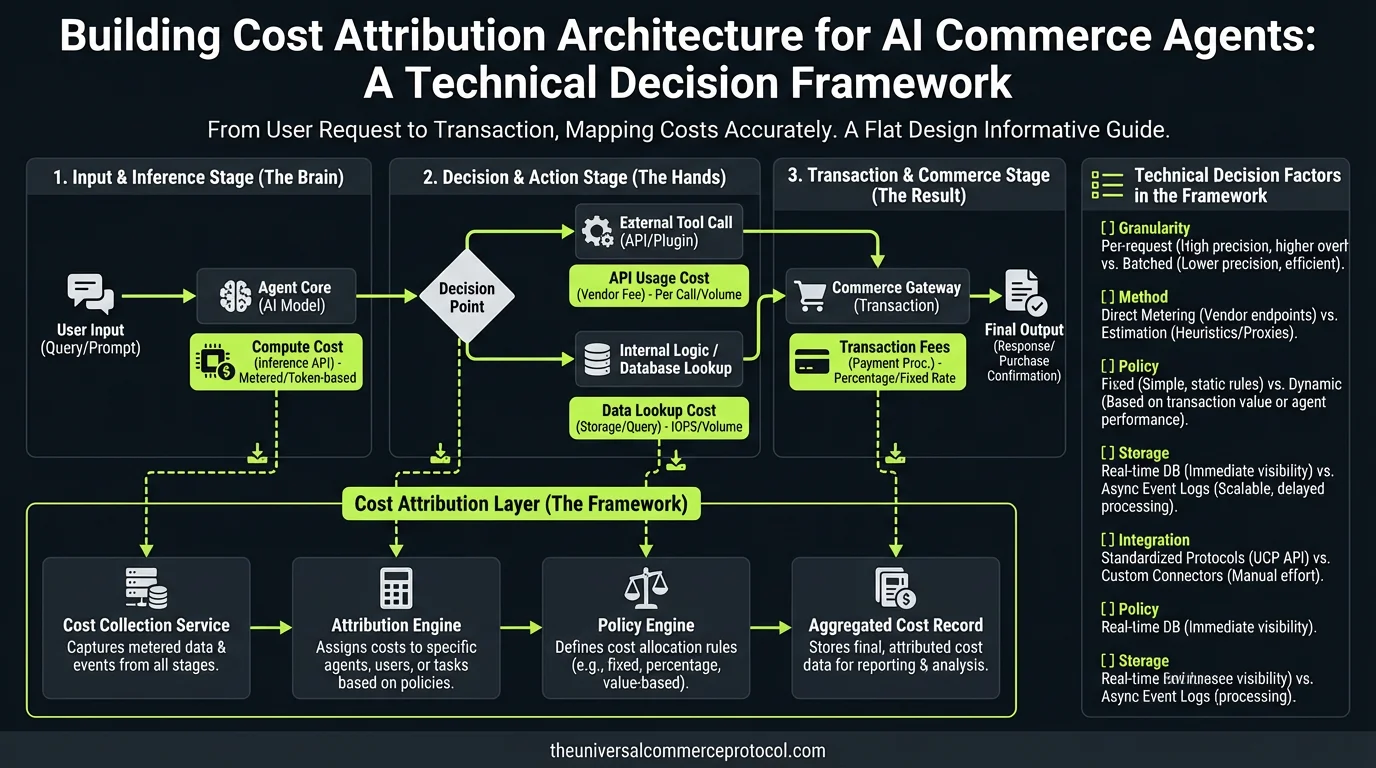
Building Cost Attribution Architecture for AI Commerce Agents: A Technical Decision Framework
Engineering teams need instrumentation patterns to track distributed AI agent costs across LLM APIs, vector stores, and payment flows.
-
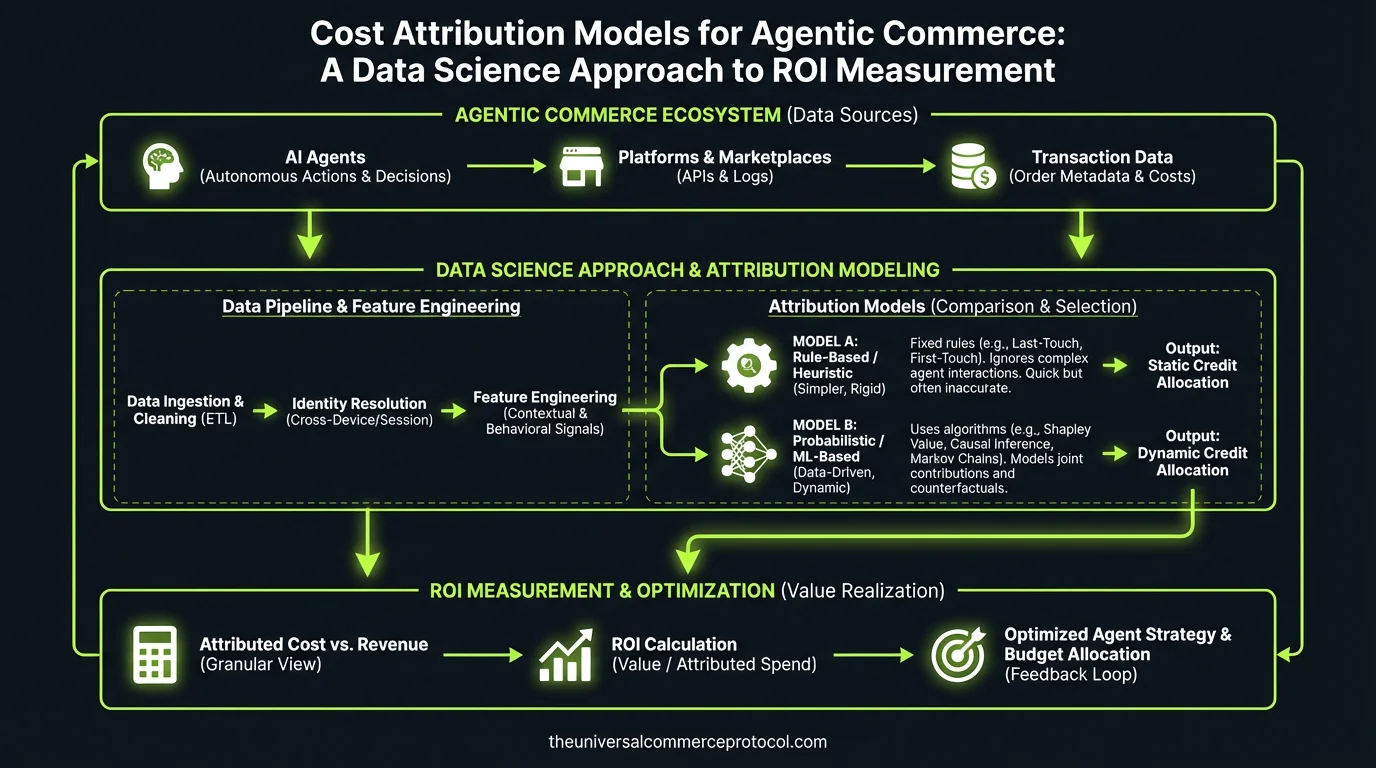
Cost Attribution Models for Agentic Commerce
Cost attribution models for agentic AI commerce quantify expenses across multi-step LLM inference chains—including token consumption, vector database queries, and API calls—where traditional transaction-level metrics fail to isolate individual agent decision costs. Data science approaches like shapley value decomposition and hierarchical cost allocation enable attribution of total cost of ownership (TCO) to specific customer journeys,…
-
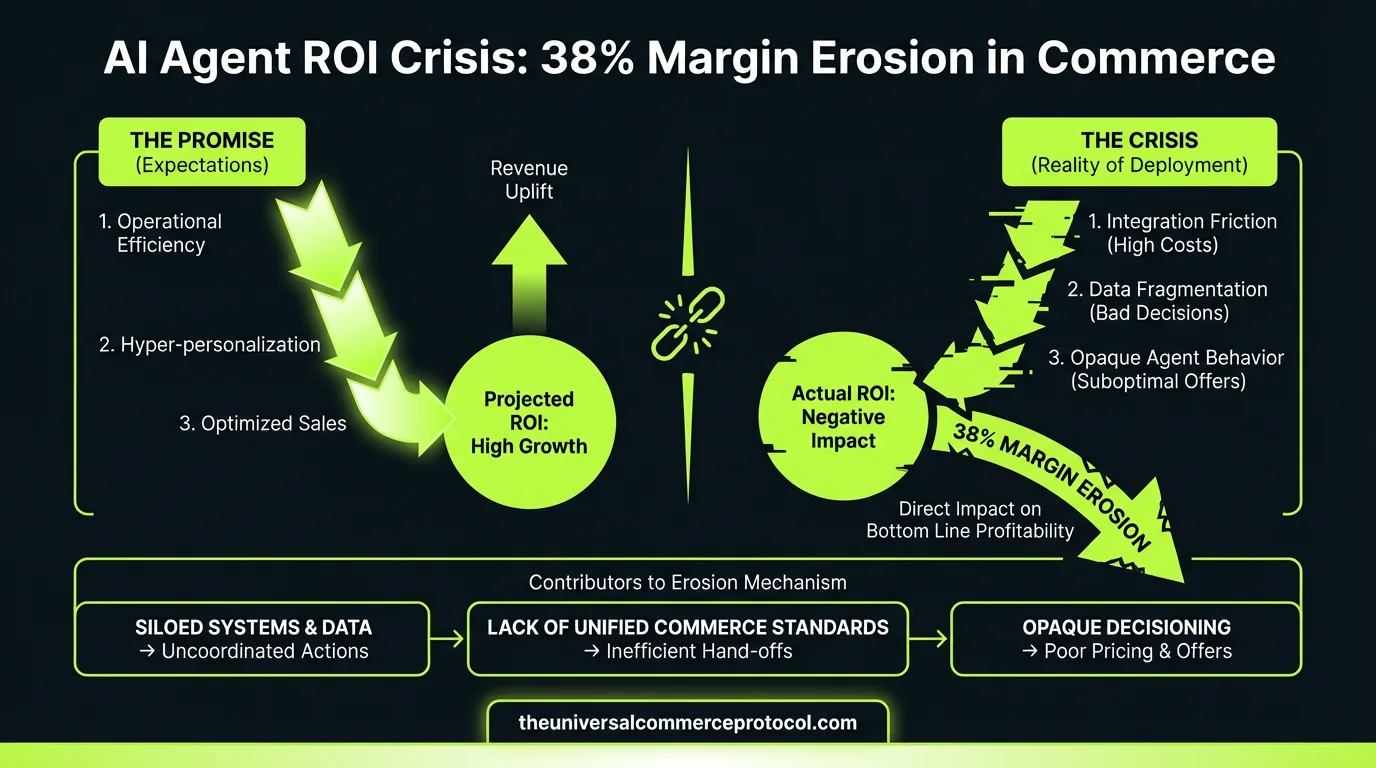
AI Agent ROI Crisis: 38% Margin Erosion in Commerce
Enterprise finance leaders implementing autonomous AI agents in e-commerce and omnichannel retail operations experience documented margin erosion of 30-38% per transaction, primarily driven by unattributed large language model (LLM) inference costs, vector database queries, and API consumption that escape traditional general ledger reconciliation. This cost leakage accelerates in high-frequency transaction environments (>10,000 daily operations) where…