Category: Merchant Integration
-
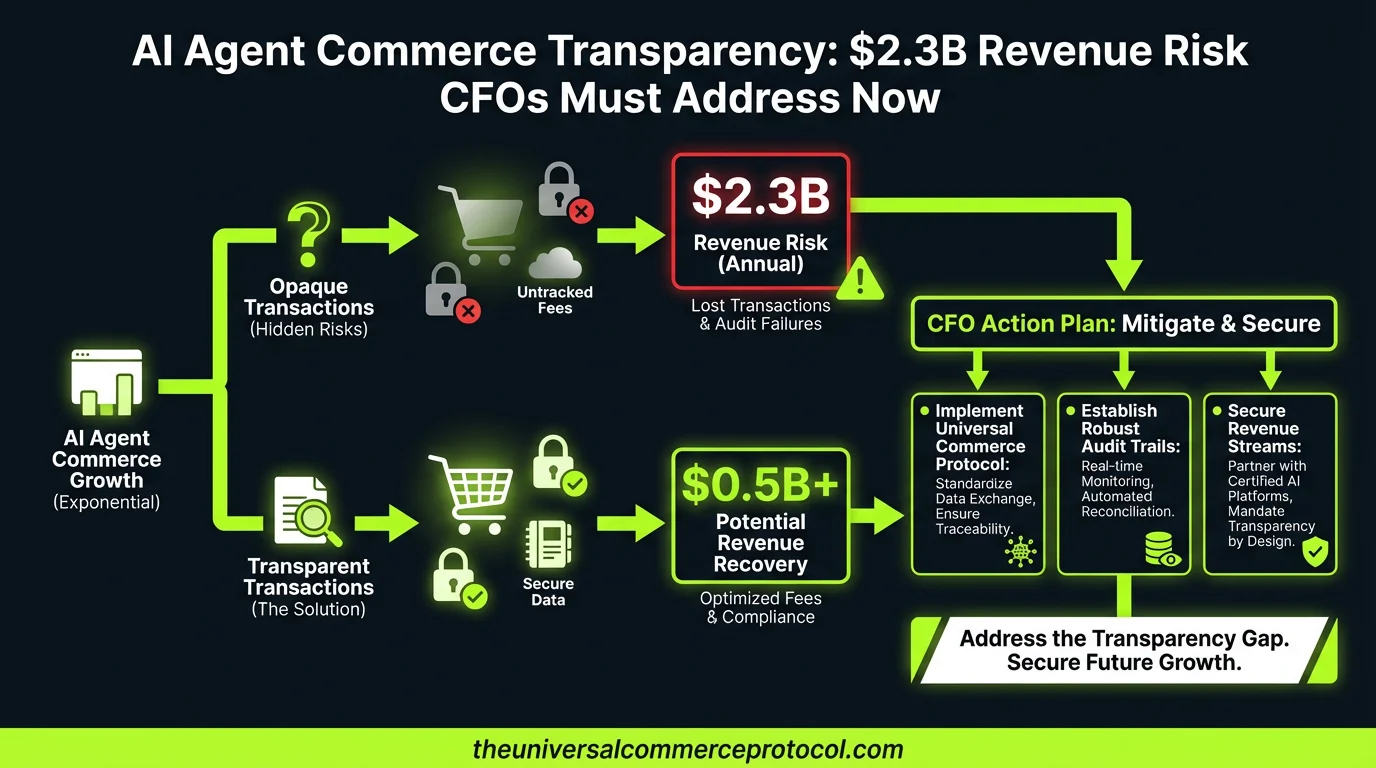
AI Agent Commerce Transparency: $2.3B Revenue Risk
AI commerce agents operating without transparent decision-making frameworks experience conversion loss rates of 38%, according to industry analysis of autonomous shopping systems. This opacity in recommendation algorithms directly correlates with elevated customer acquisition costs (CAC) and reduced customer lifetime value (CLV), representing an estimated $2.3 billion annual revenue risk across the e-commerce sector. Organizations implementing…
-
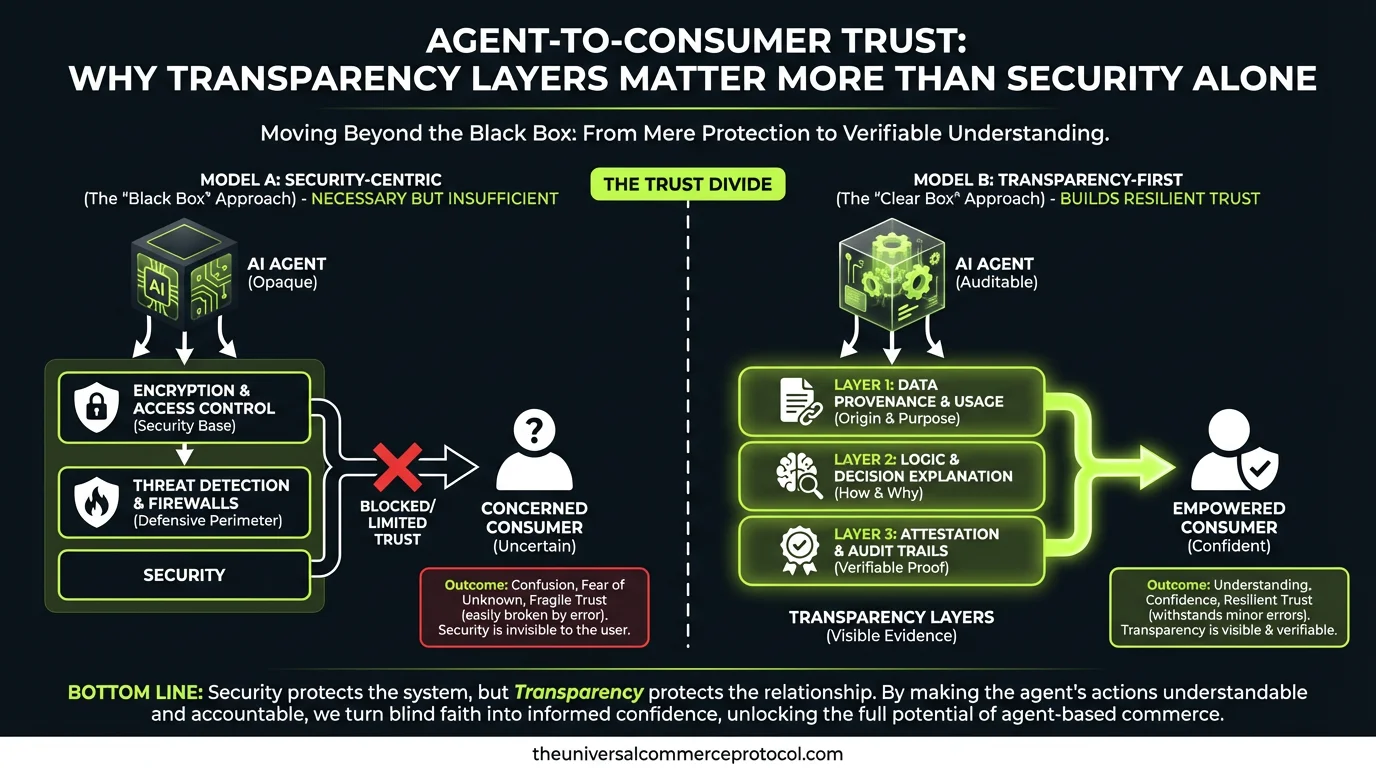
Agent-to-Consumer Trust: Transparency Over Security
Agentic commerce systems must implement GDPR Article 22-compliant transparency mechanisms—including decision logs, reasoning chains, and real-time action notifications—to address the 70% cart abandonment increase when consumers cannot understand agent-generated recommendations. Explainability layers documenting AI agent processing of personal data, dynamic pricing calculations, and inventory selection comply with the EU’s General Data Protection Regulation (GDPR), California…
-
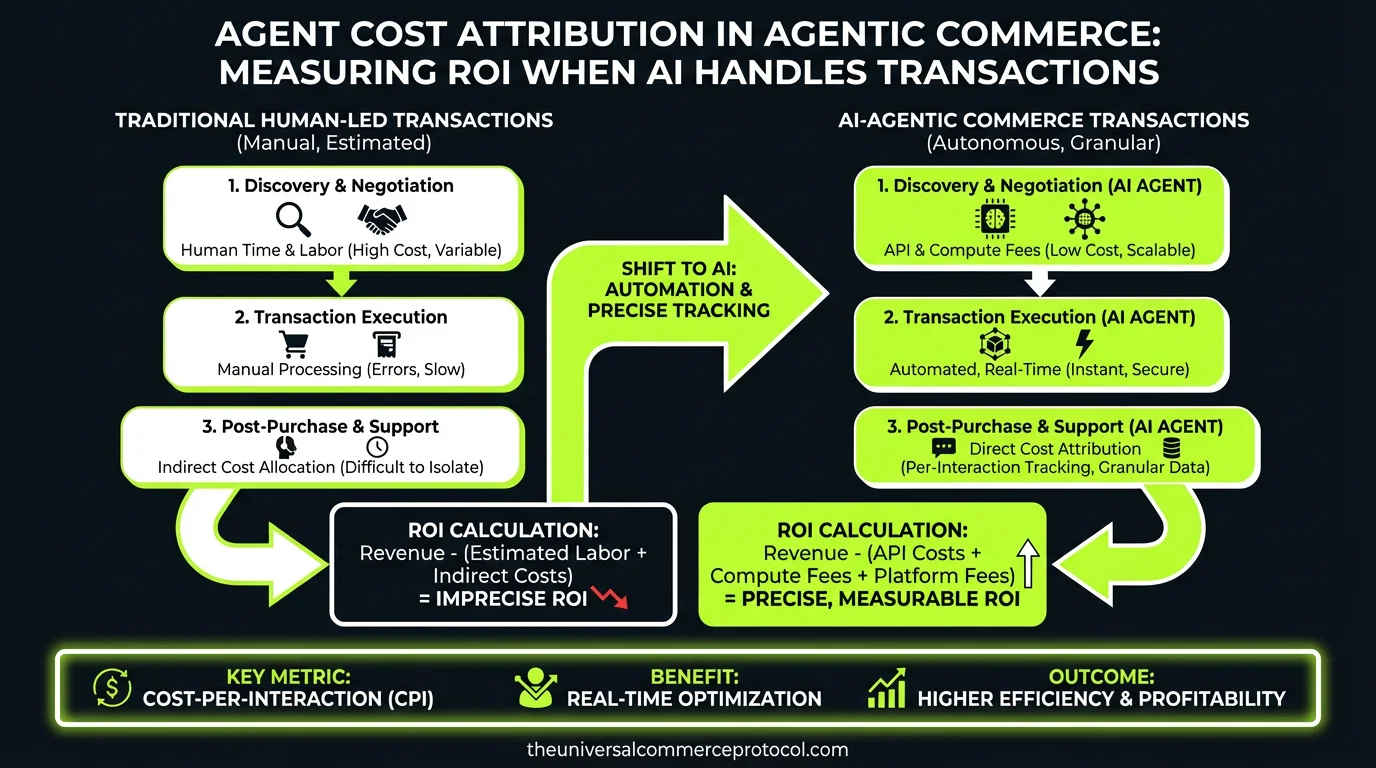
AI Agent Cost Attribution: Measuring ROI in Commerce
Agentic commerce platforms implement multi-dimensional cost attribution using real-time transaction telemetry to allocate LLM inference costs, GPU compute resources, and API licensing fees across web, mobile, and marketplace channels. Merchants measure AI agent ROI via cost-per-transaction (CPT), cost-per-conversion (CPC), and customer lifetime value (LTV) benchmarks, with attribution engines decomposing costs across LLM systems, computer vision…
-
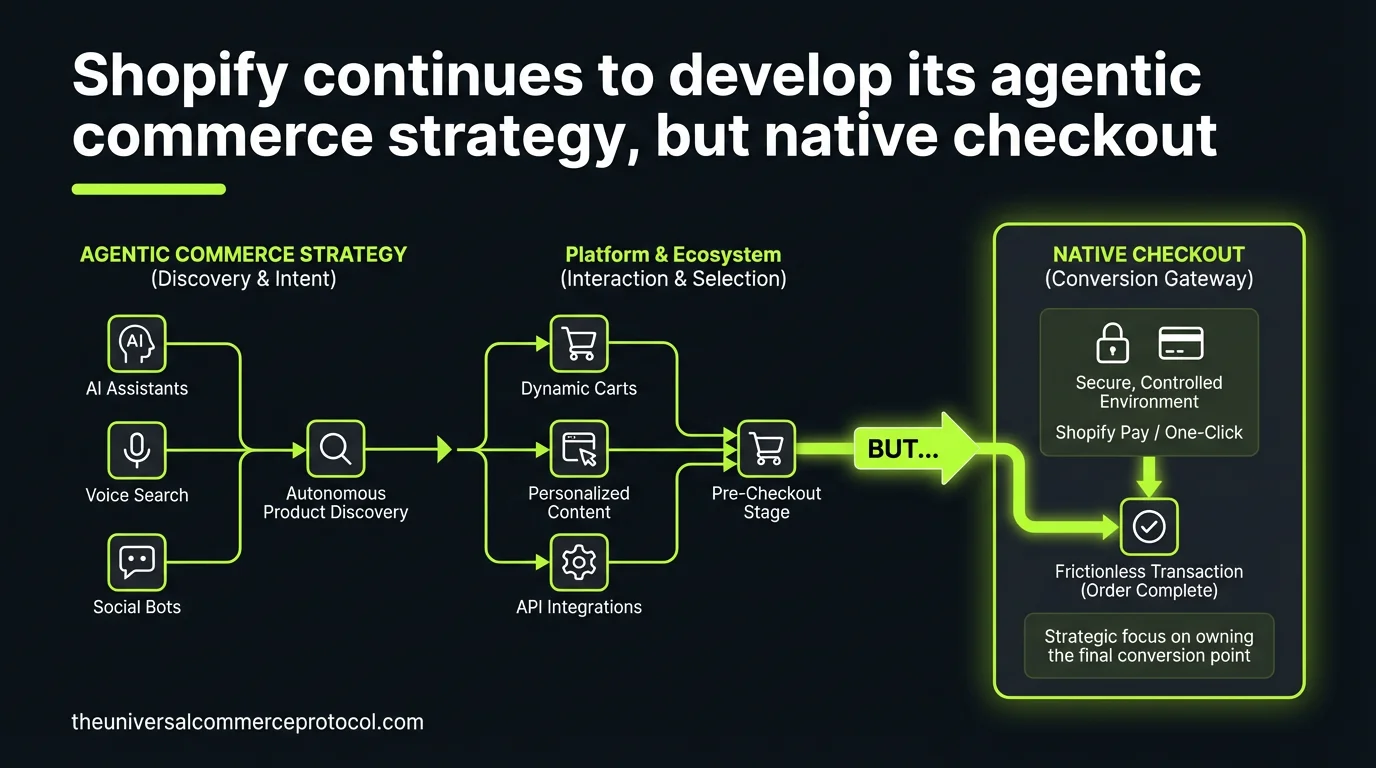
Shopify’s Agentic Commerce Strategy: ChatGPT Checkout Changes
Shopify, the Ottawa-based e-commerce platform, discontinued its native ChatGPT checkout integration in 2024 while pivoting its agentic commerce strategy toward proprietary AI tools and alternative partnership channels with AI assistants. The company continues advancing conversational commerce through its own generative AI infrastructure and select third-party AI integrations, moving away from direct embedding within OpenAI’s ChatGPT…
-

UCP Compliance & Regulatory Risk for Agentic Commerce
The Uniform Commercial Code (UCC) Article 2 governs sales contracts across all 50 U.S. states, but autonomous commerce agents must also comply with California’s Consumer Privacy Act (CCPA), Colorado’s Colorado Privacy Act (CPA), and the Federal Trade Commission Act Section 5, which prohibits deceptive practices and mandates algorithmic transparency, documented consent mechanisms, and immutable audit…
-
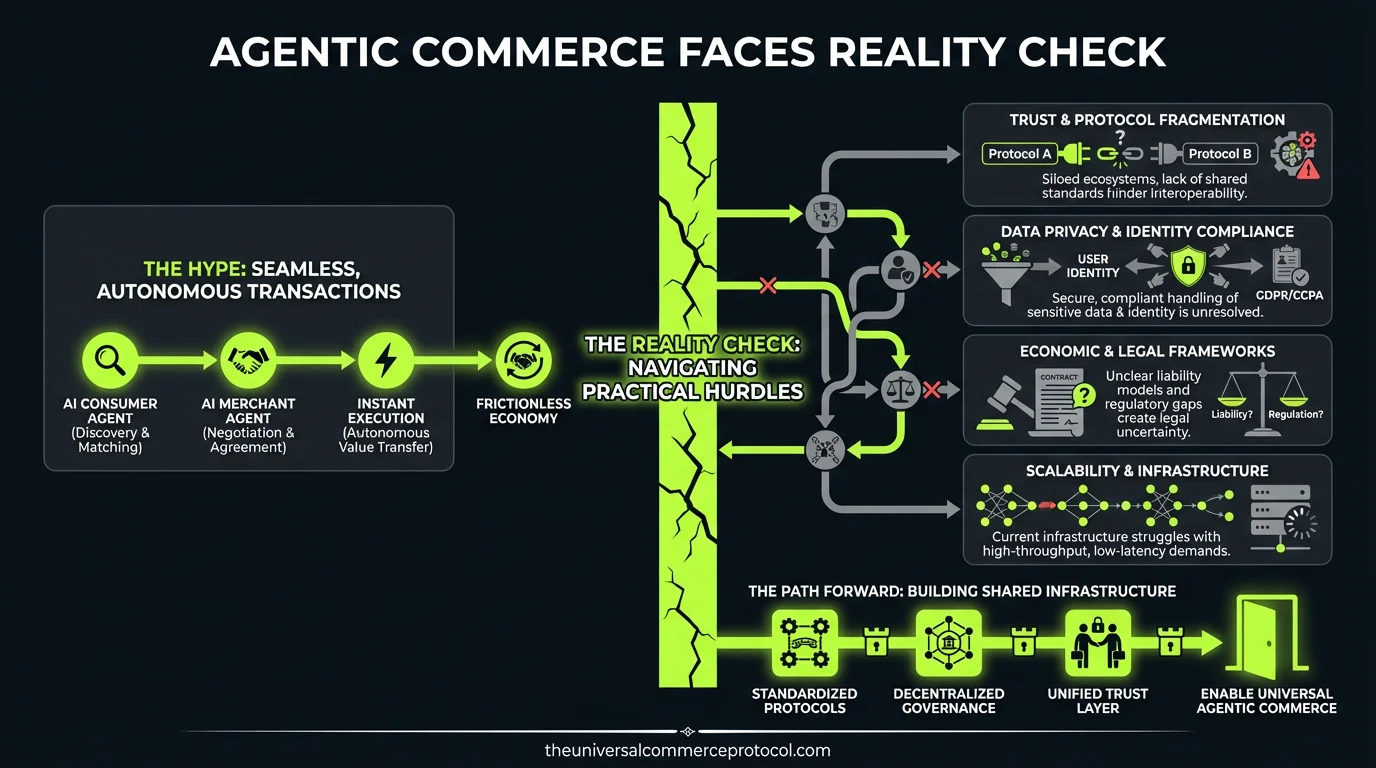
Agentic Commerce Faces Reality Check
Agentic commerce faces a reality check as major players refine strategies.
-
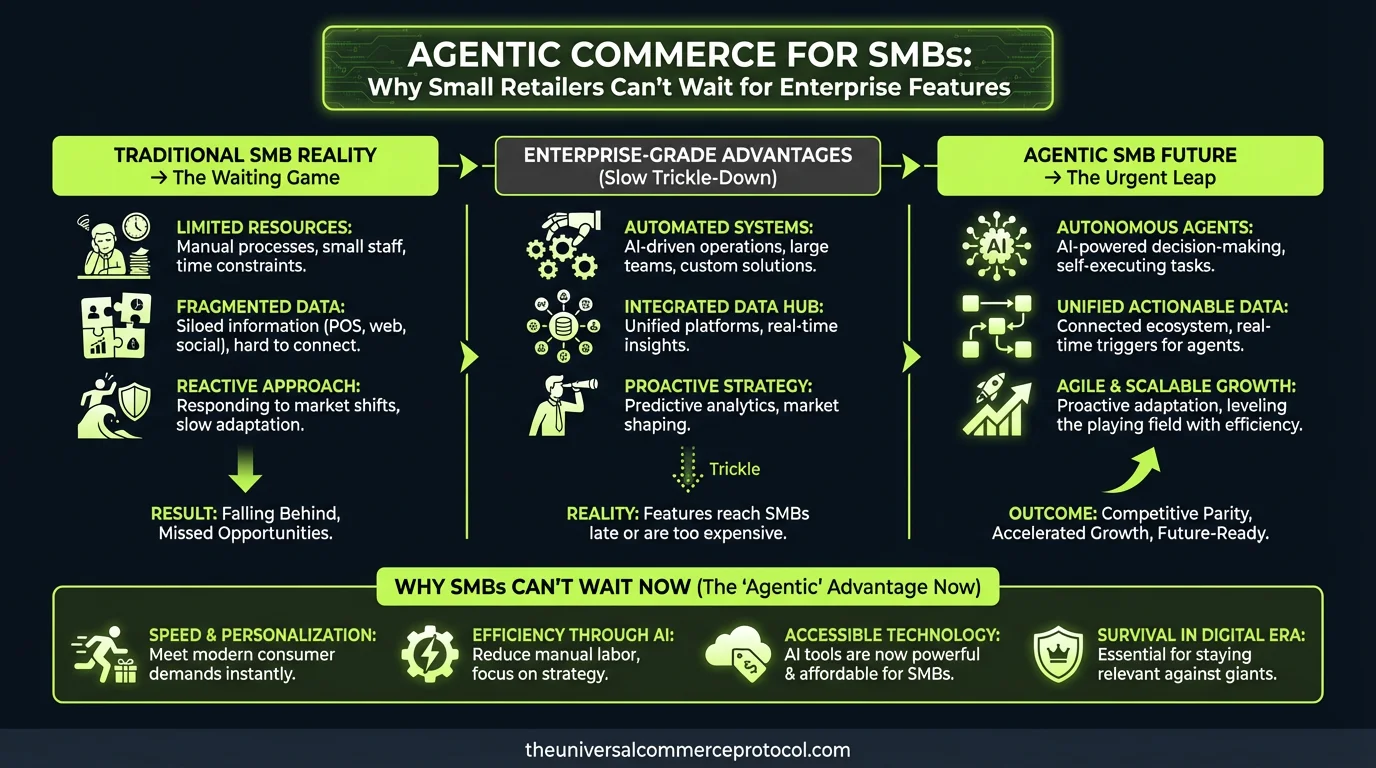
Agentic Commerce for SMBs: Why Small Retailers Can’t Wait for Enterprise Features
Enterprise agentic commerce dominates headlines, but SMBs face unique barriers: cost, integration complexity, and fragmented vendor ecosystems.
-

Shopify’s Agentic Commerce tools are enabling merchants to sell through AI-power
Shopify’s Agentic Commerce tools are enabling merchants to sell through AI-powered conversations, with AI-driven orders seeing a 15x increase since January 2025
-

India E-Commerce Market Entry: ROI Analysis for Agentic Commerce Investment
India’s $150B e-commerce opportunity requires specialized payment infrastructure—here’s the financial case for compliant market entry.
-

Agentic Commerce in India: Market Entry & Compliance
India’s e-commerce market, valued at approximately $50 billion USD as of 2024, requires agentic commerce implementations compliant with the Reserve Bank of India (RBI) regulations, National Payments Corporation of India (NPCI) standards, and the Information Technology Act, 2000. Market entry strategies must integrate Unified Payments Interface (UPI) infrastructure, adhere to India’s data localization requirements under…