Category: Protocol & Technical Architecture
-

Feature Engineering Commerce Agents: UCP vs Claude
Feature engineering for commerce agents on Anthropic Claude Marketplace and the Unified Commerce Platform (UCP) diverges in architecture: UCP implementations normalize heterogeneous features across ERP systems, POS terminals, and supply chain data sources to resolve multi-source inventory fragmentation, while Claude Marketplace agents enforce cross-tenant data isolation that limits training dataset size and statistical representativeness. Evaluation…
-

The $50B Cross-Border Payment Risk Every CFO Must Address in Automated Commerce
Cross-border payment failures cost enterprises $50B annually—automated commerce agents could eliminate 80% of these losses while reducing FX costs.
-
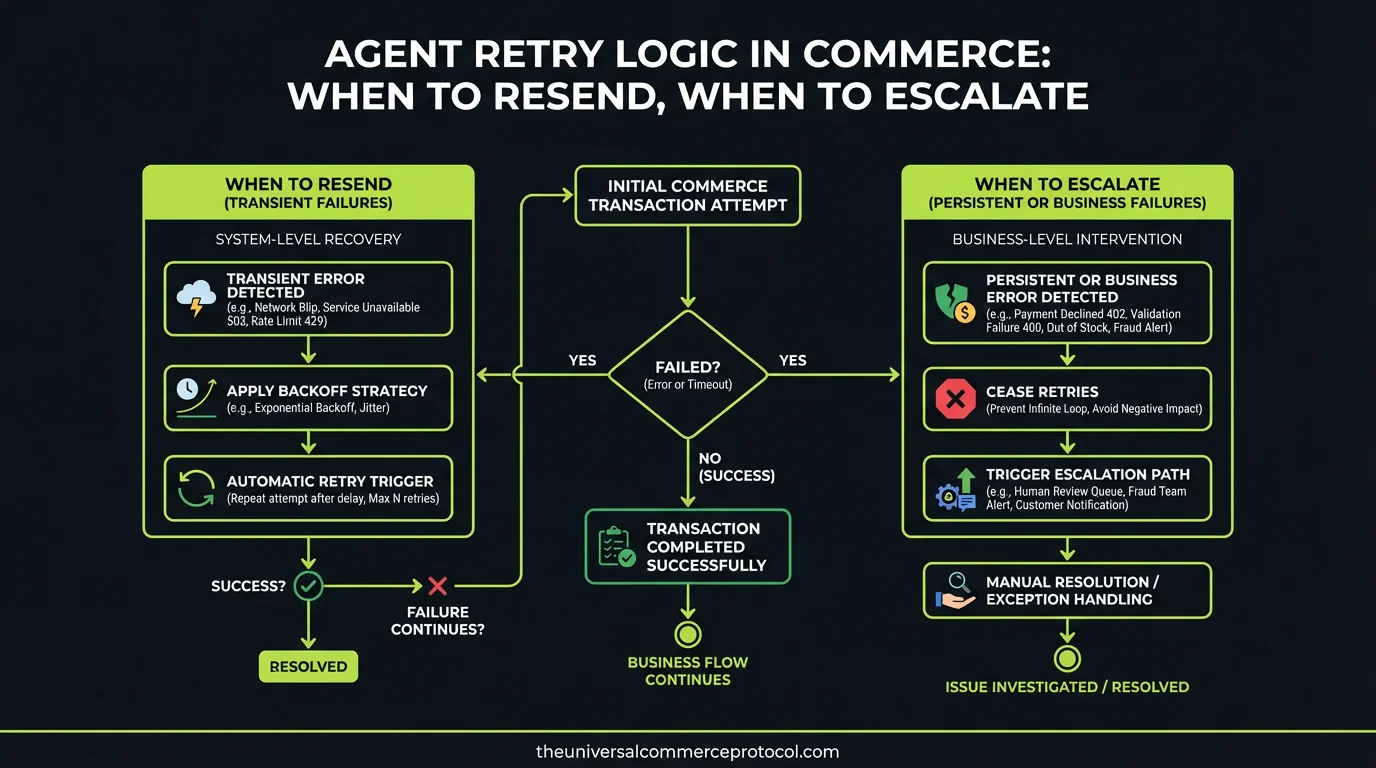
Agent Retry Logic in Commerce: Resend vs Escalate
Agentic commerce systems use deterministic retry logic based on HTTP status codes (5xx, 4xx) and idempotency keys to differentiate transient failures from permanent failures, implementing exponential backoff and circuit breaker patterns across payment processors including Stripe, Square, and PayPal. State machine decision trees evaluate retry eligibility while preventing cascading failures in real-time transaction processing. Escalation…
-
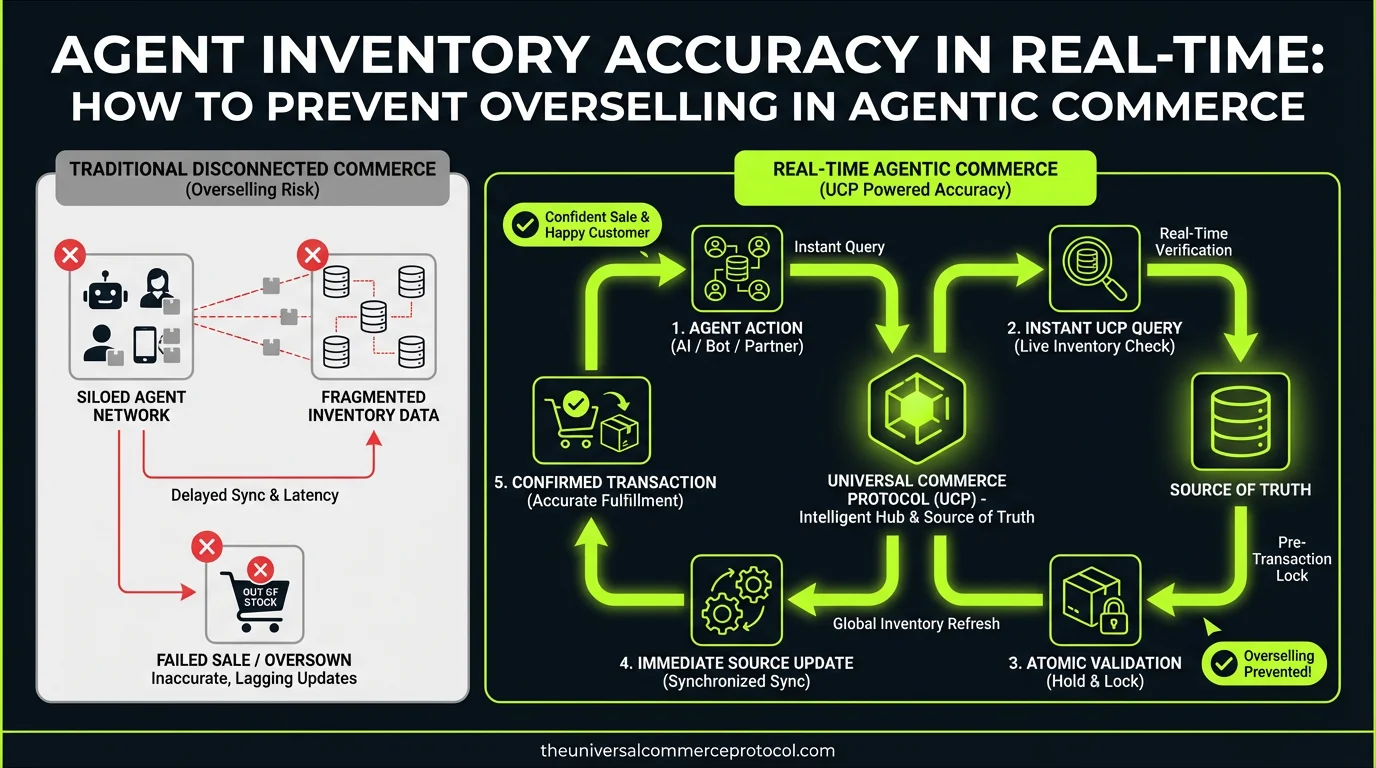
Real-Time Inventory Accuracy for Agentic Commerce
Real-time inventory accuracy in agentic commerce systems requires event-driven architectures leveraging Apache Kafka or AWS SQS message brokers integrated with ACID-compliant databases and optimistic locking protocols across Inventory Management Systems (IMS) and Order Management Systems (OMS) connected to Amazon, eBay, and Shopify. Distributed transaction coordination using two-phase commit patterns and saga choreography achieves sub-100-millisecond inventory…
-

Architectural Patterns for Real-Time Inventory Consistency in Multi-Channel Commerce Systems
Design patterns and implementation strategies for preventing inventory race conditions when AI agents operate at machine speed across distributed commerce systems.
-

UCP Multi-Item Orders: How Agents Handle Partial Fulfillment
AI agents navigating multi-item orders face partial fulfillment in 45% of B2B purchases. Learn how UCP agents query ATP, split shipments, and manage payment h
-

The 10 Things We Know for Certain About the Agentic Web — And Why Everything Else Is Noise
We queried 16 AI models across 8 organizations, ran neural embedding expansion across 60 semantic concepts, and deployed WebMCP on a live site. These are the 10 things we are certain about — backed by convergent evidence from multiple independent sources.
-
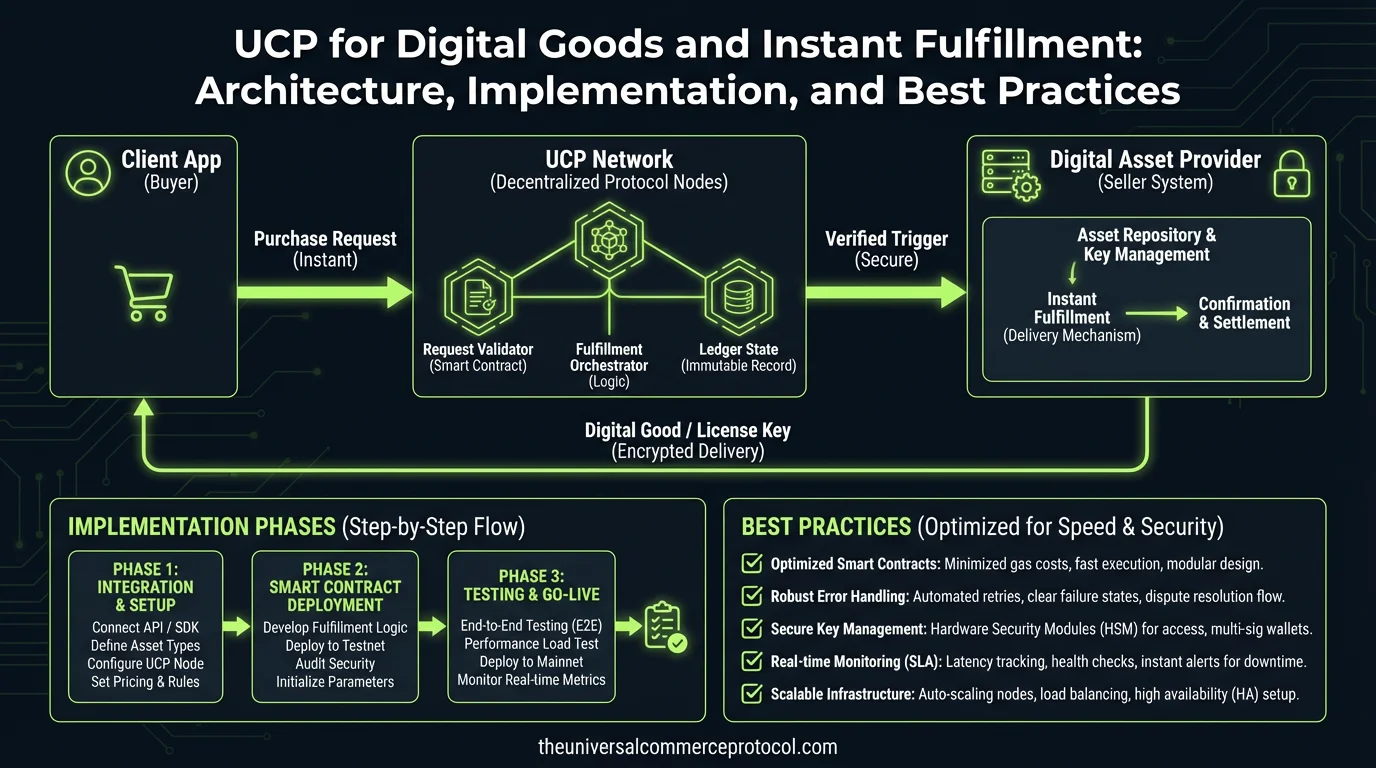
UCP for Digital Goods: Architecture & Instant Fulfillment
The Universal Commerce Protocol (UCP) is a standardized API framework enabling instant fulfillment of digital goods—including software licenses, streaming subscriptions, and SaaS applications—through automated transaction workflows compliant with PCI DSS Level 1 and OAuth 2.0 standards. UCP architecture integrates payment processors (Stripe, PayPal), content delivery networks (Cloudflare, Akamai), and fulfillment engines to provision digital assets…
-

UCP Agent Testing & QA Framework for Commerce
UCP agent testing frameworks implement ISO/IEC/IEEE 29119 standardized methodologies across unit, integration (Stripe, PayPal, Square, SAP, NetSuite), and end-to-end omnichannel testing phases, with QA protocols enforcing PCI DSS Level 1 compliance, SOC 2 Type II attestation, and ≥99.9% transaction uptime SLAs. These frameworks establish measurable security, operational, and performance benchmarks for autonomous commerce agents operating…
-
UCP Agent Hallucination: Detection & Recovery
Unified Commerce Platform (UCP) agents operating in production environments experience hallucination events characterized by false inventory counts, inaccurate product pricing data, and incorrect order status information across omnichannel systems. Mitigation strategies include confidence scoring mechanisms, multi-source data validation protocols, automated rollback procedures, and human-in-the-loop verification workflows that reduce transaction errors, prevent revenue leakage, and maintain…