Category: Strategy & Business Impact
-
AI Commerce Compliance: The $2.3M Cost of Failed Audits CFOs Must Prevent
Regulatory failures in AI-driven commerce average $2.3M in penalties. See the exact compliance framework CFOs at Mastercard and Visa merchant…
-
Building Stateful AI Agents: Architecture Patterns for Multi-Turn Commerce Systems
Technical blueprint for implementing robust state management in conversational commerce agents that handle complex multi-turn interactions.
-
Modeling Commerce Agent Decision-Making: The Multi-Objective Optimization Problem
Commerce AI agents face a complex multi-objective optimization problem balancing cost, timing, and demand uncertainty in procurement decisions.
-
AI Agent Procurement Risks: The $3M Blind Spot Destroying Profit Margins
AI agents making autonomous purchasing decisions are creating unexpected margin erosion and working capital inefficiencies worth millions in losses.
-
Multi-Agent Negotiation Systems: Training AI for Autonomous Commerce Decisions
Agent-to-agent commerce creates novel ML challenges around negotiation strategies, multi-objective optimization, and measuring autonomous decision quality.
-
Architecting Agent-to-Agent Commerce: Technical Challenges Beyond UCP
Building systems where AI agents negotiate directly creates new architectural patterns that existing commerce frameworks aren’t designed to handle.
-
The Hidden Financial Risk in AI Commerce: When Your Systems Start Negotiating Million-Dollar Deals
AI agents are now autonomously negotiating B2B deals worth millions—creating compliance gaps and liability risks that could blindside your finance…
-

Feature Contamination in Commerce AI: A Data Science Framework for Agent Robustness
Data poisoning attacks exploit feature space vulnerabilities in commerce agents, requiring novel detection methods beyond traditional validation.
-
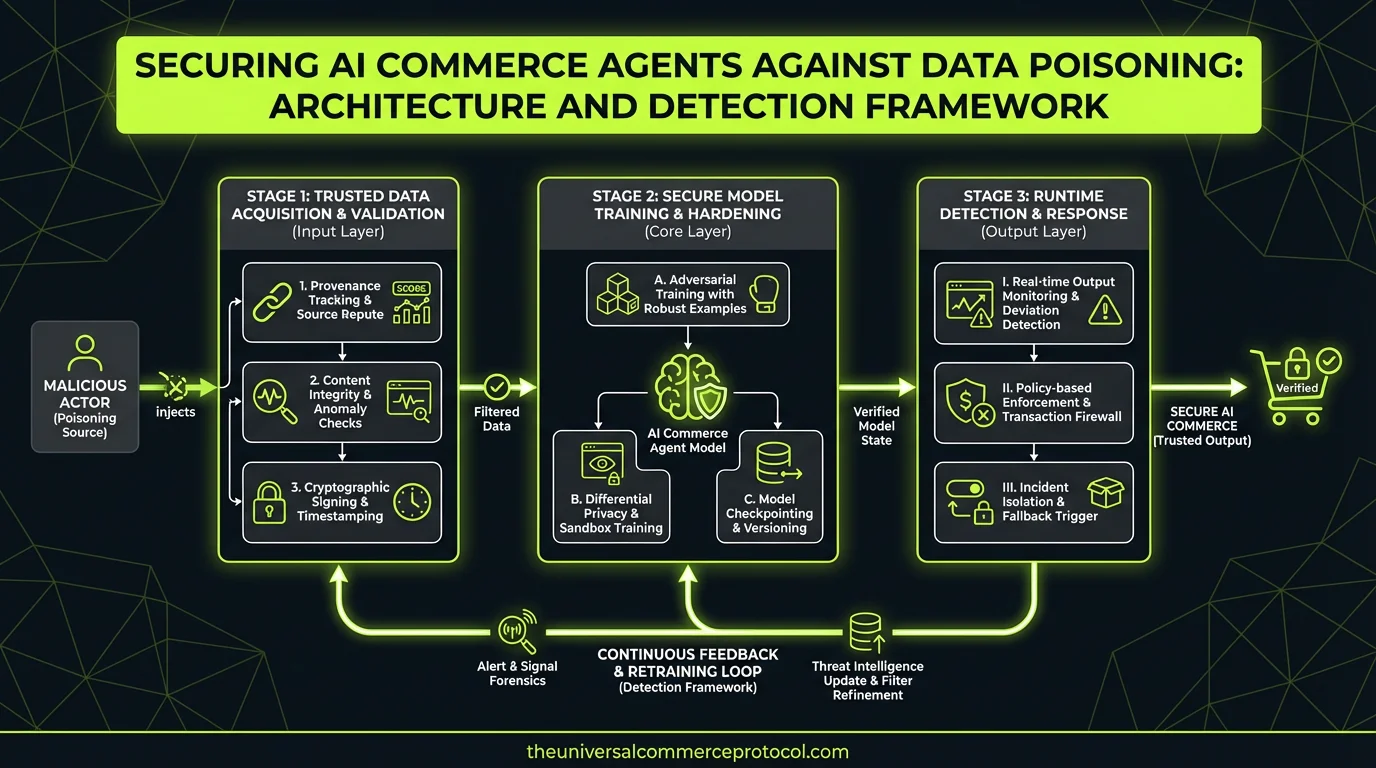
Securing AI Commerce Agents Against Data Poisoning
Data poisoning attacks on AI commerce agents exploit vulnerabilities in supply chain management systems, dynamic pricing engines, and inventory databases…
-
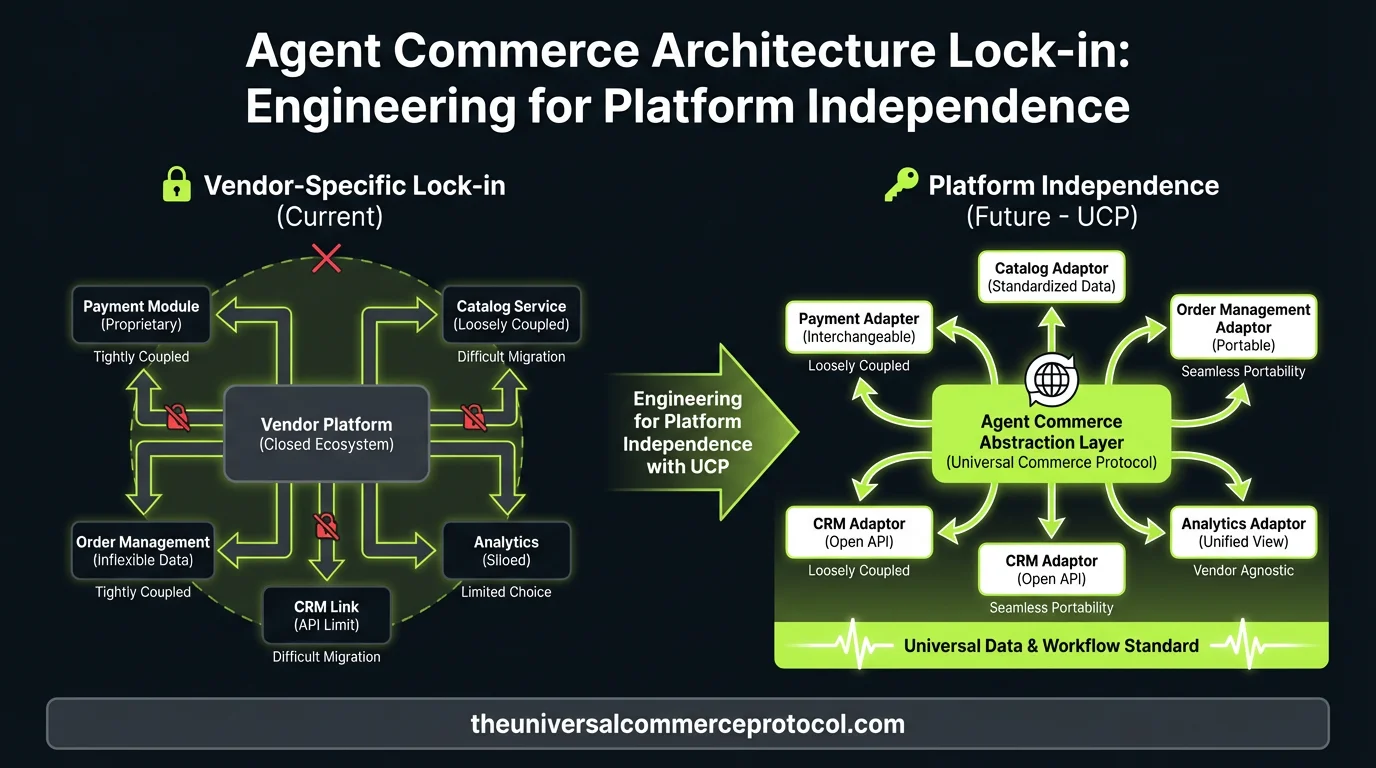
Agent Commerce Architecture: Avoiding Platform Lock-in
Agent commerce architecture requires implementing vendor-agnostic API abstractions and multi-LLM integration patterns to prevent platform lock-in with providers like OpenAI,…