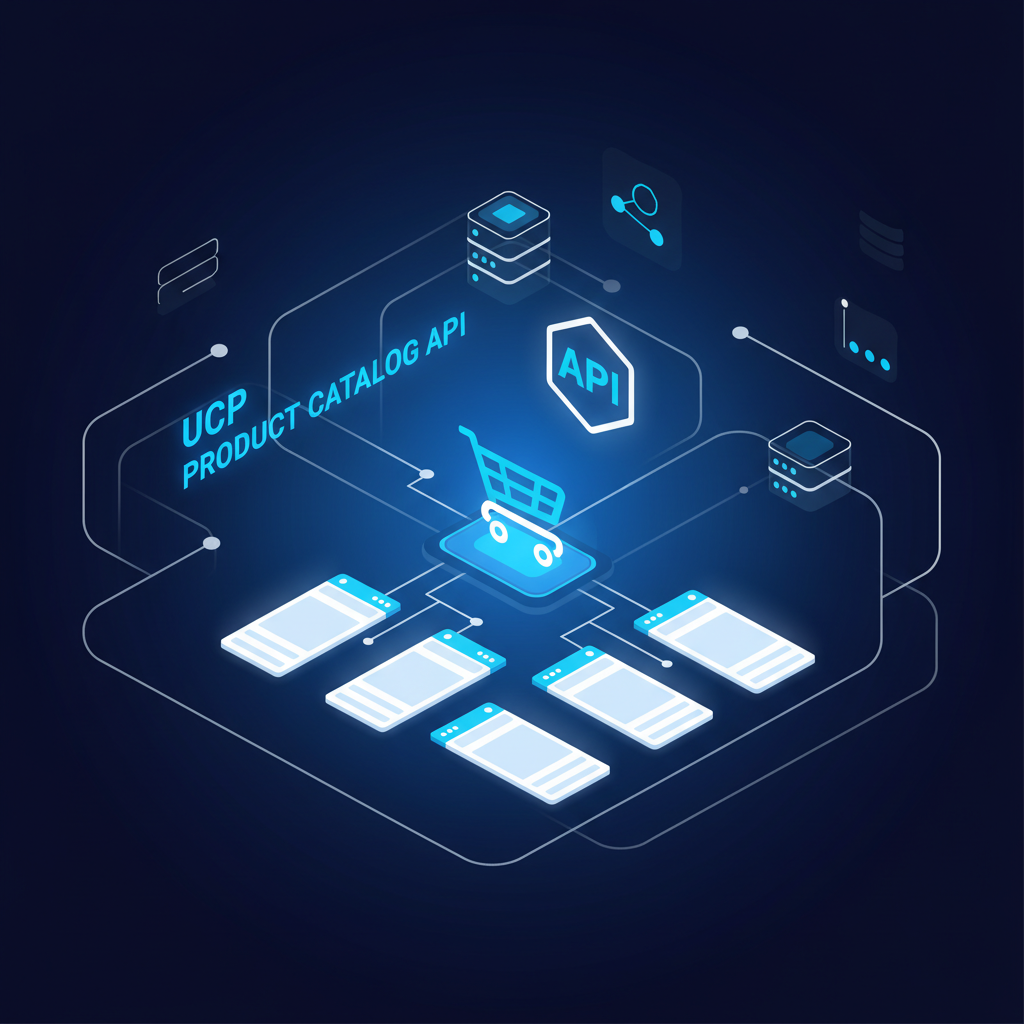
Migrating an established e-commerce platform to integrate with Google’s Universal Commerce Protocol (UCP) isn’t a rip-and-replace operation; it’s a strategic augmentation designed to unlock agentic commerce capabilities without disrupting your core business logic. This guide provides a definitive, step-by-step roadmap for developers, merchants, and strategists, focusing on the technical and strategic nuances required to seamlessly bridge your existing infrastructure with UCP. The objective is to enable your platform to participate fully in the agentic commerce ecosystem, driving new discovery channels and transaction volumes by exposing your product catalog and transactional capabilities through UCP’s standardized interfaces, thereby enhancing market reach and customer experience.
UCP Integration Paradigm: Augment, Not Replace
The fundamental principle behind integrating UCP with an existing e-commerce platform is augmentation. UCP acts as an intelligent orchestration layer, sitting above or alongside your existing systems. It consumes data and interacts with your platform via defined APIs, translating agent requests into actions your system understands and executing them. This is a critical distinction from traditional platform migrations, which often involve extensive data transfers, re-platforming, and a complete overhaul of operational workflows. With UCP, your established product catalog, inventory management, order processing, payment gateways, and fulfillment systems remain the authoritative sources. UCP merely provides the standardized conduit for intelligent agents to interact with these systems.
Key components of your existing platform that will interface with UCP include:
- Product Catalog: Exposed via UCP’s Product Feed specifications.
- Inventory & Pricing: Real-time updates delivered to UCP.
- Shopping Cart Logic: Interfaced via UCP’s
cartsAPI. - Order Management System (OMS): Integrated via UCP’s
ordersAPI for creation, updates, and fulfillment. - Payment Gateway: Orchestrated to process agent-initiated transactions.
- Shipping & Fulfillment: Providing options and receiving instructions from UCP.
Phase 1: Strategic Assessment and Planning
Before writing a single line of code, a thorough strategic assessment is paramount. This phase defines the scope, identifies potential architectural challenges, and prepares your data landscape.
Defining Your UCP Scope and Objectives
Start by articulating the specific agentic commerce use cases you aim to enable. Are you primarily targeting enhanced product discovery through conversational AI, allowing full agent-driven transactions, or focusing on post-purchase support?
- Discovery & Research: Enabling agents to accurately find, compare, and recommend your products. This primarily involves robust Product Feed integration.
- Personalized Shopping: Leveraging agent capabilities for tailored recommendations and guided purchases. Requires deeper data integration and potentially custom attributes.
- Full Transactional Flow: Allowing agents to add items to a cart, configure shipping, process payments, and place orders. This necessitates comprehensive integration with
cartsandordersAPIs. - Post-Purchase Support: Facilitating agent-assisted order tracking, returns, and exchanges. Requires
ordersAPI updates and potentially custom support endpoints.
Architectural Review and Gap Analysis
Conduct a detailed review of your existing e-commerce architecture. Map your current system capabilities against UCP’s requirements.
- Product Catalog Service: Does it expose product data in a structured, easily consumable format? Are all required UCP attributes (SKU, GTIN, title, description, image URLs, price, availability, shipping info) readily available?
- Inventory Management System (IMS): Can it provide real-time inventory levels and pricing updates? Does it support webhooks or an API for proactive notifications?
- Order Management System (OMS): Can it receive new orders programmatically via an API? Can it provide status updates?
- Payment Gateway Integration: Is your payment processor API-accessible for tokenized payments?
- Shipping & Fulfillment Service: Can it provide dynamic shipping options and rates based on destination and cart contents?
Data Readiness Assessment
UCP’s effectiveness is directly tied to the quality and structure of your product data.
- Product Data Quality: Assess the completeness, accuracy, and consistency of your product information. Missing descriptions, low-resolution images, or inconsistent pricing will degrade agent performance.
- Schema Mapping: Begin mapping your internal product data schema to the UCP Product Feed Specification. This includes identifying which internal fields correspond to UCP’s
title,description,gtin,mpn,brand,price,availability, andshippingattributes. - Customer Data Implications: While UCP primarily handles transactional data, consider privacy implications if you plan to pass any customer-specific context for personalization. Ensure compliance with regulations like GDPR or CCPA.
Resource Allocation and Timeline Estimation
Assemble your migration team. This typically includes:
- Project Manager: To coordinate efforts across teams.
- Backend Developers: For API integration, data transformation, and middleware development.
- Data Engineers: For product feed generation and ongoing data synchronization.
- QA Engineers: For comprehensive testing of agent interactions.
- Business Strategist/Product Owner: To guide UCP use cases and validate agent behavior.
Phase 2: Data Harmonization and Feed Generation
The foundation of any UCP integration is a robust and accurate product data feed. This phase focuses on transforming your existing product data into UCP-compliant formats and ensuring its freshness.
Conforming to the UCP Product Feed Specification
Your product data must adhere to the structured format expected by UCP. This typically involves generating a feed in JSON-LD or a similar structured data format that agents can parse.
Key Attributes for UCP:
-
id: Unique identifier for the product (e.g., SKU). -
gtin/mpn: Global Trade Item Number / Manufacturer Part Number for product identification. -
title: Clear and concise product name. -
description: Detailed information about the product. -
image_link: URL to the primary product image. -
link: URL to the product page on your e-commerce site. -
price: Current price, including currency. -
availability:in stock,out of stock,preorder. -
condition:new,used,refurbished. -
brand: Product brand. -
shipping: Detailed shipping information (country, service, price). -
custom_attributes: Any additional product-specific data that might be useful for agents (e.g.,material,color_family,size_chart_link).
{
  "@context": "http://schema.org/",
  "@type": "Product",
  "name": "Acme Wireless Headphones Pro",
  "sku": "ACME-WHP-PRO-BLK",
  "gtin13": "1234567890123",
  "description": "Experience unparalleled audio quality with Acme Wireless Headphones Pro. Featuring active noise cancellation and 40-hour battery life.",
  "image": "https://yourstore.com/images/headphones-pro.jpg",
  "url": "https://yourstore.com/products/headphones-pro",
  "brand": {
    "@type": "Brand",
    "name": "Acme"
  },
  "offers": {
    "@type": "Offer",
    "priceCurrency": "USD",
    "price": "299.99",
    "itemCondition": "http://schema.org/NewCondition",
    "availability": "http://schema.org/InStock",
    "url": "https://yourstore.com/products/headphones-pro",
    "seller": {
      "@type": "Organization",
      "name": "Your Store Name"
    },
    "shippingDetails": [
      {
        "@type": "OfferShippingDetails",
        "shippingRate": {
          "@type": "MonetaryAmount",
          "value": 5.99,
          "currency": "USD"
        },
        "shippingDestination": {
          "@type": "DefinedRegion",
          "addressCountry": "US"
        },
        "deliveryTime": {
          "@type": "ShippingDeliveryTime",
          "handlingTime": {
            "@type": "QuantitativeValue",
            "minValue": 1,
            "maxValue": 2,
            "unitCode": "DAY"
          },
          "transitTime": {
            "@type": "QuantitativeValue",
            "minValue": 3,
            "maxValue": 5,
            "unitCode": "DAY"
          }
        }
      }
    ]
  }
}
Implement a data pipeline (e.g., a scheduled job, a dedicated microservice) that extracts, transforms, and loads (ETL) your product data into this UCP-compliant format.
Establishing Real-time Inventory and Price Updates
Stale inventory or pricing data is detrimental to agent accuracy and customer trust. UCP requires mechanisms for near real-time updates.
- Delta Feeds: Instead of re-sending your entire catalog, implement a system that generates delta feeds (only changed products) at frequent intervals.
- UCP Products API: For critical, immediate updates (e.g., an item going out of stock), use the UCP
products.patchAPI. This allows you to update specific attributes for a product by itsid.
products.patch API
PATCH https://universalcommerceprotocol.googleapis.com/v1alpha/{name=products/*}
Authorization: Bearer [YOUR_ACCESS_TOKEN]
Content-Type: application/json

{
  "id": "ACME-WHP-PRO-BLK",
  "availability": "OUT_OF_STOCK"
}
Integrate this API call into your IMS whenever inventory levels or prices change.
Phase 3: Core UCP Agent API Integration
This phase involves building the bridge between UCP’s transactional APIs and your existing e-commerce platform’s core functionalities. You will implement endpoints on your platform that UCP’s Agent API can call.
Implementing the Product Search and Retrieval Endpoint
UCP agents will use your products API to find specific items or browse your catalog. Your existing product search service must be adapted to respond to UCP’s requests.
-
products.search: Your endpoint should accept parameters likequery(text search),filters(e.g.,brand,category,price_range),pageSize, andpageToken, and return a list of UCP-compliantProductobjects. -
products.get: For retrieving details of a single product by itsid.
products.search -> Your API Gateway routes to your internal product search service -> Your service queries your product database -> Transforms results into UCP Product objects -> Returns to UCP.
Integrating the Cart and Checkout Flow
This is where agents begin to perform transactional actions. Your existing shopping cart and checkout logic must be exposed and adaptable.
-
carts.addItems: Map this to your existing API for adding items to a user’s shopping cart. It will receiveline_itemswithproduct_idandquantity. Your system should handle session management (for guest carts) or user identification (for logged-in users). -
carts.updateItems/carts.removeItems: Map these to your existing cart modification logic. -
orders.create: This is the critical endpoint for finalizing an order. It will receive the full cart contents,shipping_address,shipping_options, andpayment_info(which includes tokenized payment details). Your system will then:
Order object to UCP with a unique order_id and initial status.
Example: Conceptual orders.create request from UCP
{
  "cart": {
    "lineItems": [
      {
        "productId": "ACME-WHP-PRO-BLK",
        "quantity": 1,
        "price": { "amount": "299.99", "currencyCode": "USD" }
      }
    ],
    "totalPrice": { "amount": "299.99", "currencyCode": "USD" }
  },
  "shippingInfo": {
    "address": {
      "recipientName": "Jane Doe",
      "streetAddress": "123 Main St",
      "city": "Anytown",
      "state": "CA",
      "postalCode": "90210",
      "countryCode": "US"
    },
    "shippingMethodId": "standard_shipping_5_99" // ID from your shipping options
  },
  "paymentInfo": {
    "paymentMethodToken": "tok_visa_xxxx", // Token from the payment processor
    "paymentProcessorId": "stripe" // Your internal ID for the payment processor
  }
}
Your system’s response to orders.create would return a UCP Order object.
Payment Gateway Orchestration
UCP does not directly process payments; it orchestrates them. Agents collect payment information (e.g., credit card details) from the user, tokenize it via a compliant payment processor, and pass this token via payment_info in the orders.create call.
Your backend must:
- Receive the
paymentMethodTokenandpaymentProcessorIdfrom UCP. - Use this token with your existing payment gateway integration to authorize and capture the payment.
- Ensure your system remains PCI DSS compliant, as UCP handles tokens, not raw card data.
Shipping and Fulfillment Integration
When an agent requests shipping options or finalizes an order, your system needs to provide accurate shipping information.
- Dynamic Shipping Rates: Your
carts.getororders.createendpoint should integrate with your existing shipping rate calculator API to provide real-time shipping options based on the cart contents, destination, and chosen shipping method. -
shippingOptions: UCP expects a list of availableshippingOptionswithid,name,description, andprice. - Fulfillment Instructions: Once an order is placed, your OMS should receive all necessary fulfillment details (shipping address, chosen shipping method) from the
orders.createpayload to initiate the fulfillment process.
Phase 4: Post-Order Management and Synchronization
The integration doesn’t end with order creation. Agents and users need up-to-date information on their orders.
Order Status Updates
As order statuses change in your OMS (e.g., PROCESSING, SHIPPED, DELIVERED, CANCELLED), you must push these updates back to UCP.
- UCP
orders.updateAPI: Use this API to notify UCP of status changes, tracking numbers, or other relevant fulfillment details. This ensures the agent has the most current information to provide to the user.
orders.update API
PATCH https://universalcommerceprotocol.googleapis.com/v1alpha/{name=orders/*}
Authorization: Bearer [YOUR_ACCESS_TOKEN]
Content-Type: application/json

{
  "orderId": "YOUR_INTERNAL_ORDER_ID_123",
  "orderStatus": "SHIPPED",
  "fulfillmentInfo": {
    "trackingId": "TRK123456789",
    "carrier": "UPS"
  }
}
Returns and Refunds
If your UCP scope includes agent-assisted post-purchase actions, integrate your returns and refunds process.
-
orders.cancel/orders.refund: Your system should expose APIs that allow UCP to initiate cancellations or refunds, which then trigger your internal processes. The agent can then communicate the outcome to the user. This requires careful consideration of business logic for eligibility and processing.
Phase 5: Testing, Deployment, and Optimization
Rigorous testing and continuous optimization are crucial for a successful UCP migration.
Comprehensive End-to-End Testing
- Unit & Integration Tests: Thoroughly test each UCP API endpoint (e.g.,
products.search,carts.addItems,orders.create) in isolation and as part of a flow. - User Acceptance Testing (UAT) with Agent Simulations: Simulate various agent interactions, including edge cases:
carts.addItems or orders.create.
* Payment failures.
* Invalid shipping addresses.
* Complex product queries.
* Cancellations and returns.
* Ensure data consistency across your internal systems and UCP.
- Data Validation: Verify that all product data, prices, and inventory levels displayed by the agent accurately reflect your backend.
Performance and Scalability Benchmarking
UCP can drive significant traffic. Ensure your existing infrastructure can handle the increased load from UCP API calls.
- Latency: Monitor API response times. High latency will directly impact agent performance and user experience.
- Load Testing: Simulate concurrent agent requests to identify bottlenecks in your product catalog, cart, and order processing services.
- Database Performance: Optimize database queries for UCP-driven requests.
Monitoring and Iteration
- API Monitoring: Implement robust monitoring for all UCP-facing API endpoints. Track error rates, response times, and throughput.
- Data Feed Monitoring: Ensure your product data feeds are generated and ingested by UCP without errors and on schedule.
- Agent Performance Analytics: Leverage UCP’s analytics to understand how agents are interacting with your products and services. Identify areas for improvement in data quality, product descriptions, or API logic.
- A/B Testing: Consider A/B testing different product data representations or API responses to optimize agent effectiveness.
Strategic Considerations for Long-Term UCP Success
Beyond the technical implementation, several strategic elements will define your long-term success with UCP.
The Role of Custom Attributes and Extensibility
UCP allows for custom_attributes in product feeds and flexible data structures in API responses. Leverage this to expose unique selling propositions, specific product features, or business logic that can differentiate your offerings through agent interactions. For example, if you sell configurable products, use custom attributes to guide agent queries on customization options.
Data Governance and Privacy
When exposing data to UCP, maintain stringent data governance. Clearly define what data is shared, how it’s used, and ensure it complies with all relevant privacy regulations. UCP is designed with privacy in mind, but your internal data handling practices remain critical. Do not expose sensitive customer data that is not explicitly required for a transaction or service.
Agent Experience Design
Think beyond just data pipes. How will agents interpret and leverage the information you provide?
- Clarity of Product Descriptions: Agents rely on well-structured and clear descriptions.
- Comprehensive FAQs: If agents can answer common questions about your products or policies, it enhances the user experience.
- Error Handling: Provide clear, actionable error messages from your APIs so agents can gracefully inform users.
FAQ
Q1: Is UCP a replacement for my existing e-commerce platform? A1: No, UCP is not a replacement. It’s an augmentation layer that sits above or alongside your existing platform. Your current e-commerce system remains the authoritative source for product data, inventory, orders, and payments. UCP provides the standardized interfaces for intelligent agents to interact with your existing functionalities, extending your reach into agentic commerce without requiring a full re-platforming.
Q2: What’s the typical timeline for a UCP migration? A2: The timeline varies significantly based on the complexity of your existing platform, the scope of UCP features you aim to integrate (e.g., just discovery vs. full transactional flow), and the quality of your existing data. A basic product feed integration might take weeks, while a full, end-to-end transactional integration with robust error handling and post-purchase capabilities could take several months. A thorough strategic assessment (Phase 1) is crucial for accurate estimation.
Q3: How does UCP handle sensitive customer data during checkout?
A3: UCP is designed with privacy and security in mind. It does not directly handle raw sensitive payment information (like credit card numbers). Instead, it orchestrates the process: agents collect payment details from the user, tokenize them via a compliant payment processor (e.g., Stripe, Adyen), and then pass this secure paymentMethodToken to your existing e-commerce backend via the orders.create API. Your system then uses this token with your existing payment gateway integration to process the transaction, maintaining your PCI DSS compliance.
Q4: Can I migrate only a subset of my products to UCP initially? A4: Yes, absolutely. It’s often a recommended strategy to start with a subset of your product catalog (e.g., best-sellers, a specific category, or products with high-quality data) to test the integration and gather insights. You can then gradually expand the product range as you optimize your UCP integration and understand agent performance.
Q5: What are the main prerequisites before starting a UCP migration? A5: Key prerequisites include:
- API-accessible E-commerce Platform: Your existing platform must have robust, well-documented APIs for product data, inventory, cart management, order creation, and payment processing.
- Clean, Structured Product Data: High-quality, complete, and consistent product data is essential for effective agent interaction.
- Dedicated Technical Resources: A skilled team of developers and data engineers familiar with your platform and API integrations.
- Clear Business Objectives: A defined understanding of why you are integrating UCP and what specific agentic commerce use cases you want to enable.
Leave a Reply