Tag: Agentic Commerce
-
Multi-Agent Negotiation Systems: Training AI for Autonomous Commerce Decisions
Agent-to-agent commerce creates novel ML challenges around negotiation strategies, multi-objective optimization, and measuring autonomous decision quality.
-
Architecting Agent-to-Agent Commerce: Technical Challenges Beyond UCP
Building systems where AI agents negotiate directly creates new architectural patterns that existing commerce frameworks aren’t designed to handle.
-
The Hidden Financial Risk in AI Commerce: When Your Systems Start Negotiating Million-Dollar Deals
AI agents are now autonomously negotiating B2B deals worth millions—creating compliance gaps and liability risks that could blindside your finance team.
-
Feature Contamination in Commerce AI: A Data Science Framework for Agent Robustness
Data poisoning attacks exploit feature space vulnerabilities in commerce agents, requiring novel detection methods beyond traditional validation.
-
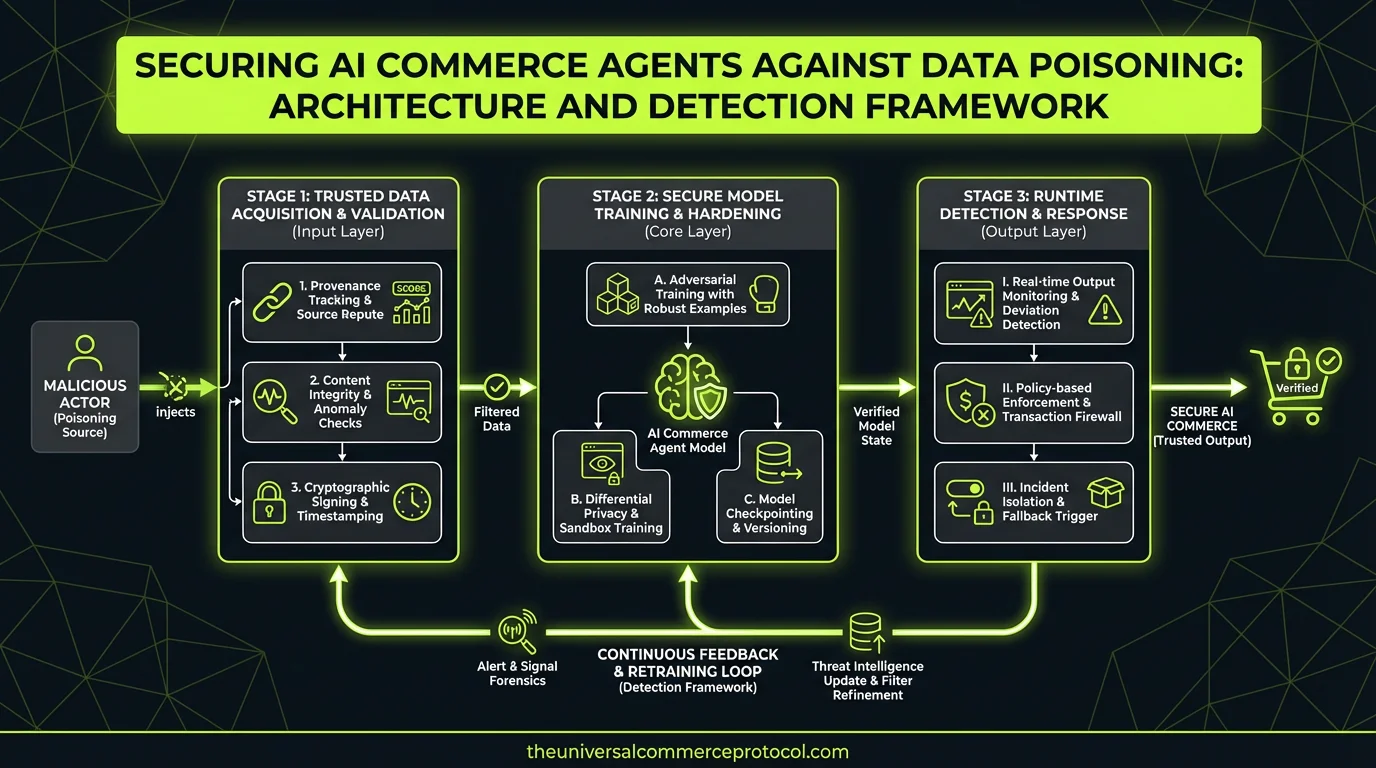
Securing AI Commerce Agents Against Data Poisoning
Data poisoning attacks on AI commerce agents exploit vulnerabilities in supply chain management systems, dynamic pricing engines, and inventory databases to inject malicious training data. Organizations must implement cryptographic integrity verification, input validation frameworks, and anomaly detection systems across procurement channels, price optimization models, and stock management platforms to prevent adversarial model degradation. Multi-vector defense…
-
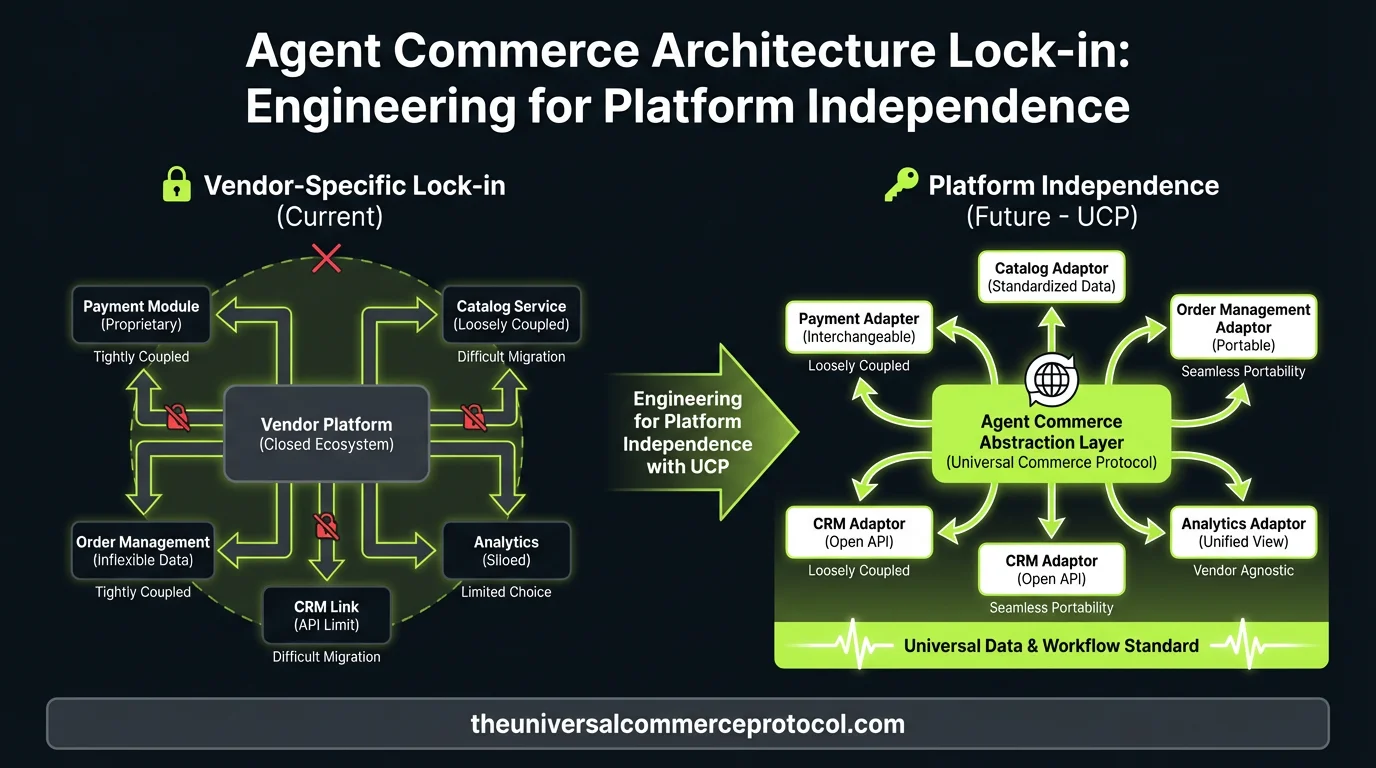
Agent Commerce Architecture: Avoiding Platform Lock-in
Agent commerce architecture requires implementing vendor-agnostic API abstractions and multi-LLM integration patterns to prevent platform lock-in with providers like OpenAI, Anthropic, and Google Cloud. Organizations should adopt containerized microservices deployed on Kubernetes, standardized message protocols (OpenAPI/AsyncAPI), and modular payment processor integrations (Stripe, Square, PayPal) to maintain system portability. This approach reduces switching costs and enables…
-
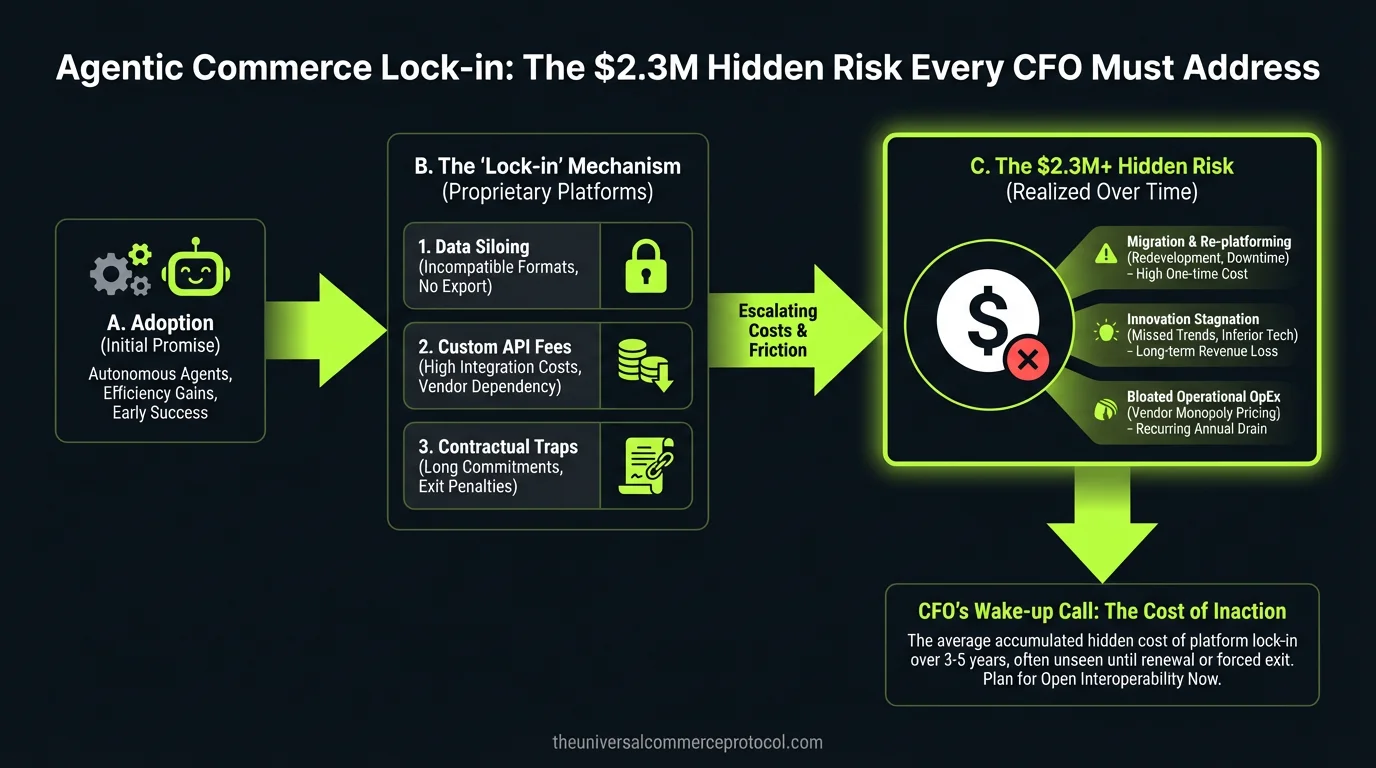
Agentic Commerce Lock-in: $2.3M CFO Risk
Agentic commerce platforms including Salesforce Einstein, Microsoft Copilot for Commerce, and custom LLM implementations impose switching costs exceeding $1.2M–$2.3M for mid-market merchants (annual revenue $50M–$500M), comprising retraining expenses, API integration rework, and operational downtime. CFOs face quantifiable vendor lock-in risk as proprietary agent frameworks become embedded across e-commerce, supply chain, and customer service operations. Organizations…
-
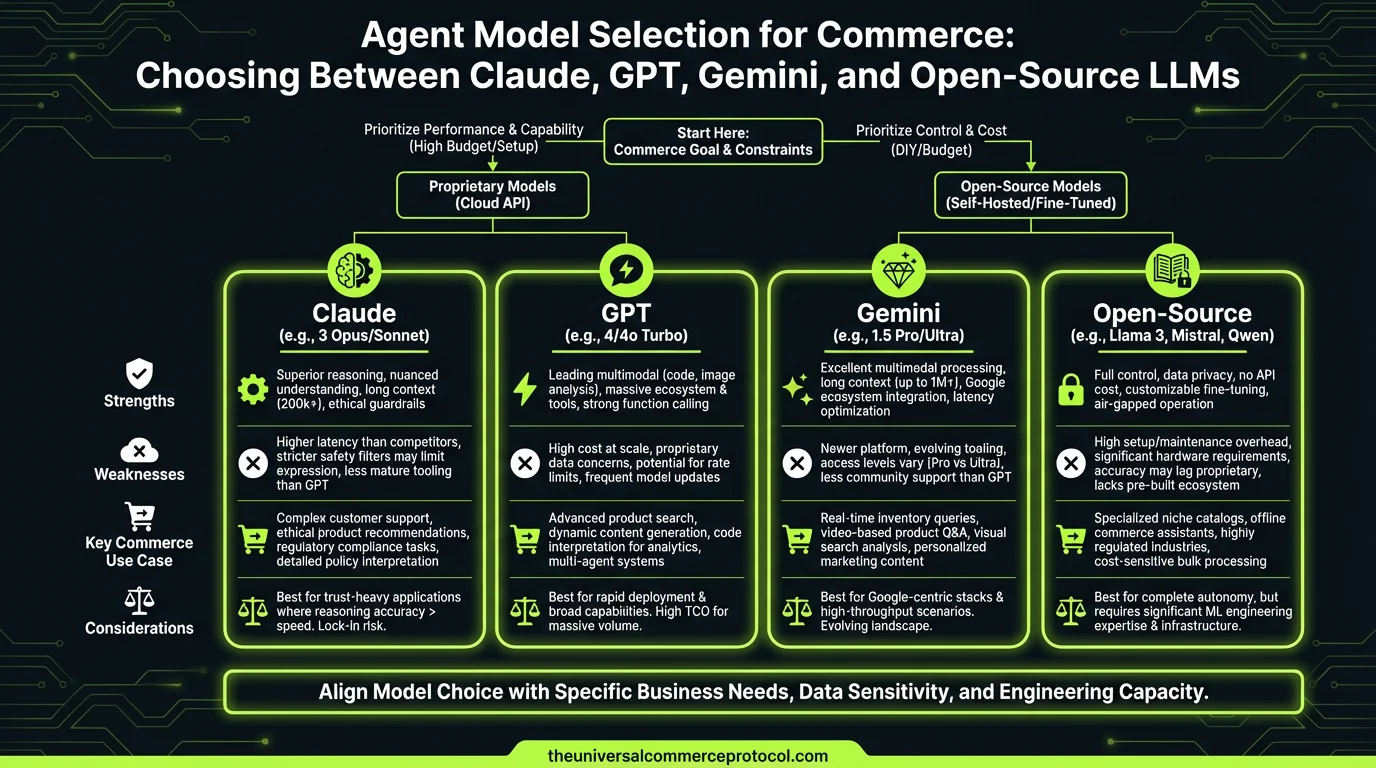
LLM Model Selection for AI Commerce Agents
Agent model selection for commerce requires evaluating Anthropic Claude (3.5 Sonnet, 3 Opus), OpenAI GPT-4 and GPT-4o, and Google Gemini (1.5 Pro, 2.0 Flash) across latency benchmarks, token pricing structures, and compliance frameworks including SOC 2 Type II and GDPR requirements. Open-source alternatives such as Meta Llama 3.1, Mistral Large, and Qwen achieve cost optimization…
-
Agent Consent & Privacy: Building Trust in AI Commerce
GDPR Article 7 and FTC Act Section 5 establish legal frameworks for e-commerce platforms to deploy consent management systems that require explicit opt-in authorization for AI shopping agents, including transaction categories, spending caps defined in USD/EUR, and product restrictions. Compliance requires disclosure of machine learning decision trees under FTC Guidelines on Algorithmic Transparency (2020), with…
-
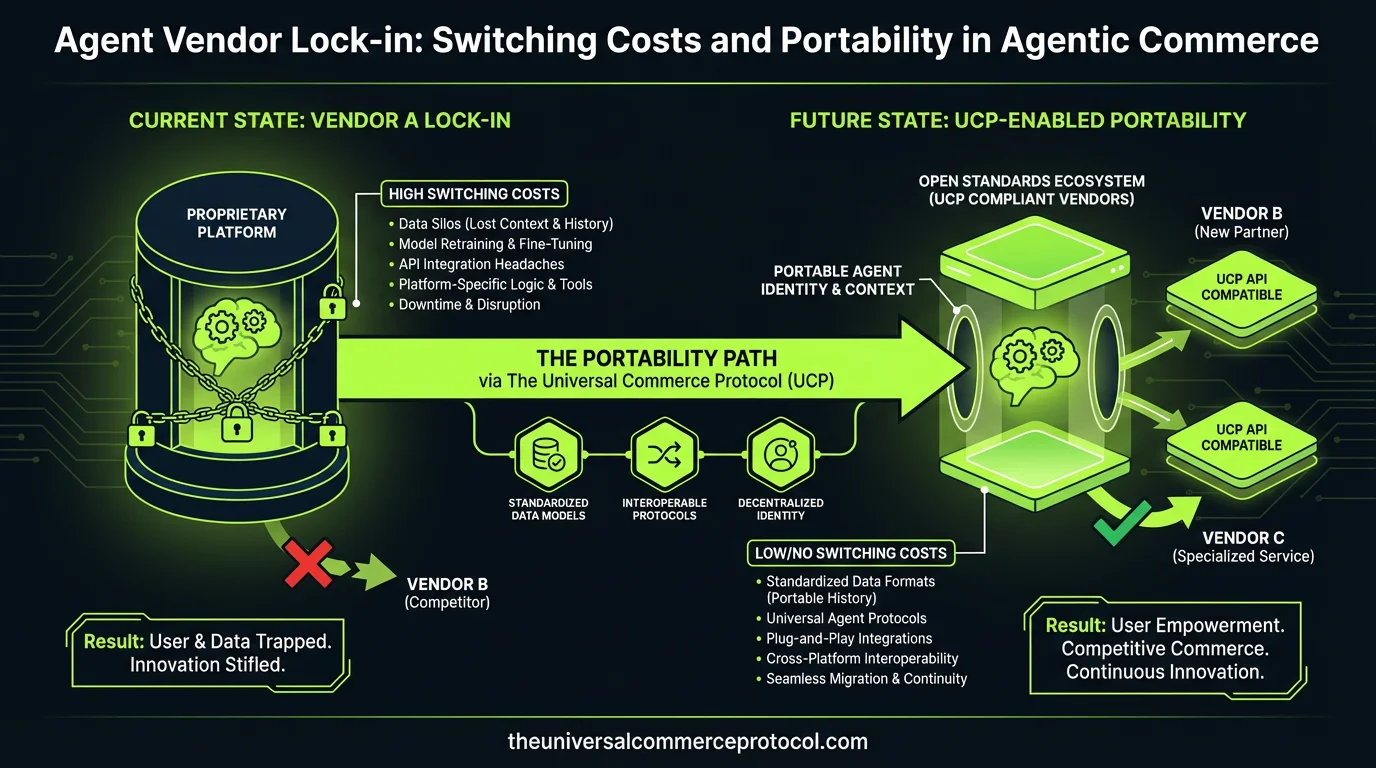
Agent Vendor Lock-in: Switching Costs in Agentic Commerce
Merchant adoption of AI agents from vendors including OpenAI, Anthropic, and specialized commerce platforms creates switching friction through proprietary APIs, closed data formats, and vendor-specific agent frameworks. Portable agentic commerce architectures require standardized interfaces such as OpenAPI 3.0 specifications, interoperable data schemas including JSON-LD and Schema.org markup, and abstraction layers that decouple business logic from…