Tag: Agentic Commerce
-
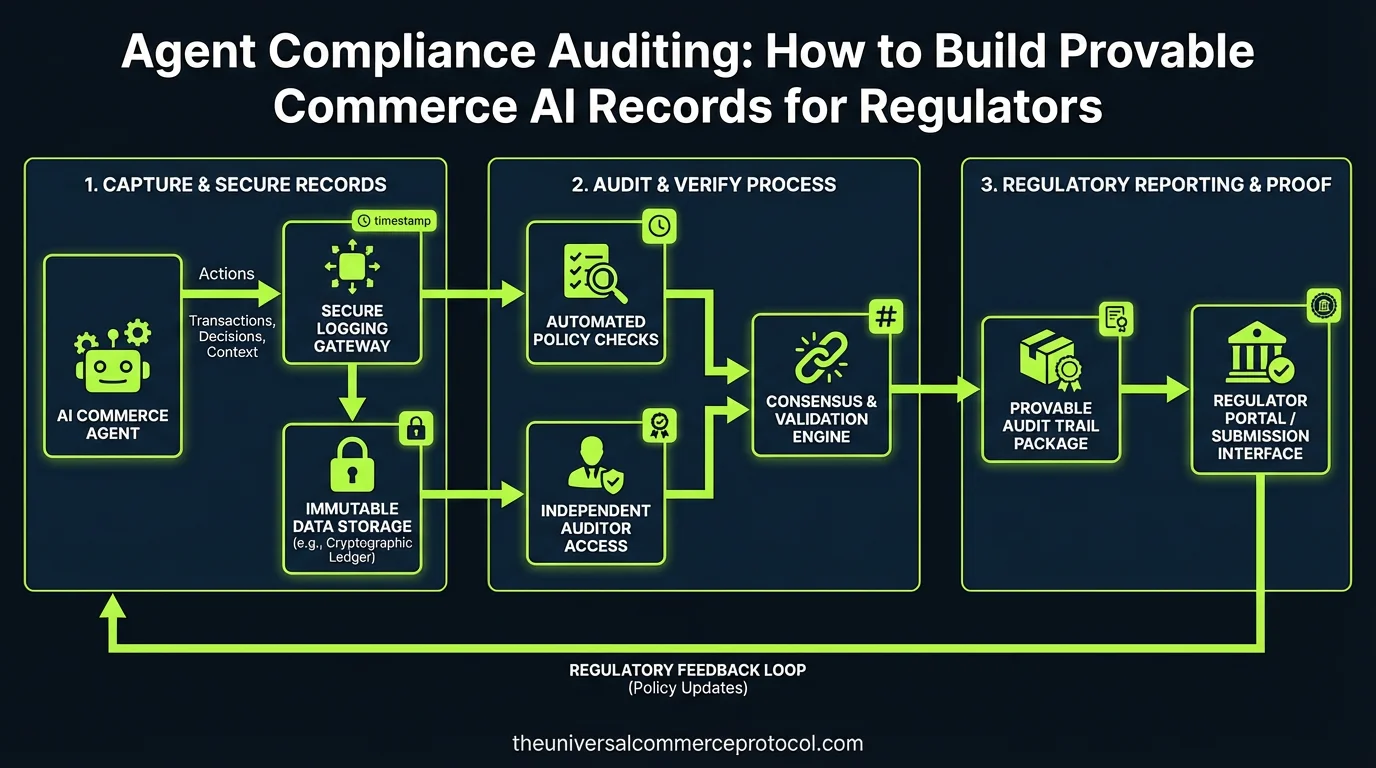
AI Agent Compliance Auditing: Provable Commerce Records
The Federal Trade Commission (FTC), Securities and Exchange Commission (SEC), and state attorneys general enforce audit trail requirements under the Fair Credit Reporting Act (FCRA) and Gramm-Leach-Bliley Act (GLBA), with the Office of the Comptroller of the Currency (OCC) mandating machine-readable compliance records documenting AI agent decision logic, input variables, and output justifications. Financial institutions…
-
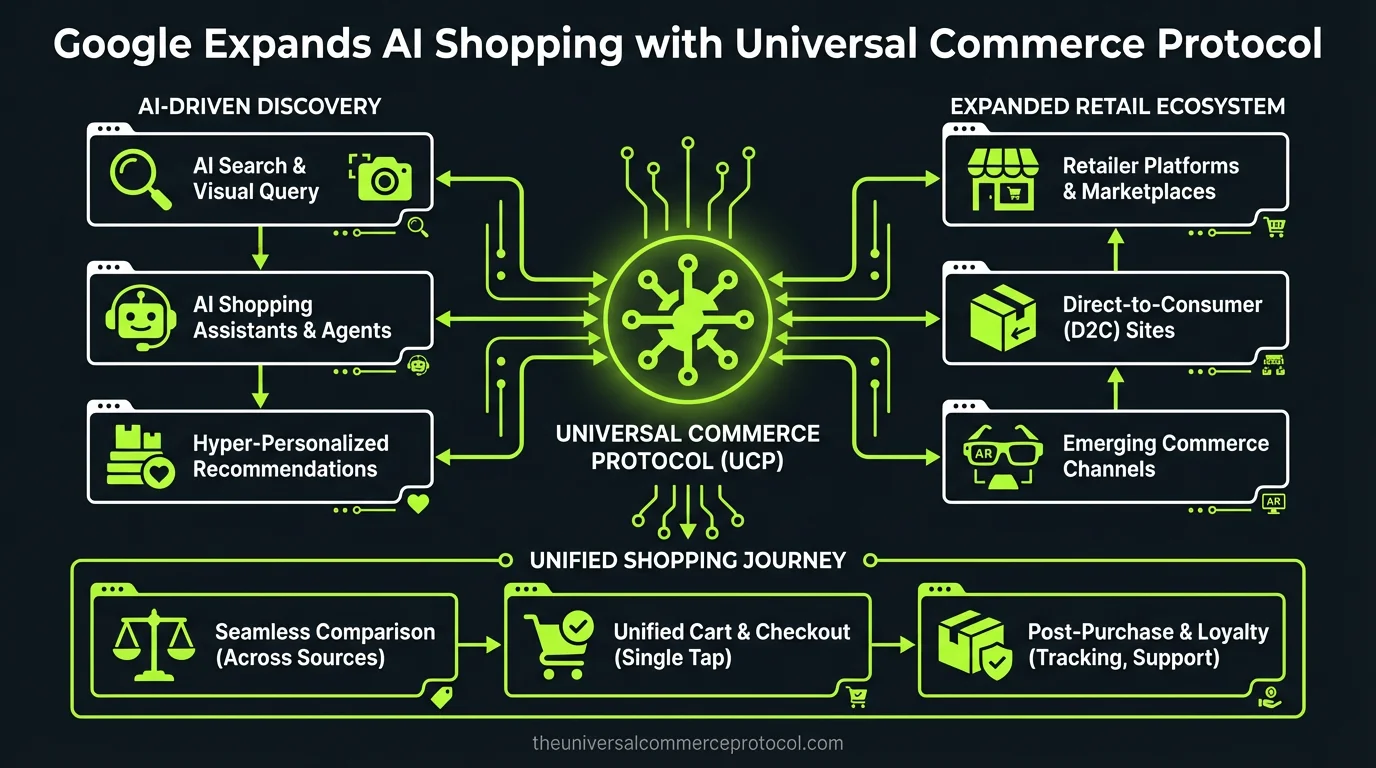
Google Expands AI Shopping with Universal Commerce
Google’s Universal Commerce Protocol (UCP) expansion across the United States integrates generative AI-powered product discovery and real-time checkout into Google Search, Google Maps, and YouTube, enabling merchants to synchronize inventory dynamically while leveraging Google’s AI infrastructure for streamlined customer journeys. This initiative directly competes with Amazon’s e-commerce ecosystem by embedding transactional capabilities into Google’s search…
-
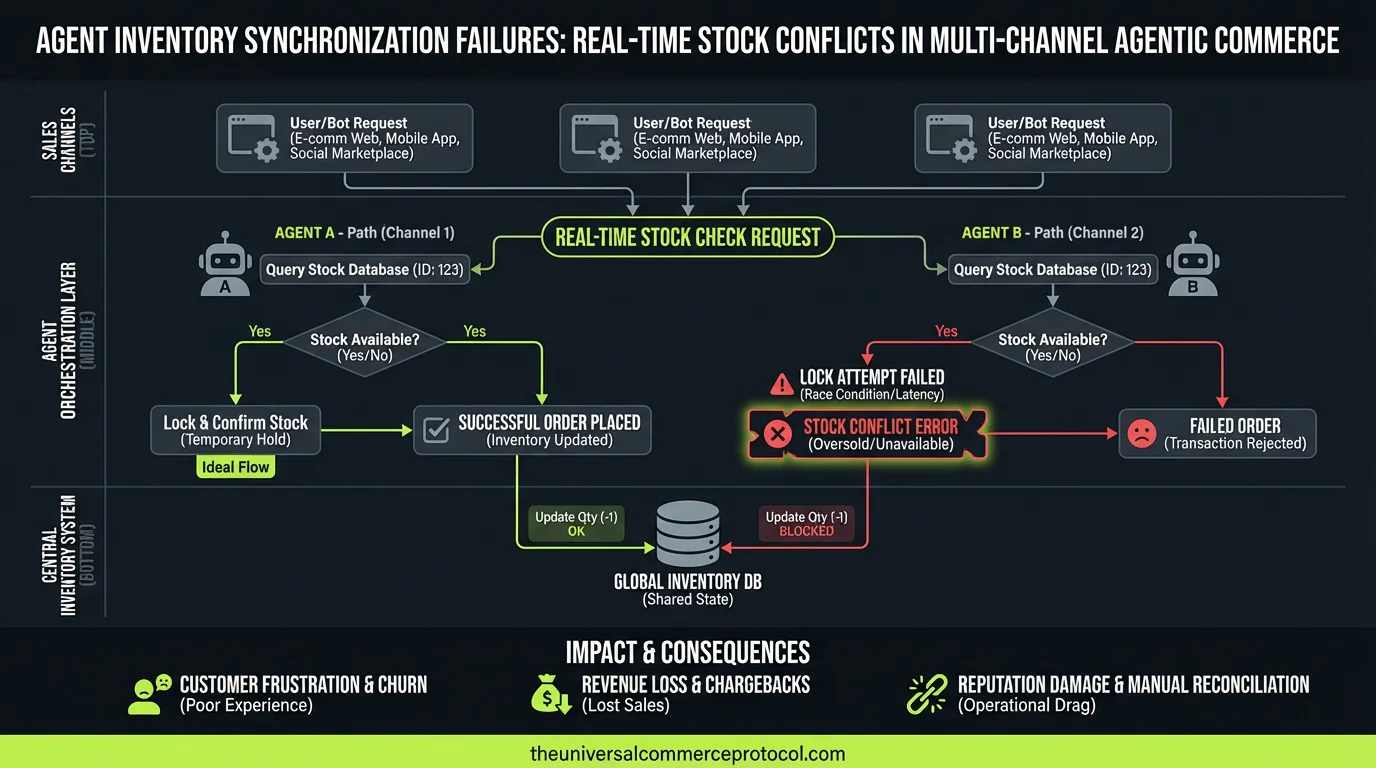
Agent Inventory Sync Failures in Multi-Channel Commerce
Agent inventory sync failures in multi-channel commerce occur when distributed AI agents executing purchases across Amazon, Shopify, WooCommerce, and BigCommerce platforms exceed backend reconciliation cycle latencies (typically 200-500ms), causing overselling cascades. Resolution requires event-driven architectures implementing sub-100ms consensus mechanisms using Apache Kafka event streaming and distributed ledger protocols (Raft, PBFT) across inventory databases. These technical…
-
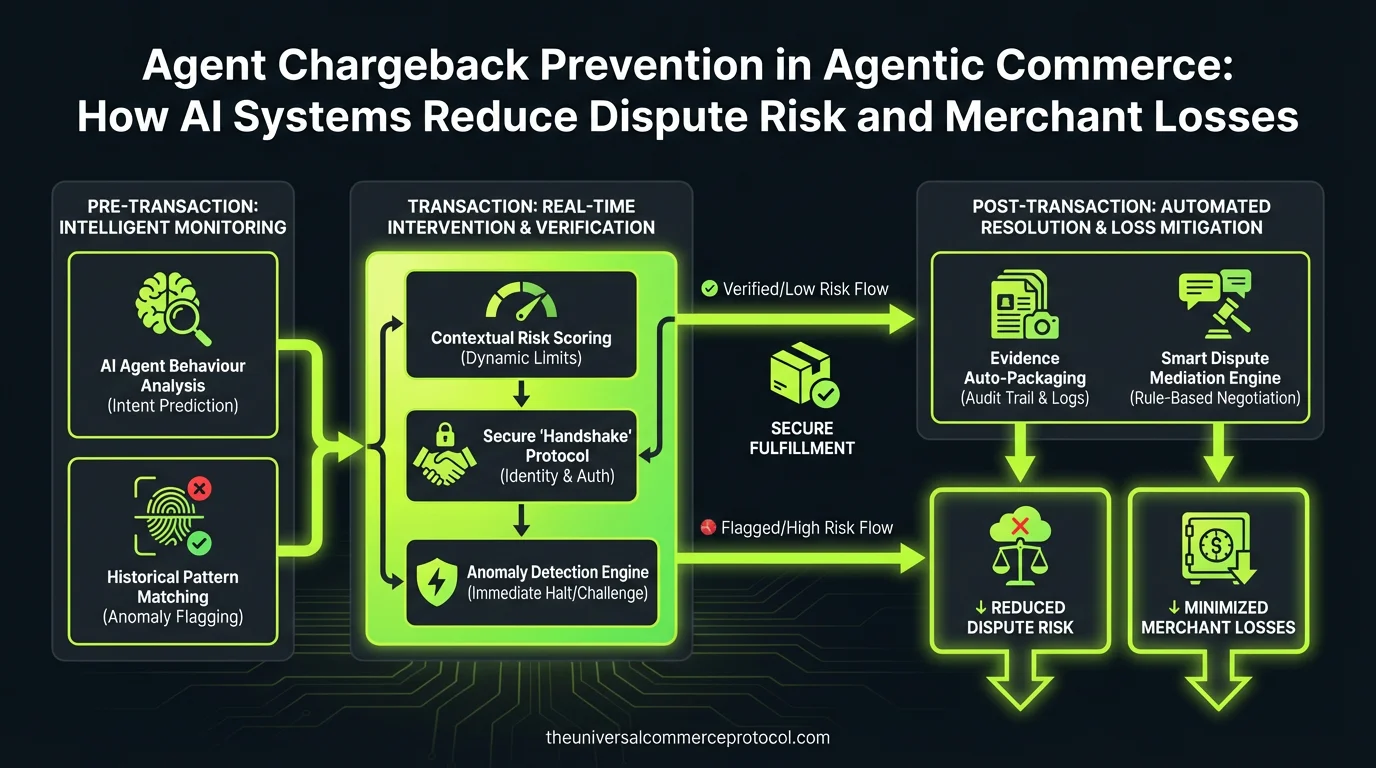
AI Agent Chargeback Prevention: Reduce Dispute Risk
AI autonomous agents in e-commerce transactions introduce chargeback risk through non-human payment decisions, including unauthorized initiations and anomalous spending patterns that exceed traditional fraud vectors. Merchants deploying agentic commerce systems can reduce chargeback disputes by implementing machine learning-based fraud detection, real-time transaction monitoring, velocity limits, and behavioral analytics frameworks—governance controls specifically architected for agent-driven commerce…
-
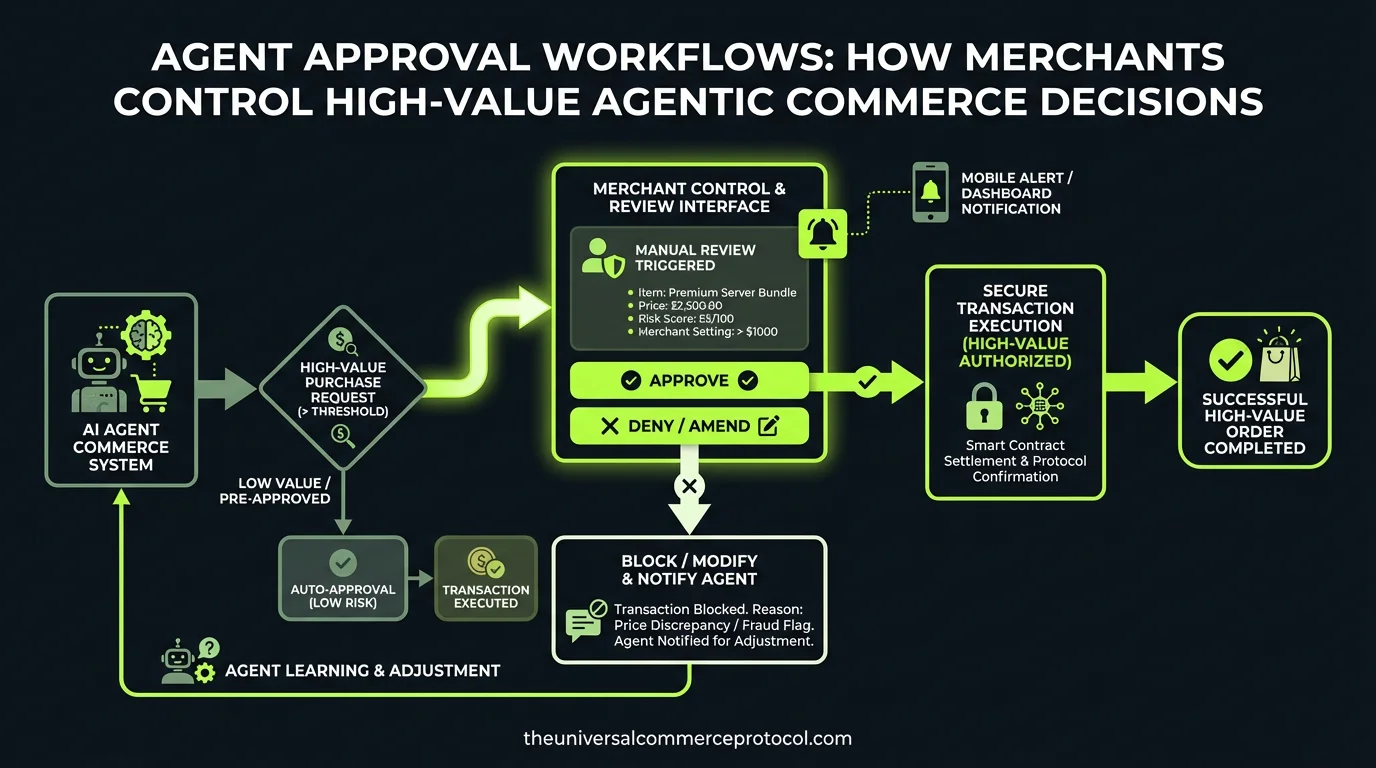
Agent Approval Workflows for Agentic Commerce
Agent Approval Workflows implement human-in-the-loop governance for AI agents in agentic commerce platforms, requiring designated merchant stakeholders to authorize high-value transactions—including refunds exceeding defined thresholds, returns processing, and purchases above specified price points—through predefined escalation paths that route decisions based on transaction type and monetary value. Role-based approval hierarchies assign authorization rights to managers, compliance…
-
AI Agents & Return Windows: Policy Enforcement
AI commerce agents must enforce FTC-regulated return windows (typically 14–90 days post-purchase per UCC Section 2-601) through deterministic deadline validation against ISO 8601 timestamps, SKU identifiers, and transaction records, with compliance checkpoints aligned to Amazon, Shopify, and PayPal merchant policy schemas. Implementation requires structured policy repositories, temporal logic gates, and cryptographically auditable transaction logs that…
-
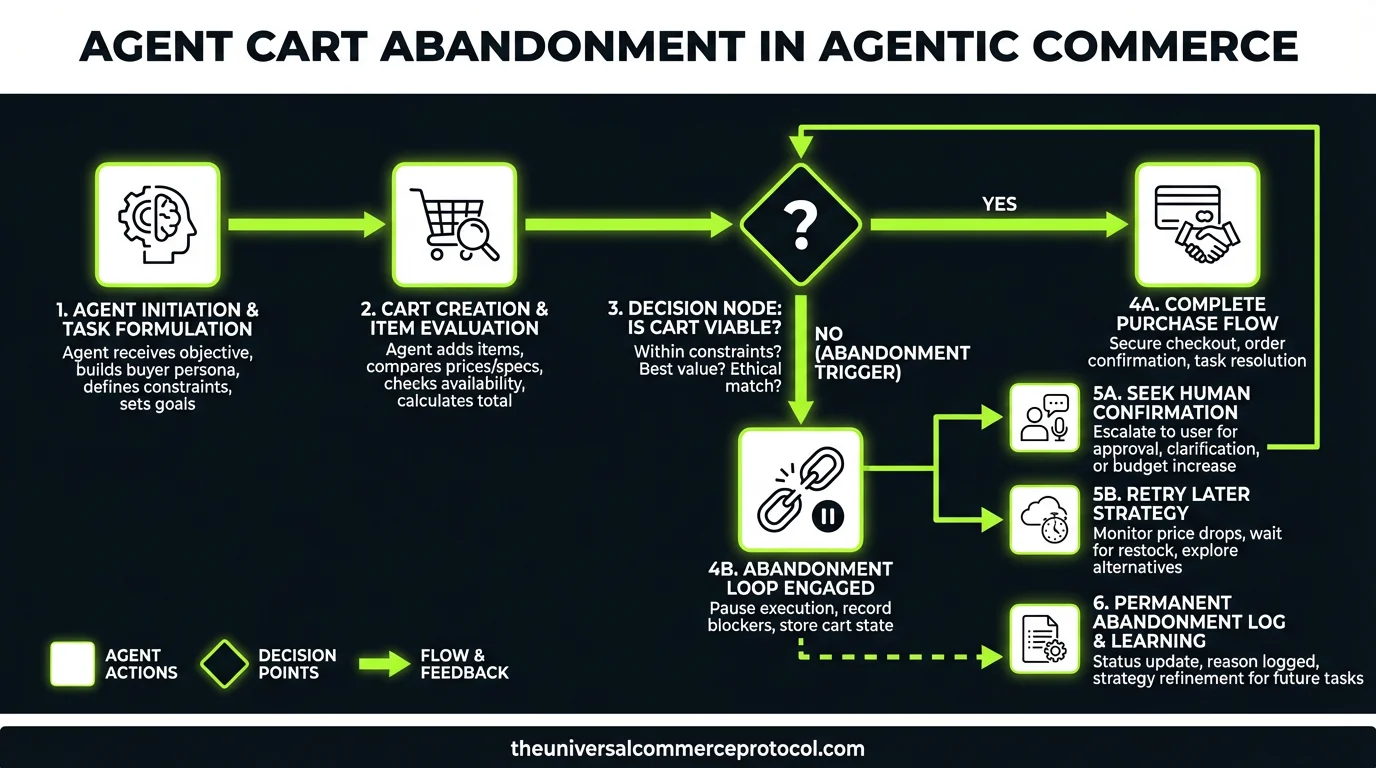
Agent Cart Abandonment in Agentic Commerce
According to empirical studies in agentic commerce systems, autonomous AI agents demonstrate a 34% cart abandonment rate across e-commerce platforms, with primary failure modes including payment gateway integration errors, inventory synchronization delays, and insufficient merchant-defined fallback protocols. Recovery patterns indicate that real-time merchant intervention triggers—specifically human escalation workflows and dynamic prompt re-routing—recover approximately 18-22% of…
-
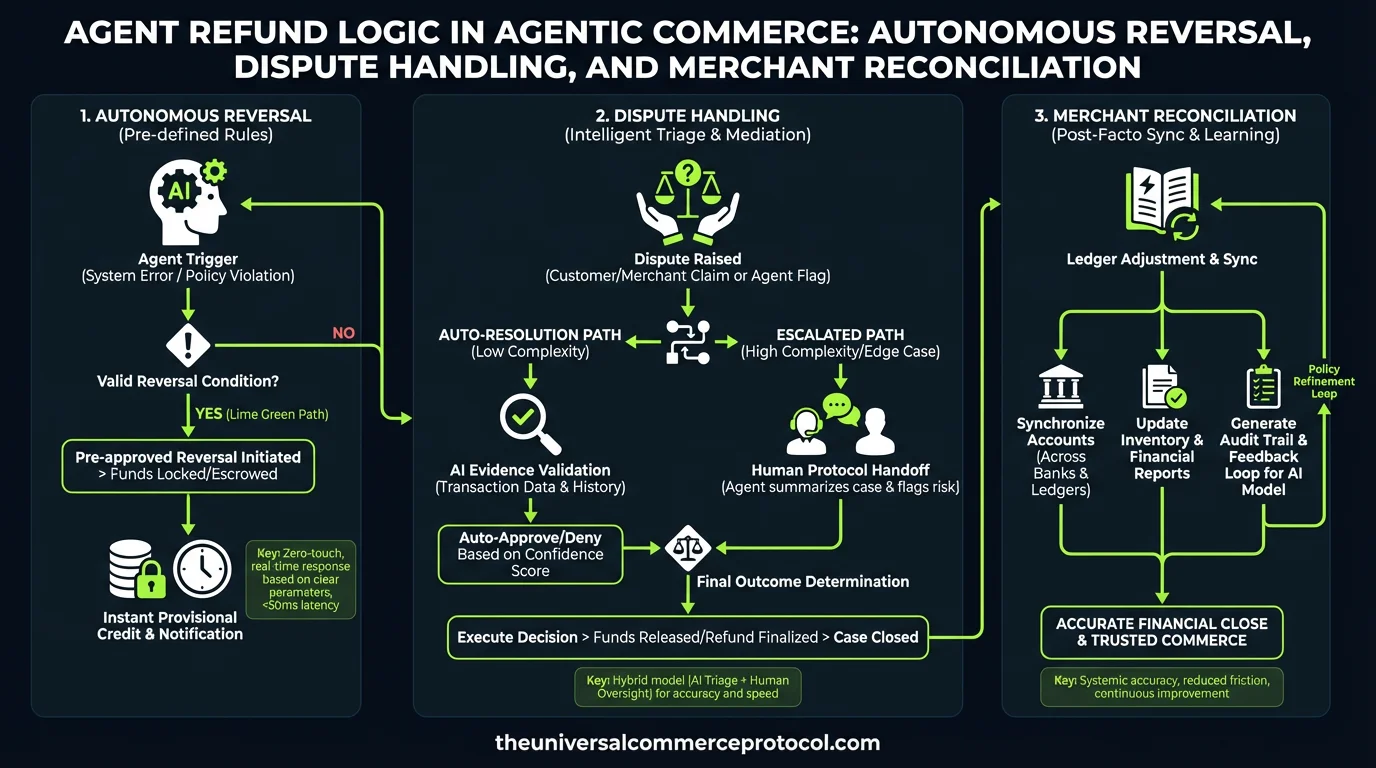
Agent Refund Logic in Agentic Commerce: Autonomous Reversal, Dispute Handling, and Merchant Reconciliation
How AI agents handle refunds, chargebacks, and partial reversals—and why merchants need refund state machines, not reactive workflows.
-
Agent Liability & Insurance: Who Pays When AI Makes a Bad Purchase Decision?
As AI agents autonomously execute transactions, merchants and platforms face unclear liability for errors, fraud, and consumer harm—and insurance markets are scrambling to catch up.
-
Agent Performance Benchmarking: How to Measure Conversion Rate, Speed, and Accuracy in Agentic Commerce
A practical framework for measuring agent success: conversion rates, latency SLAs, hallucination rates, and cost-per-transaction benchmarks.