Tag: AI agents
-

UCP Webhook Security & Event Reliability Checklist
Universal Commerce Platform (UCP) webhook implementations require HMAC-SHA256 signature verification compliant with RFC 2104, idempotent event processing using unique message…
-
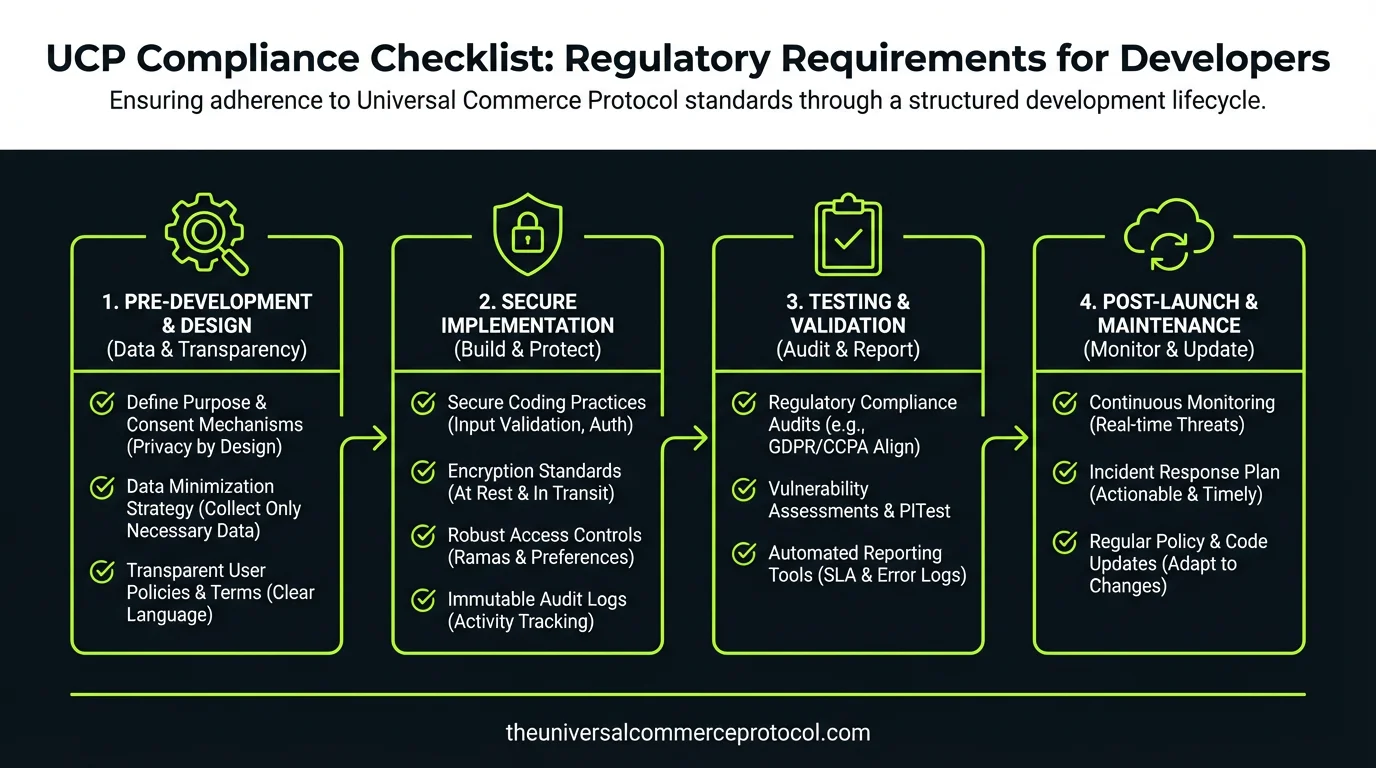
UCP Compliance Checklist: Developer Regulatory Requirements
UCP 500 compliance mandates PCI-DSS v3.2.1 cardholder data protection and GDPR Article 32 encryption, with jurisdiction-specific requirements: NACHA ACH and…
-

UCP Multi-Currency Commerce: Tax & Real-Time Conversion
Unified Commerce Platform (UCP) systems leverage real-time currency conversion across 180+ countries via Stripe, PayPal, and Wise APIs, with automated…
-
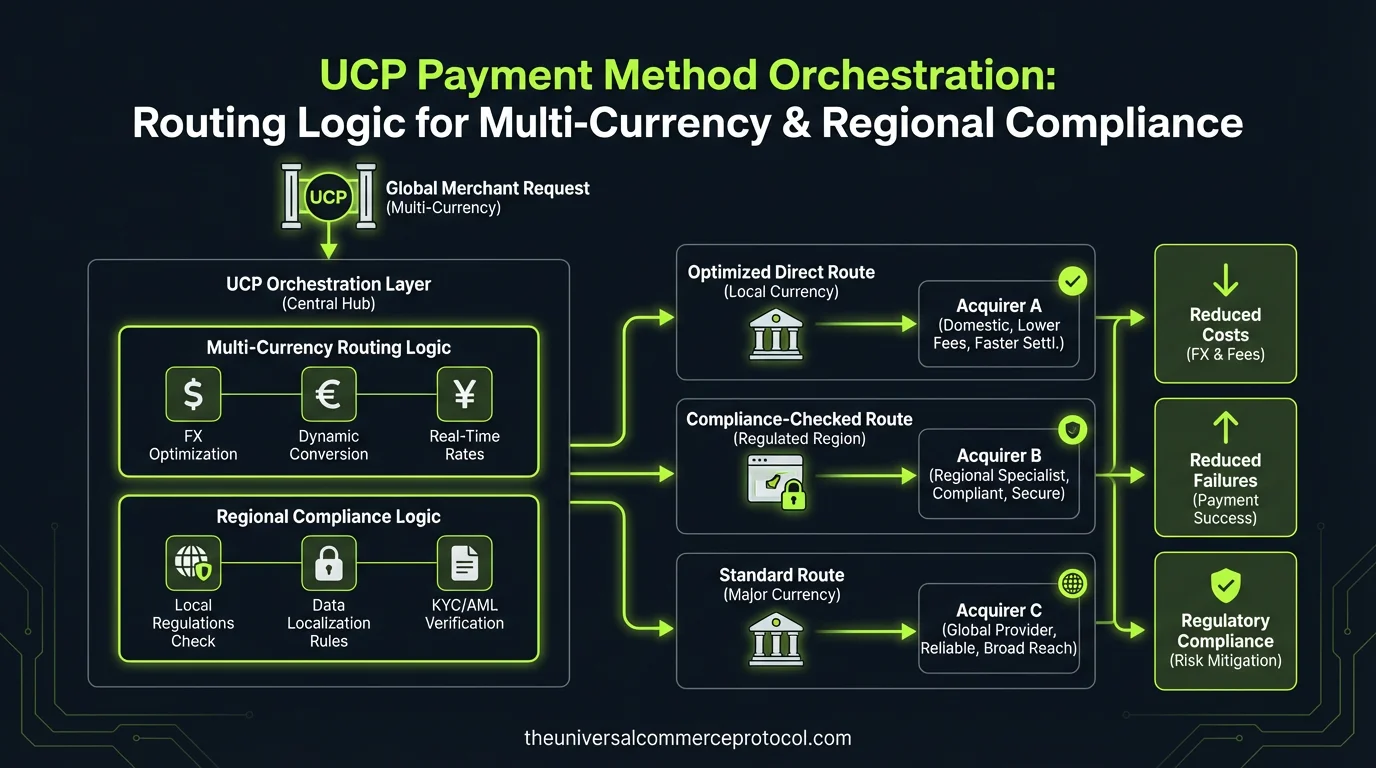
UCP Payment Method Orchestration: Smart Routing
Universal Commerce Platform (UCP) payment method orchestration dynamically routes transactions across Stripe, Adyen, and regional acquiring banks based on currency…
-

UCP Inventory Management & Real-Time Stock Sync
Unified Commerce Platform (UCP) inventory management enables real-time stock synchronization across multiple sales channels through centralized stock deduction logic that…
-

UCP Error Handling & Retry Logic for Resilient Commerce
Unified Commerce Platform (UCP) error handling implements HTTP 429 (Rate Limit), 503 (Service Unavailable), and 5xx status codes with exponential…
-

Training Commerce Agents: UCP vs Claude Marketplace
Anthropic’s Unified Commerce Platform (UCP) implements deterministic API-based catalog integration for agent state representation, while Claude Marketplace employs vector embedding…
-

UCP vs Claude MCP: Agent Architecture & Performance
Claude MCP (Model Context Protocol), developed by Anthropic, standardizes server-based tool integration for AI agents through protocol-compliant action spaces and…
-

UCP vs Claude Marketplace: Commerce Agent Architecture
The Universal Commerce Protocol (UCP) is an open-source integration standard that normalizes REST and GraphQL APIs across Shopify, WooCommerce, and…
-

Claude Marketplace: $2M AI Commerce Cost Reduction
Anthropic’s Claude 3.5 Sonnet integration with Shopify, SAP Commerce Cloud, and Adobe Commerce platforms delivers up to 60% cost reductions…