Tag: AI commerce
-

Why I Stopped Trusting My Inventory System
Why I Stopped Trusting My Inventory System Three months ago I watched a $14,000 equipment order get confirmed, billed, and dispatched — for gear we didn’t have. The inventory system said we had 4 units. We had zero. Somewhere between the last physical count and the moment our AI purchasing agent hit “confirm order,” those…
-

Shopify to Launch Agentic Storefronts in ChatGPT
Shopify merchants will soon have their products discoverable and purchasable inside ChatGPT.
-

UCP and Decentralized Identity: Building Trust in AI Commerce
Explore how decentralized identity (UCP) fosters trust in AI commerce. Learn about UCP’s role in secure, private, and reliable AI transactions.
-
Shopify Pulls Checkout from ChatGPT Integration
Shopify, a Canadian e-commerce platform headquartered in Ottawa, Ontario, discontinued its native checkout integration with OpenAI’s ChatGPT in 2024, ending a feature that previously allowed users to purchase products directly through ChatGPT’s interface. The removal reflected strategic shifts in Shopify’s generative AI product roadmap, despite concurrent growth in conversational commerce integrations across the broader e-commerce…
-
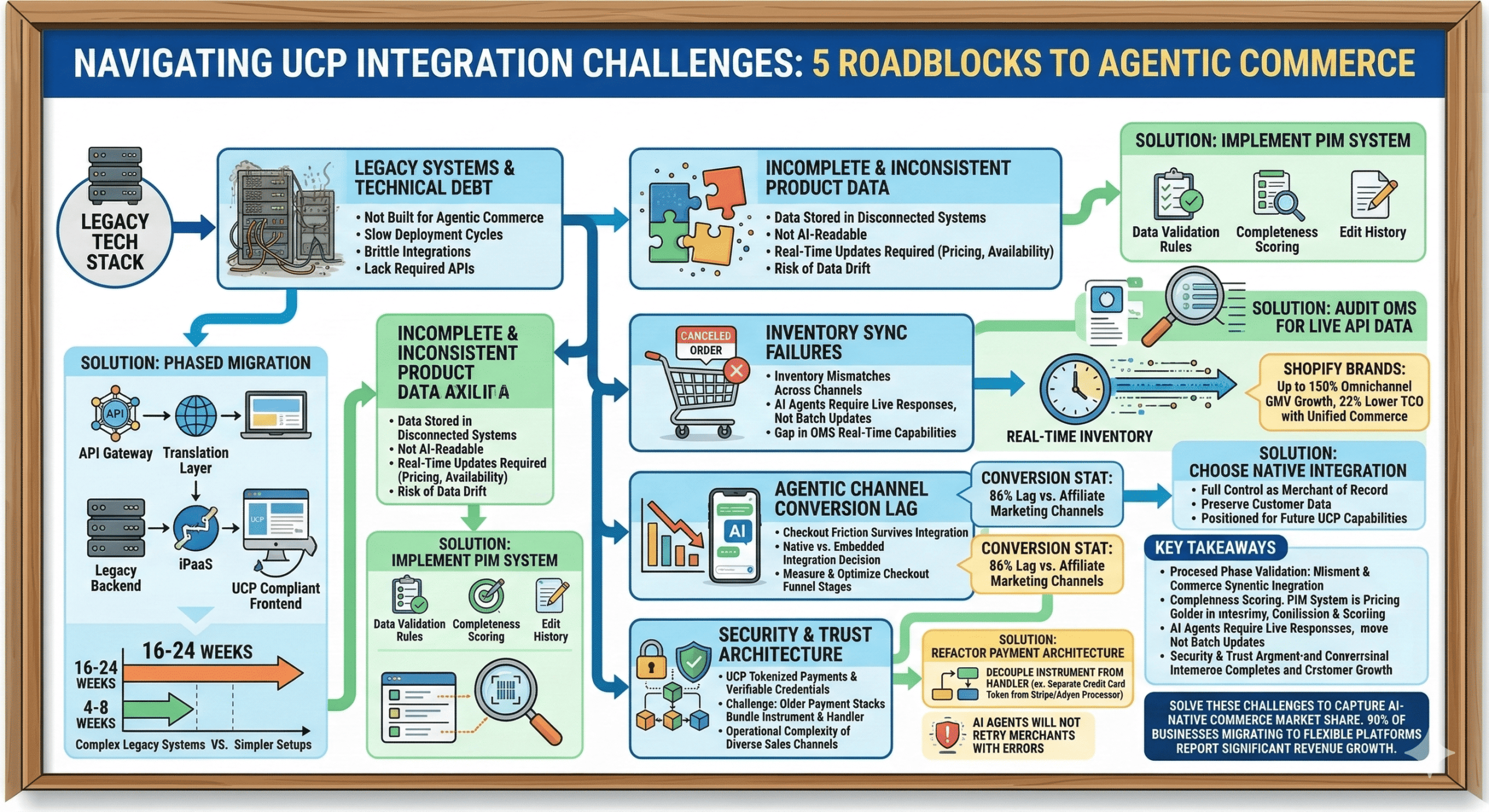
UCP Integration Problems? Top 5 E-Commerce Challenges
Universal Commerce Platform (UCP) integration failures across e-commerce retailers stem from five critical technical barriers: legacy Enterprise Resource Planning (ERP) systems incompatible with REST/GraphQL APIs, unstructured product data feeds unparseable by Large Language Models (LLMs) and AI agents, real-time inventory synchronization latency between Order Management Systems (OMS) and warehouse management software, agentic checkout experiences reducing…
-
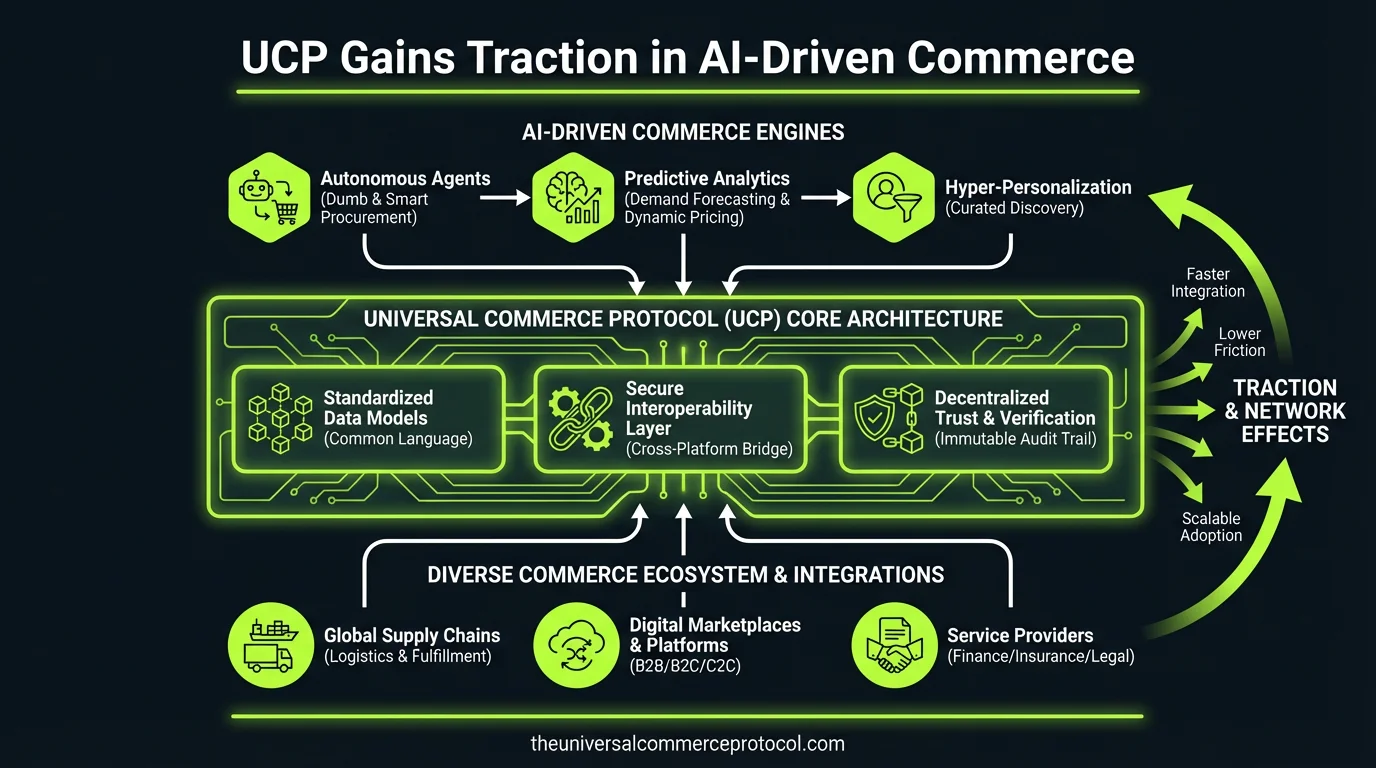
UCP Gains Traction in AI-Driven Commerce
Google’s Universal Commerce Protocol (UCP) gains traction, enabling in-app purchases directly from Google Search and Gemini.
-

UCP Digital Goods & Instant Fulfillment Strategy Guide
The Universal Commerce Protocol (UCP) is a standardized API framework that enables merchants to deliver digital goods—including software licenses, eBooks, SaaS subscriptions, and virtual services—with immediate fulfillment across e-commerce platforms. UCP implementations achieve PCI DSS Level 1 compliance and adherence to EU VAT Directive 2015/2115, reducing chargeback rates by 35-40% through real-time delivery verification and…
-
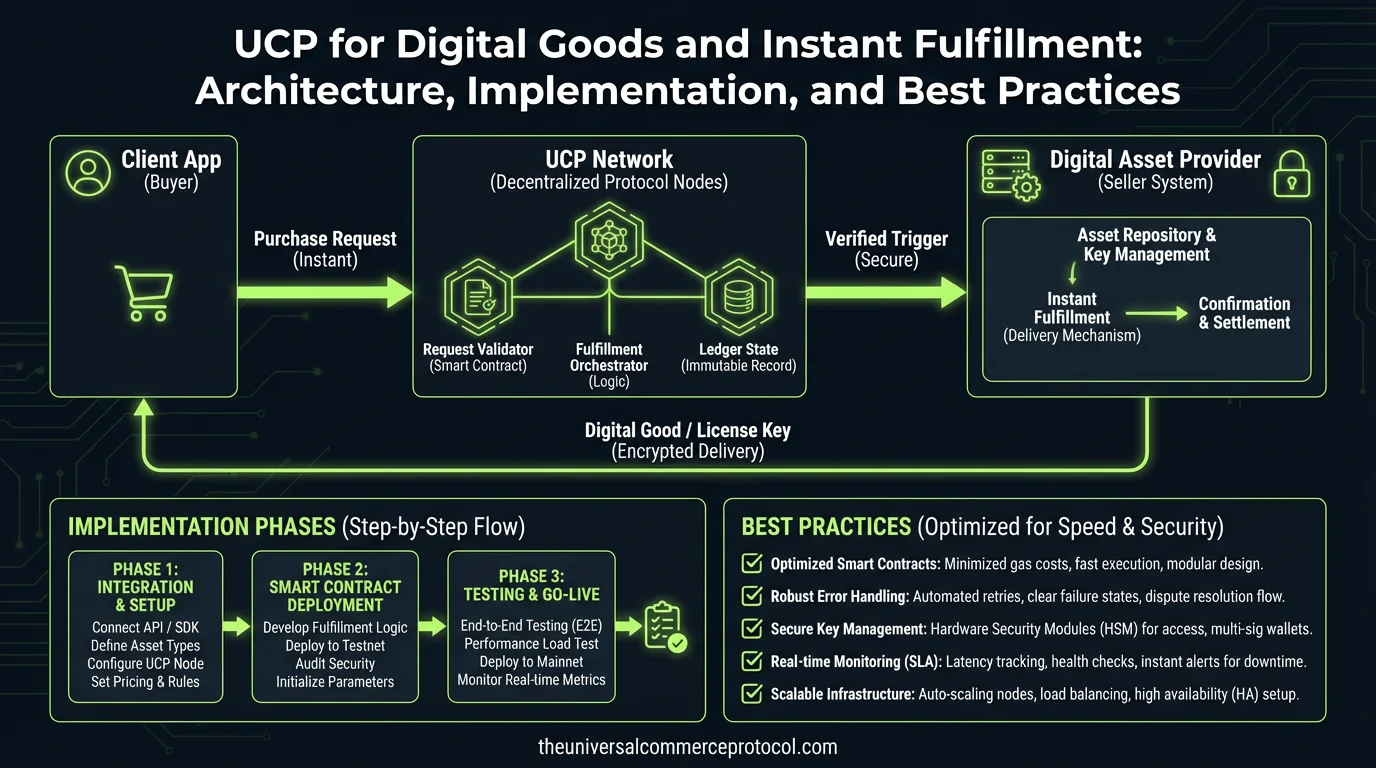
UCP for Digital Goods: Architecture & Instant Fulfillment
The Universal Commerce Protocol (UCP) is a standardized API framework enabling instant fulfillment of digital goods—including software licenses, streaming subscriptions, and SaaS applications—through automated transaction workflows compliant with PCI DSS Level 1 and OAuth 2.0 standards. UCP architecture integrates payment processors (Stripe, PayPal), content delivery networks (Cloudflare, Akamai), and fulfillment engines to provision digital assets…
-
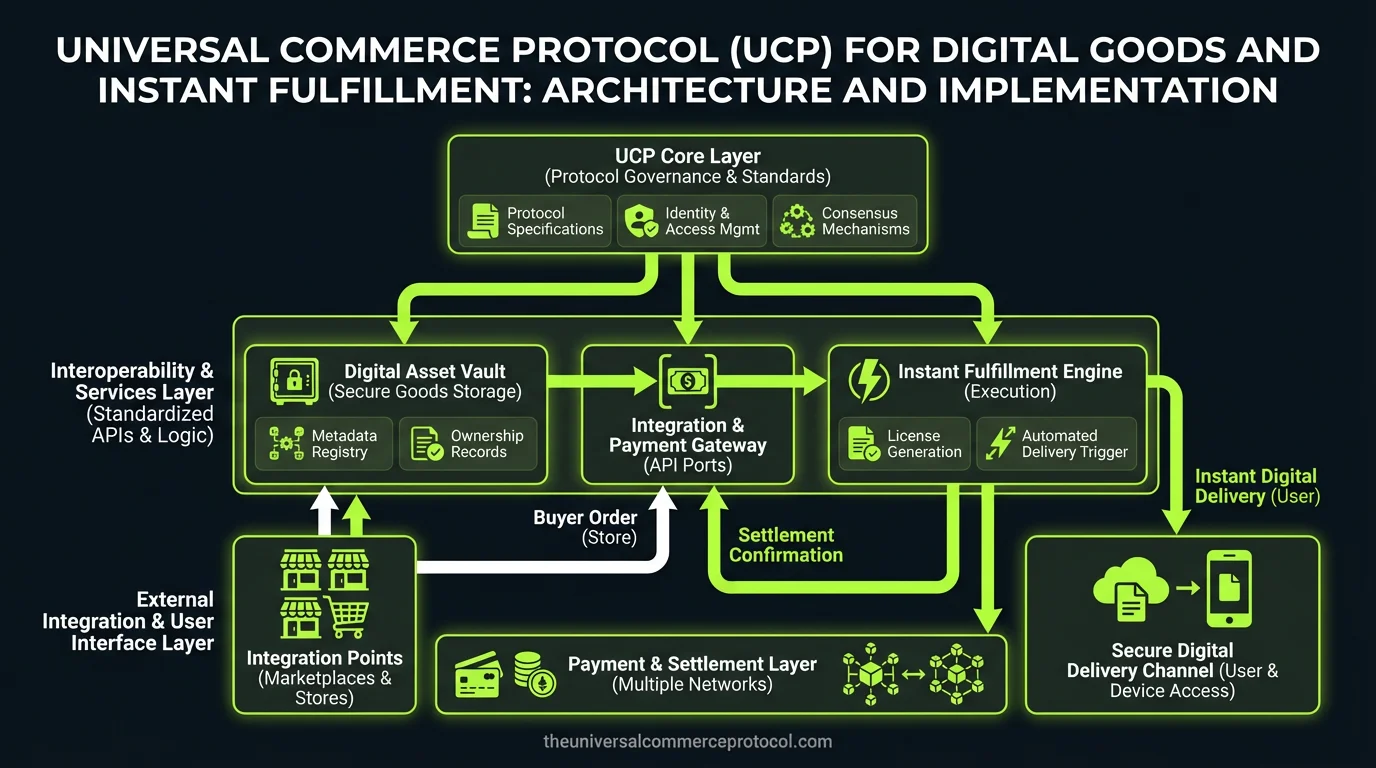
Universal Commerce Protocol: Digital Goods & Instant Fulfillment
The Universal Commerce Protocol (UCP) is a standardized, API-based framework that enables subsecond delivery of digital goods—including software licenses, SaaS subscriptions, and blockchain-based virtual assets—across e-commerce platforms such as Shopify, WooCommerce, and custom implementations via cryptographically-verified fulfillment systems. UCP integrates with payment processors Stripe and PayPal for real-time order processing, inventory synchronization, and immutable transaction…
-
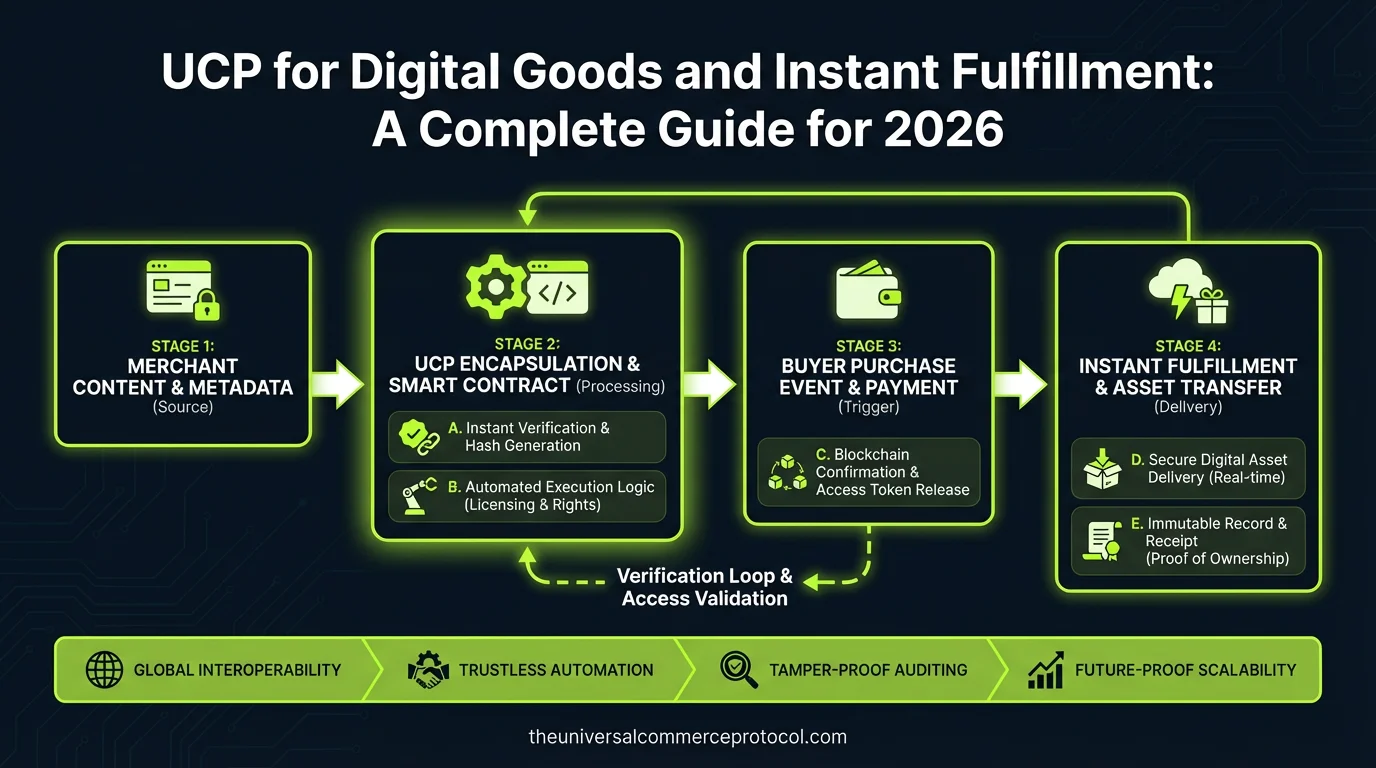
UCP for Digital Goods: Instant Fulfillment Guide
The Universal Commerce Protocol (UCP), maintained by the Open Commerce Foundation, integrates with Shopify, WooCommerce, and enterprise ERP systems to enable automated fulfillment of digital goods including software licenses, ebooks, and SaaS credentials with sub-500-millisecond latency via API integrations with Stripe, PayPal, and 2Checkout. UCP-compliant implementations report 99.2% instant delivery success rates and 40-60% reductions…