Tag: API
-
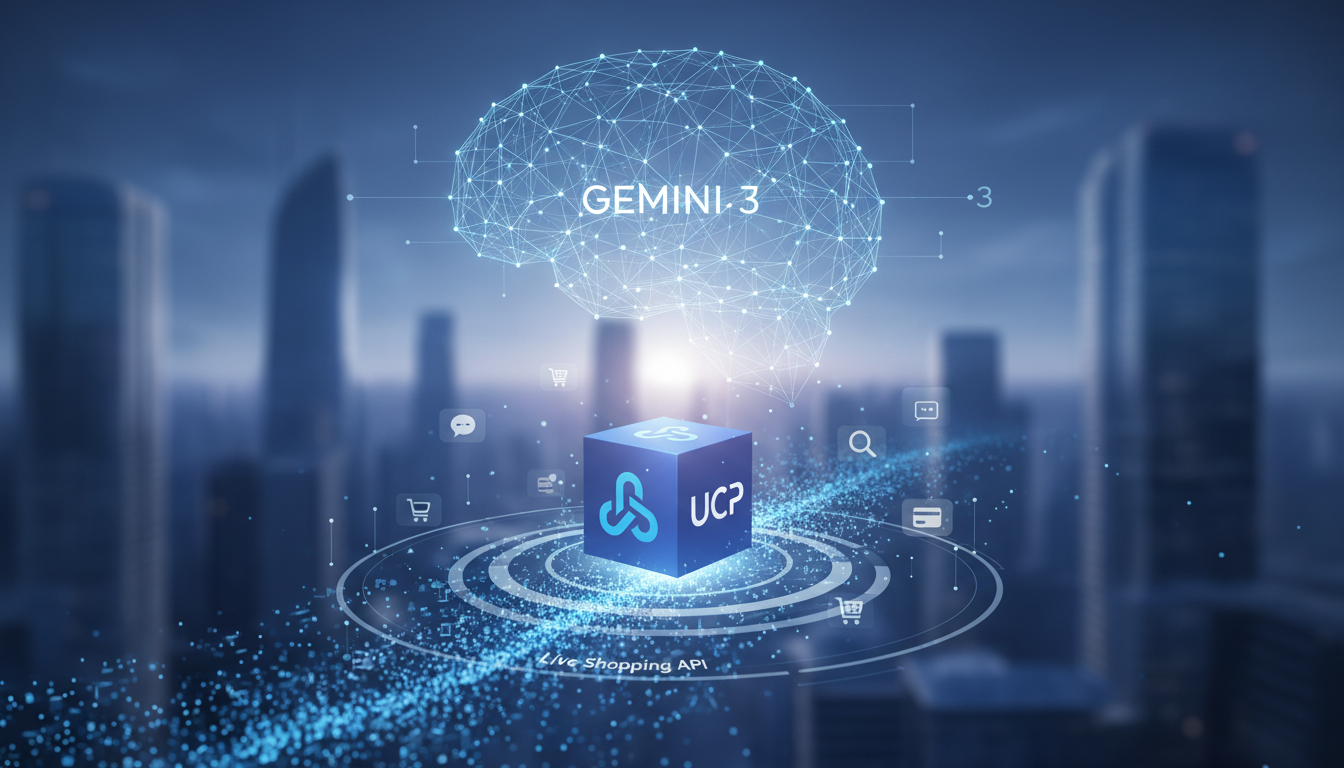
Gemini 3 and UCP: Capturing Intent in the Live Shopping API
Exploring the integration of Gemini 3’s Live API with UCP for real-time, voice-activated transactions.
-

Zero-Trust Agent Models: Protecting User Data in UCP
How UCP implements zero-trust principles to protect sensitive merchant and consumer data during agent-led commerce.
-

Beyond the Browser: UCP in Wearables and IoT
How the Universal Commerce Protocol (UCP) enables native checkout on smart glasses, watches, and IoT devices.
-
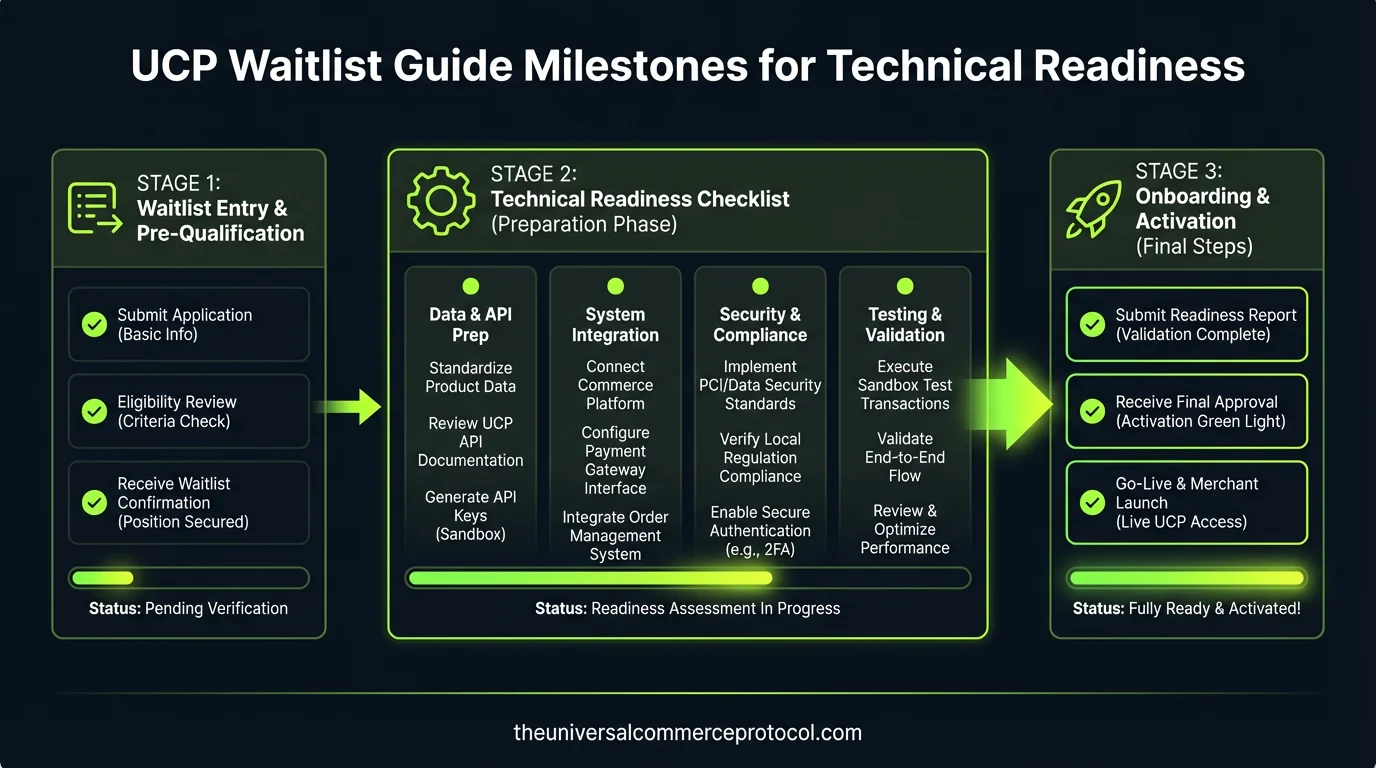
UCP Waitlist Guide: Technical Readiness Milestones
The Unified Commerce Platform (UCP) waitlist requires merchants to complete specific technical readiness milestones including API integration certification, inventory synchronization across channels, and payment gateway compliance validation before agentic commerce deployment. Merchants must demonstrate end-to-end order orchestration capabilities, real-time data pipeline configuration, and AI-agent interaction protocols across supported commerce channels such as web, mobile, and…
-
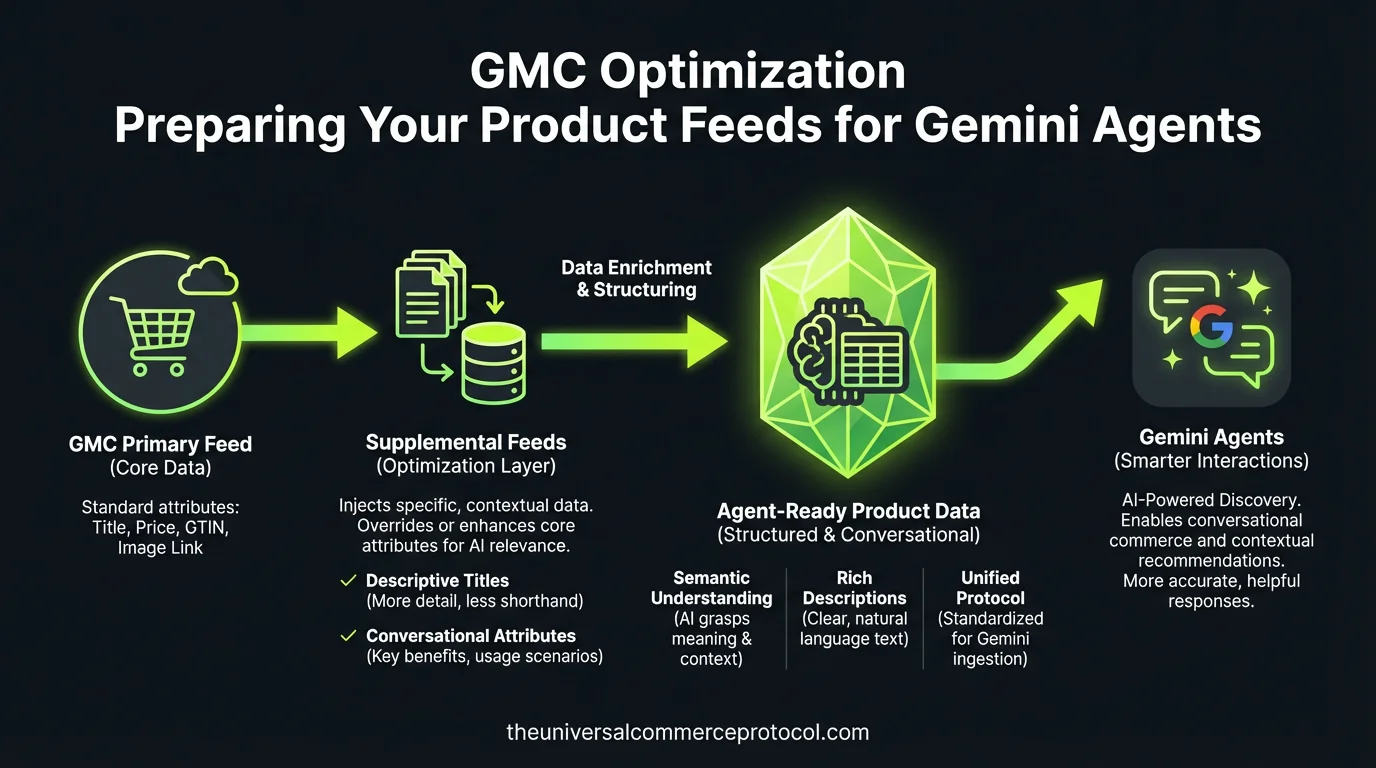
GMC Optimization: Preparing Product Feeds for Gemini
Google Merchant Center’s Supplemental Feeds enable merchants to enhance product data schemas with structured attributes—including SKU, GTIN, price, availability, and rich descriptions—that improve compatibility with Google Gemini’s generative AI models and Universal Commerce Platform (UCP) transaction flows. By implementing entity-rich feeds compliant with schema.org standards and Google’s Merchant Feed Specification, retailers can ensure their product…
-
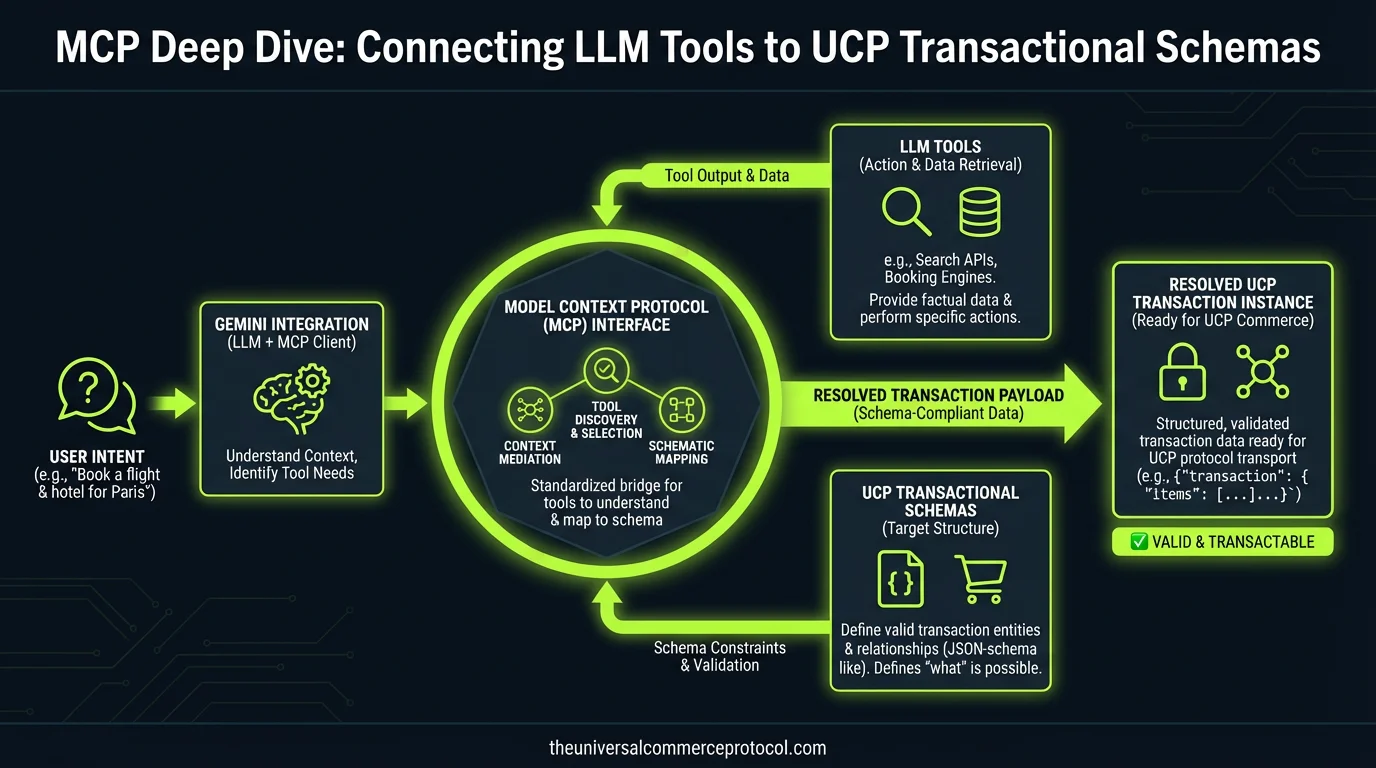
MCP Deep Dive: Connecting LLM Tools to UCP Schemas
Model Context Protocol (MCP) enables integration between Large Language Models—including Google Gemini, OpenAI GPT, and Claude—and Unified Commerce Platform (UCP) transactional systems by standardizing tool connections through schema-compliant APIs. This technical approach leverages MCP’s standardized transport layer to map LLM function calls to UCP transaction handlers, database schemas, and RESTful endpoints. Implementation requires defining JSON…
-
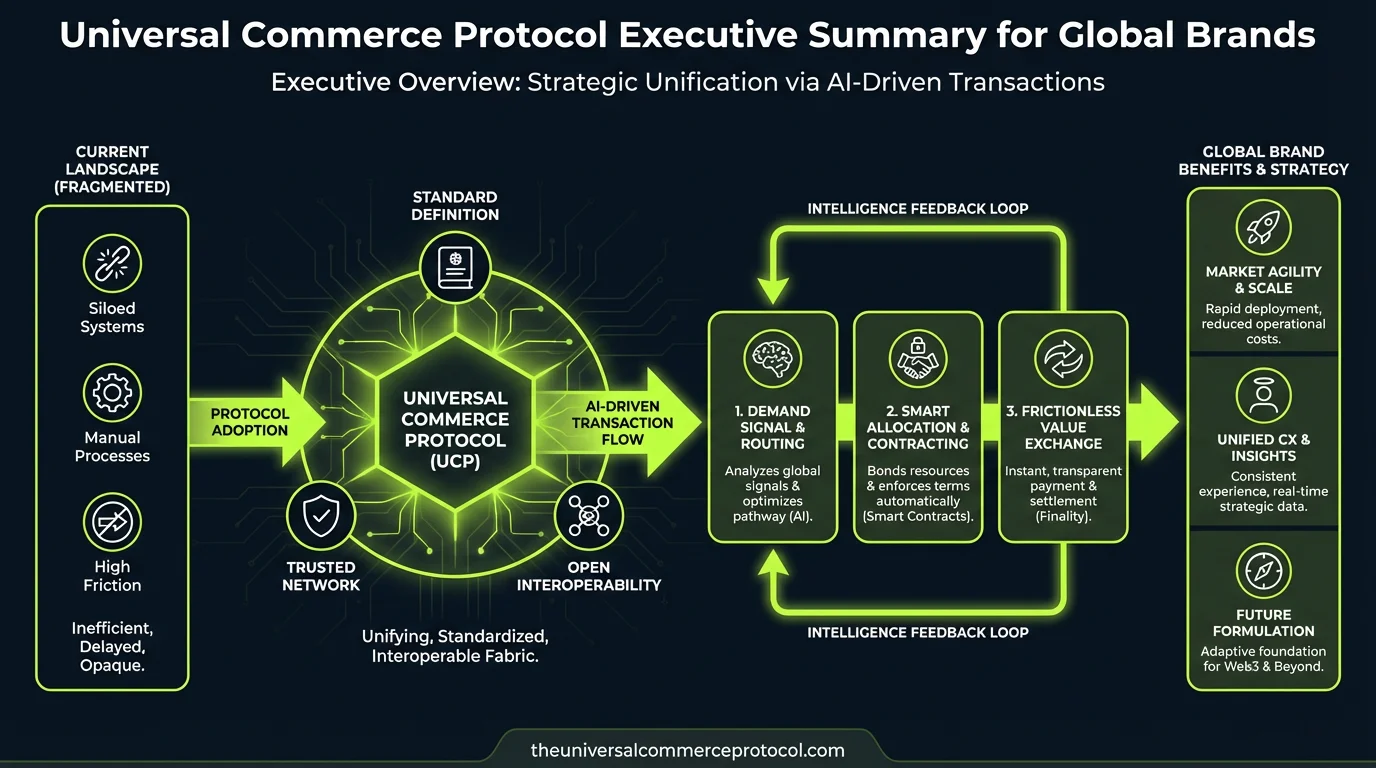
Universal Commerce Protocol: Executive Summary
The Universal Commerce Protocol (UCP) is a standardized framework that enables AI agents and language models to execute end-to-end e-commerce transactions—including product discovery, cart management, payment processing, and order fulfillment—across distributed retail systems without requiring graphical user interface interaction. Developed as an open standard for machine-to-merchant communication, UCP allows brands like Amazon, Shopify, and enterprise…
-
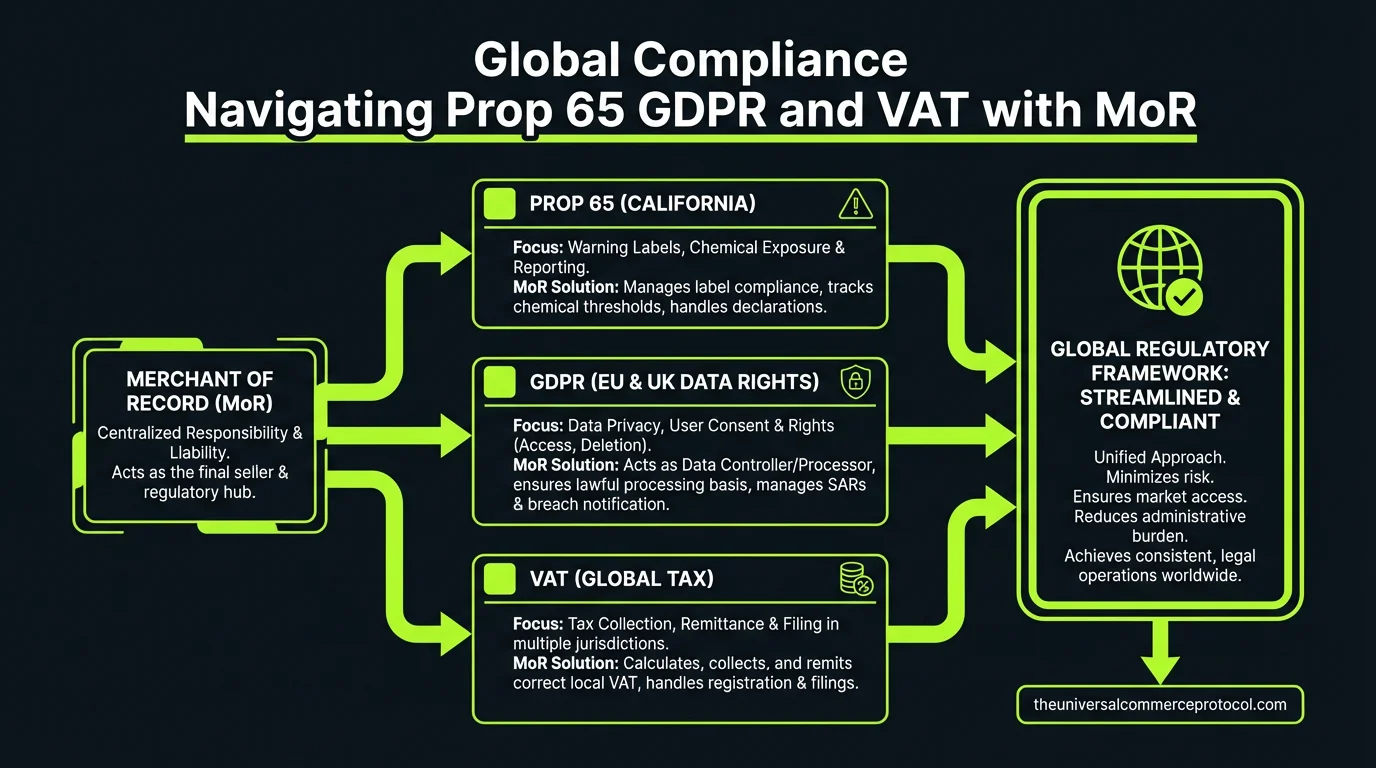
AI Commerce Liability: How Merchant of Record Ensures Compliance
The Merchant of Record (MoR) model within Unified Commerce Platform (UCP) architecture assumes legal responsibility for California Proposition 65 (Safe Drinking Water and Toxic Enforcement Act of 1986) compliance, including product warning requirements and chemical disclosure obligations, while simultaneously managing General Data Protection Regulation (GDPR) requirements under EU Regulation 2016/679 and VAT compliance across EU…