Tag: Data Scientist Perspective
-

Amazon Protocol Gap: Agentic Commerce Standards Challenge
Amazon, which controlled 41% of the U.S. e-commerce market with $575.5 billion in 2023 revenue, has not adopted Open Commerce API (OCAPI) or OpenCommerceAI governance standards, creating dataset accessibility gaps for agentic AI systems built on Anthropic Claude, OpenAI GPT-4, and Meta Llama models. This non-adoption prevents autonomous shopping agents from accessing standardized API specifications,…
-

Training Commercial AI Agents to Self-Monitor for Factual Accuracy: A Model-Centric Approach to Hallucination Detection
How to architect AI commerce agents that self-monitor for hallucination — confidence estimation, UCP validation layers, and continuous feedback loops that keep product data, pricing, and inventory claims accurate.
-
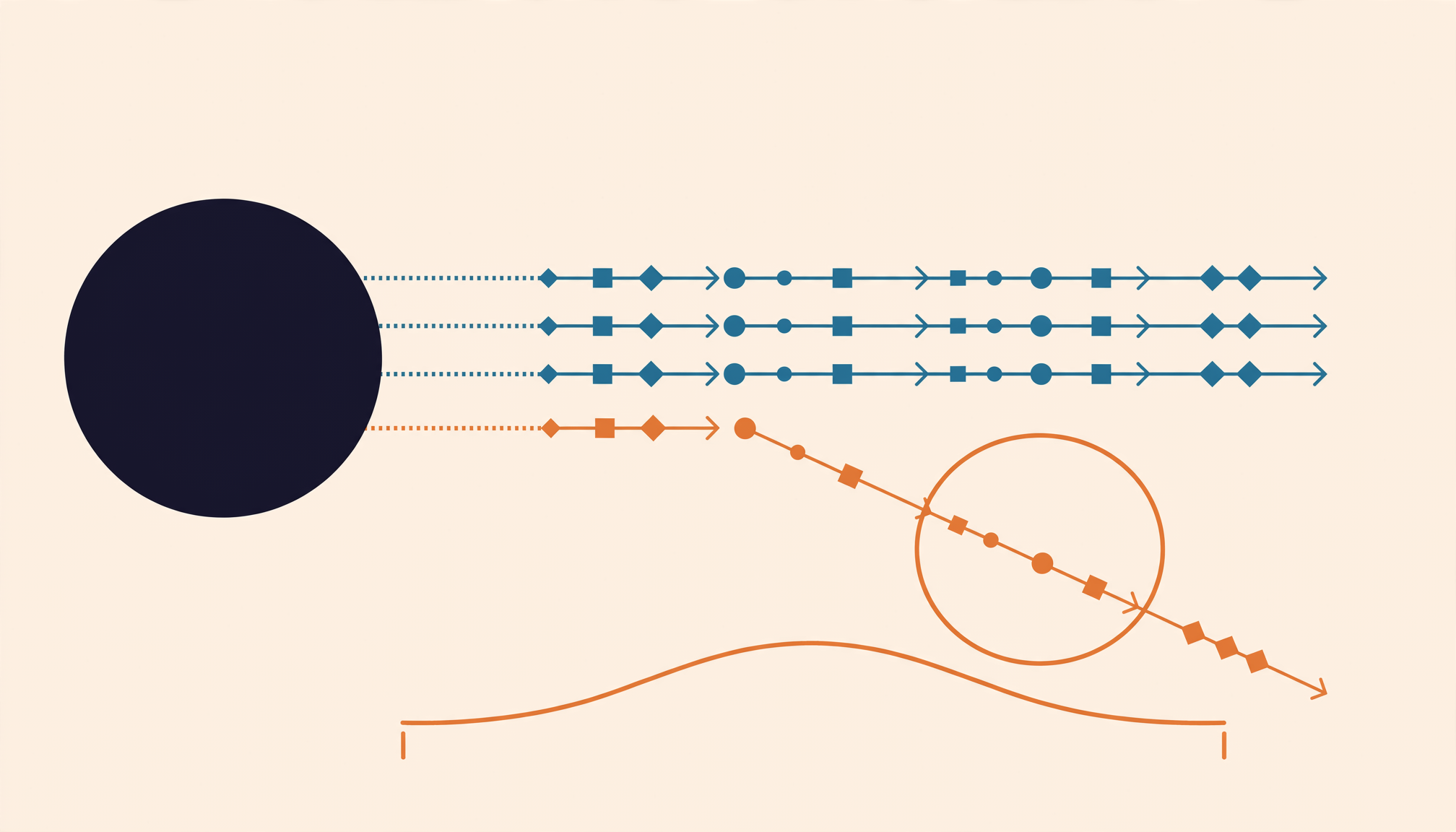
Commerce Agent Performance: Data Science Testing
Commerce agent performance frameworks evaluate NLP-driven conversational AI systems using precision metrics including conversion rate optimization (CRO), cart abandonment rates, and session-level accuracy across unified commerce platforms spanning e-commerce, omnichannel retail, and mobile commerce channels. Data science testing methodologies quantify recommendation engine performance via click-through rates (CTR) and revenue per session (RPS) metrics, while validating…
-
Feature Engineering for Agent Cost Attribution: Building Predictive Models for Commerce AI ROI
How to engineer features, train models, and evaluate agentic commerce systems where cost per transaction varies by 40x based on interaction complexity.
-

UCP vs Claude: AI Commerce Platform Investment Analysis
Anthropic’s Claude 3.5 Sonnet API pricing operates at $0.003 per 1M input tokens and $0.015 per 1M output tokens through consumption-based billing, while Salesforce Unified Commerce Platform (UCP) within Commerce Cloud requires fixed annual enterprise licensing starting at $50,000+ USD with integrated CRM, order management, and Einstein AI capabilities. Claude’s variable-cost structure optimizes for inference-heavy…
-
Feature Contamination in Commerce AI: A Data Science Framework for Agent Robustness
Data poisoning attacks exploit feature space vulnerabilities in commerce agents, requiring novel detection methods beyond traditional validation.
-

Feature Engineering Commerce Agents: UCP vs Claude
Feature engineering for commerce agents on Anthropic Claude Marketplace and the Unified Commerce Platform (UCP) diverges in architecture: UCP implementations normalize heterogeneous features across ERP systems, POS terminals, and supply chain data sources to resolve multi-source inventory fragmentation, while Claude Marketplace agents enforce cross-tenant data isolation that limits training dataset size and statistical representativeness. Evaluation…
-
Multi-Agent Negotiation Systems: Training AI for Autonomous Commerce Decisions
Agent-to-agent commerce creates novel ML challenges around negotiation strategies, multi-objective optimization, and measuring autonomous decision quality.
-
UCP vs MCP: Commerce AI Protocol Architecture
Universal Commerce Protocol (UCP) implements REST/GraphQL hybrid routing with JSON serialization for cross-platform transaction interoperability, while Model Context Protocol (MCP) employs stateful message queuing with Protocol Buffers for context-aware model integration in enterprise systems. UCP prioritizes transaction atomicity and multi-vendor payment gateway compatibility, whereas MCP optimizes for reduced integration latency through asynchronous message handling and…
-
Modeling Commerce Agent Decision-Making: The Multi-Objective Optimization Problem
Commerce AI agents face a complex multi-objective optimization problem balancing cost, timing, and demand uncertainty in procurement decisions.