Tag: ML Engineer
-

Training and Evaluating Commerce Agents: An Observability Framework for Model Performance
How to structure training data, evaluate agent decision-making, and monitor model performance in production commerce AI systems.
-

MCP vs UCP: Data Architecture for Agentic Commerce
Anthropic’s Model Context Protocol (MCP) enables agentic commerce systems to access structured merchant catalogs and real-time inventory data through standardized context windows, achieving 23-40% improvements in multi-turn purchase dialogue coherence and order fulfillment accuracy compared to monolithic Unified Commerce Platform (UCP) architectures. MCP-native implementations demonstrate superior token efficiency and reduced latency in product recommendation and…
-
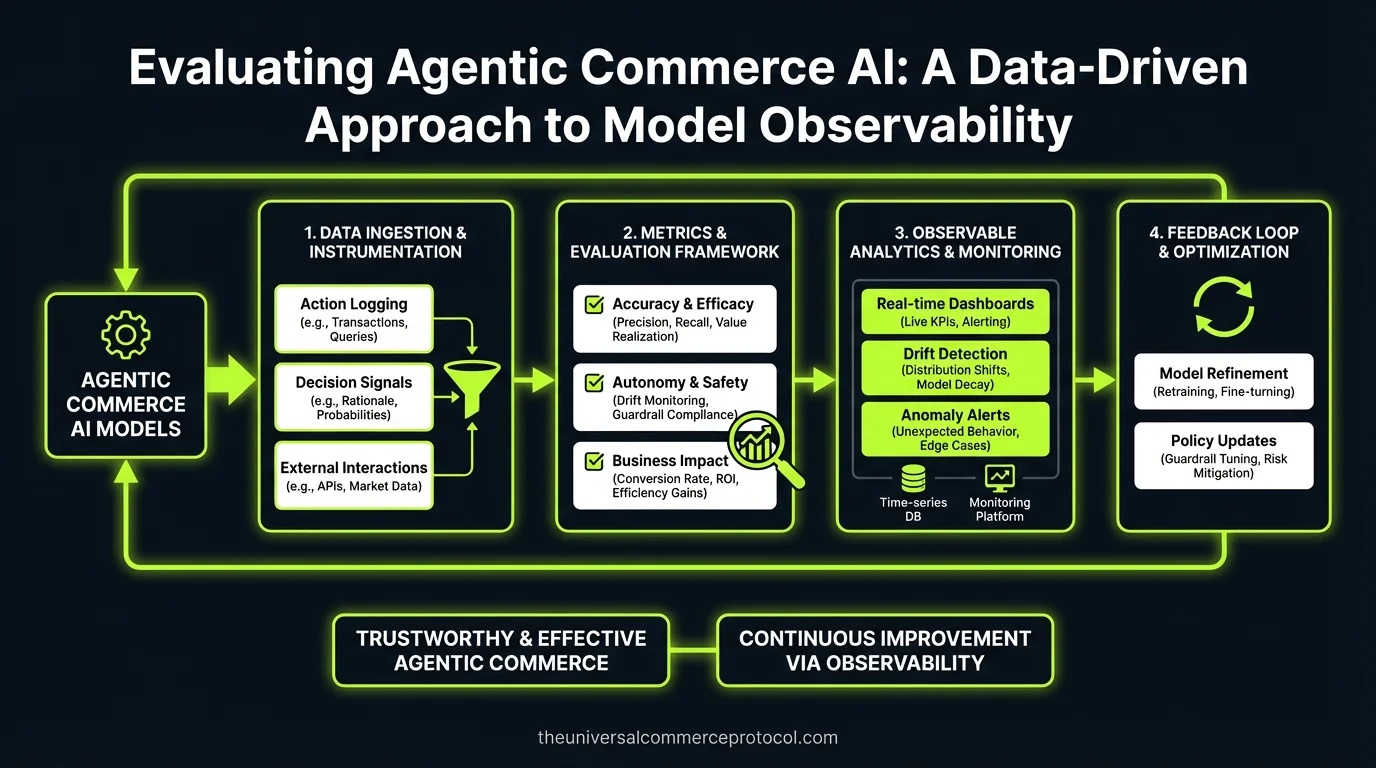
Agentic Commerce AI: Data-Driven Model Observability
Commerce AI agents processing 1,000+ daily transactions require continuous observability through data-driven monitoring frameworks employing drift detection algorithms, prediction confidence scoring, and behavioral anomaly analysis to identify machine learning model performance degradation in non-stationary e-commerce environments. Observability systems must track feature distributions, decision latency (measured in milliseconds), and conversion impact metrics—key performance indicators for maintaining…
-

AI Protocol Decision: $2.3M Revenue Impact Guide
The Commerce AI Protocol Decision framework quantifies a $2.3 million annual revenue impact differential between Protocol-A (enterprise transaction layer) and Protocol-B (real-time settlement infrastructure) for organizations processing $50M+ in annual transaction volume. Protocol-B delivers measurable performance advantages: transaction fee variance reduction of 0.8–2.1%, processing time acceleration of 15–28%, and working capital redeployment of $400K–$900K annually.…
-
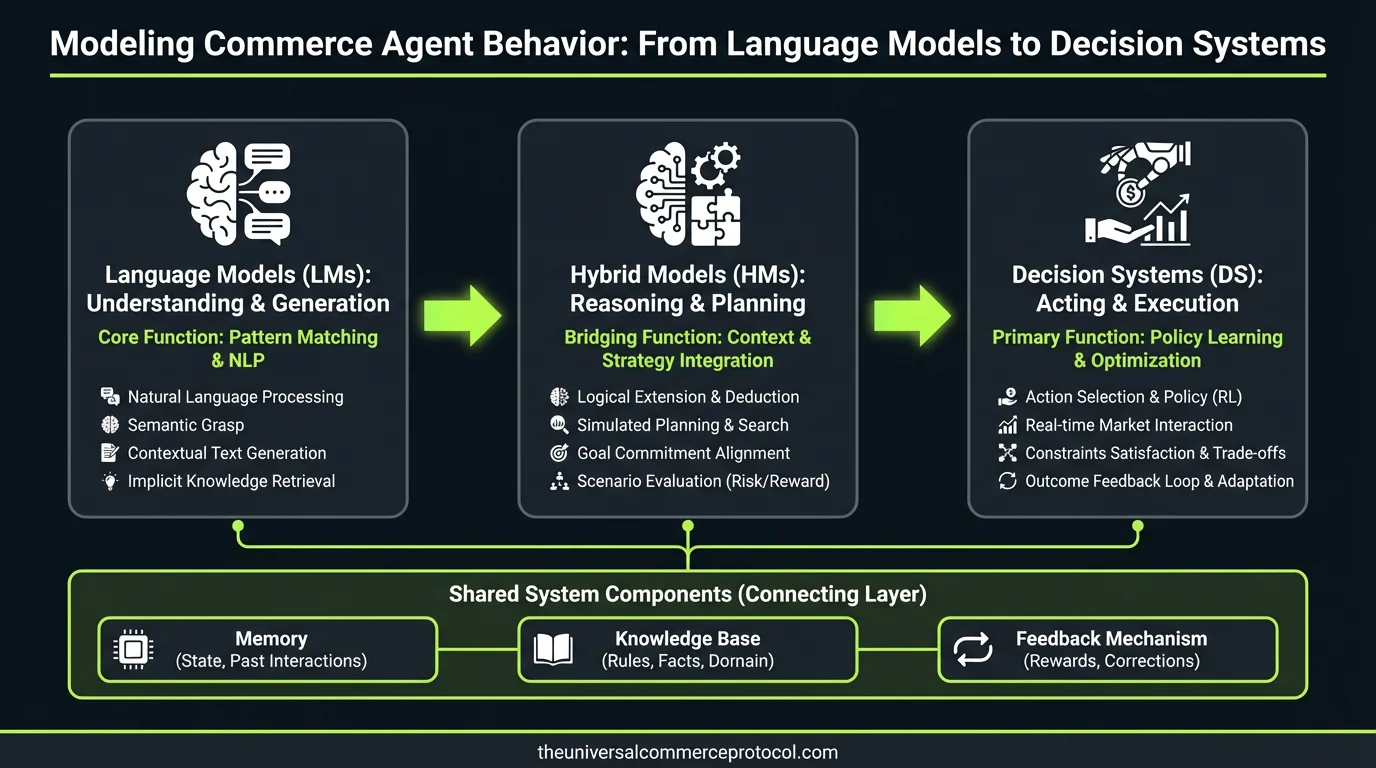
Commerce Agents: Language Models Making Purchase Decisions
Commerce agents leverage reinforcement learning with large language models (LLMs) such as GPT-4 and Claude to execute multi-objective optimization across e-commerce environments, balancing measurable KPIs including conversion rate, customer lifetime value, and inventory turnover while operating within constrained action spaces defined by platform APIs and business rules. These decision systems process real-time market signals, competitor…
-

UCP vs Claude Marketplace: Which AI Commerce Platform Wins
Google’s Unified Commerce Platform (UCP) and Anthropic’s Claude Marketplace represent competing approaches to AI-driven commerce infrastructure. As of 2024, AI agents influence approximately 47% of B2B purchasing decisions, making platform selection critical for enterprises seeking to optimize agent-to-human handoff workflows and transaction processing capabilities. UCP integrates with Google Cloud’s ecosystem, while Claude Marketplace leverages Anthropic’s…
-
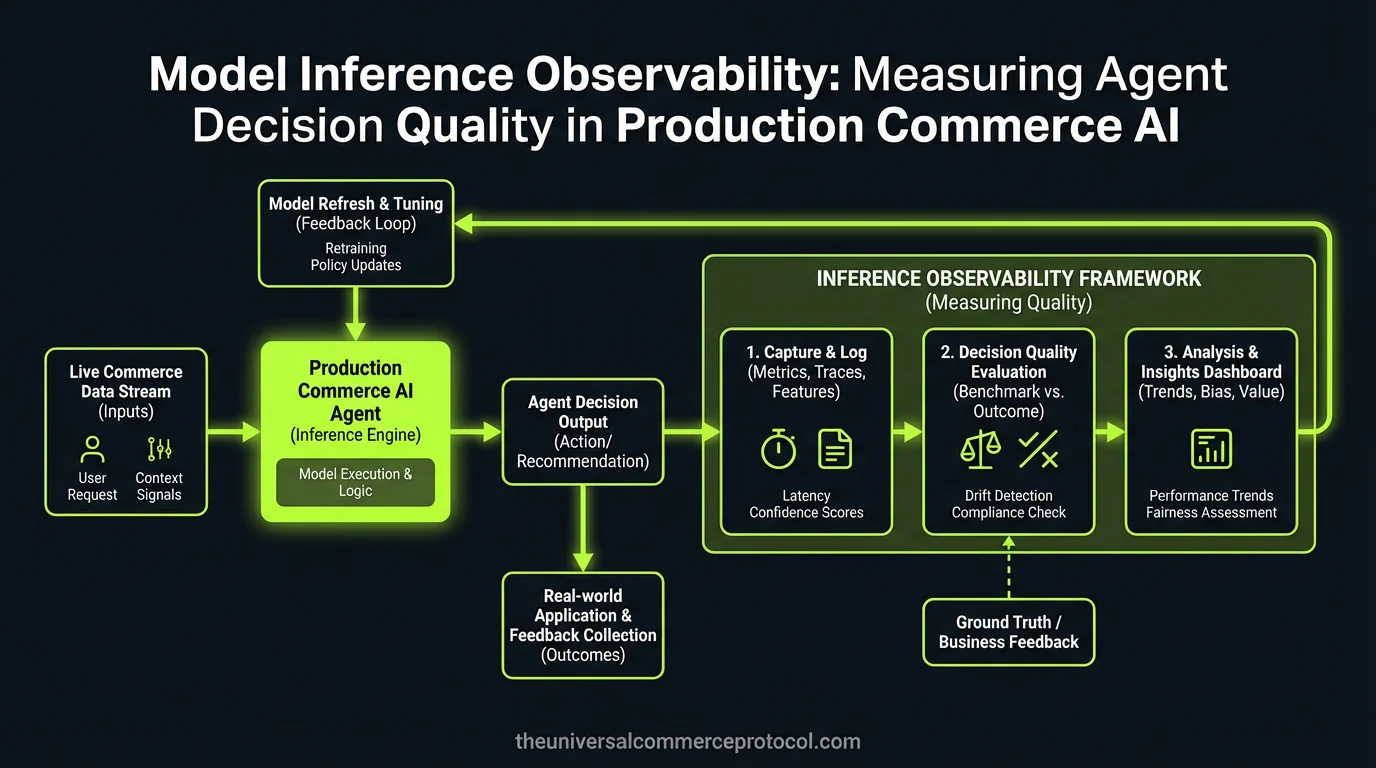
Model Inference Observability: Measuring Agent Decision Quality
Model inference observability encompasses semantic logging, latency measurement, and token-efficiency tracking for AI agents in production environments. Beyond infrastructure metrics like GPU utilization and request latency, decision quality measurement requires evaluation frameworks assessing hallucination rates, reasoning chain validity, and business outcome correlation. Organizations implementing comprehensive observability for large language model agents report 23-40% improvements in…
-
UCP vs Claude Marketplace: Commerce Agent Architecture
The Universal Commerce Protocol (UCP) is an open-source integration standard that normalizes REST and GraphQL APIs across Shopify, WooCommerce, and BigCommerce platforms through vendor-agnostic JSON Schema definitions, while Claude Marketplace is Anthropic’s proprietary agent framework built on Claude 3 model variants (Opus, Sonnet, Haiku) accessible via the Anthropic API Console and constitutional AI training. UCP…
-
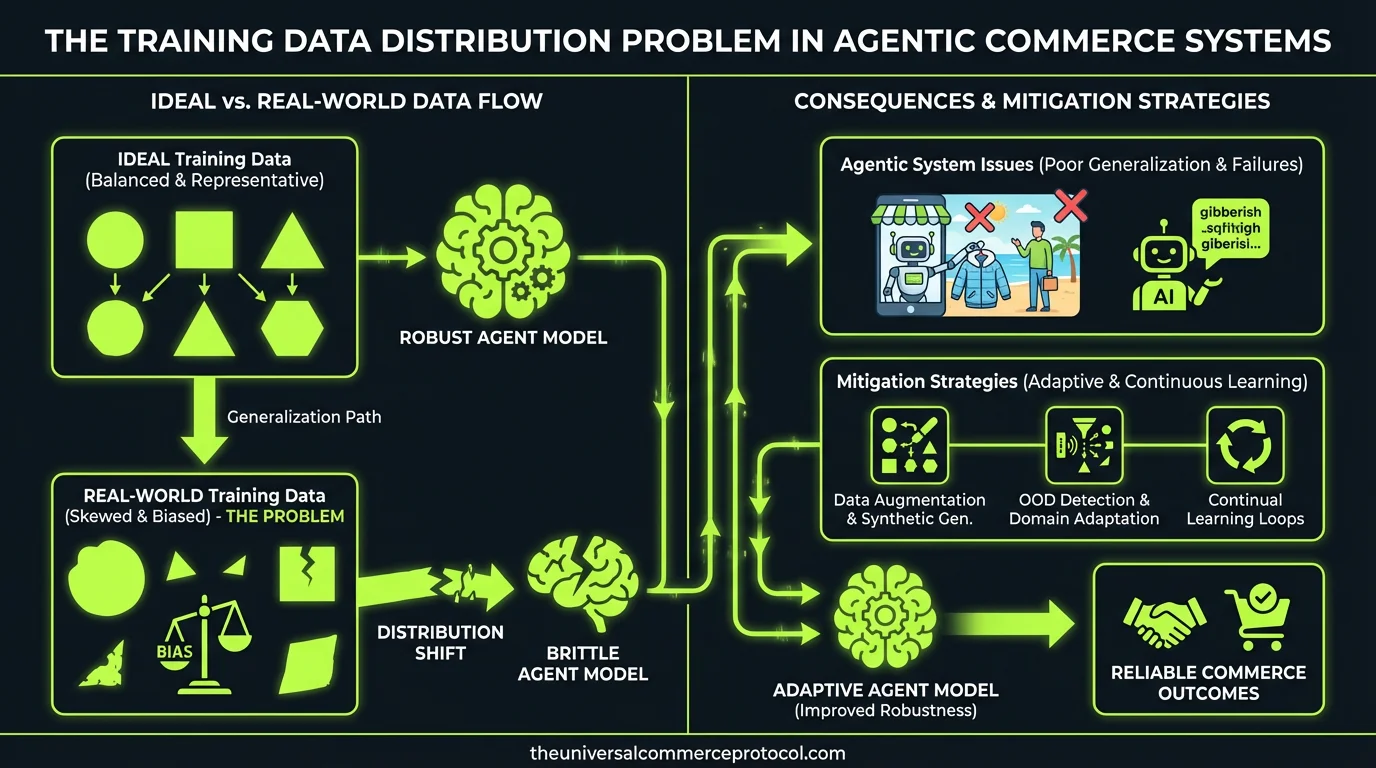
Training Data Distribution in Agentic Commerce Systems
Agentic commerce systems deployed on platforms including Shopify, SAP Commerce Cloud, and microservices architectures experience distribution shift when training datasets (synthetic or historical e-commerce data) diverge from production environments, causing inventory management failures and transaction errors across product categories, customer segments, and seasonal demand patterns. Mitigation strategies include real-time monitoring of prediction confidence scores, domain…
-
UCP vs Claude MCP: Agent Architecture & Performance
Claude MCP (Model Context Protocol), developed by Anthropic, standardizes server-based tool integration for AI agents through protocol-compliant action spaces and context window partitioning to mitigate prompt injection risks. Unified Context Protocol (UCP) differentiates itself by optimizing stateful transaction handling across heterogeneous e-commerce platforms using unified context vectors that preserve transaction state across platform boundaries. Comparative…