Tag: UCP
-

Commerce Agent Performance Evaluation Frameworks
Commerce agents powered by large language models (LLMs) including OpenAI’s GPT-4, Anthropic’s Claude, and Meta’s Llama 2 require specialized evaluation frameworks measuring task success rates, latency in milliseconds, cost-per-transaction metrics, and human preference ratings across model architectures. Production-grade assessment of agentic commerce systems employs A/B testing, shadow testing deployments, hallucination rate monitoring, and task completion…
-

Agentic Commerce in Latin America: Market Entry Guide
Latin America’s agentic commerce market encompasses 656 million consumers across Brazil, Mexico, Colombia, and Argentina, requiring integration with Brazil’s PIX instant payment system, Mexico’s SPEI electronic interbank transfer network, and compliance with Brazil’s LGPD (Lei Geral de Proteção de Dados) data protection regulation. Autonomous commerce agents must support BNPL (Buy Now, Pay Later) adoption exceeding…
-

Subscription Commerce in Agentic Systems: Agent Design
Agentic AI systems automate subscription commerce by deploying autonomous agents that orchestrate recurring billing cycles through Stripe and Adyen payment APIs, execute PCI DSS-compliant state-machine renewal workflows, and apply machine learning models trained on RFM segmentation and customer lifecycle datasets for churn prediction. Predictive analytics agents optimize retention by implementing data-driven decision trees and rule-based…
-

UCP Gains Traction with Gemini, Retailers
Google’s UCP is gaining momentum, fueled by Gemini and retailer partnerships.
-
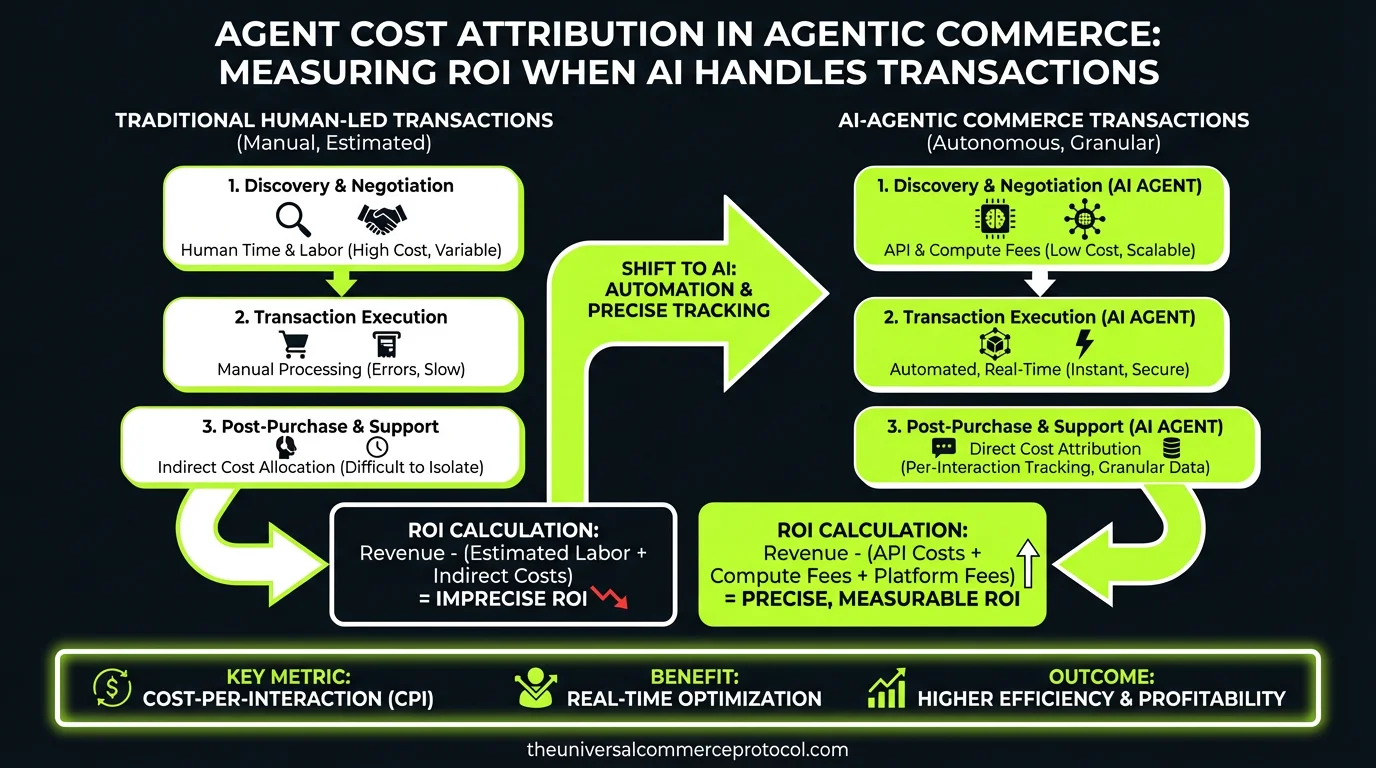
AI Agent Cost Attribution: Measuring ROI in Commerce
Agentic commerce platforms implement multi-dimensional cost attribution using real-time transaction telemetry to allocate LLM inference costs, GPU compute resources, and API licensing fees across web, mobile, and marketplace channels. Merchants measure AI agent ROI via cost-per-transaction (CPT), cost-per-conversion (CPC), and customer lifetime value (LTV) benchmarks, with attribution engines decomposing costs across LLM systems, computer vision…
-
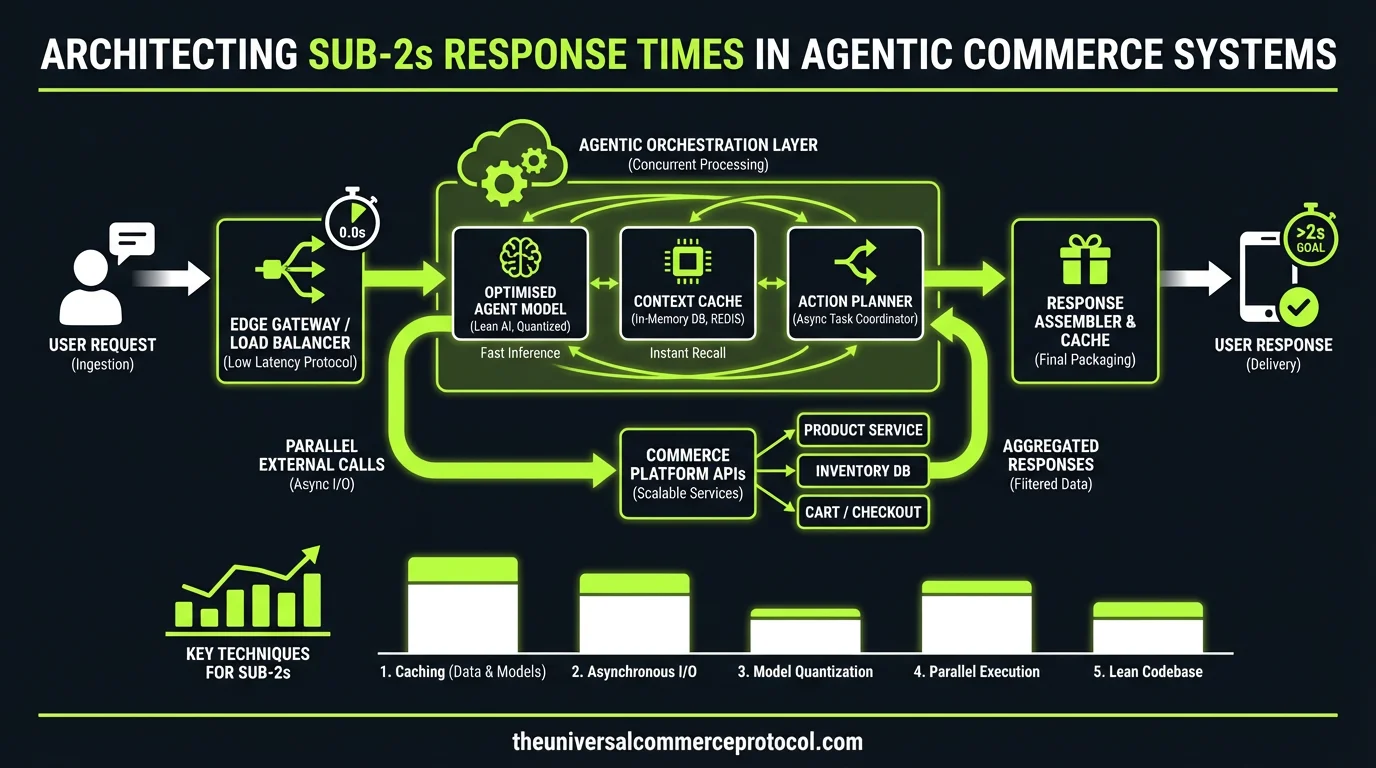
Sub-2s Response Times in Agentic Commerce Systems
Achieving sub-2-second response times in agentic commerce systems requires optimizing API gateway routing latency, vector database query performance (Pinecone, Weaviate, Milvus), and LLM token generation throughput via request batching and Redis caching layers. Production deployments on AWS Lambda, Google Cloud Run, and Kubernetes leverage asynchronous event-driven architectures with CDN edge nodes (Cloudflare, Fastly) to reduce…
-
UCP Integration: Building Compliant Agentic Commerce Architecture
Technical framework for implementing UCP-based agentic commerce while maintaining regulatory compliance across jurisdictions and payment flows.
-

AI Commerce Tax Reporting & Compliance Guide
AI commerce agents executing autonomous transactions must comply with Internal Revenue Code (IRC) Section 6001 record-retention requirements, file IRS Form 8949 for capital asset transactions, and satisfy economic nexus obligations established by South Dakota v. Wayfair, 585 U.S. ___ (2018) across all state jurisdictions conducting sales. Merchants deploying AI purchasing systems must apply Financial Accounting…
-

The Hidden Financial Risk in AI Commerce: When Your Systems Start Negotiating Million-Dollar Deals
AI agents are now autonomously negotiating B2B deals worth millions—creating compliance gaps and liability risks that could blindside your finance team.
-
Agent Commerce in Regulated Industries: Compliance Frameworks for Healthcare, Financial Services, and Pharma
AI agents operating in healthcare, pharma, and financial services face stricter compliance than retail. Here’s how to architect compliant agentic systems.