Category: Protocol & Technical Architecture
-
UCP vs Claude Marketplace: Training Commerce Agents
Unified Commerce Platform (UCP) architectures implement role-based access control (RBAC) with sandboxed transaction boundaries for PCI-DSS compliance in payment processing and PII handling, while Anthropic’s Claude Marketplace agents use RESTful API integration with tool-use capabilities to orchestrate actions across distributed third-party systems like Stripe, Shopify, and ERP microservices. UCP-trained commerce agents operate within monolithic service…
-
UCP vs Claude Marketplace: Commerce Integration Trade-offs
Claude Marketplace integrates Anthropic’s Claude 3.5 Sonnet (200K context window), Claude 3 Opus (128K tokens), and Claude 3 Haiku through proprietary APIs with
-
Claude vs. Google Commerce: Protect Your Digital Revenue
Claude (Anthropic) integrates natural language processing for commerce through conversational AI, enabling purchase intent recognition and product discovery via chat interfaces without native payment processing. Google Commerce—comprising Google Shopping, Google Merchant Center, Google Pay, and Google Ads—processes transactions for 2+ billion monthly active users, charging standardized merchant fees of 2–3.5%, with real-time inventory synchronization via…
-
Claude Marketplace vs Google UCP: Agentic Commerce
Anthropic’s Claude Marketplace leverages Claude 3.5 Sonnet and Claude 3 Opus models through proprietary APIs to enable direct agentic commerce integration, while Google’s Unified Commerce Protocol (UCP) operates as a vendor-neutral standard supporting Vertex AI, Google Commerce APIs, OpenAI GPT-4, and Meta Llama 2 across Google Cloud Platform, Amazon Web Services (AWS), and Microsoft Azure…
-
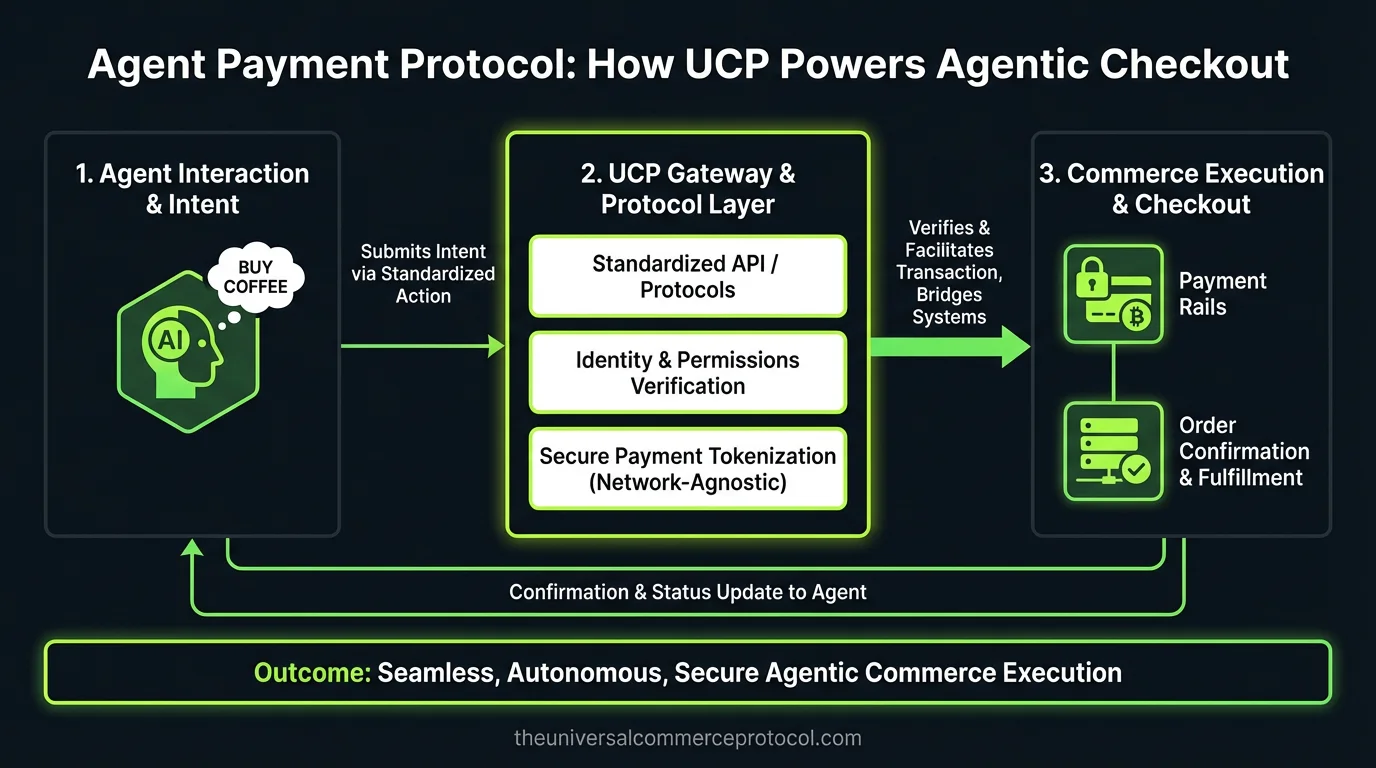
Agent Payment Protocol: How UCP Powers Agentic Checkout
Agent payment protocol enables AI agents to authorize and complete purchases autonomously. Learn how UCP, AP2, and Google Pay work together to power agentic commerce — and what merchants must do to be ready.
-
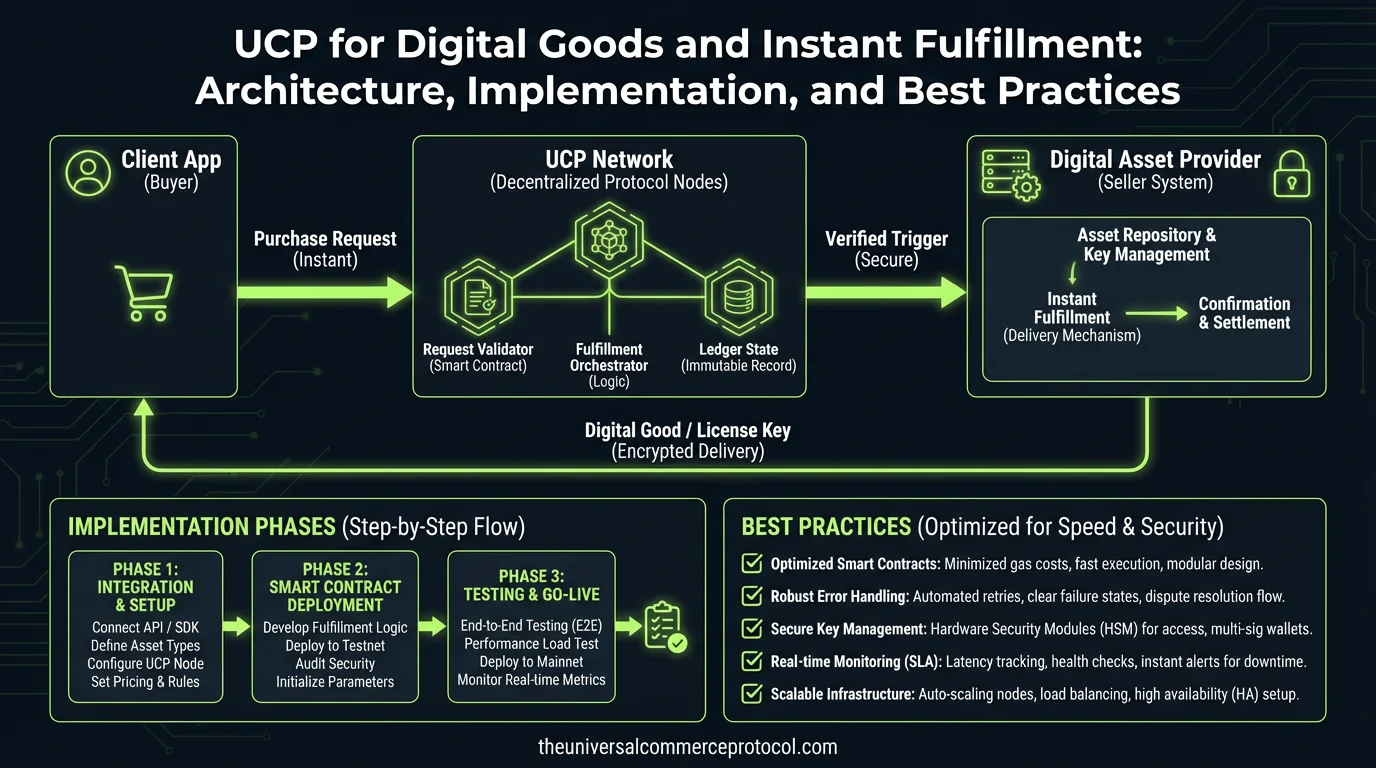
UCP for Digital Goods: Architecture & Instant Fulfillment
The Universal Commerce Protocol (UCP) is a standardized API framework enabling instant fulfillment of digital goods—including software licenses, streaming subscriptions, and SaaS applications—through automated transaction workflows compliant with PCI DSS Level 1 and OAuth 2.0 standards. UCP architecture integrates payment processors (Stripe, PayPal), content delivery networks (Cloudflare, Akamai), and fulfillment engines to provision digital assets…
-
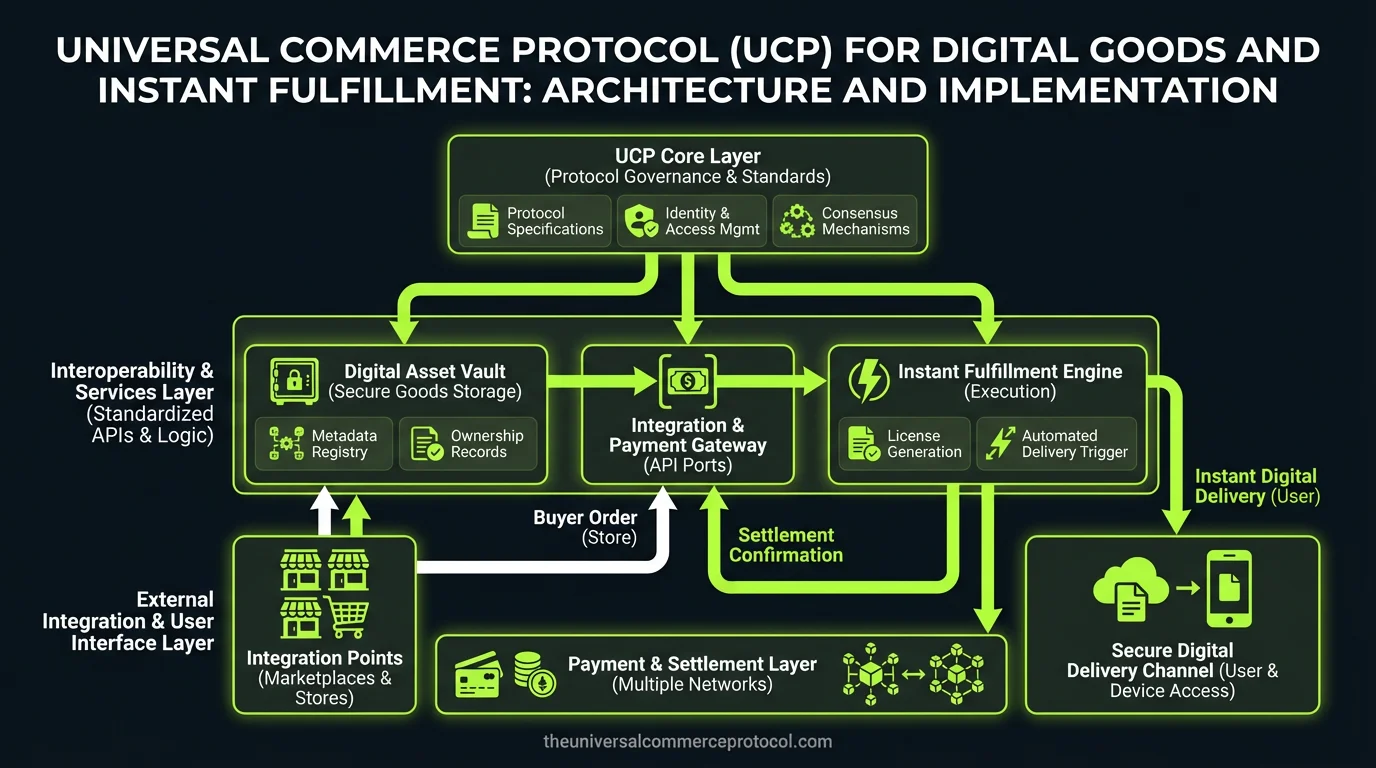
Universal Commerce Protocol: Digital Goods & Instant Fulfillment
The Universal Commerce Protocol (UCP) is a standardized, API-based framework that enables subsecond delivery of digital goods—including software licenses, SaaS subscriptions, and blockchain-based virtual assets—across e-commerce platforms such as Shopify, WooCommerce, and custom implementations via cryptographically-verified fulfillment systems. UCP integrates with payment processors Stripe and PayPal for real-time order processing, inventory synchronization, and immutable transaction…
-
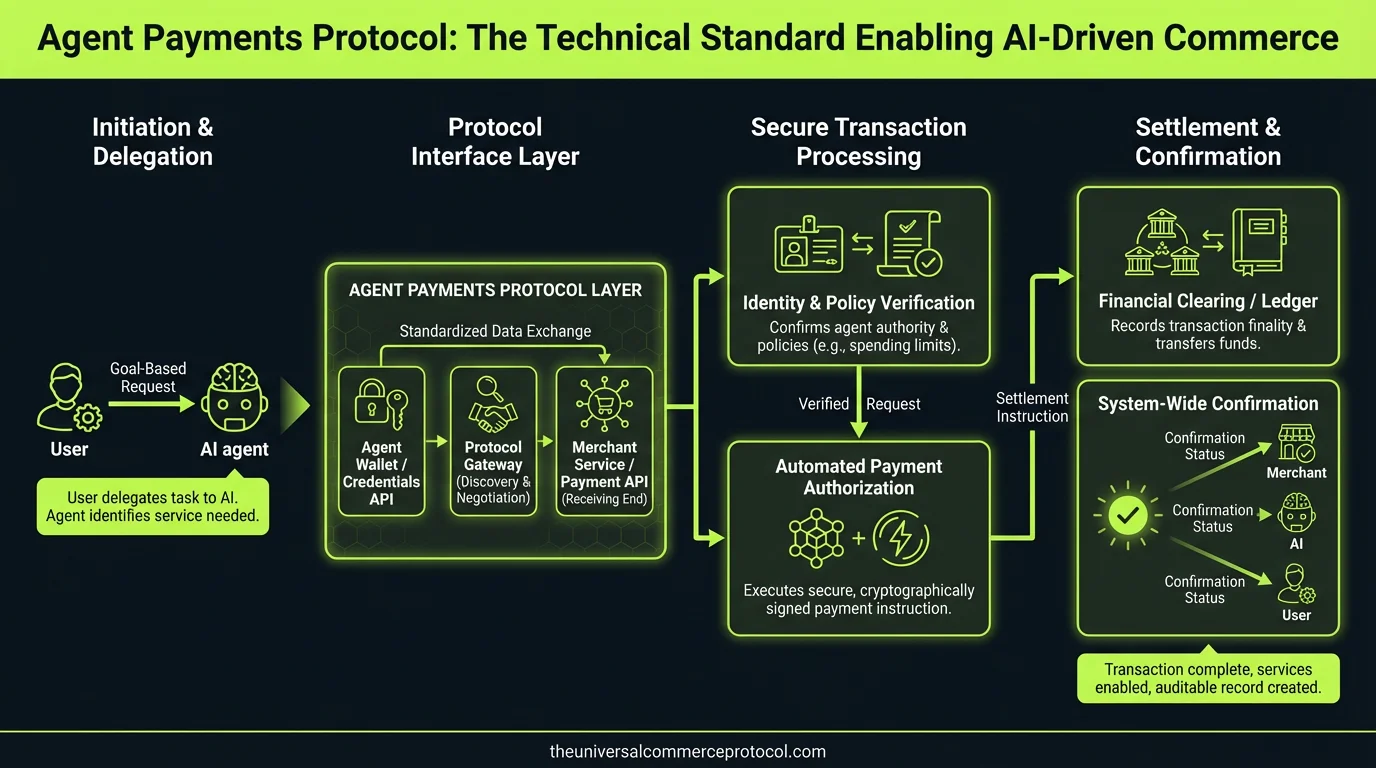
Agent Payments Protocol: The Technical Standard Enabling AI-Driven Commerce
The Agent Payments Protocol represents a critical layer in the Universal Commerce Protocol stack, enabling autonomous AI agents to execute transactions with cryptographic verification and settlement finality. This technical deep dive explores how UCP integrates payment standards, merchant acquiring, and agent authorization to create a trustless commerce infrastructure.
-
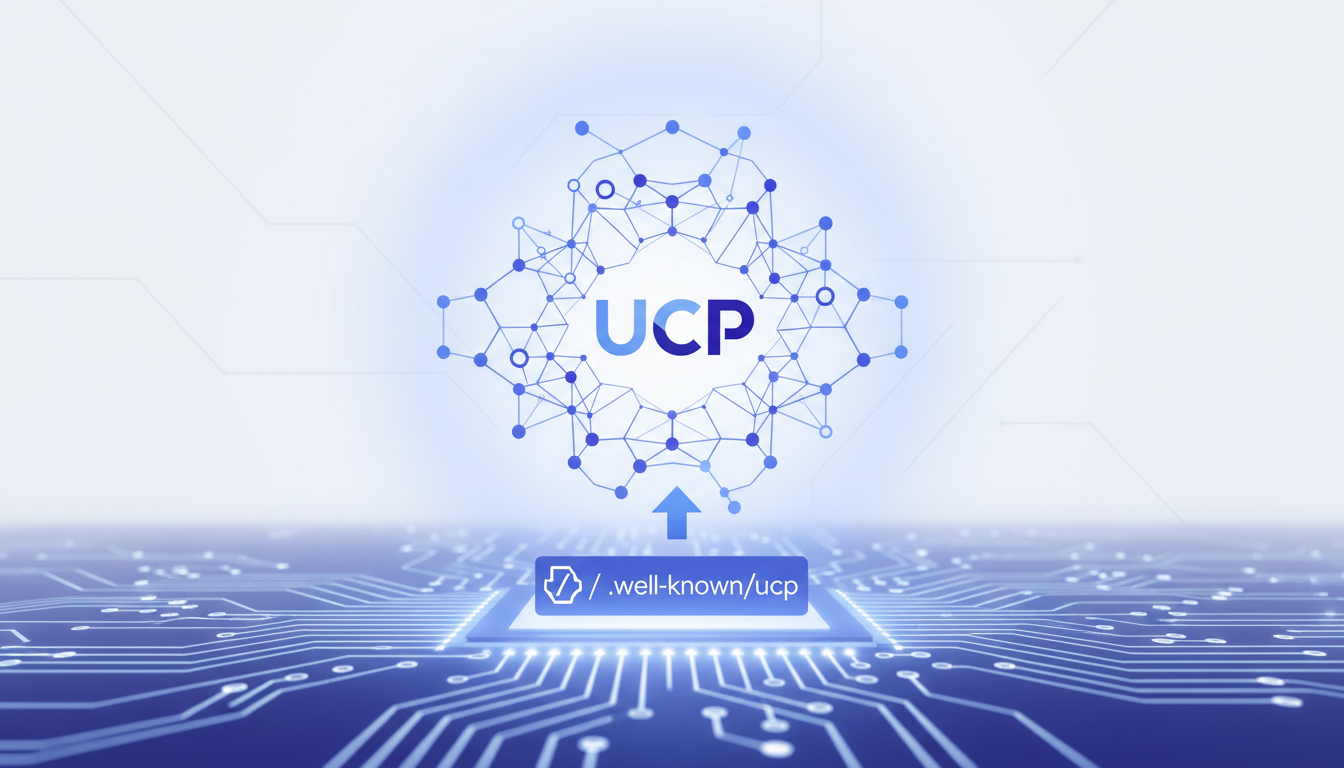
/.well-known/ucp Endpoint: Universal Commerce Protocol
The /.well-known/ucp endpoint is a standardized discovery mechanism defined in RFC specifications that enables e-commerce platforms to advertise Unified Commerce Platform (UCP) capabilities and API endpoints. Implementing this endpoint requires serving a JSON configuration file at https://yourdomain.com/.well-known/ucp containing vendor metadata, supported protocols, and authentication mechanisms to establish interoperability with UCP-compliant clients and aggregators. This Well-Known…
-
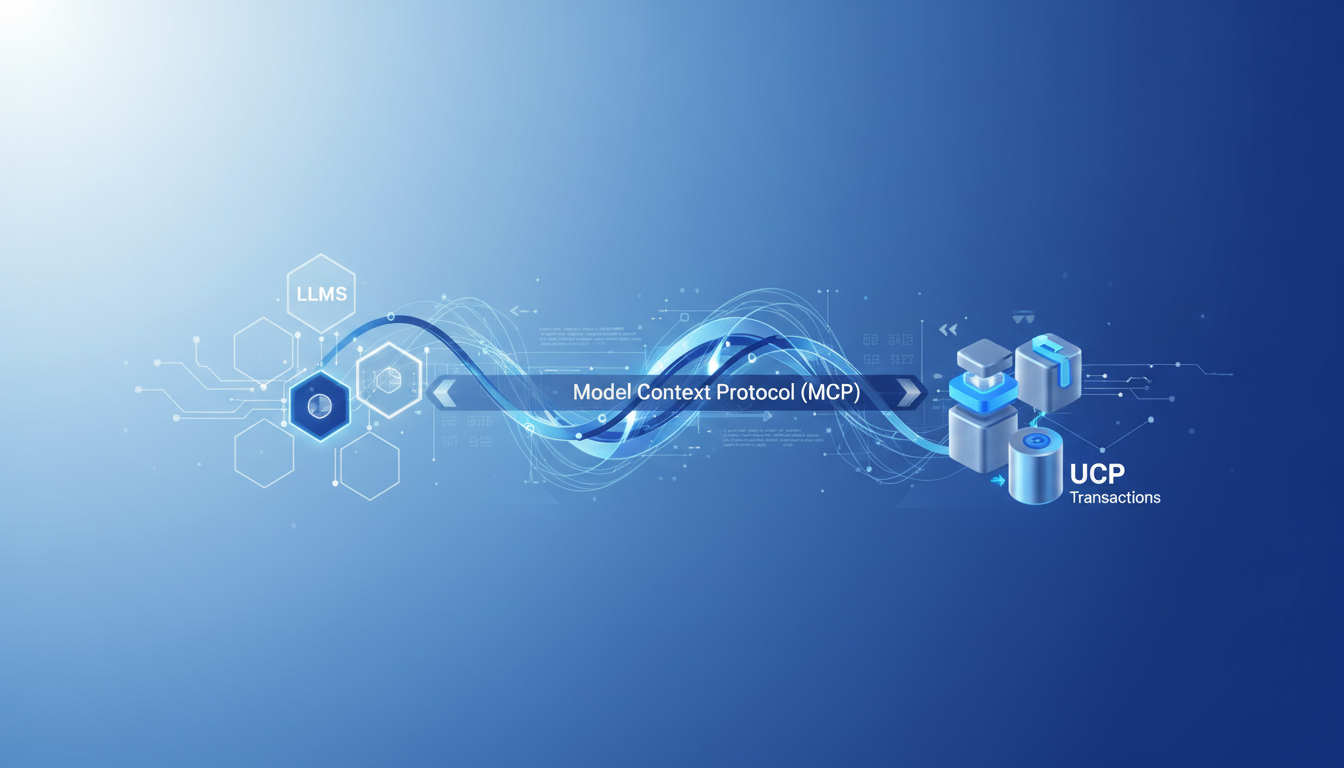
MCP: Bridging LLMs and Universal Commerce Protocol
The Model Context Protocol (MCP), developed collaboratively by Anthropic and Google, is a standardized framework that enables Large Language Models (LLMs) to securely interface with Universal Crypto Protocol (UCP) transaction systems through verified context windows. MCP architecture allows AI agents to access real-time blockchain data, validate smart contract interactions, and execute transactions while maintaining cryptographic…