Category: Protocol & Technical Architecture
-

UCP Perishable Fulfillment: Cold Chain Compliance for AI Agents
UCP standardizes perishable fulfillment rules for AI agents, encoding cold chain compliance, expiry dates, and delivery windows into machine-readable constraint
-

UCP Agent Permissions: Delegated Access Without Shared Credentials
Your AI agent just reordered laundry detergent. Great. But did you check what else it can access?
-

How to Configure the /.well-known/ucp Discovery Endpoint for AI Agents
Learn how to configure the /.well-known/ucp discovery endpoint so AI agents and commerce platforms can automatically discover your store’s capabilities, supported payment methods, and API endpoints.
-

UCP Inventory Management & Real-Time Stock Sync
Unified Commerce Platform (UCP) inventory management enables real-time stock synchronization across multiple sales channels through centralized stock deduction logic that executes when autonomous agents process orders. UCP systems maintain inventory visibility by updating SKU-level stock counts instantaneously across e-commerce platforms, point-of-sale (POS) systems, and fulfillment networks, preventing overselling and stockouts in agentic commerce workflows. Multi-channel…
-

Webhook Architecture Resilience: Reliable Event Processing
Webhook architecture resilience for Unified Commerce Platform (UCP) event processing implements idempotent retry mechanisms with exponential backoff, distributed transaction coordination via Apache Kafka or AWS EventBridge, and event sourcing patterns compliant with exactly-once processing semantics. Dead-letter queue (DLQ) management, HMAC-SHA256 webhook signature verification, and circuit breaker patterns prevent cascading failures across payment processing, inventory synchronization,…
-

Fulfillment Agent Architecture for Real-Time Order-to-Delivery
Fulfillment agent architectures orchestrate autonomous systems across warehouse management systems (WMS), transportation management systems (TMS), and last-mile delivery networks—integrating real-time inventory visibility via RFID/barcode systems, dynamic route optimization algorithms (Dijkstra, genetic algorithms), and carrier APIs (FedEx, UPS, Amazon Logistics)—to compress order-to-delivery cycles from 2-5 business days to 4-24 hours. These agentic frameworks automate handoff coordination…
-
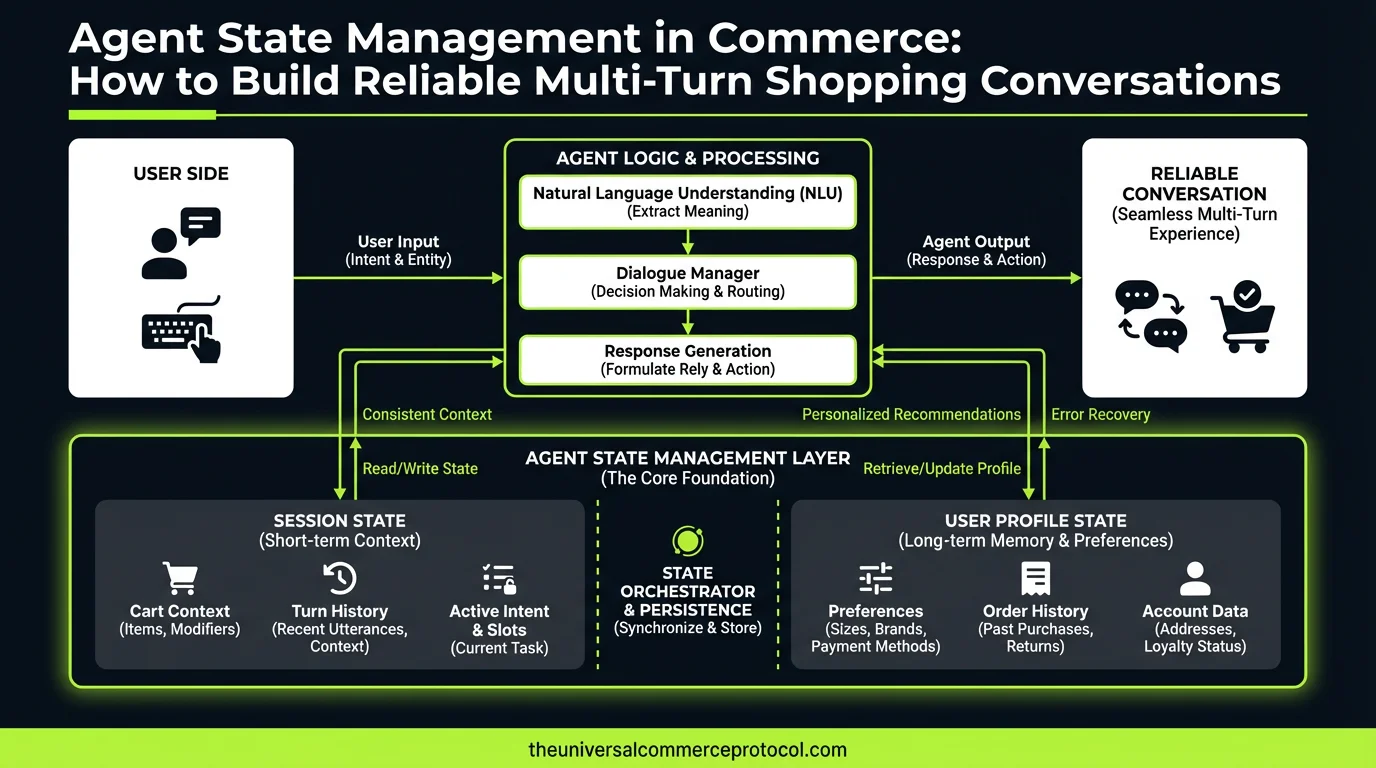
Agent State Management in Multi-Turn Commerce
Agent state management in e-commerce systems persists user intent, shopping cart contents, and transaction history across multi-turn conversations using vector databases such as Pinecone and Weaviate, combined with distributed session stores including Redis and Memcached. Agentic commerce platforms on Shopify, Magento, and custom microservices architectures implement deterministic finite state machines (DFSMs) with ACID-compliant transaction handling…
-
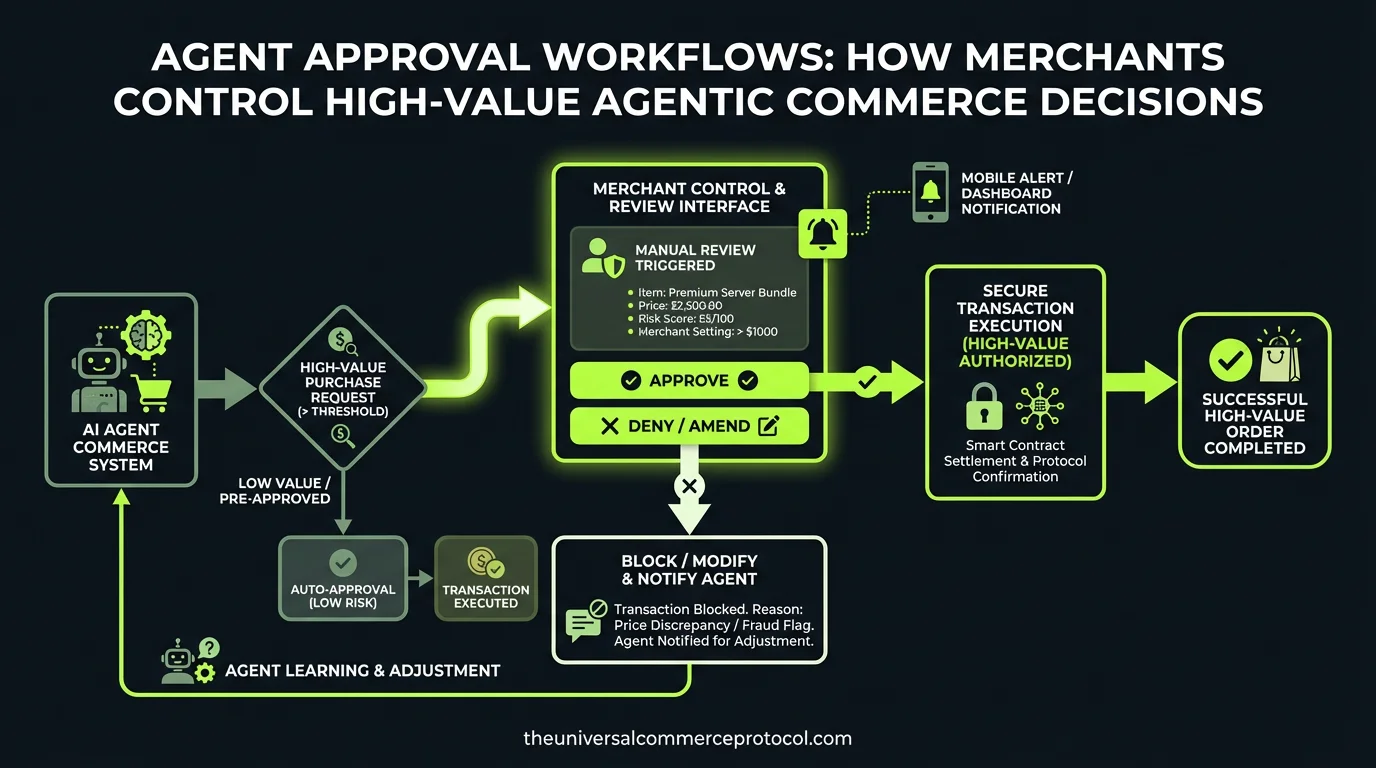
Agent Approval Workflows for Agentic Commerce
Agent Approval Workflows implement human-in-the-loop governance for AI agents in agentic commerce platforms, requiring designated merchant stakeholders to authorize high-value transactions—including refunds exceeding defined thresholds, returns processing, and purchases above specified price points—through predefined escalation paths that route decisions based on transaction type and monetary value. Role-based approval hierarchies assign authorization rights to managers, compliance…
-

AI Agent Procurement Risks: The $3M Blind Spot Destroying Profit Margins
AI agents making autonomous purchasing decisions are creating unexpected margin erosion and working capital inefficiencies worth millions in losses.
-

UCP Token Lifecycle: Issuance Through Expiry Guide
Master UCP payment token lifecycle from issuance to expiry. Learn token scope, TTL configuration, revocation events, and security best practices for AI agents.