Category: Strategy & Business Impact
-

My Agent vs. Your Agent: Who Wins the Negotiation?
When both buyer and seller have AI agents, two algorithms optimize against each other. Will’s take on agent-vs-agent negotiation, pricing, and whether the
-

The UCP Skeptic’s Case
Will steelmans the critics: when transactions happen inside Google’s environment, merchants lose UX, merchandising, and post-purchase engagement. Products
-

What Happens to Loyalty Programs When My Agent Shops for Me?
AI agents have zero brand loyalty. Loyalty programs built over decades get bypassed at the moment of purchase. Will’s take from a small operator who’s watc
-

UCP Dispute Resolution: Who Arbitrates AI Agent Transactions?
UCP dispute resolution frameworks determine liability when AI agents execute purchases. Learn who arbitrates agent transactions, authorization chains, and emerg
-
GDPR Article 22: Automated Decision-Making in Agentic Commerce
AI agents executing B2B purchases must comply with GDPR Article 22’s automated decision-making safeguards. Learn the three lawful bases and audit your UCP imple
-
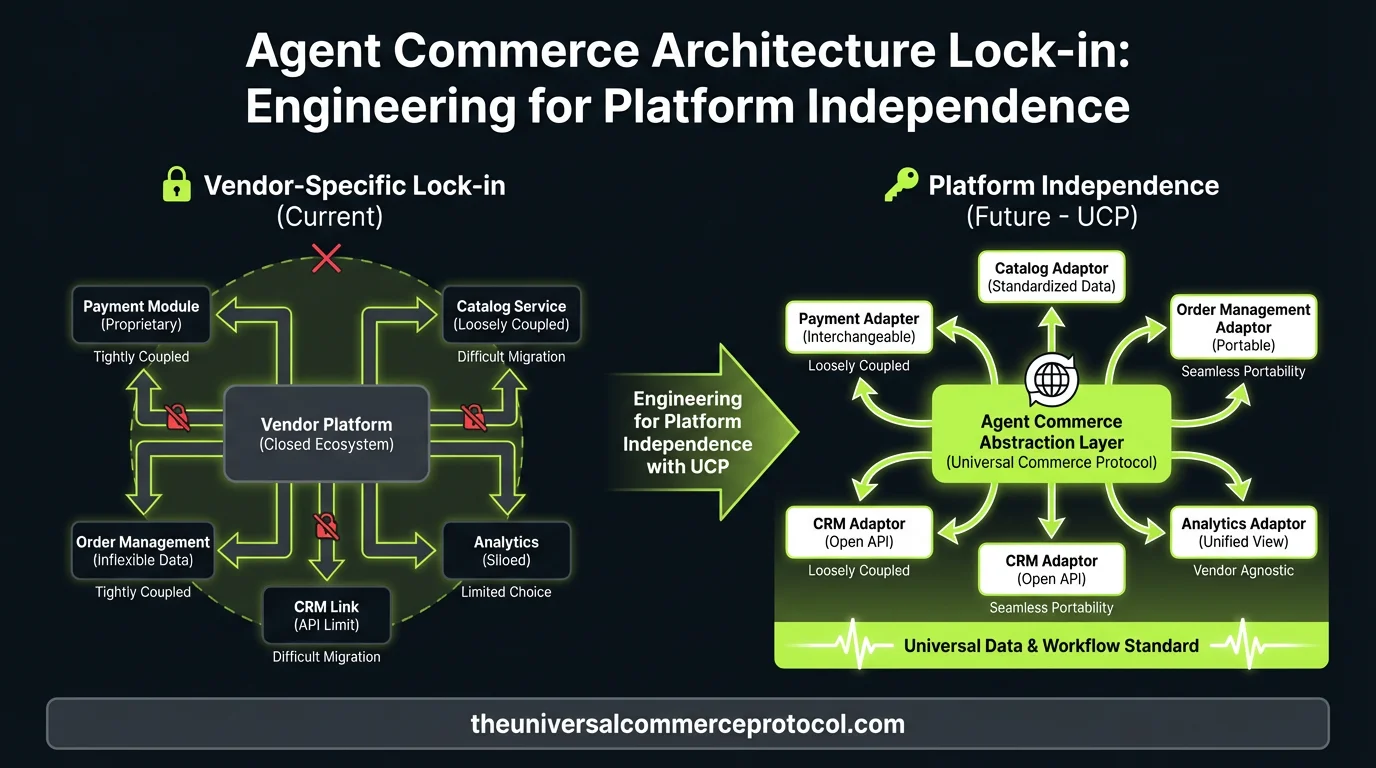
Agent Commerce Architecture: Avoiding Platform Lock-in
Agent commerce architecture requires implementing vendor-agnostic API abstractions and multi-LLM integration patterns to prevent platform lock-in with providers like OpenAI, Anthropic, and Google Cloud. Organizations should adopt containerized microservices deployed on Kubernetes, standardized message protocols (OpenAPI/AsyncAPI), and modular payment processor integrations (Stripe, Square, PayPal) to maintain system portability. This approach reduces switching costs and enables…
-
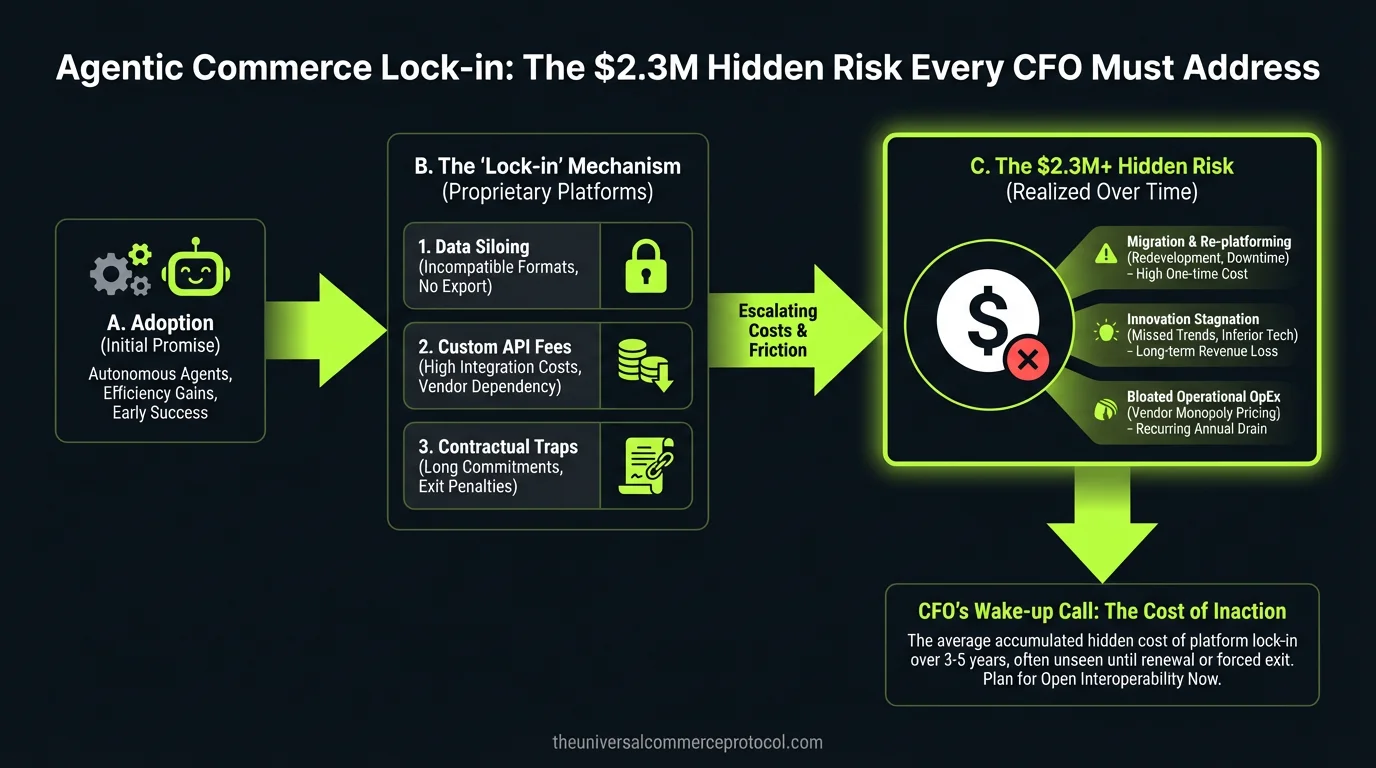
Agentic Commerce Lock-in: $2.3M CFO Risk
Agentic commerce platforms including Salesforce Einstein, Microsoft Copilot for Commerce, and custom LLM implementations impose switching costs exceeding $1.2M–$2.3M for mid-market merchants (annual revenue $50M–$500M), comprising retraining expenses, API integration rework, and operational downtime. CFOs face quantifiable vendor lock-in risk as proprietary agent frameworks become embedded across e-commerce, supply chain, and customer service operations. Organizations…
-
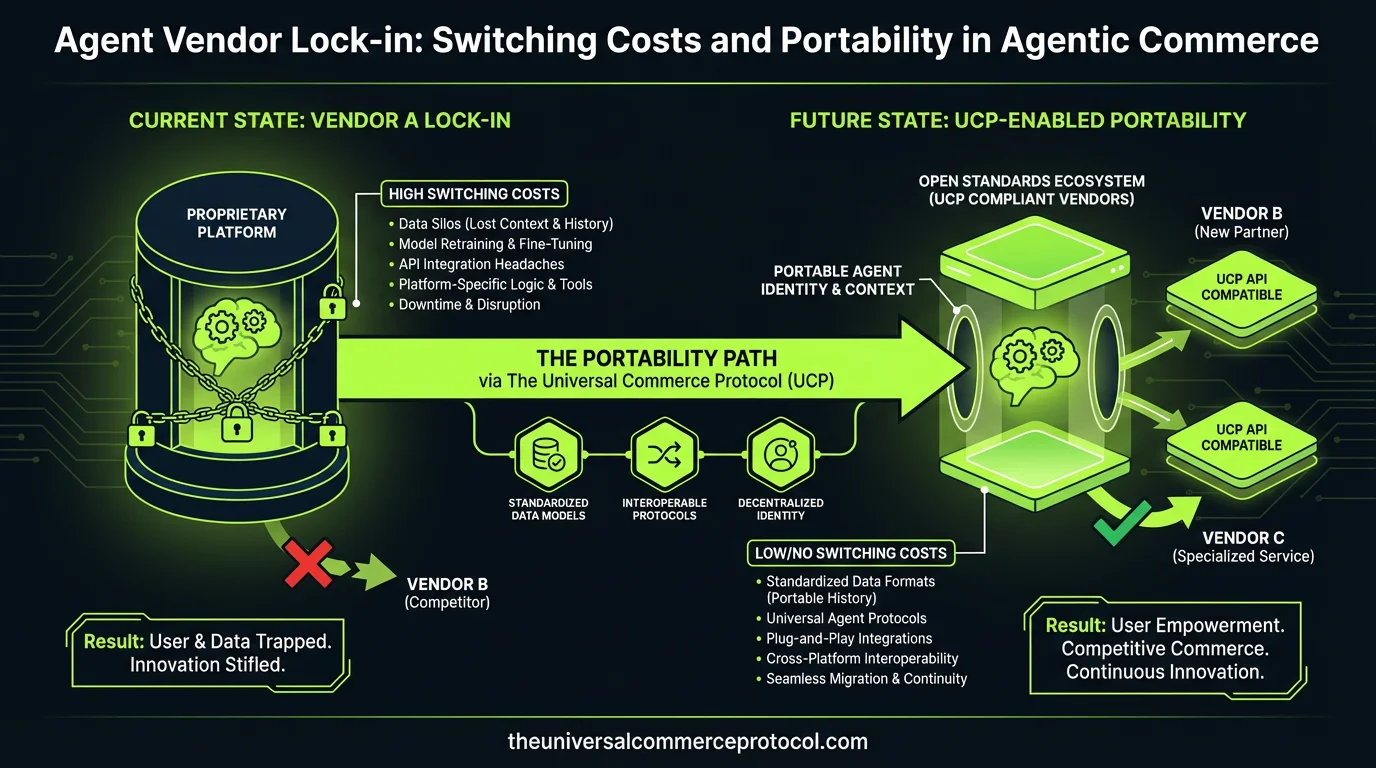
Agent Vendor Lock-in: Switching Costs in Agentic Commerce
Merchant adoption of AI agents from vendors including OpenAI, Anthropic, and specialized commerce platforms creates switching friction through proprietary APIs, closed data formats, and vendor-specific agent frameworks. Portable agentic commerce architectures require standardized interfaces such as OpenAPI 3.0 specifications, interoperable data schemas including JSON-LD and Schema.org markup, and abstraction layers that decouple business logic from…
-

B2B Agentic Commerce: Enterprise Procurement Strategy
Enterprise procurement agents automate RFQ processing and multi-stakeholder approval workflows by integrating with SAP Ariba, Coupa, and Jaggr across manufacturing, healthcare, and FAR-compliant U.S. government contracting sectors. B2B agentic commerce systems integrate with ERP platforms—SAP S/4HANA, Oracle Fusion Cloud, and NetSuite—to aggregate vendor performance data, generate purchase orders, and execute contract lifecycle management while maintaining…
-
PayPal’s Agentic Commerce Payment Agent Architecture
PayPal’s Commerce Platform integrates autonomous payment agents into unified commerce environments (UCP), enabling agent-to-agent payment orchestration and real-time settlement routing across B2B and D2C channels with native large language model compatibility. This architecture directly competes with Stripe’s modular payment APIs and Shopify’s composable commerce infrastructure, positioning PayPal as an enterprise-grade agentic commerce provider. The platform’s…