Category: Strategy & Business Impact
-
Voice Commerce API Architecture: UCP Integration Patterns for Enterprise
Technical deep-dive into UCP-compliant voice commerce architecture, API design patterns, and integration strategies for enterprise teams.
-
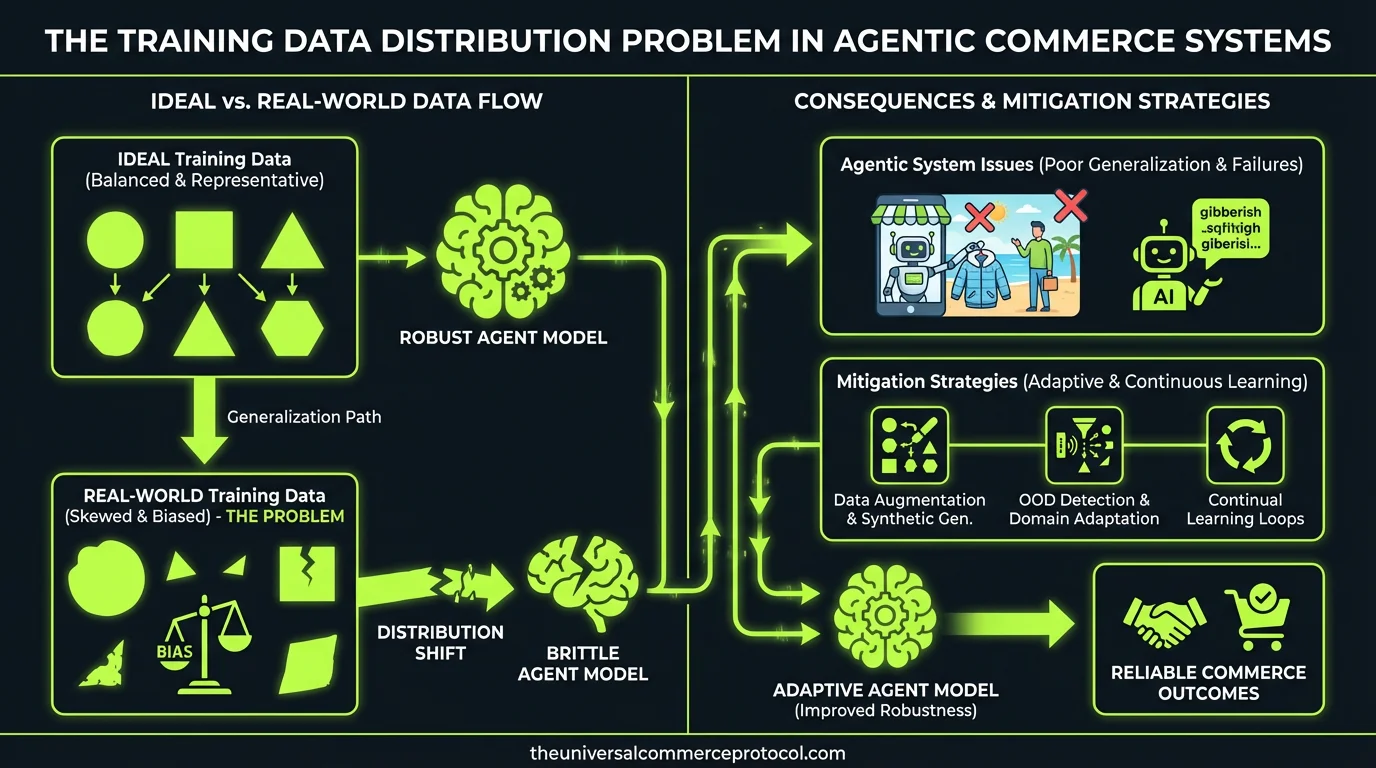
Training Data Distribution in Agentic Commerce Systems
Agentic commerce systems deployed on platforms including Shopify, SAP Commerce Cloud, and microservices architectures experience distribution shift when training datasets (synthetic or historical e-commerce data) diverge from production environments, causing inventory management failures and transaction errors across product categories, customer segments, and seasonal demand patterns. Mitigation strategies include real-time monitoring of prediction confidence scores, domain…
-
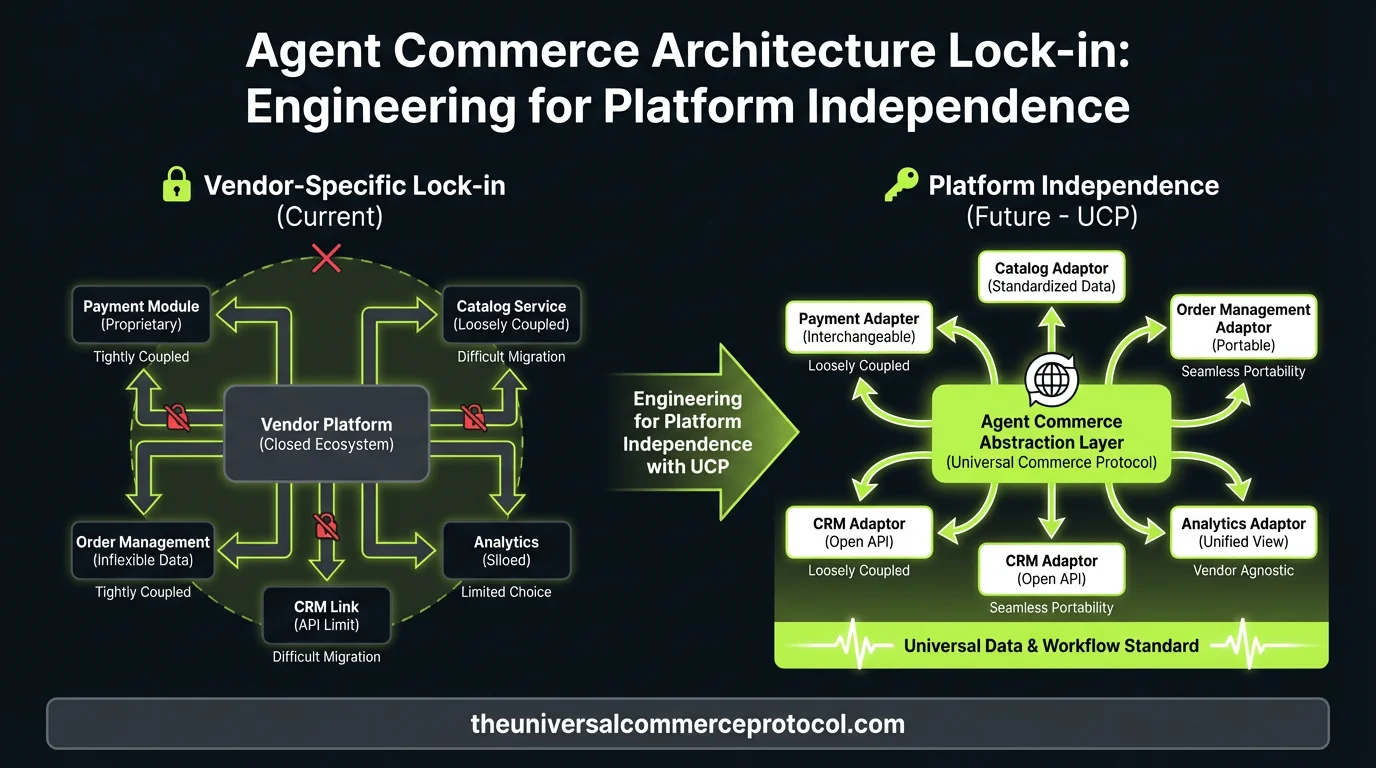
Agent Commerce Architecture: Avoiding Platform Lock-in
Agent commerce architecture requires implementing vendor-agnostic API abstractions and multi-LLM integration patterns to prevent platform lock-in with providers like OpenAI, Anthropic, and Google Cloud. Organizations should adopt containerized microservices deployed on Kubernetes, standardized message protocols (OpenAPI/AsyncAPI), and modular payment processor integrations (Stripe, Square, PayPal) to maintain system portability. This approach reduces switching costs and enables…
-

The UCP Skeptic’s Case
Will steelmans the critics: when transactions happen inside Google’s environment, merchants lose UX, merchandising, and post-purchase engagement. Products
-

Why Adobe’s Number Should Scare Every Marketer
AI referrals convert 31% higher and generate 254% more revenue per visit than traditional traffic. The agent buyer is the best buyer. If agent traffic is t
-

UCP 600 Cross-Border B2B Payment Disputes: 2025 Guide
UCP Real-Time: Handling Out-of-Stock Agent Events When an AI agent queries your inventory endpoint at 2:47 AM and receives a hard 404 on a sold-out SKU, it doesn’t wait — it abandons the transaction in milliseconds. Out-of-stock agent events are the silent infrastructure failures that agentic commerce exposes at scale, and 78% of mid-market merchants…
-

UCP Offline: Edge Commerce for Low-Connectivity Markets
You probably designed your last commerce integration assuming a stable connection. Most architects do. However, that assumption quietly excludes more than half the world’s population from the [agentic commerce revolution UCP promises](https://theuniversalcommerceprotocol.com/?s=The%20Protocol%20Bene
-

Agentic Commerce vs Traditional Ecommerce: Architectural Comparison & Technical Deep Dive
Traditional ecommerce is session-based with humans navigating storefronts. Agentic commerce is intent-based with AI agents executing purchases through protocols. Here are the seven structural differences and why merchants need to adapt.
-

UCP and Decentralized Commerce: Blockchain Integration
Universal Commerce Platform (UCP) enables decentralized commerce by integrating with blockchain networks such as Ethereum and Polygon, and Web3 protocols including smart contracts and decentralized finance (DeFi) infrastructure to facilitate peer-to-peer transactions with cryptographic verification and immutable transaction records. This integration leverages distributed ledger technology to eliminate intermediaries, reduce settlement times, and provide transparency through…
-

MCP vs Traditional AI: Commerce Integration Architecture
Anthropic’s Model Context Protocol (MCP) implements a stateless, protocol-based architecture that decouples AI model inference from business logic, enabling e-commerce platforms including Shopify, WooCommerce, and SAP to integrate large language models without backend restructuring—a fundamental departure from traditional monolithic AI systems where commerce rules are embedded directly into model parameters. MCP standardizes context exchange between…