Tag: AI agents
-

UCP Merchant Economics: ROI Calculator & Analysis
Unified Commerce Platform (UCP) merchants quantify ROI by benchmarking implementation costs—infrastructure investment, staff training, and software licensing—against omnichannel revenue growth, inventory carrying cost reduction, and customer lifetime value (CLV) increases. Break-even analysis using unit economics models (customer acquisition cost, average order value, gross margin per transaction, and channel-specific churn rates across POS, e-commerce, and mobile)…
-

UCP vs MCP Architecture: Implementation Guide for Leaders
Unified Commerce Platform (UCP) architecture employs distributed microservices for commerce orchestration across omnichannel retail, optimizing horizontal scalability and system throughput. Modular Commerce Platform (MCP) architecture centralizes AI-native processing through integrated machine learning pipelines, transformer-based large language models (LLMs), and neural networks for real-time personalization, recommendation engines, and predictive analytics. UCP vs. MCP selection criteria include…
-

Agentic Commerce in Southeast Asia Beyond Malaysia
Mastercard’s 2024 autonomous commerce pilot in Malaysia catalyzed agentic AI adoption across Southeast Asia, with Thailand, Vietnam, and Indonesia—home to 280+ million consumers and experiencing 25%+ annual e-commerce growth—implementing agent-based transaction frameworks by 2025-2026. Key infrastructure enablers include Bangkok Bank’s AI systems, Grab’s payment integrations across Singapore and Malaysia, and Vietnam’s Open Banking Framework (2024),…
-

Returns & Refunds in Agentic Commerce: Agent State
Universal Commerce Protocol (UCP) agents orchestrate post-purchase returns through deterministic finite state machines that synchronize transactional state across Stripe, PayPal, and Square while maintaining consistency with SAP ERP, Oracle Commerce, and fulfillment platforms like ShipBob. Agent recovery mechanisms employ idempotent operations reconciling distributed ledger records against authoritative PostgreSQL and AWS DynamoDB stores under ACID compliance…
-

$18 Billion Revenue Recovery: The CFO’s Guide to AI-Driven Cart Abandonment Solutions
Cart abandonment costs merchants $18B annually. AI agents can recover 22% more revenue through real-time interventions—here’s the business case.
-
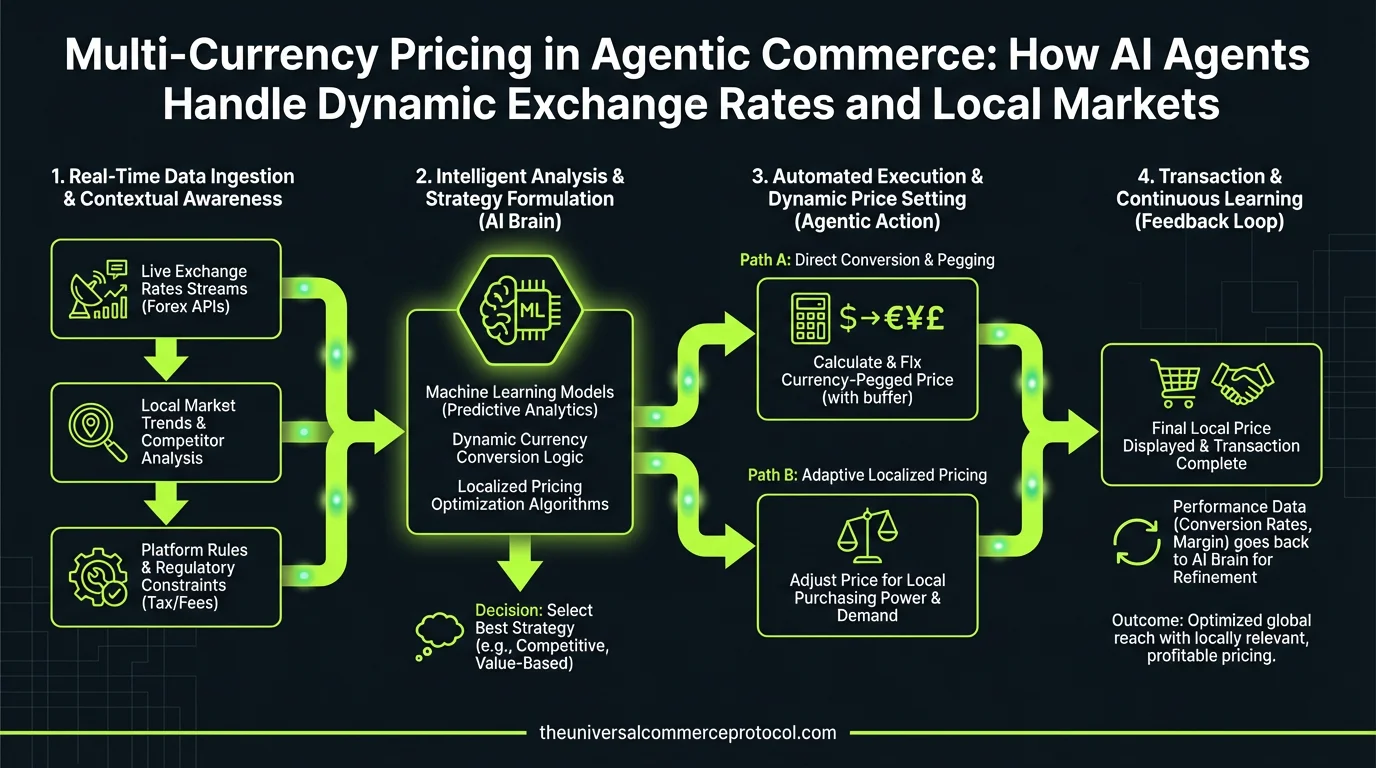
AI Agents & Multi-Currency Pricing: Dynamic Exchange Rates
AI agents in agentic commerce systems integrate real-time foreign exchange APIs—including OANDA, XE.com, and Bloomberg Terminal—to process dynamic currency conversion across major trading pairs (USD/EUR, GBP/JPY, AUD/SGD) while calculating jurisdiction-specific tax obligations such as EU VAT directives, UK VAT at 20%, German VAT at 19%, US Economic Nexus Framework sales tax, and Australian GST at…
-
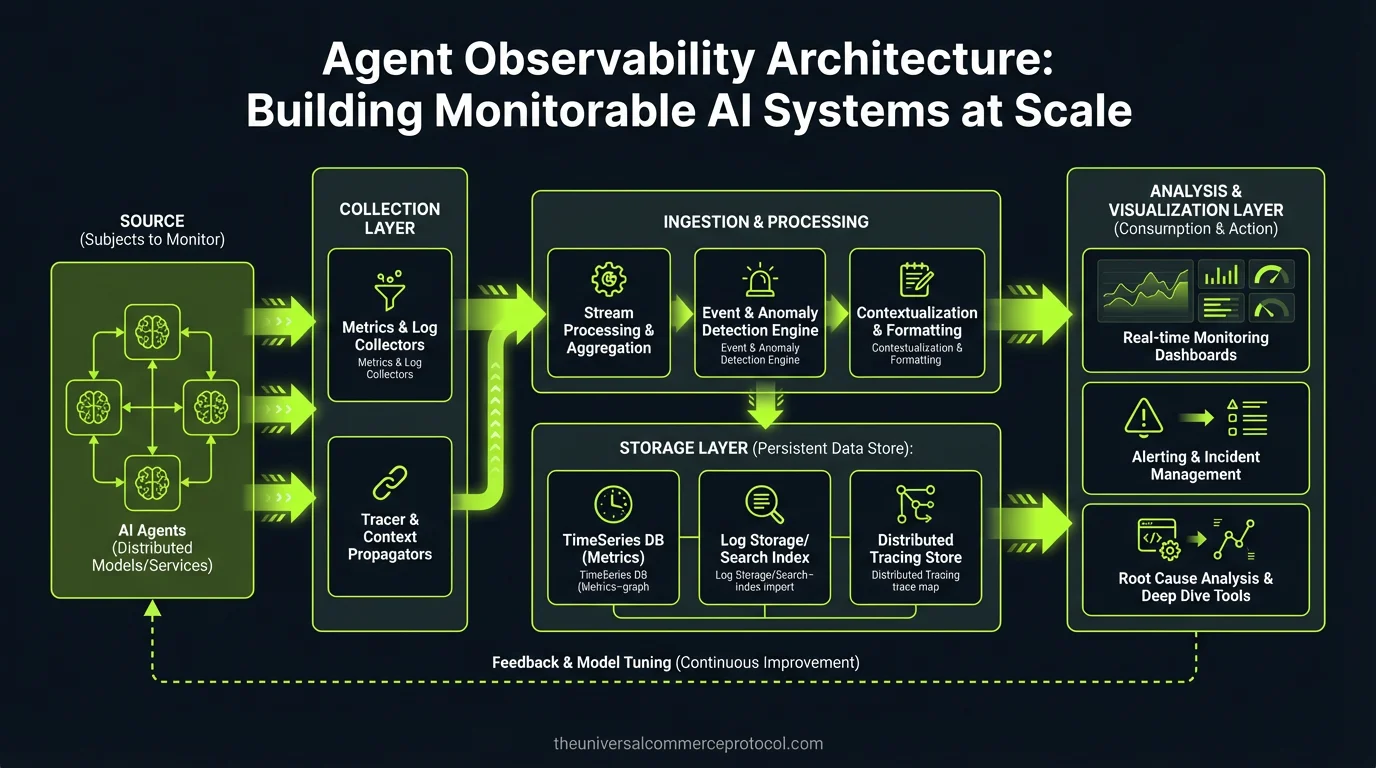
Agent Observability Architecture: Monitorable AI Systems
Enterprise AI agent systems operating in e-commerce, SaaS, and financial services sectors frequently lack comprehensive observability frameworks, forcing engineering teams at organizations like Anthropic, OpenAI, and AWS to implement post-deployment debugging practices for LLM-based decision trees and tool-use chains. Modern agentic architectures require structured logging of model invocations, token usage metrics, and tool call hierarchies…
-

Training Commercial AI Agents to Self-Monitor for Factual Accuracy: A Model-Centric Approach to Hallucination Detection
How to architect AI commerce agents that self-monitor for hallucination — confidence estimation, UCP validation layers, and continuous feedback loops that keep product data, pricing, and inventory claims accurate.
-
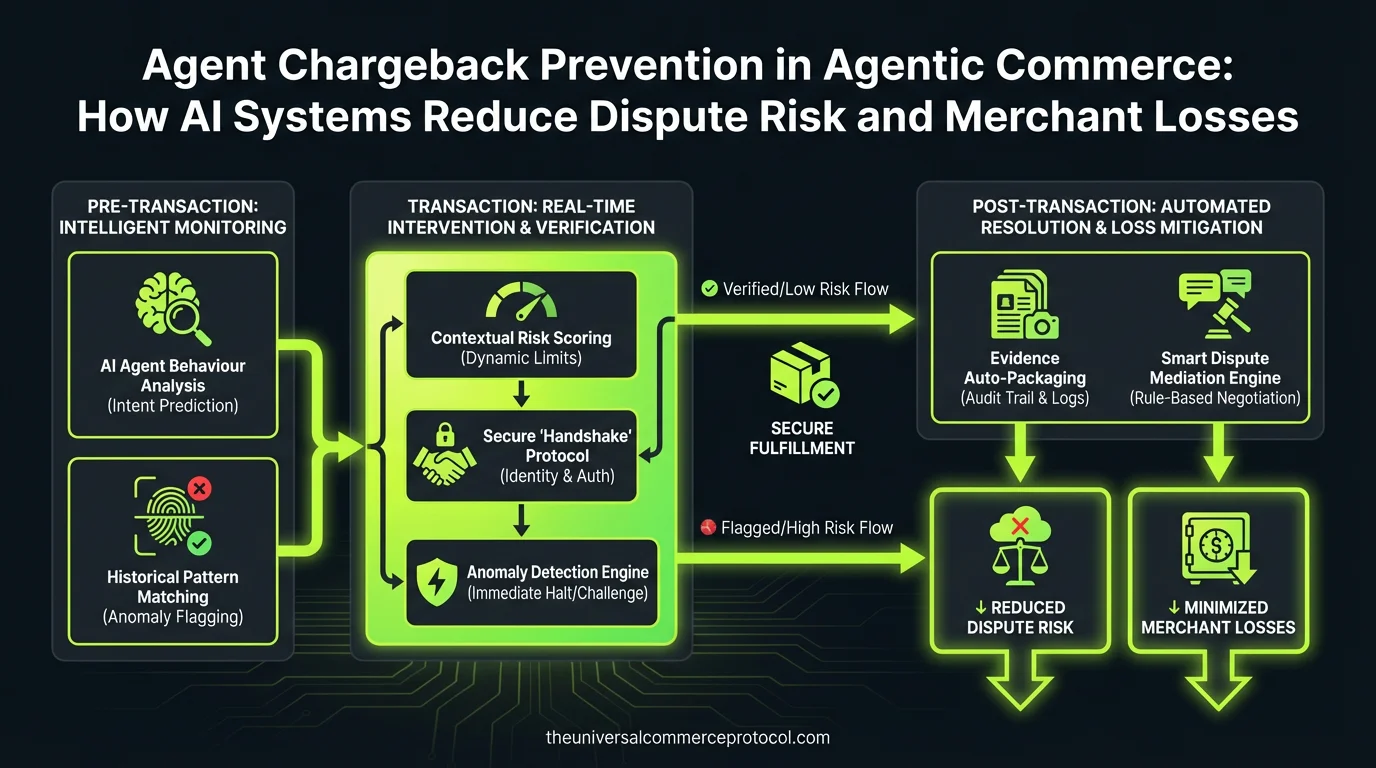
AI Agent Chargeback Prevention: Reduce Dispute Risk
AI autonomous agents in e-commerce transactions introduce chargeback risk through non-human payment decisions, including unauthorized initiations and anomalous spending patterns that exceed traditional fraud vectors. Merchants deploying agentic commerce systems can reduce chargeback disputes by implementing machine learning-based fraud detection, real-time transaction monitoring, velocity limits, and behavioral analytics frameworks—governance controls specifically architected for agent-driven commerce…
-
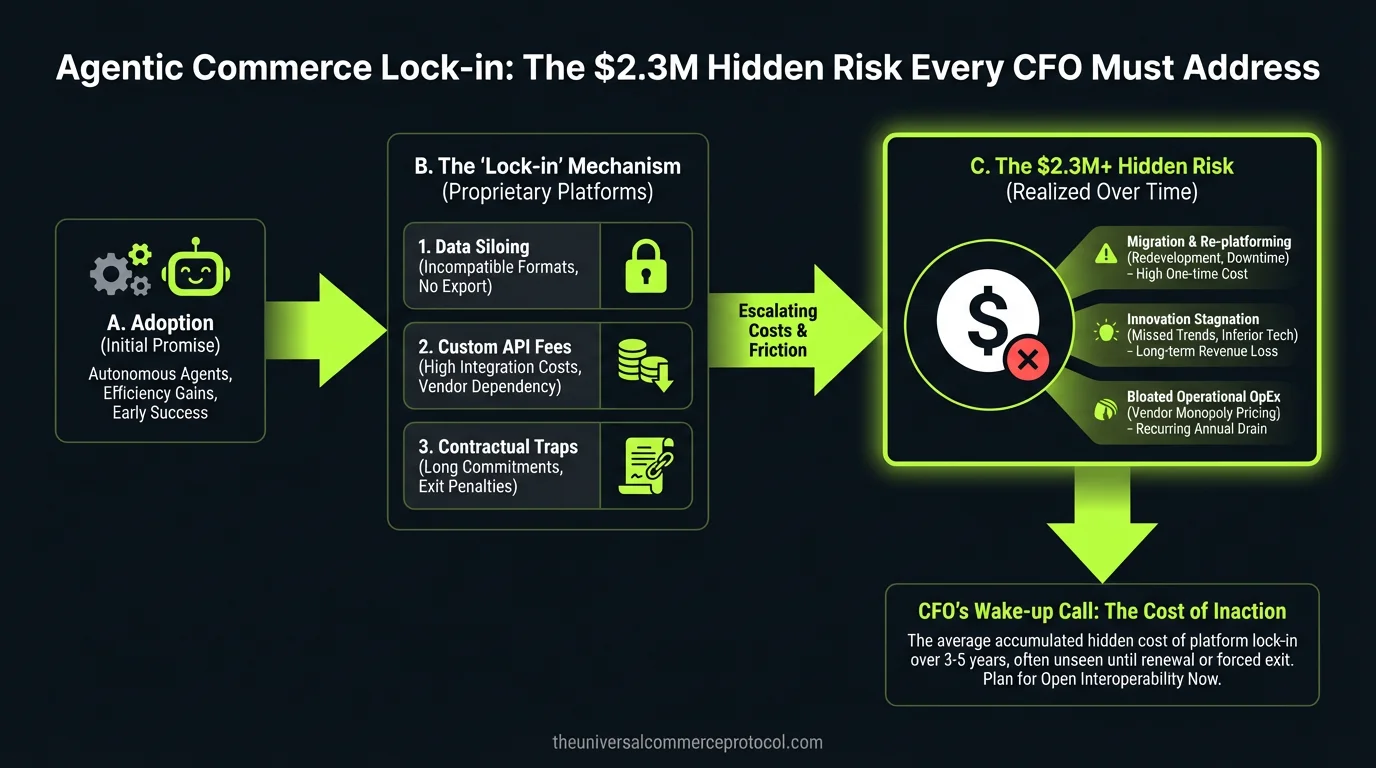
Agentic Commerce Lock-in: $2.3M CFO Risk
Agentic commerce platforms including Salesforce Einstein, Microsoft Copilot for Commerce, and custom LLM implementations impose switching costs exceeding $1.2M–$2.3M for mid-market merchants (annual revenue $50M–$500M), comprising retraining expenses, API integration rework, and operational downtime. CFOs face quantifiable vendor lock-in risk as proprietary agent frameworks become embedded across e-commerce, supply chain, and customer service operations. Organizations…