Tag: AI agents
-

Claude vs. Google Commerce: Protect Your Digital Revenue
Claude (Anthropic) integrates natural language processing for commerce through conversational AI, enabling purchase intent recognition and product discovery via chat interfaces without native payment processing. Google Commerce—comprising Google Shopping, Google Merchant Center, Google Pay, and Google Ads—processes transactions for 2+ billion monthly active users, charging standardized merchant fees of 2–3.5%, with real-time inventory synchronization via…
-

UCP vs Claude Marketplace: Commerce Agent Architecture
The Universal Commerce Protocol (UCP) is an open-source integration standard that normalizes REST and GraphQL APIs across Shopify, WooCommerce, and BigCommerce platforms through vendor-agnostic JSON Schema definitions, while Claude Marketplace is Anthropic’s proprietary agent framework built on Claude 3 model variants (Opus, Sonnet, Haiku) accessible via the Anthropic API Console and constitutional AI training. UCP…
-

UCP Agent Failure Recovery: Resilient Commerce
Unified Commerce Platform (UCP) agents implement failure recovery through idempotency keys, distributed transaction logs, and circuit breaker patterns—mechanisms standardized by companies like Shopify and Stripe—to prevent cascading failures across payment gateways, inventory systems, and order management services. Production-grade commerce architectures leverage compensating transactions, event sourcing, and saga orchestration (ACID-compliant patterns defined in microservices literature) to…
-

UCP Agent Testing Architecture for Production Commerce
The Universal Commerce Platform (UCP) Agent Testing Architecture deploys a three-tier validation framework comprising deterministic unit tests, stochastic Monte Carlo simulations, and end-to-end integration testing to address production e-commerce risks including non-deterministic large language model outputs, third-party payment gateway failures (Stripe, PayPal, Square integrations), and order management system inconsistencies across inventory, billing, and fulfillment microservices.…
-
UCP Agent Hallucination: Detection & Recovery
Unified Commerce Platform (UCP) agents operating in production environments experience hallucination events characterized by false inventory counts, inaccurate product pricing data, and incorrect order status information across omnichannel systems. Mitigation strategies include confidence scoring mechanisms, multi-source data validation protocols, automated rollback procedures, and human-in-the-loop verification workflows that reduce transaction errors, prevent revenue leakage, and maintain…
-

AI Agent Cart Recovery: Real-Time Abandonment Solutions
AI agents integrated with Universal Commerce Platform (UCP) detect cart abandonment through predictive analytics and behavioral segmentation, triggering real-time interventions across web, mobile, and conversational channels at checkout friction points. Enterprise deployments of UCP-native agentic systems report 15-35% recovery rate improvements compared to traditional email campaigns by delivering dynamic, personalized offers through autonomous agent orchestration.…
-

Modeling Cart Abandonment: Training AI Agents for Real-Time Commerce Recovery
Explore the data architecture, model design, and evaluation frameworks needed to train commerce AI agents for real-time cart abandonment recovery.
-
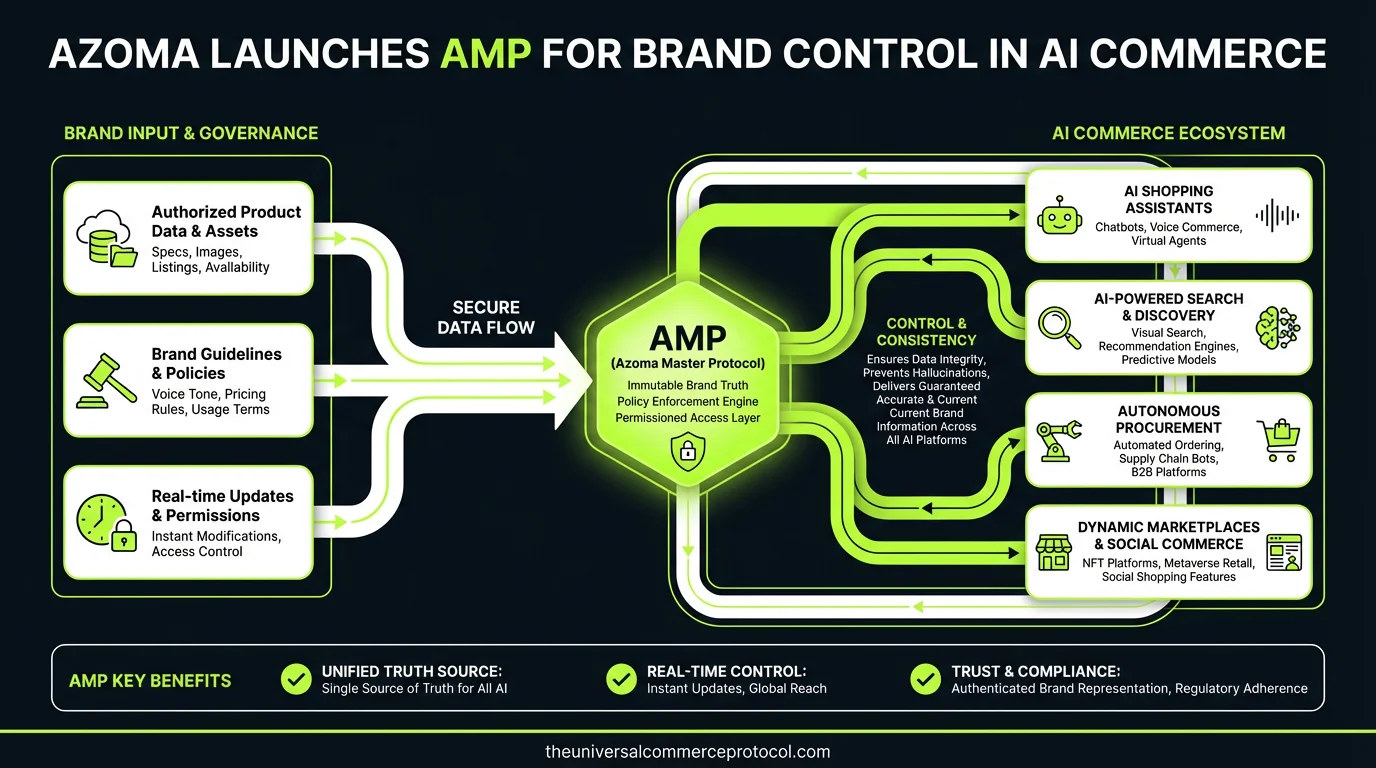
Azoma Launches AMP for Brand Control in AI Commerce
Azoma’s Agentic Merchant Protocol (AMP) is an open standard framework enabling retailers to maintain authoritative control over product catalogs, pricing, and merchandising rules across AI-powered shopping agents through machine-readable specifications and standardized APIs, with real-time inventory synchronization and transaction authorization against merchant-owned data sources. AMP establishes vendor-agnostic technical specifications for autonomous agent query validation and…
-
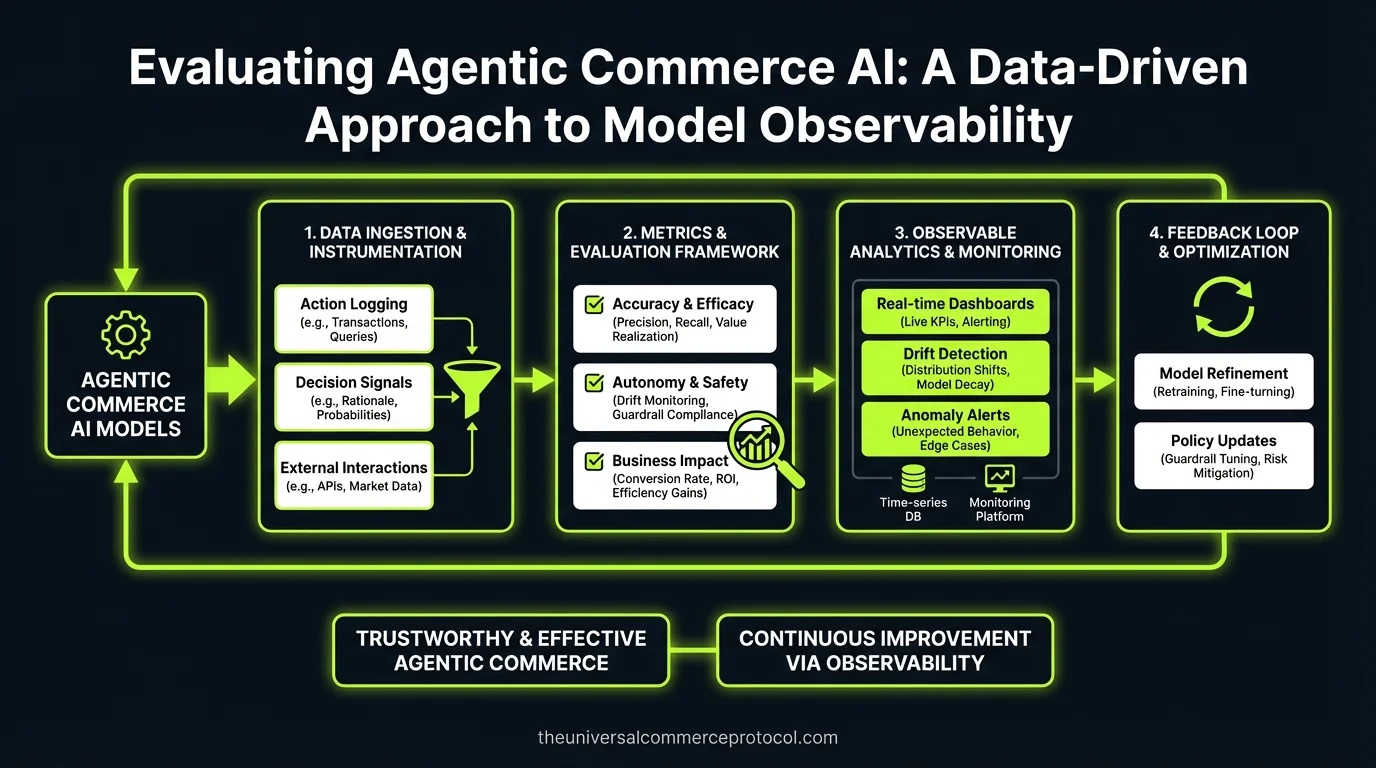
Agentic Commerce AI: Data-Driven Model Observability
Commerce AI agents processing 1,000+ daily transactions require continuous observability through data-driven monitoring frameworks employing drift detection algorithms, prediction confidence scoring, and behavioral anomaly analysis to identify machine learning model performance degradation in non-stationary e-commerce environments. Observability systems must track feature distributions, decision latency (measured in milliseconds), and conversion impact metrics—key performance indicators for maintaining…
-
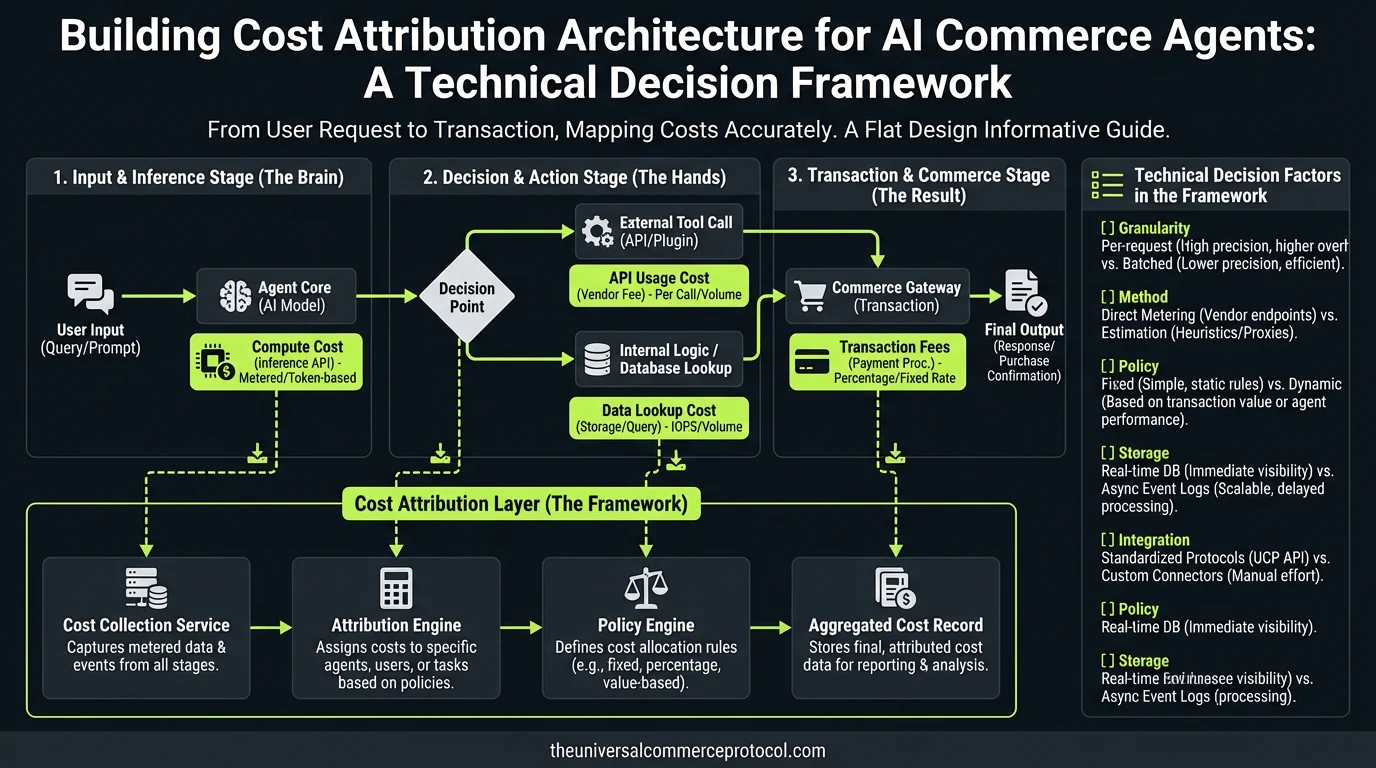
Building Cost Attribution Architecture for AI Commerce Agents: A Technical Decision Framework
Engineering teams need instrumentation patterns to track distributed AI agent costs across LLM APIs, vector stores, and payment flows.