Tag: AI agents
-

UCP Integration: Security & Compliance Architecture
UCP (Unified Communication Platform) integration enforces PCI DSS 3.2.1, GDPR Article 32, and SOC 2 Type II compliance through defense-in-depth architecture implementing AES-256 encryption-at-rest, payment card tokenization, and role-based access controls (RBAC) aligned with NIST SP 800-57 cryptographic key management standards. The multi-tenant infrastructure maintains HIPAA-eligible audit trails and real-time anomaly detection for financial services…
-

Stripe’s Agentic Commerce API: Native UCP Payment Rails
Stripe, headquartered in San Francisco, California, launched native Universal Commerce Protocol (UCP) support via its Agentic Commerce API in March 2026, establishing the first production payment rail integration of UCP among major payment processors. The system employs autonomous agent-based transaction routing across multiple payment methods and corridors, reducing checkout latency by 40% and enabling real-time…
-

India E-Commerce Market Entry: ROI Analysis for Agentic Commerce Investment
India’s $150B e-commerce opportunity requires specialized payment infrastructure—here’s the financial case for compliant market entry.
-
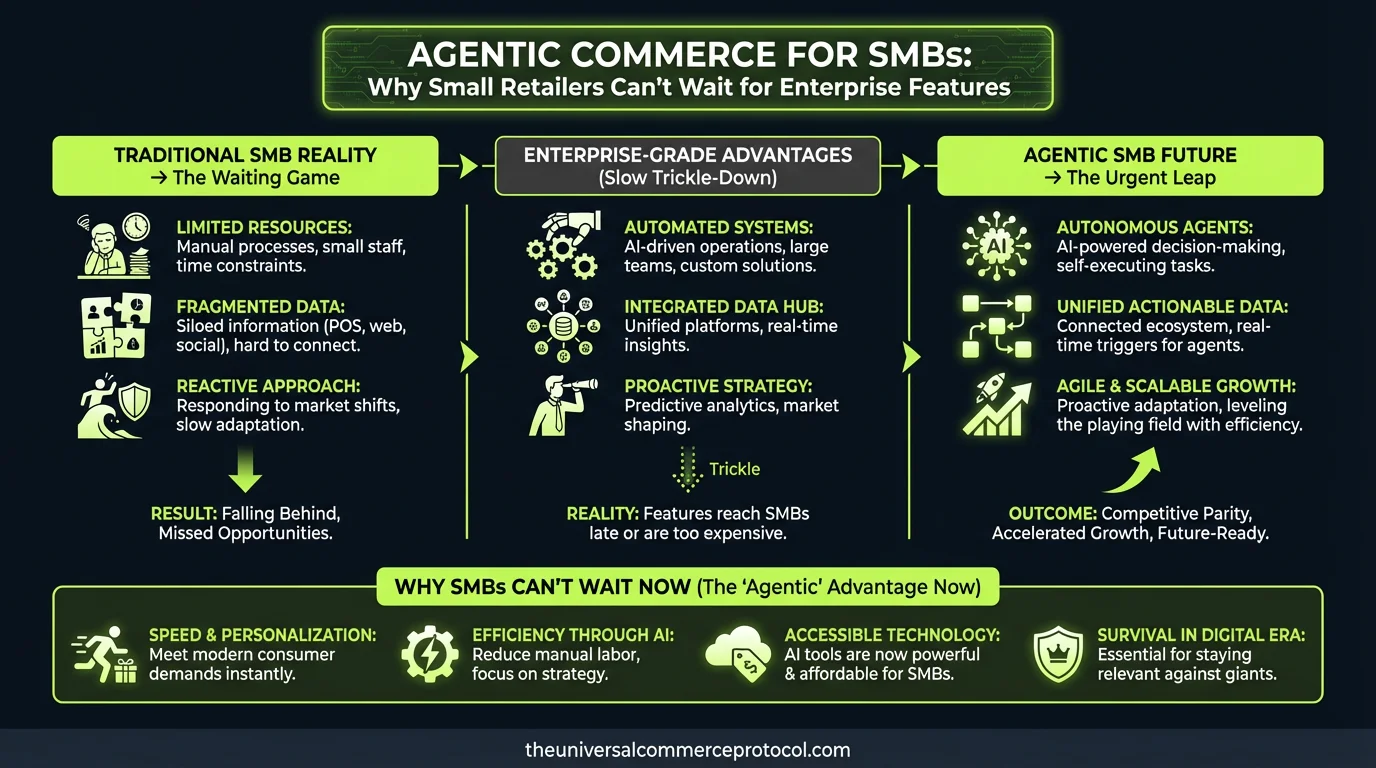
Agentic Commerce for SMBs: Why Small Retailers Can’t Wait for Enterprise Features
Enterprise agentic commerce dominates headlines, but SMBs face unique barriers: cost, integration complexity, and fragmented vendor ecosystems.
-
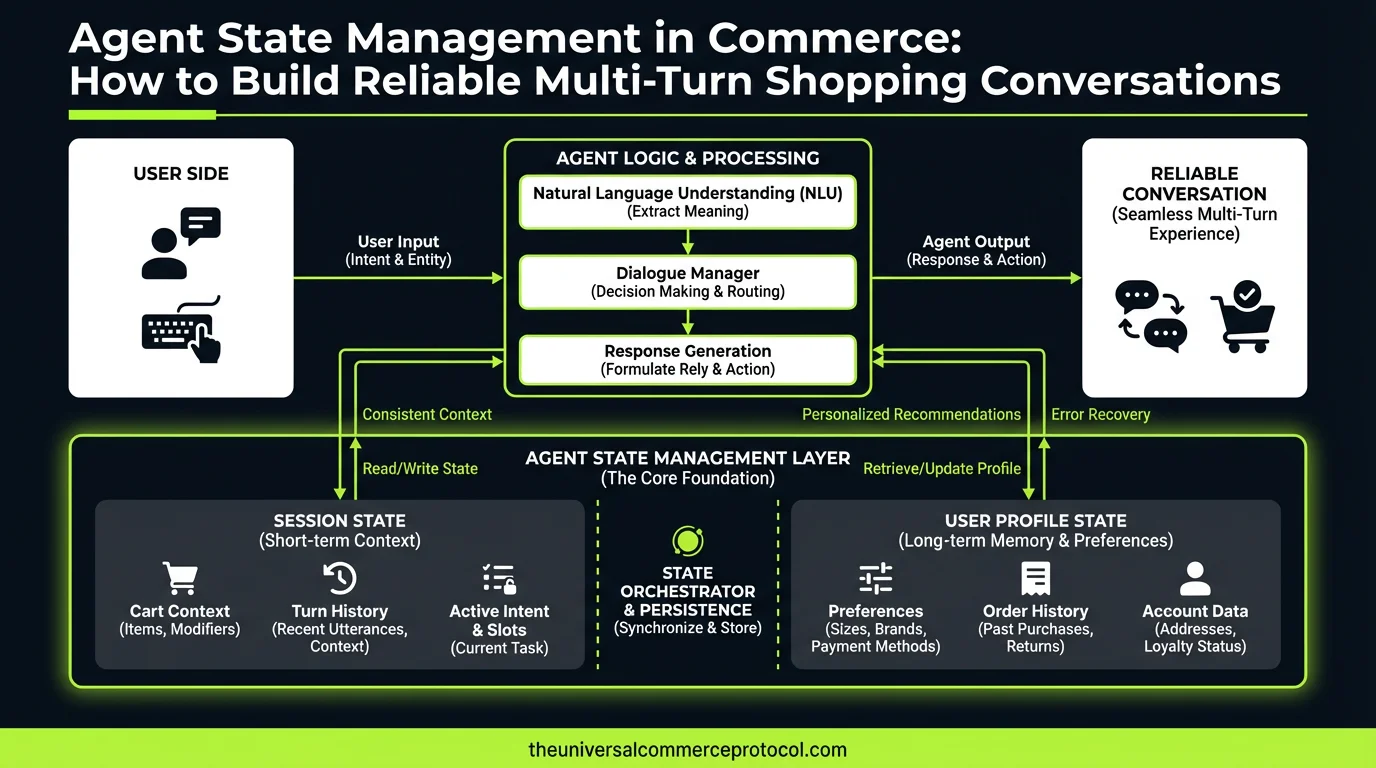
Agent State Management in Multi-Turn Commerce
Agent state management in e-commerce systems persists user intent, shopping cart contents, and transaction history across multi-turn conversations using vector databases such as Pinecone and Weaviate, combined with distributed session stores including Redis and Memcached. Agentic commerce platforms on Shopify, Magento, and custom microservices architectures implement deterministic finite state machines (DFSMs) with ACID-compliant transaction handling…
-
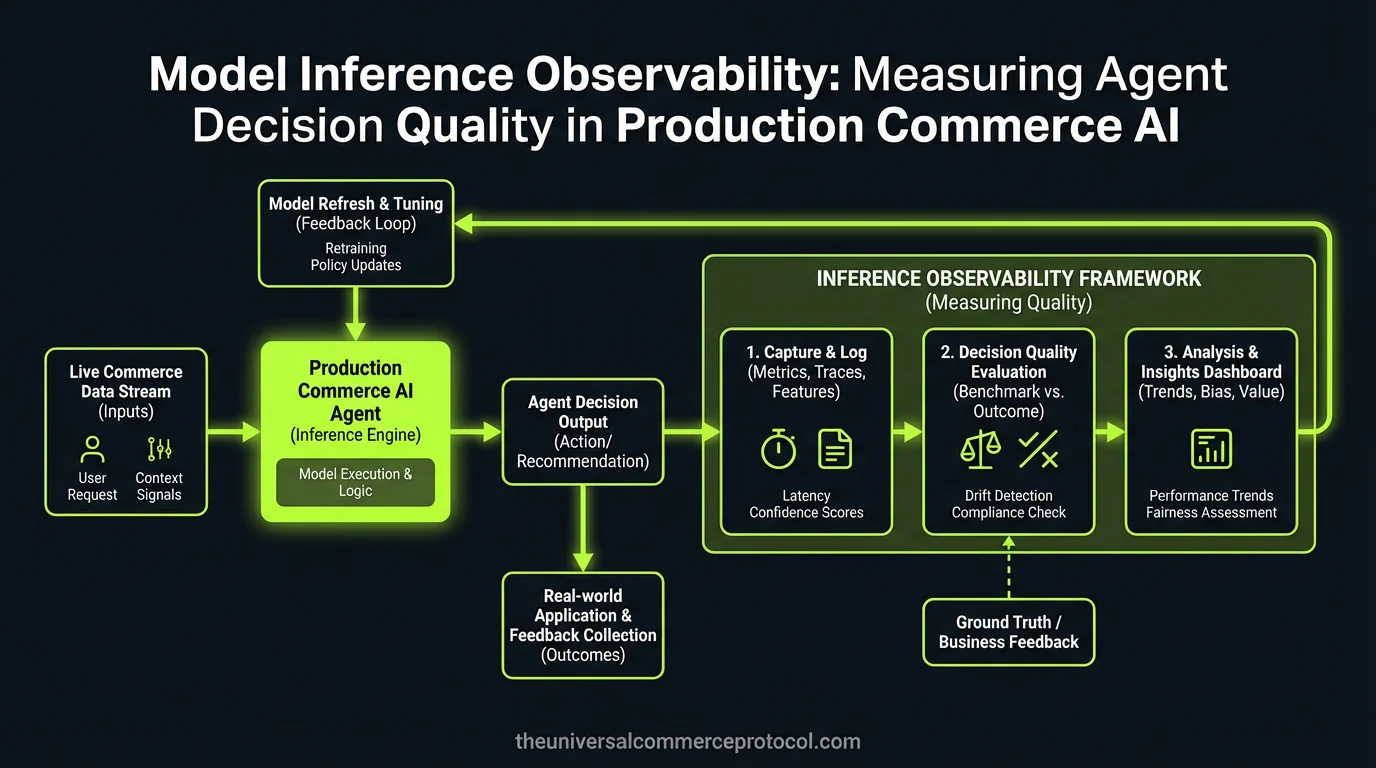
Model Inference Observability: Measuring Agent Decision Quality
Model inference observability encompasses semantic logging, latency measurement, and token-efficiency tracking for AI agents in production environments. Beyond infrastructure metrics like GPU utilization and request latency, decision quality measurement requires evaluation frameworks assessing hallucination rates, reasoning chain validity, and business outcome correlation. Organizations implementing comprehensive observability for large language model agents report 23-40% improvements in…
-

Agent Authentication & Identity Verification in Agentic Commerce: Cryptographic Layer Matrix
How merchants verify AI agent identity, prevent impersonation attacks, and maintain consumer trust in autonomous transactions.
-
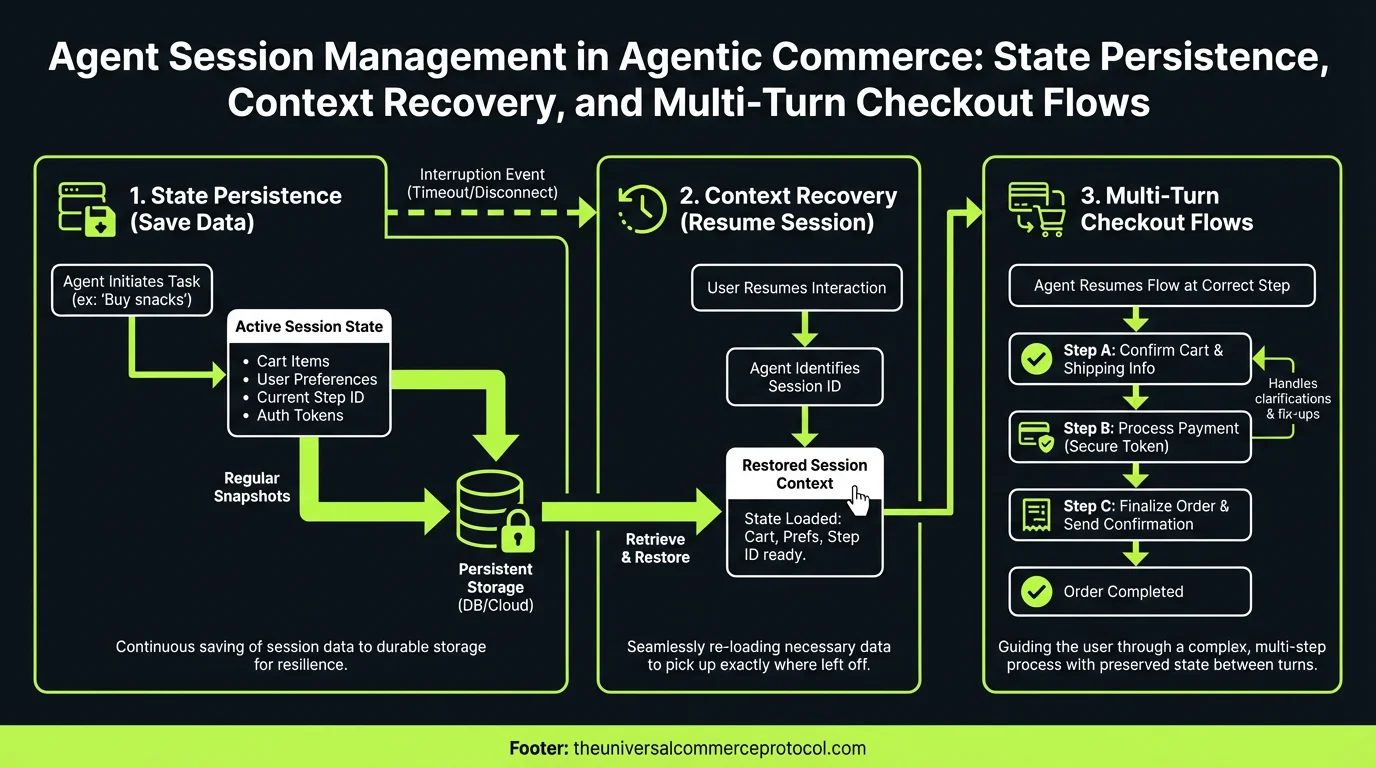
Agent Session Management in Agentic Commerce
Agent session management in agentic commerce persists state across Redis (sub-millisecond latency) and PostgreSQL (Write-Ahead Logs for ACID compliance) using OAuth 2.0/OpenID Connect with cryptographically-signed JWT tokens, while retrieval-augmented generation (RAG) powered by transformer models including GPT-4 and Claude 3 maintain purchase context across device switches and multi-turn checkout flows. This architecture implements encrypted state…
-

AI Agent Procurement Risks: The $3M Blind Spot Destroying Profit Margins
AI agents making autonomous purchasing decisions are creating unexpected margin erosion and working capital inefficiencies worth millions in losses.
-
Agent Commerce SLA Management: Defining and Enforcing Service Level Agreements for AI-Driven Transactions
How merchants can define, monitor, and enforce SLAs for agentic commerce systems to prevent revenue loss and maintain customer satisfaction.