Tag: Business Leader
-
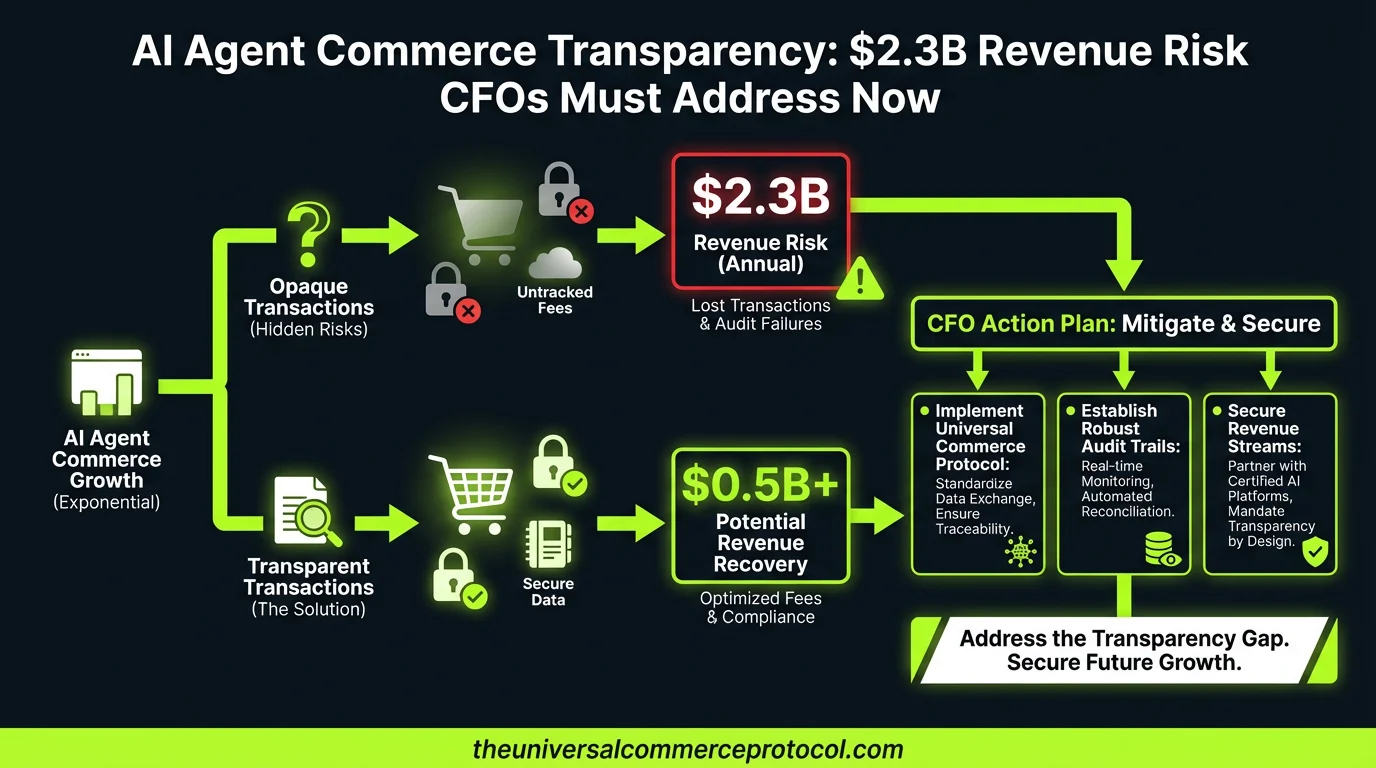
AI Agent Commerce Transparency: $2.3B Revenue Risk
AI commerce agents operating without transparent decision-making frameworks experience conversion loss rates of 38%, according to industry analysis of autonomous shopping systems. This opacity in recommendation algorithms directly correlates with elevated customer acquisition costs (CAC) and reduced customer lifetime value (CLV), representing an estimated $2.3 billion annual revenue risk across the e-commerce sector. Organizations implementing…
-
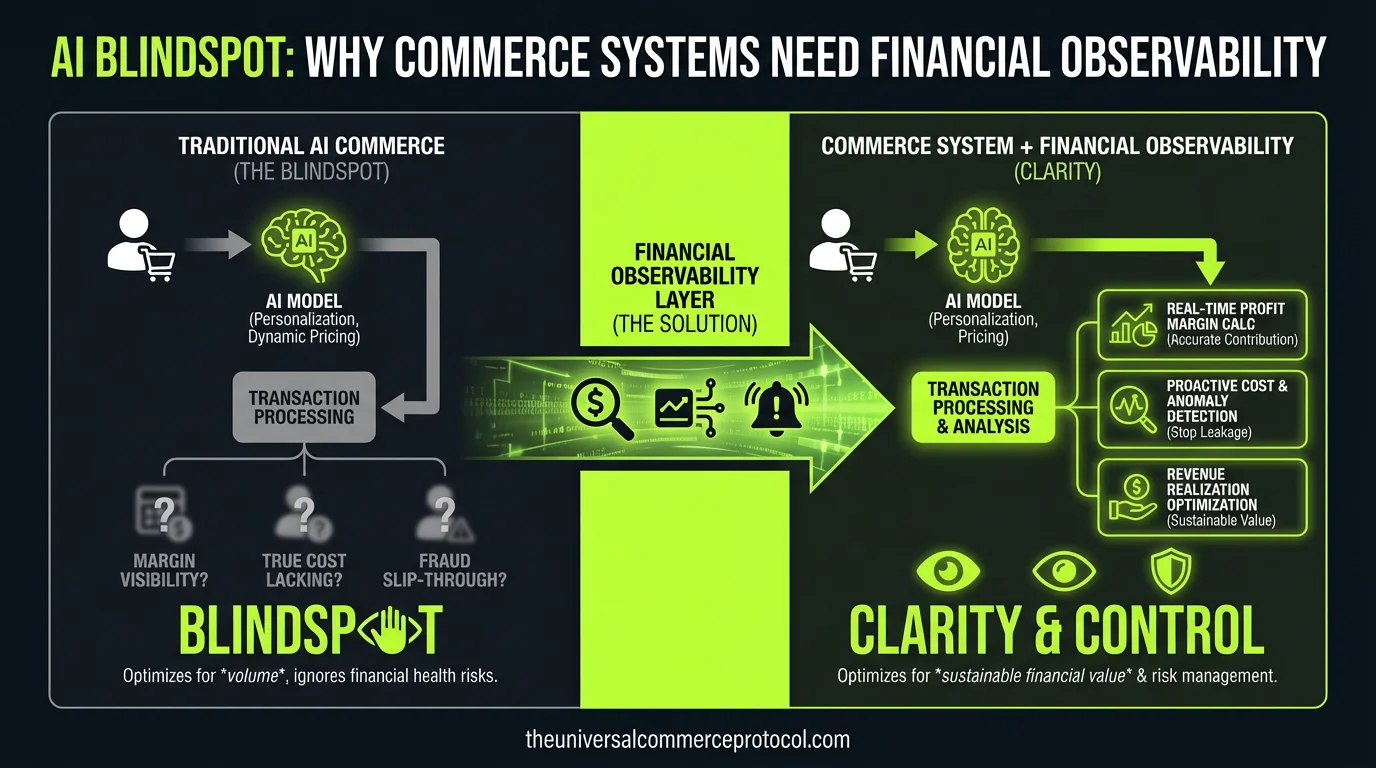
AI Blindspot: Why Commerce Systems Need Financial Observability
Enterprise CFOs implementing autonomous commerce agents on e-commerce platforms without financial-grade observability systems face estimated annual revenue leakage of $2,000,000 USD; mitigation requires real-time transaction monitoring, anomaly detection, and cryptographic audit trails aligned with FINOPS architectures and SOC 2 Type II compliance protocols. Financial services institutions employ AI governance standards to monitor agentic systems managing…
-
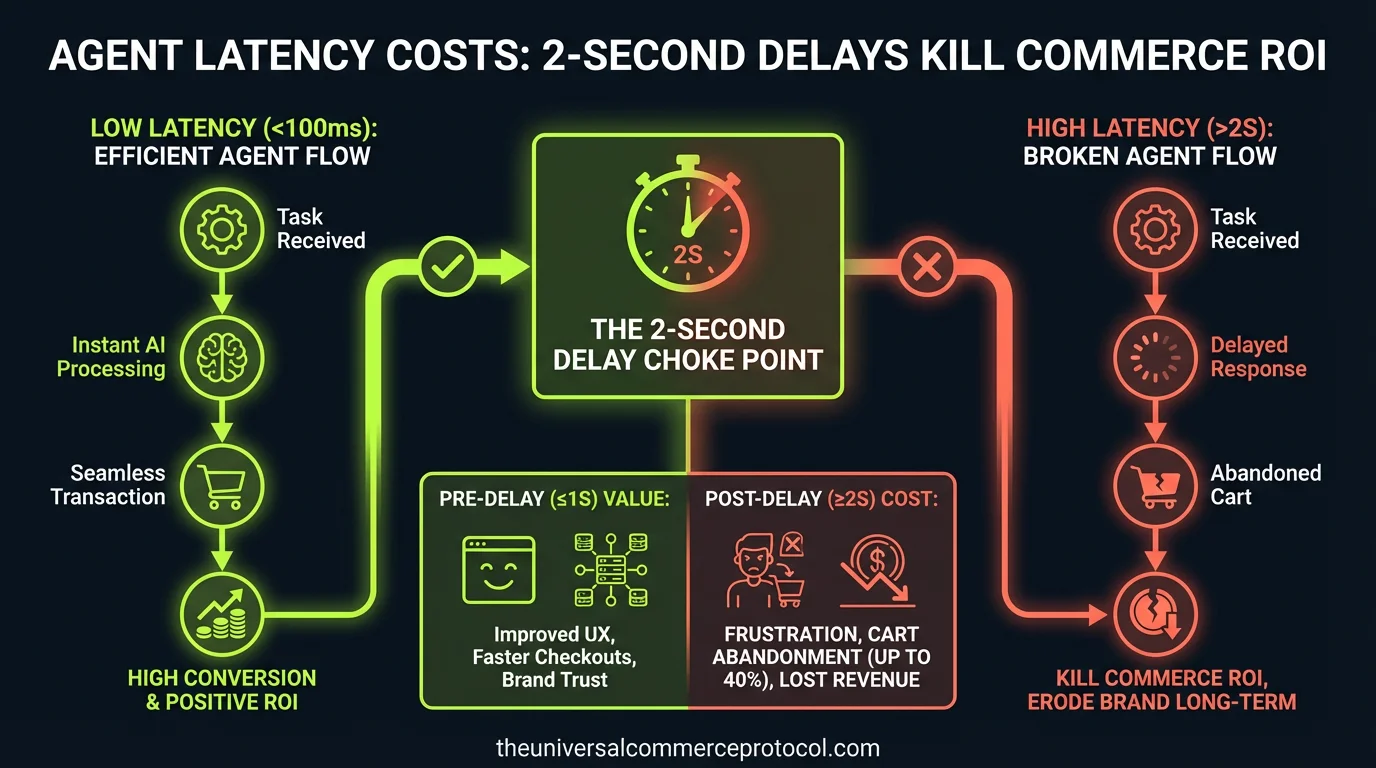
Agent Latency Costs: 2-Second Delays Kill Commerce ROI
Amazon and Google research quantifies that agentic commerce latency exceeding 2 seconds reduces e-commerce conversion rates by ~50%, with mid-market retailers ($10M–$1B revenue) facing cumulative annual losses exceeding $2M. Critical conversion funnel stages—including product search, recommendation delivery, and checkout processing—are directly impacted by latency delays. Organizations implementing sub-500ms response architectures via edge computing and distributed…
-
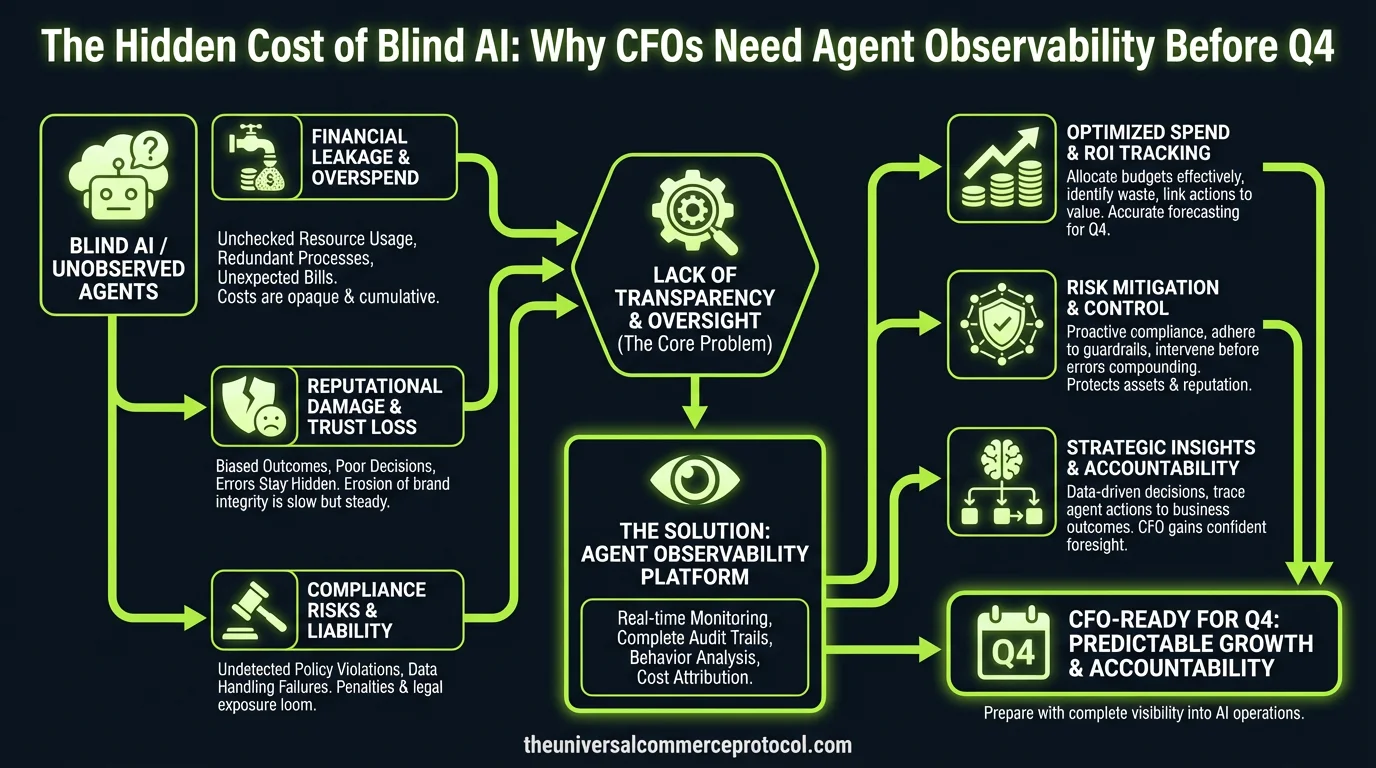
AI Agent Observability: Why CFOs Need Visibility Now
Fortune 500 organizations lose an average of $2.3 million annually from unmonitored AI agents due to undetected system failures, regulatory non-compliance, and operational anomalies, according to enterprise financial analysis. CFOs deploying agent observability platforms gain real-time monitoring of AI decision-making, comprehensive audit trails for SEC compliance, and predictive failure detection that materially reduces financial exposure…
-

$18 Billion Revenue Recovery: The CFO’s Guide to AI-Driven Cart Abandonment Solutions
Cart abandonment costs merchants $18B annually. AI agents can recover 22% more revenue through real-time interventions—here’s the business case.
-

The $50B Cross-Border Payment Risk Every CFO Must Address in Automated Commerce
Cross-border payment failures cost enterprises $50B annually—automated commerce agents could eliminate 80% of these losses while reducing FX costs.
-

The $47 Billion Subscription Revenue Gap: Why CFOs Need Automated Recurring Billing
Subscription commerce generates 40% of SaaS revenue, but outdated billing systems leak 11% annually through failed payments and churn.
-

India E-Commerce Market Entry: ROI Analysis for Agentic Commerce Investment
India’s $150B e-commerce opportunity requires specialized payment infrastructure—here’s the financial case for compliant market entry.
-
UCP vs MCP: Choose the Right Commerce AI Protocol
Google’s Unified Commerce Protocol (UCP) implements centralized feature normalization across omnichannel retail infrastructure—including e-commerce platforms, point-of-sale terminals, and inventory management systems—while Anthropic’s Model Context Protocol (MCP) enables distributed context windows optimized for multi-agent AI reasoning in supply chain orchestration and demand forecasting workflows. Protocol selection directly determines feature engineering dimensionality, training data stratification across transaction…
-
UCP vs MCP: Commerce AI Protocol Architecture
Universal Commerce Protocol (UCP) implements REST/GraphQL hybrid routing with JSON serialization for cross-platform transaction interoperability, while Model Context Protocol (MCP) employs stateful message queuing with Protocol Buffers for context-aware model integration in enterprise systems. UCP prioritizes transaction atomicity and multi-vendor payment gateway compatibility, whereas MCP optimizes for reduced integration latency through asynchronous message handling and…