Tag: OAuth 2.0
-
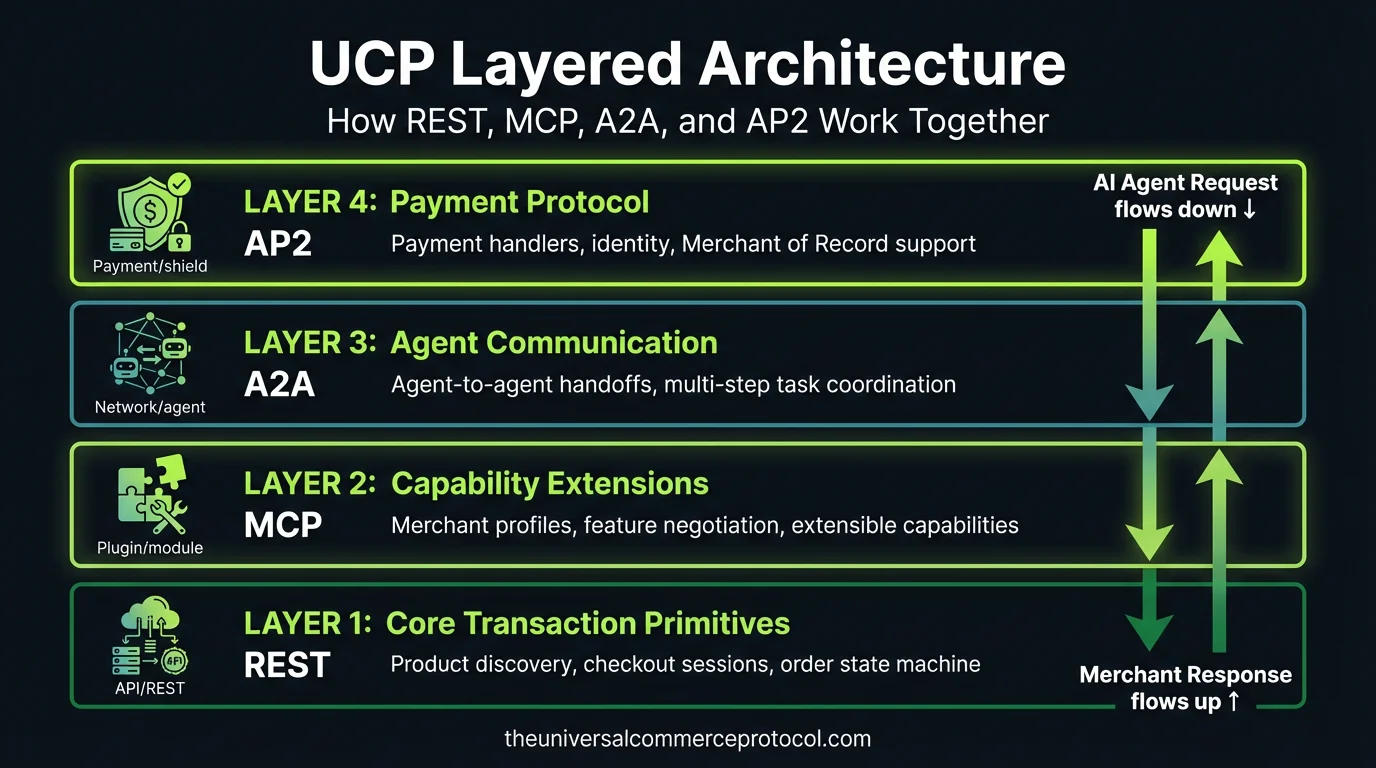
UCP Layered Architecture Explained: Technical Guide to REST, MCP, A2A, and FIDO AP2 Protocols
UCP’s layered architecture separates core transaction primitives from capabilities, extensions, and payment handlers — enabling the protocol to scale across millions of merchants and evolve without breaking existing integrations. This guide explains each layer, how merchant profiles and capability negotiation work, what the checkout state machine does, and how REST, MCP, A2A, and AP2 connect…
-
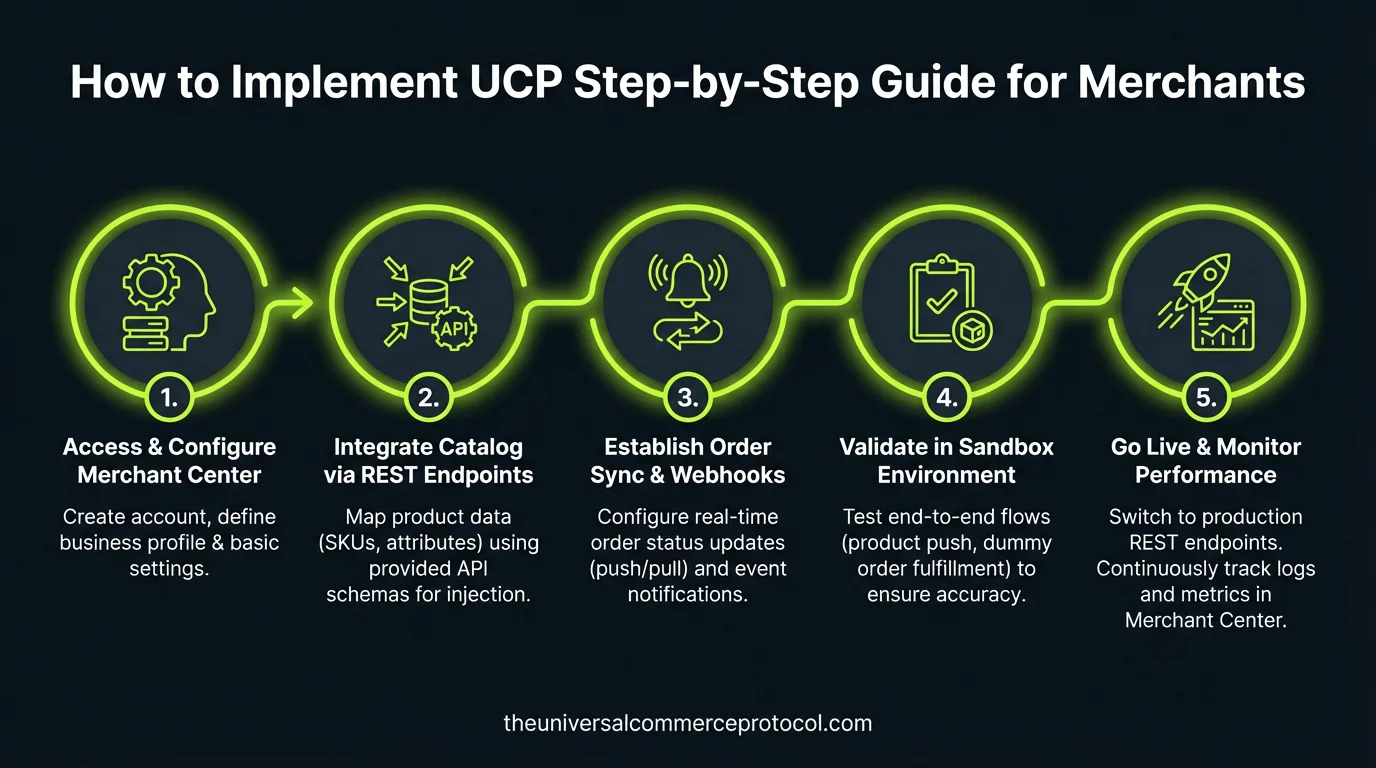
How to Implement the Universal Commerce Protocol: The Complete Developer & Merchant Integration Manual (2026)
Implementing UCP with Google means enabling checkout inside AI Mode and Gemini through five official steps: Merchant Center preparation, business profile publishing, three core REST checkout endpoints, user identification path selection, and order status sync. This guide covers every step sourced directly from Google’s official UCP implementation documentation, including what UCP does not require of…
-
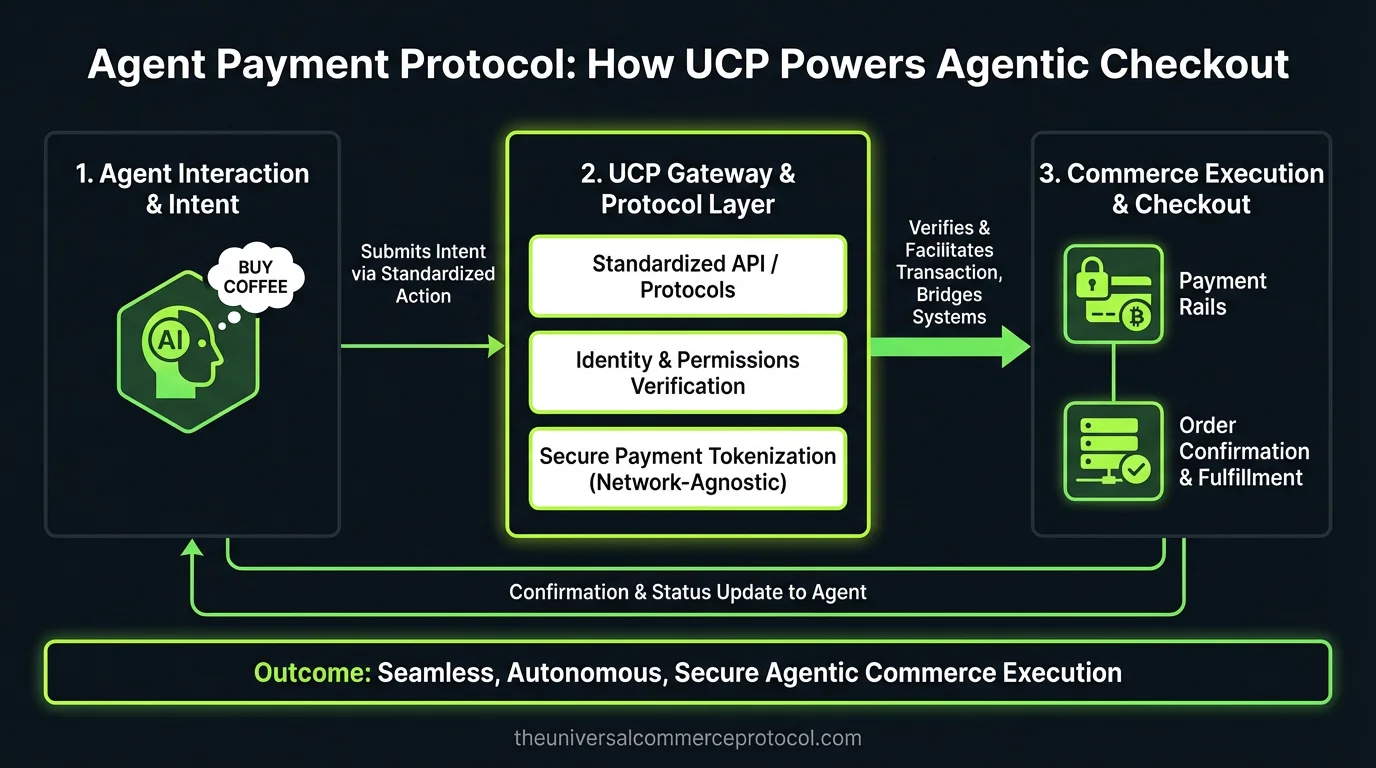
Agent Payment Protocol: How UCP Powers Agentic Checkout
Agent payment protocol enables AI agents to authorize and complete purchases autonomously. Learn how UCP, AP2, and Google Pay work together to power agentic commerce — and what merchants must do to be ready.
-
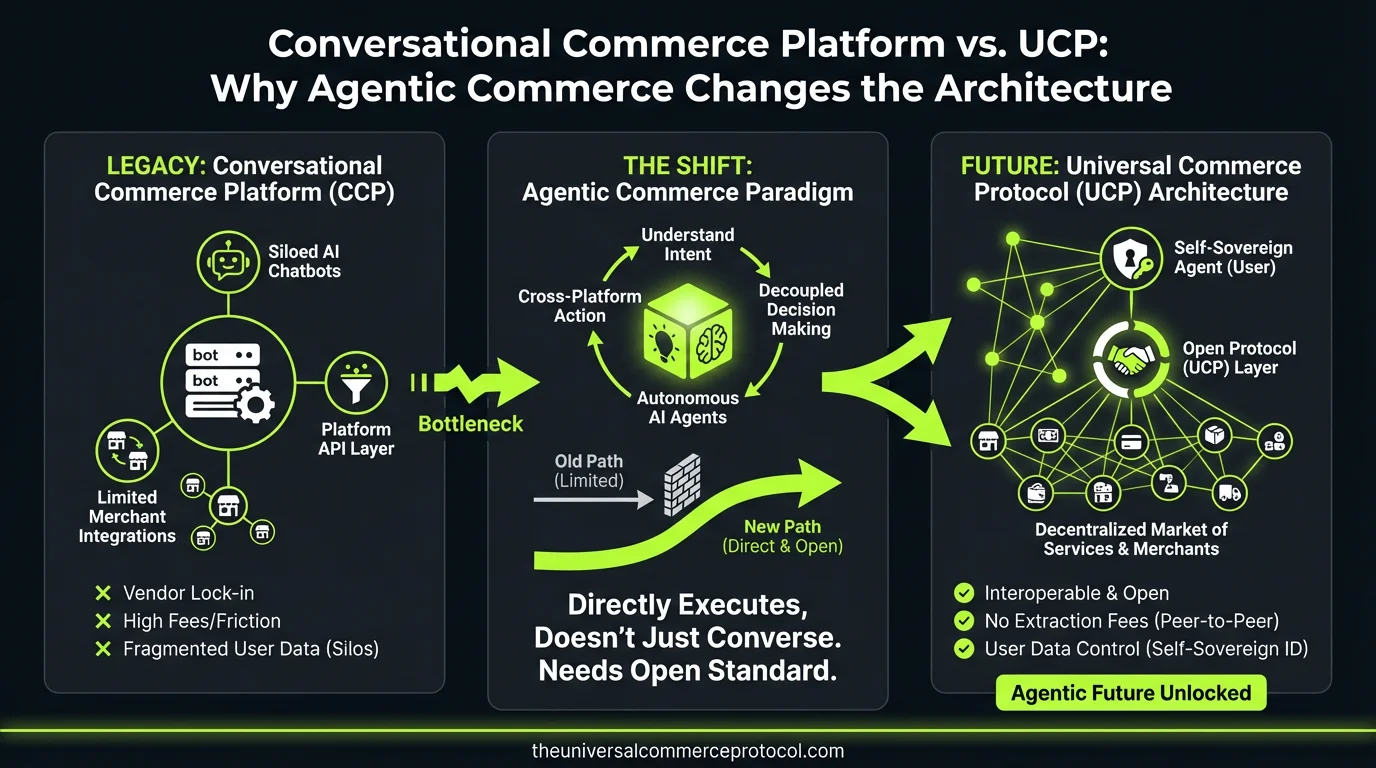
Conversational Commerce Platform vs. UCP: Why Agentic Commerce Changes the Architecture
Traditional conversational commerce platforms add a chatbot layer on top of checkout. UCP makes any AI surface — Gemini, ChatGPT, Alexa — a native commerce platform. Here’s what the architectural shift means for merchants.
-
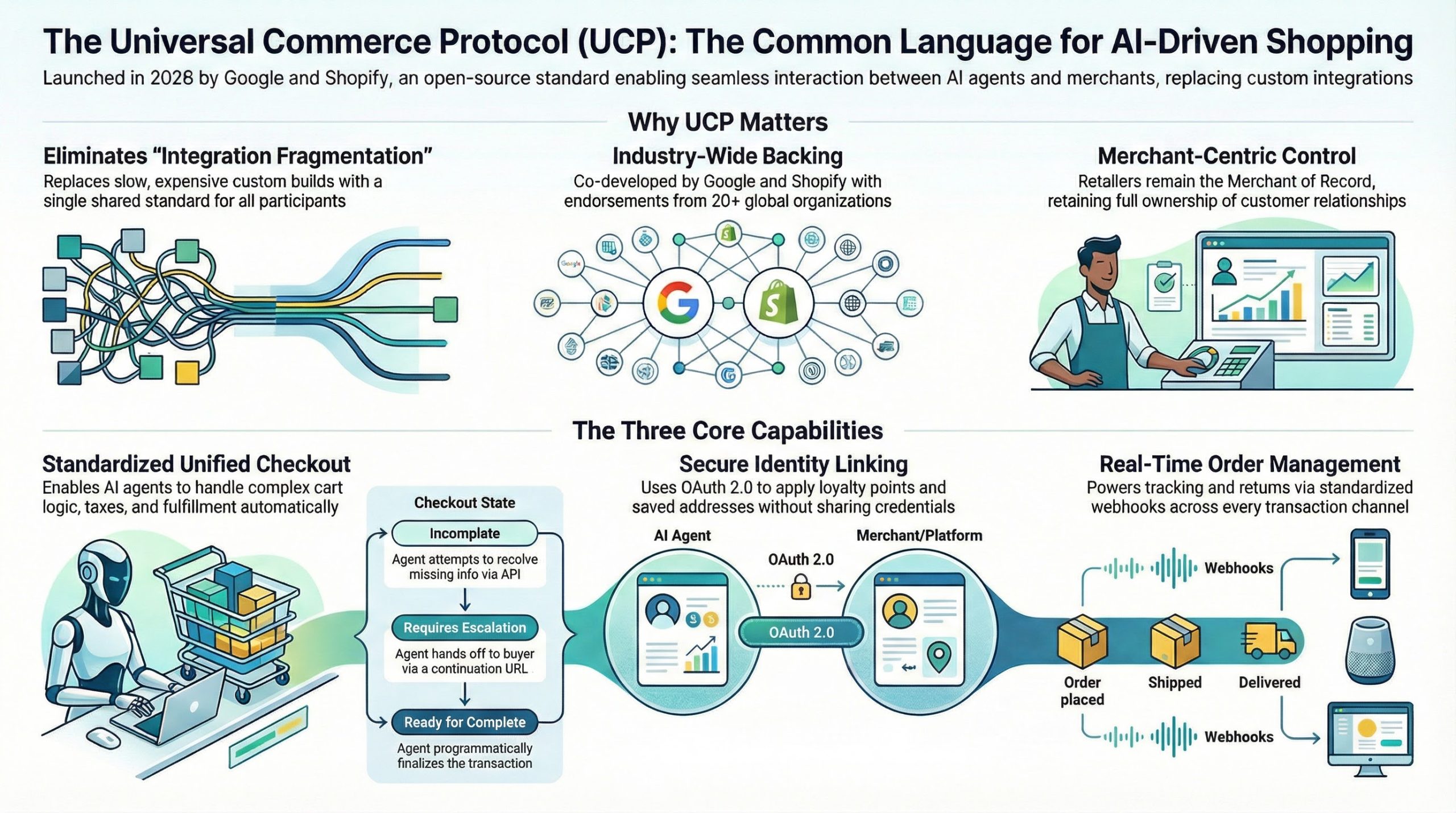
What Is the Universal Commerce Protocol (UCP)? The Definitive Technical & Architecture Guide (2026)
The Universal Commerce Protocol (UCP) is an open-source standard co-developed by Google and Shopify that enables AI agents to discover products, negotiate prices, and complete purchases autonomously. This complete guide covers UCP architecture, capabilities, and merchant integration.