Tag: UCP
-
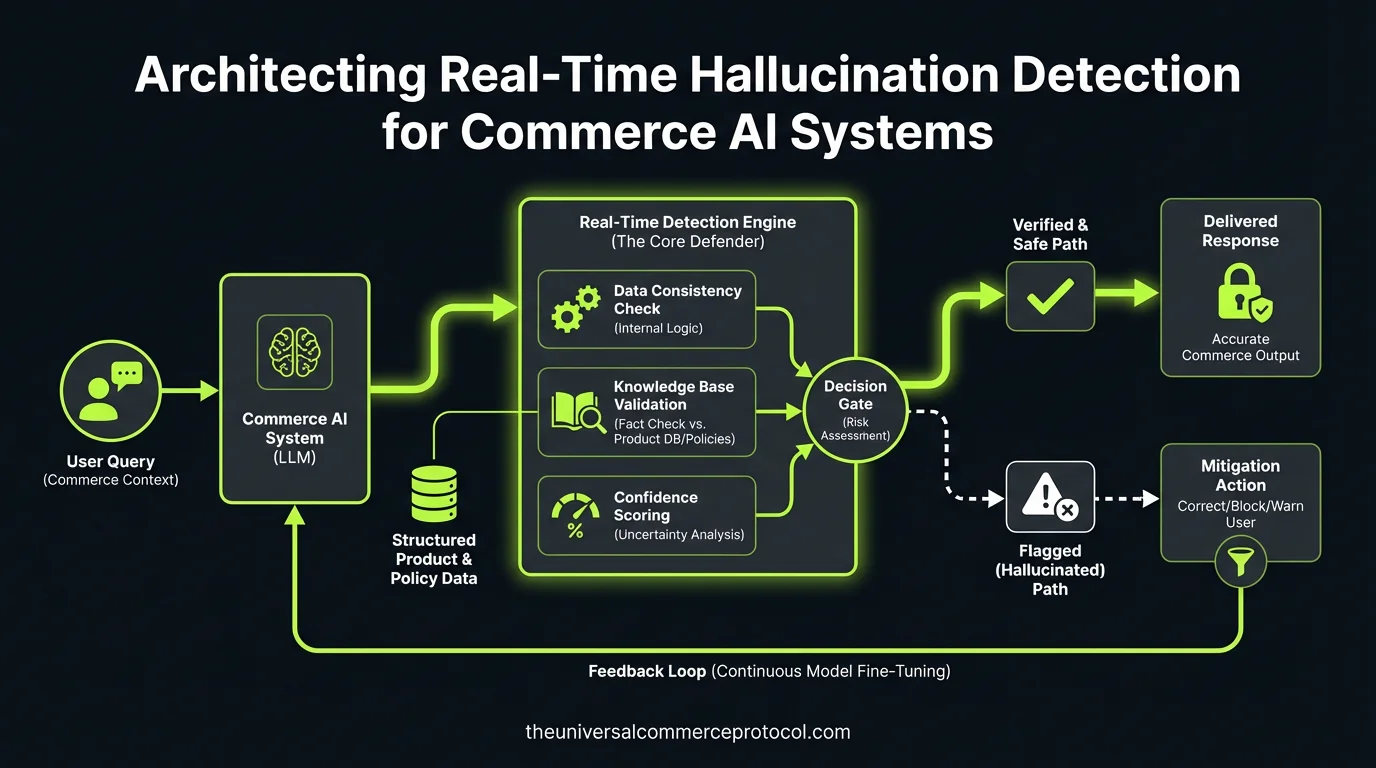
Architecting Real-Time Hallucination Detection for Commerce AI Systems
Technical blueprint for implementing three-layer hallucination detection in production commerce agents with
-
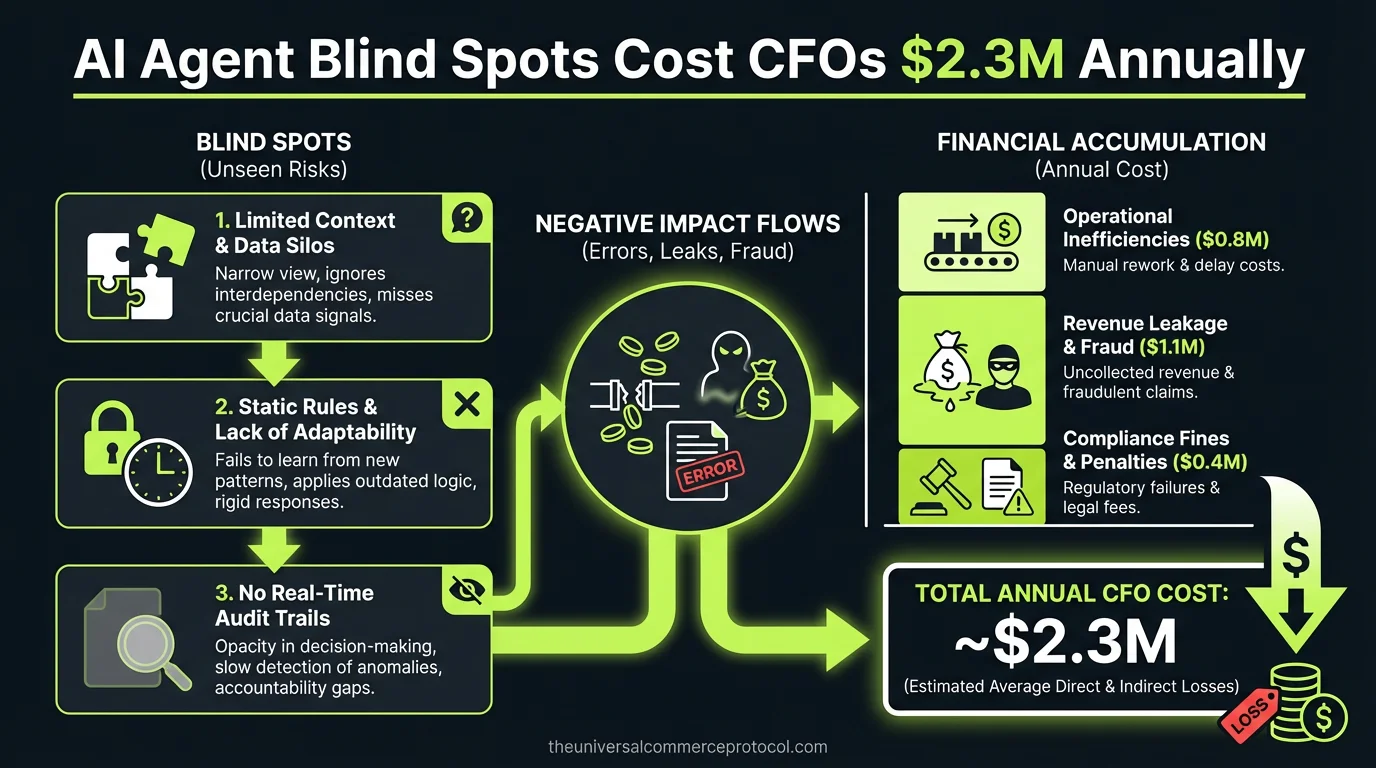
AI Agent Blind Spots Cost CFOs $2.3M Annually
According to enterprise financial technology research, AI agents operating in autonomous commerce decision-making environments without observability infrastructure accumulate average annual financial exposure of $2.3 million through undetected transaction errors, failed reconciliation processes, and systemic blind spots in audit trails. Chief Financial Officers implementing AI agent governance frameworks—including real-time monitoring, decision logging, and anomaly detection systems—can…
-
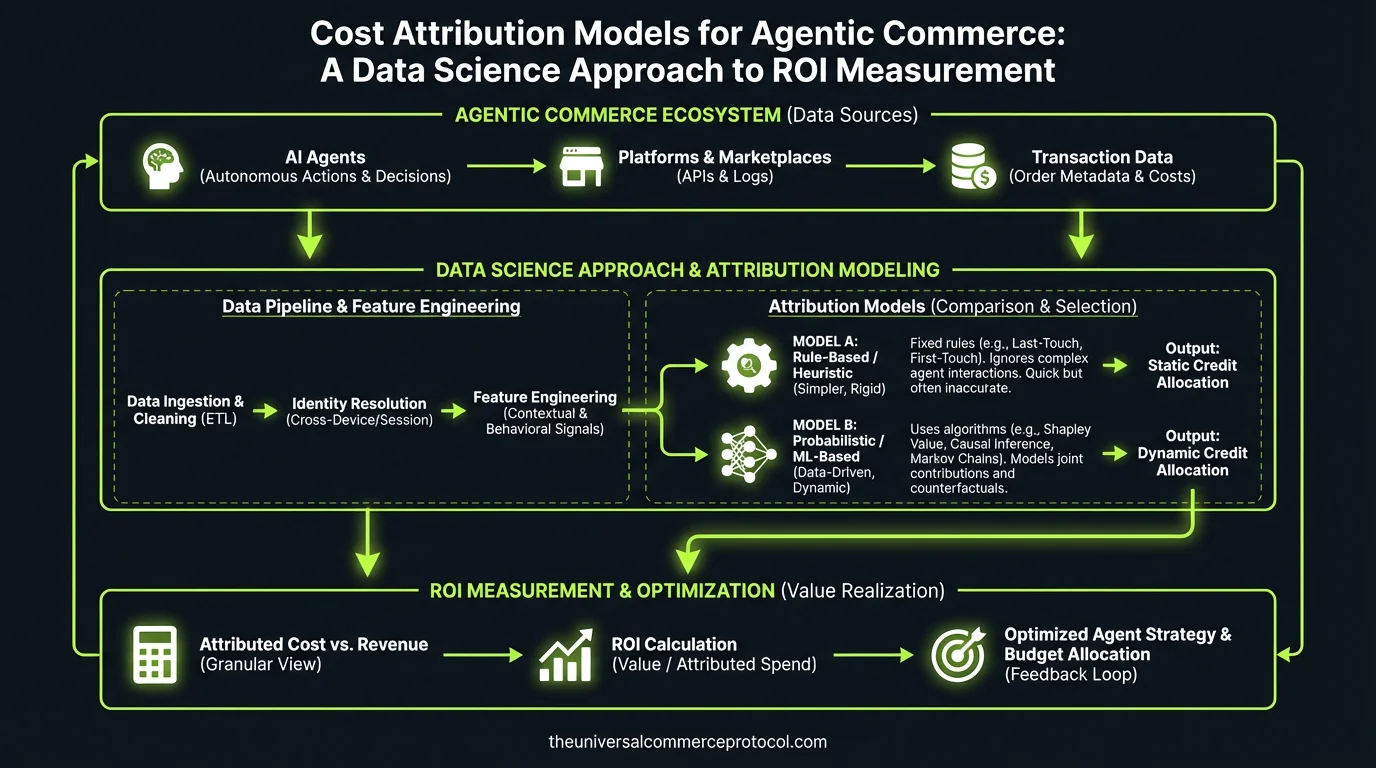
Cost Attribution Models for Agentic Commerce
Cost attribution models for agentic AI commerce quantify expenses across multi-step LLM inference chains—including token consumption, vector database queries, and API calls—where traditional transaction-level metrics fail to isolate individual agent decision costs. Data science approaches like shapley value decomposition and hierarchical cost allocation enable attribution of total cost of ownership (TCO) to specific customer journeys,…
-
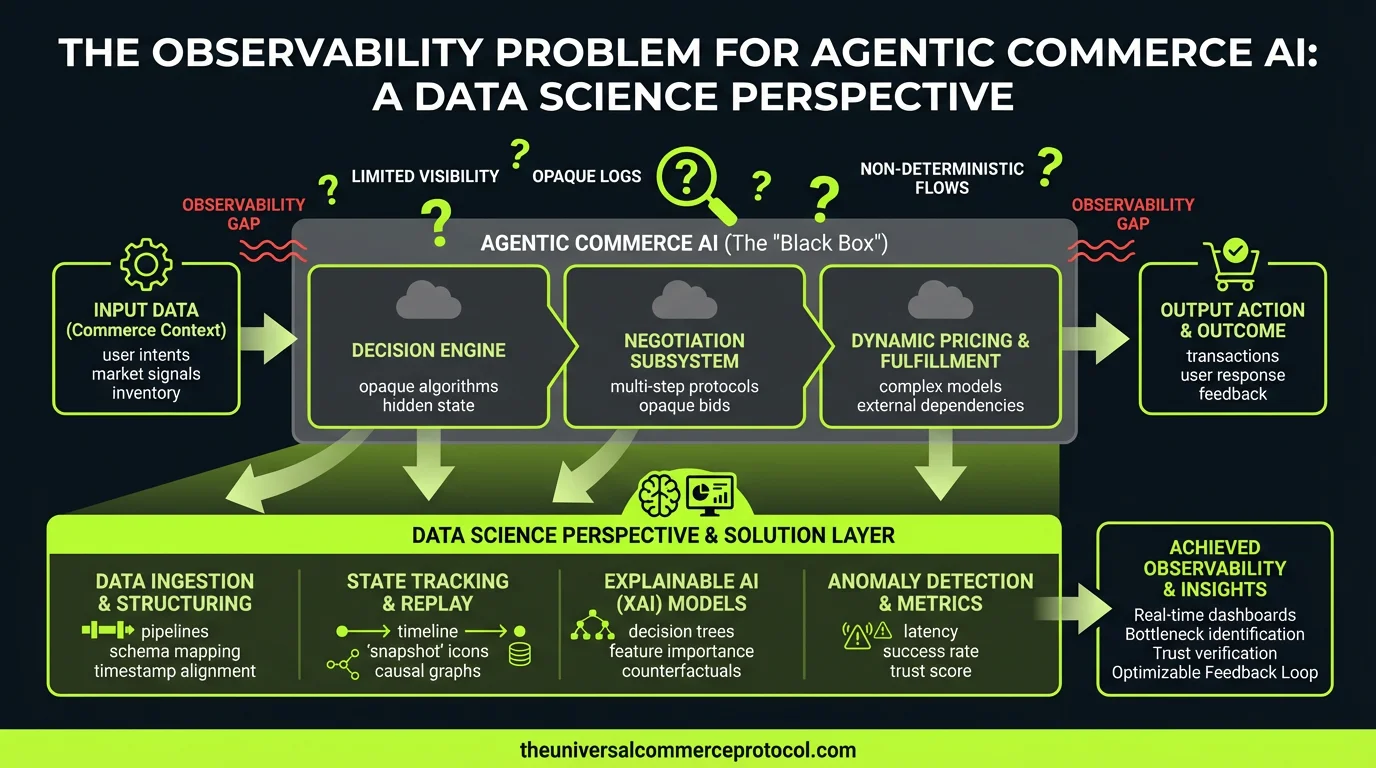
Observability Problem for Agentic Commerce AI
Agentic commerce AI systems processing high-volume transaction workflows require observability frameworks that move beyond traditional ML metrics like precision and recall to capture business-critical signals: transaction success rates, conversion funnel completion, fraud detection accuracy, and latency-induced revenue loss. Data science teams must implement causal inference methodologies and counterfactual analysis to validate decision-making quality across autonomous…
-
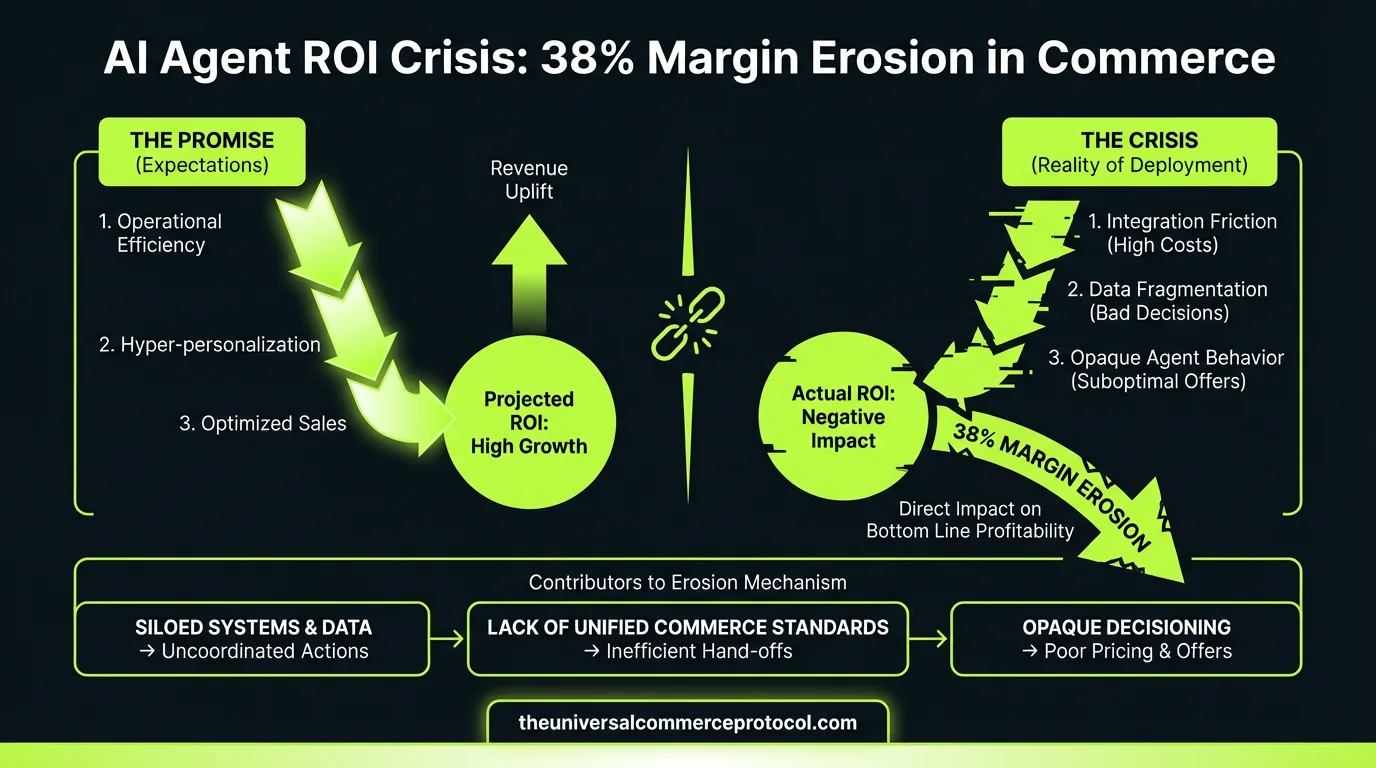
AI Agent ROI Crisis: 38% Margin Erosion in Commerce
Enterprise finance leaders implementing autonomous AI agents in e-commerce and omnichannel retail operations experience documented margin erosion of 30-38% per transaction, primarily driven by unattributed large language model (LLM) inference costs, vector database queries, and API consumption that escape traditional general ledger reconciliation. This cost leakage accelerates in high-frequency transaction environments (>10,000 daily operations) where…
-
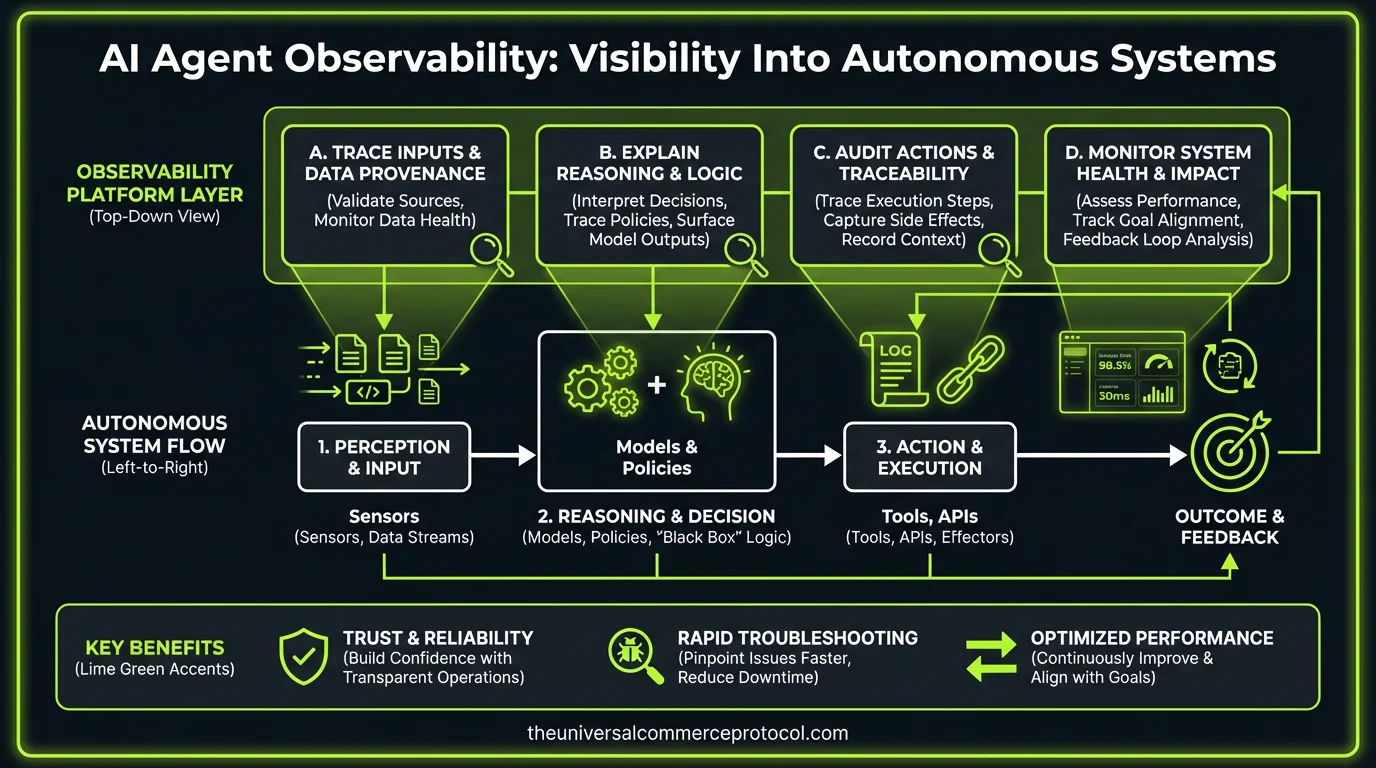
AI Agent Observability: Visibility Into Autonomous Systems
AI agent observability requires specialized monitoring architectures to capture decision-making traces, token consumption, and action sequences across large language models including OpenAI’s GPT-4 and GPT-4o, Anthropic’s Claude, and Meta’s Llama, since traditional APM platforms like Datadog, New Relic, and Dynatrace lack instrumentation for reasoning chains and ReAct pattern execution. Purpose-built observability platforms such as Langfuse,…
-
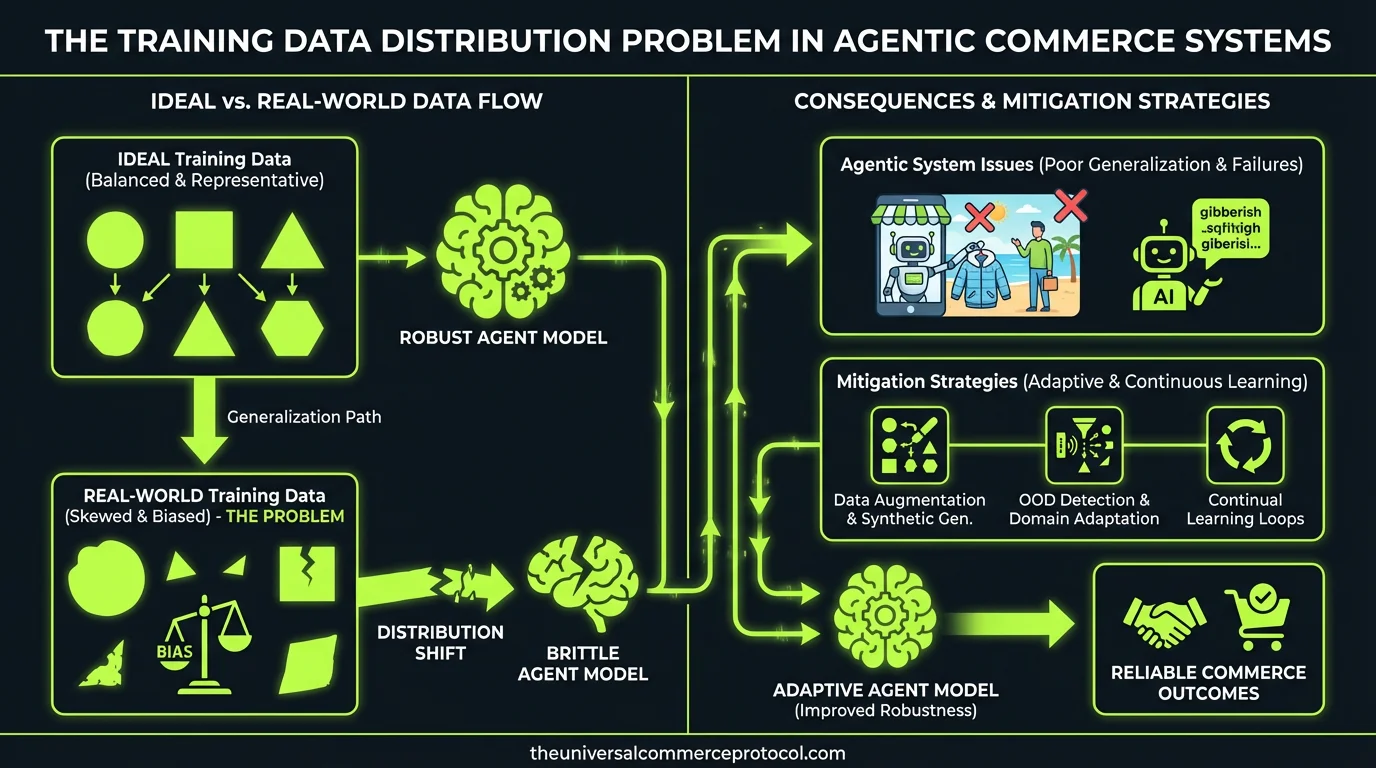
Training Data Distribution in Agentic Commerce Systems
Agentic commerce systems deployed on platforms including Shopify, SAP Commerce Cloud, and microservices architectures experience distribution shift when training datasets (synthetic or historical e-commerce data) diverge from production environments, causing inventory management failures and transaction errors across product categories, customer segments, and seasonal demand patterns. Mitigation strategies include real-time monitoring of prediction confidence scores, domain…
-
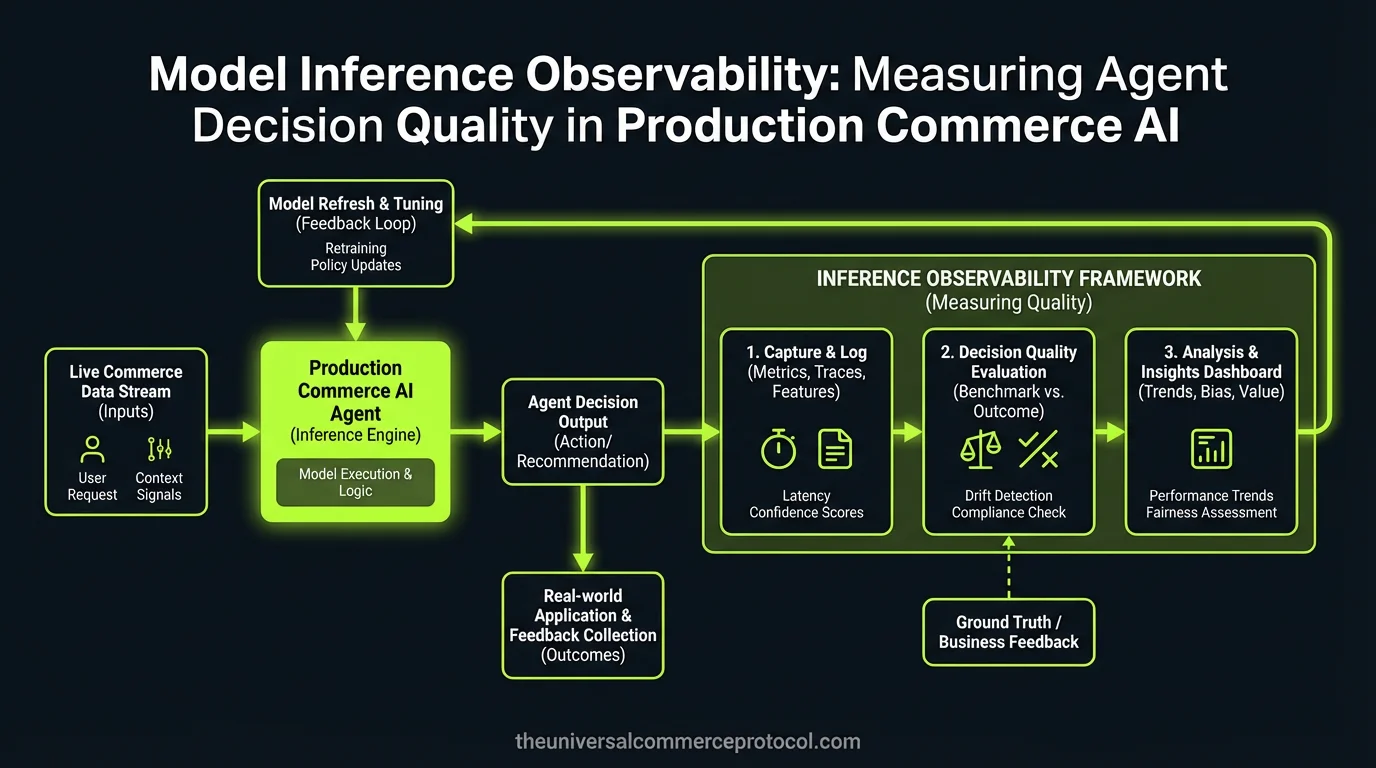
Model Inference Observability: Measuring Agent Decision Quality
Model inference observability encompasses semantic logging, latency measurement, and token-efficiency tracking for AI agents in production environments. Beyond infrastructure metrics like GPU utilization and request latency, decision quality measurement requires evaluation frameworks assessing hallucination rates, reasoning chain validity, and business outcome correlation. Organizations implementing comprehensive observability for large language model agents report 23-40% improvements in…
-
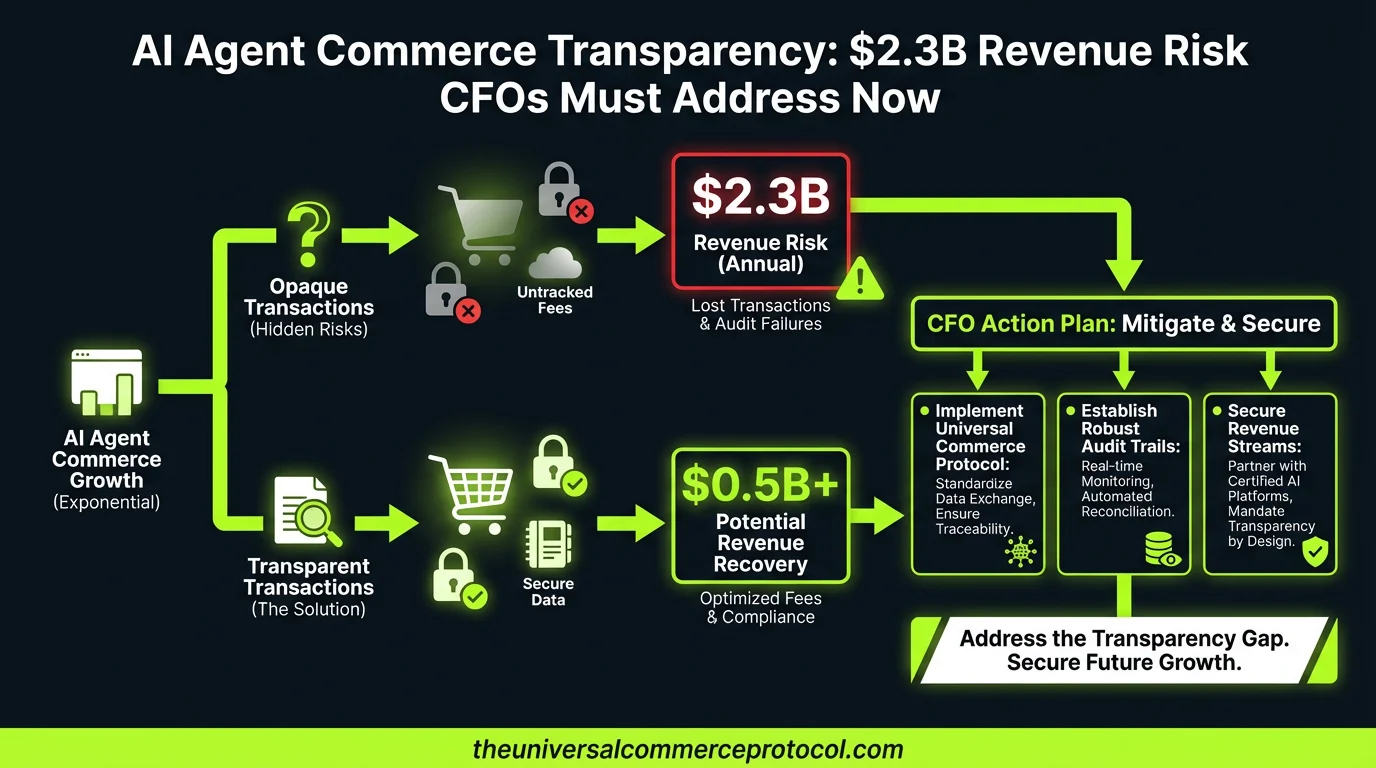
AI Agent Commerce Transparency: $2.3B Revenue Risk
AI commerce agents operating without transparent decision-making frameworks experience conversion loss rates of 38%, according to industry analysis of autonomous shopping systems. This opacity in recommendation algorithms directly correlates with elevated customer acquisition costs (CAC) and reduced customer lifetime value (CLV), representing an estimated $2.3 billion annual revenue risk across the e-commerce sector. Organizations implementing…
-
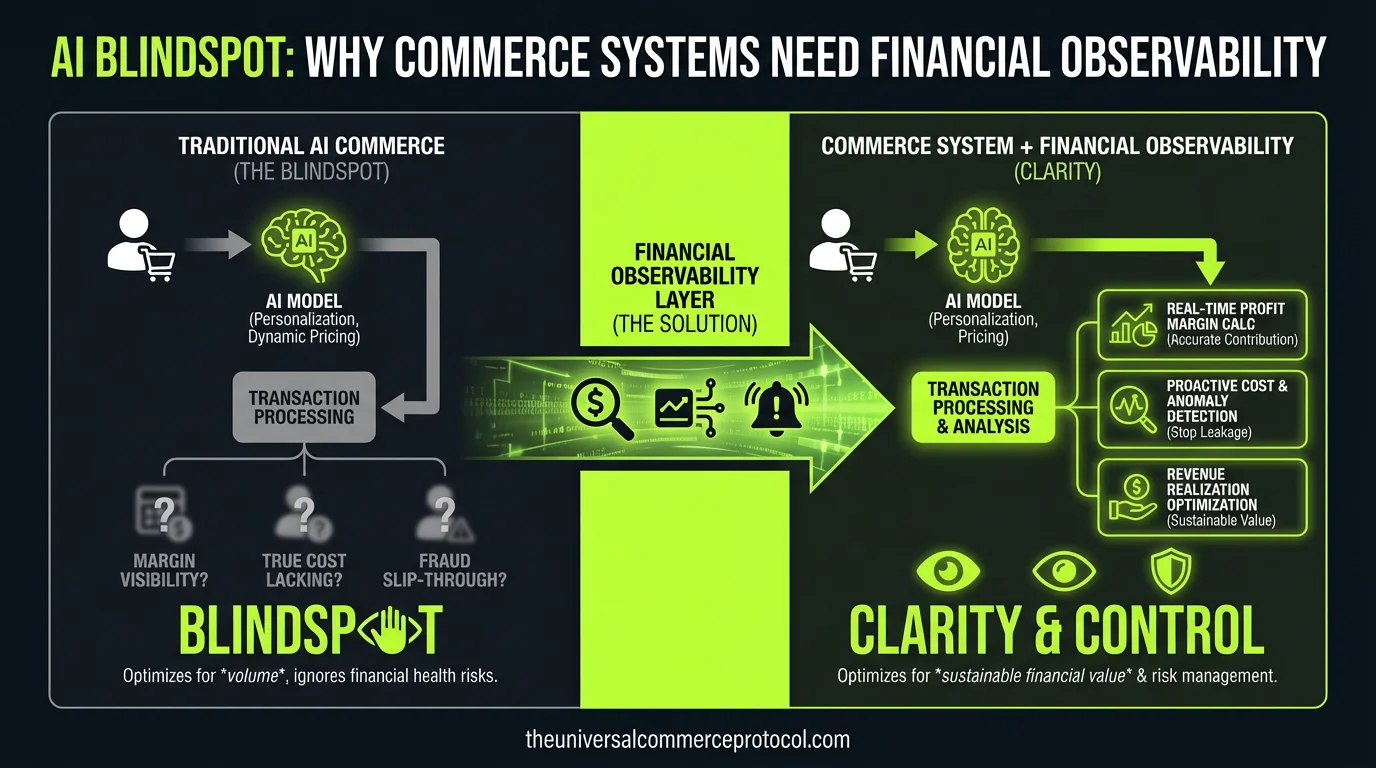
AI Blindspot: Why Commerce Systems Need Financial Observability
Enterprise CFOs implementing autonomous commerce agents on e-commerce platforms without financial-grade observability systems face estimated annual revenue leakage of $2,000,000 USD; mitigation requires real-time transaction monitoring, anomaly detection, and cryptographic audit trails aligned with FINOPS architectures and SOC 2 Type II compliance protocols. Financial services institutions employ AI governance standards to monitor agentic systems managing…