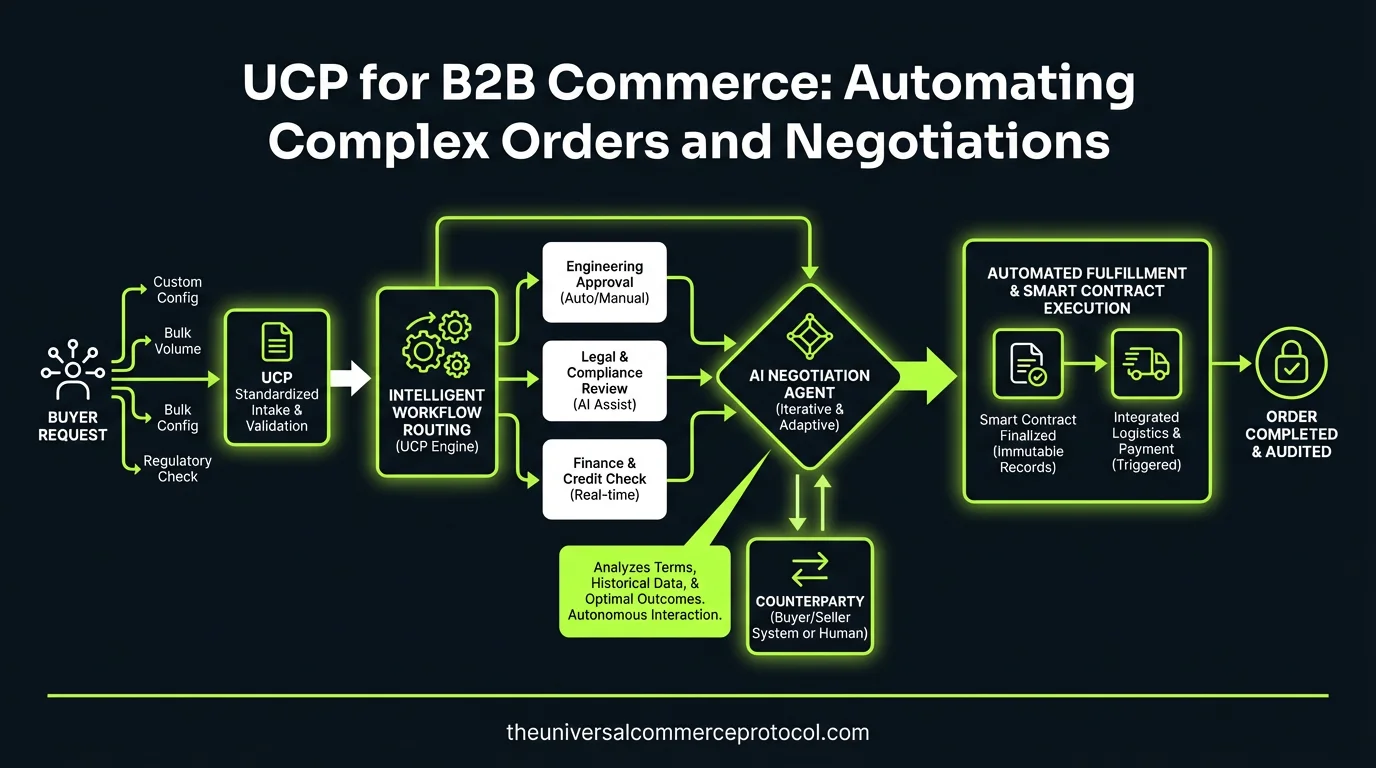
Key Takeaways (Late 2026 Update): UCP is rapidly expanding into B2B commerce, allowing autonomous agents to handle complex procurement, bulk pricing negotiations, and multi-layered approvals without human intervention, drastically reducing B2B sales cycles.
UCP for B2B Commerce: Automating Complex Orders and Negotiations
In the realm of Business-to-Business (B2B) transactions, complexity reigns supreme. From intricate product configurations to dynamic pricing negotiations, the process of fulfilling a B2B order can be a labyrinthine affair. This is where the Universal Commerce Protocol (UCP B2B commerce) steps in, offering a standardized framework to automate and streamline these complex interactions. UCP aims to bring efficiency, transparency, and interoperability to the forefront of B2B digital transformation. This article explores the core concepts of UCP, its benefits, and its potential to revolutionize B2B commerce.
- Key Takeaways:
- UCP standardizes complex B2B order processes.
- It enables automated negotiations and dynamic pricing.
- UCP enhances interoperability between different B2B systems.
- It improves efficiency and transparency in B2B transactions.
- UCP is poised to drive significant digital transformation in B2B commerce.
Understanding the Universal Commerce Protocol (UCP)
The Universal Commerce Protocol (UCP) is not just another protocol; it’s a comprehensive framework designed to standardize and automate the complexities inherent in B2B commerce. Unlike traditional Electronic Data Interchange (EDI) systems, which are often rigid and expensive to implement, UCP leverages modern technologies like APIs and cloud computing to provide a more flexible and accessible solution.
Core Principles of UCP
- Standardization: UCP defines a common language and structure for B2B transactions, ensuring that different systems can communicate seamlessly.
- Automation: By automating key processes such as order placement, negotiation, and fulfillment, UCP reduces manual effort and accelerates transaction times.
- Interoperability: UCP promotes interoperability between different B2B platforms and systems, allowing businesses to connect with a wider range of partners and suppliers.
- Transparency: UCP provides real-time visibility into the status of orders and transactions, improving transparency and trust between trading partners.
How UCP Differs from Traditional EDI
Traditional EDI systems have long been the backbone of B2B commerce, but they often suffer from limitations such as high implementation costs, lack of flexibility, and limited interoperability. UCP addresses these challenges by offering a more modern and open approach. While EDI relies on proprietary formats and point-to-point connections, UCP leverages open standards and APIs to enable seamless integration with a wide range of systems. This makes UCP a more cost-effective and scalable solution for businesses of all sizes.
Benefits of Implementing UCP in B2B Commerce
The adoption of UCP offers a multitude of benefits for businesses engaged in B2B commerce. These benefits span across various aspects of the business, from operational efficiency to enhanced customer relationships.
Increased Efficiency and Reduced Costs
By automating key processes and reducing manual effort, UCP can significantly improve efficiency and reduce costs. For example, automated order processing can eliminate the need for manual data entry, reducing errors and saving time. Similarly, automated negotiation can help businesses secure better prices and terms, improving profitability. UCP can also streamline supply chain operations, reducing inventory holding costs and improving order fulfillment times.
Improved Transparency and Traceability
UCP provides real-time visibility into the status of orders and transactions, improving transparency and traceability. This allows businesses to track the progress of orders from placement to delivery, identify potential bottlenecks, and resolve issues quickly. Improved transparency also fosters trust between trading partners, leading to stronger and more collaborative relationships.
Enhanced Interoperability and Scalability
UCP promotes interoperability between different B2B platforms and systems, allowing businesses to connect with a wider range of partners and suppliers. This can open up new market opportunities and enable businesses to scale their operations more easily. UCP’s API-driven architecture makes it easy to integrate with existing systems and adapt to changing business needs.
Streamlined Negotiation and Dynamic Pricing
One of the key advantages of UCP is its ability to automate and streamline negotiation processes. UCP enables dynamic pricing based on factors such as supply and demand, order volume, and customer relationship. This allows businesses to optimize pricing strategies and maximize profitability. Automated negotiation can also reduce the time and effort required to reach agreements, accelerating the sales cycle.
Key Components of the UCP Architecture
Understanding the architecture of UCP is crucial for businesses looking to implement this protocol. The UCP architecture is designed to be modular and flexible, allowing businesses to customize it to their specific needs.
UCP Message Format
The UCP message format defines the structure and content of messages exchanged between B2B systems. It typically includes information such as order details, pricing, shipping information, and payment terms. The UCP message format is based on open standards such as XML or JSON, making it easy to parse and process. Standardized message formats are key to interoperability between different systems.
UCP API
The UCP API provides a set of interfaces for accessing UCP services and data. Businesses can use the UCP API to integrate their systems with the UCP network and automate B2B transactions. The UCP API typically supports a variety of programming languages and platforms, making it easy for developers to work with.
UCP Security Model
Security is a critical aspect of B2B commerce, and UCP incorporates a robust security model to protect sensitive data and prevent fraud. The UCP security model typically includes features such as encryption, authentication, and authorization. Encryption ensures that data is protected during transmission, while authentication verifies the identity of trading partners. Authorization controls access to UCP resources, ensuring that only authorized users can perform certain actions.
Implementing UCP: A Step-by-Step Guide
Implementing UCP can be a complex undertaking, but following a structured approach can help ensure a successful implementation. Here’s a step-by-step guide to implementing UCP:
- Assess Your Needs: Identify the specific B2B processes that you want to automate and the systems that need to be integrated.
- Choose a UCP Platform: Select a UCP platform that meets your needs and budget. Consider factors such as features, scalability, and security.
- Integrate Your Systems: Integrate your systems with the UCP platform using the UCP API. This may involve custom development or the use of pre-built connectors.
- Configure Your Processes: Configure your B2B processes within the UCP platform. This includes defining message formats, setting up workflows, and configuring security settings.
- Test Your Implementation: Thoroughly test your implementation to ensure that everything is working correctly. This includes testing message exchange, workflow execution, and security controls.
- Deploy and Monitor: Deploy your UCP implementation and monitor its performance. This includes tracking key metrics such as transaction volume, error rates, and response times.
The Future of UCP in B2B Commerce
UCP is poised to play a significant role in the future of B2B commerce. As businesses increasingly embrace digital transformation, the need for standardized and automated B2B processes will only grow. UCP offers a compelling solution to this challenge, providing a framework for streamlining complex orders, automating negotiations, and enhancing interoperability.
Emerging technologies such as blockchain and artificial intelligence (AI) are likely to further enhance the capabilities of UCP. Blockchain can provide a secure and transparent platform for tracking B2B transactions, while AI can be used to automate tasks such as price optimization and fraud detection. The convergence of UCP with these technologies has the potential to revolutionize B2B commerce and create new opportunities for businesses of all sizes.
What are the main benefits of using UCP in B2B commerce?
UCP offers increased efficiency, reduced costs, improved transparency, enhanced interoperability, and streamlined negotiation processes.
How does UCP differ from traditional EDI systems?
UCP leverages modern technologies like APIs and cloud computing to provide a more flexible, accessible, and cost-effective solution compared to rigid and expensive traditional EDI systems.
What are the key components of the UCP architecture?
The key components include the UCP message format, the UCP API, and the UCP security model.
Is UCP difficult to implement?
Implementing UCP can be complex, but following a structured approach and choosing the right UCP platform can help ensure a successful implementation.
Ready to transform your B2B commerce with UCP? Contact us today to learn how our UCP solutions can help you streamline your processes, reduce costs, and improve your bottom line. Let us help you unlock the full potential of automated B2B transactions!
Frequently Asked Questions
What is the Universal Commerce Protocol (UCP)?
The Universal Commerce Protocol (UCP) is an open standard developed to enable AI agents to autonomously conduct commerce transactions across any platform.
How does UCP enable agentic commerce?
UCP provides standardized APIs and protocols so AI agents can discover products, negotiate terms, and complete purchases without human intervention, working across any compatible commerce platform.
Why should businesses implement UCP?
UCP adoption reduces integration costs, opens revenue channels to AI-driven buyers, and future-proofs commerce infrastructure as agentic purchasing becomes mainstream.
Frequently Asked Questions
Can UCP handle complex B2B pricing structures?
Yes. UCP supports tiered pricing, volume discounts, contract-based pricing, and dynamic negotiation between buyer and seller agents. The protocol includes price negotiation endpoints that allow agents to propose, counter, and accept pricing terms within merchant-defined parameters.
How does UCP differ from traditional EDI for B2B transactions?
EDI is a rigid, format-dependent data exchange standard that requires extensive setup between trading partners. UCP is a flexible, REST-based protocol where AI agents can dynamically discover capabilities, negotiate terms, and transact without pre-established data formats or point-to-point integrations.
Does UCP support multi-party B2B transactions?
Yes. UCP’s architecture supports multi-party transactions including manufacturer-distributor-retailer chains, procurement with multiple approvers, and split-shipment orders across suppliers. Each party in the chain can expose their own UCP endpoints.
What industries benefit most from UCP in B2B?
Manufacturing, wholesale distribution, healthcare procurement, industrial supplies, and any industry with complex procurement workflows and frequent repeat orders benefit most from UCP automation. Industries with regulatory compliance requirements also benefit from UCP’s built-in audit trails.
Leave a Reply