“`html
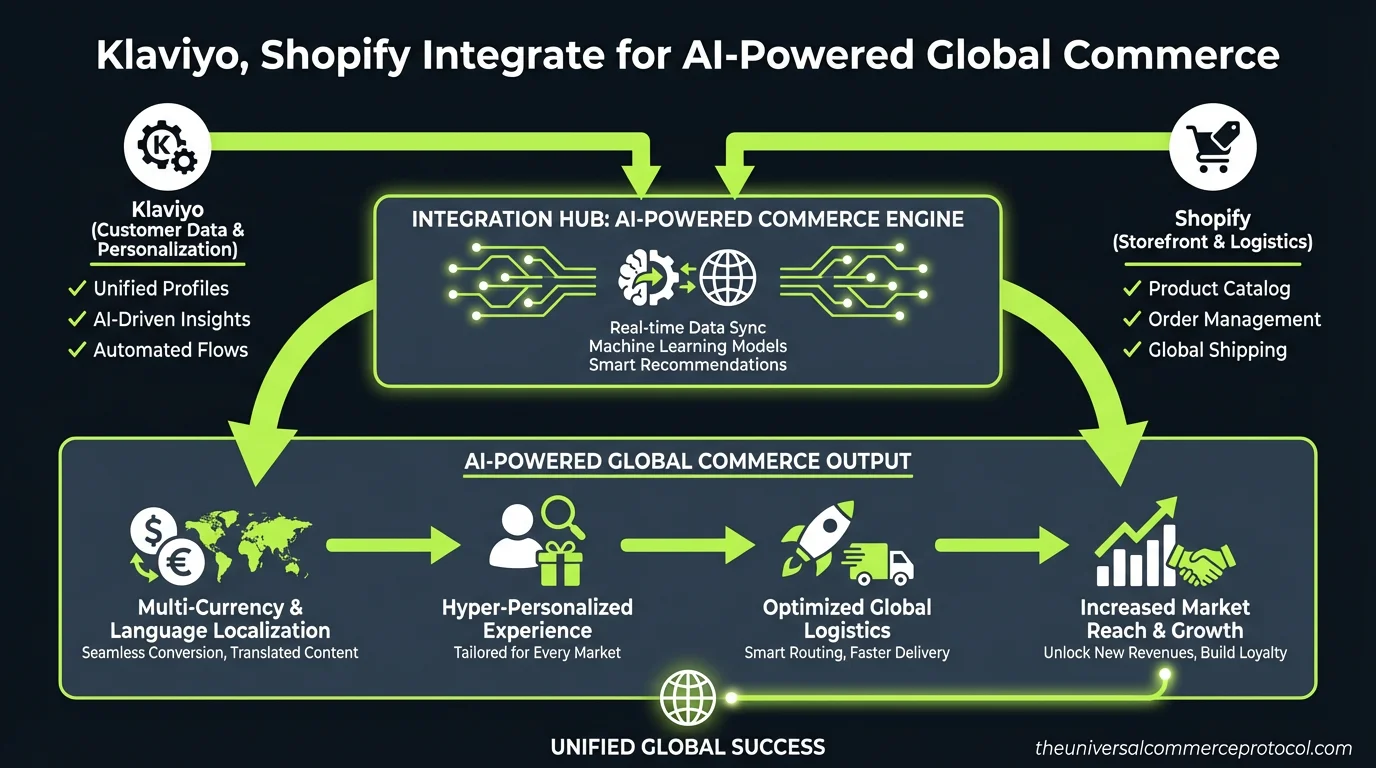
BOSTON (theuniversalcommerceprotocol.com) – Klaviyo and Shopify are deepening their integration to offer a unified, multi-market data foundation, enabling brands to personalize customer experiences globally. The move comes as Shopify reports that AI-powered shopping orders jumped 15x since January 2025.
The integration signals the growing importance of AI-driven solutions in agentic commerce, where AI agents act on behalf of customers or merchants to automate ecommerce tasks. By providing a unified data foundation, Klaviyo and Shopify aim to empower developers to build integrations that leverage AI for more personalized and efficient shopping experiences.
Locale Aware Catalogs Streamline Personalization
Klaviyo’s CRM now natively integrates Shopify Markets’ localized catalog data through its new Locale Aware Catalogs feature. This automatically syncs translated content, regional pricing, currency, and market-specific URLs into Klaviyo. This eliminates the need for multiple catalogs, simplifying the process of creating personalized marketing campaigns across different regions.
According to Klaviyo, brands using Klaviyo and Shopify together have seen 73% revenue growth over three years. The deepened integration aims to further accelerate this growth by providing merchants with the tools they need to effectively engage customers in diverse markets.
Shopify Doubles Down on Agentic Commerce
Shopify has been investing heavily in AI and related tools to enable agentic commerce. At the Morgan Stanley Technology, Media & Telecom Conference on March 3, 2026, Shopify President and CFO highlighted the company’s ongoing agentic commerce initiatives. These initiatives aim to leverage AI to understand customer intent, search and compare products, and provide ongoing support automatically.
Forrester Research estimates that agentic commerce will account for a significant portion of online sales within the next five years. Shopify’s investment in AI and its partnership with Klaviyo position the company to capitalize on this trend.
Developer Ecosystem Key to AI-Powered Future
The integration of Klaviyo and Shopify underscores the need for developers to build integrations that leverage AI to create more personalized and efficient shopping experiences. The availability of unified data and AI-powered tools will enable developers to create innovative solutions that automate tasks and improve customer engagement.
According to a report in The Information, Shopify is actively encouraging developers to build AI-powered apps for its platform. The company sees its developer ecosystem as a key driver of innovation in agentic commerce.
Background: Agentic commerce refers to AI-powered shopping where AI agents act on behalf of customers or merchants to perform ecommerce tasks automatically. Mastercard recently published a white paper on the potential of agentic commerce to transform the retail industry.
“`html
Frequently Asked Questions
The integration provides a unified, multi-market data foundation that enables brands to personalize customer experiences globally. By combining Klaviyo’s CRM capabilities with Shopify’s market localization features, businesses can deliver more relevant and personalized shopping experiences across different regions and markets.
AI is central to the integration through agentic commerce, where AI agents automate ecommerce tasks on behalf of customers or merchants. Shopify has reported that AI-powered shopping orders jumped 15x since January 2025, demonstrating the growing impact of AI-driven solutions in modern commerce.
Locale Aware Catalogs streamline personalization by allowing Klaviyo’s CRM to natively integrate with Shopify Markets’ localization features. This enables brands to tailor product catalogs and messaging to specific regions and languages, making shopping experiences more relevant to customers in different markets.
“`
Frequently Asked Questions
What is the Universal Commerce Protocol (UCP)?
The Universal Commerce Protocol (UCP) is an open standard developed to enable AI agents to autonomously conduct commerce transactions across any platform.
How does UCP enable agentic commerce?
UCP provides standardized APIs and protocols so AI agents can discover products, negotiate terms, and complete purchases without human intervention, working across any compatible commerce platform.
Why should businesses implement UCP?
UCP adoption reduces integration costs, opens revenue channels to AI-driven buyers, and future-proofs commerce infrastructure as agentic purchasing becomes mainstream.
Leave a Reply