“`html
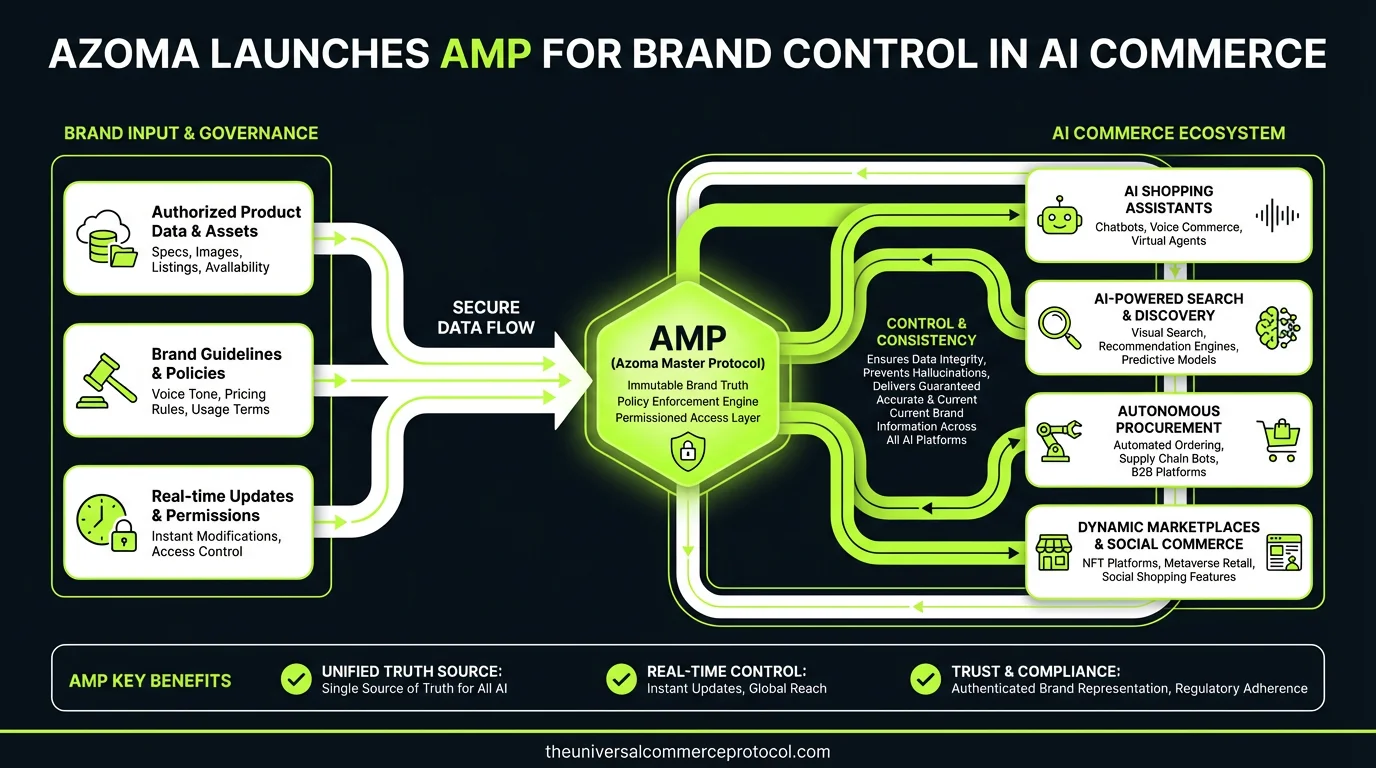
NEW YORK (theuniversalcommerceprotocol.com) — Azoma today launched its Agentic Merchant Protocol (AMP), a new standard designed to empower retailers to retain control of their product catalogs in the face of growing AI-driven commerce. On Black Friday 2025 AI chatbots and agents drove an estimated $14.2B in sales globally, over $3B in the U.S. alone.
The launch of AMP highlights the growing importance of brand control and consistent product representation as AI agents play a larger role in commerce. The protocol offers developers a new tool to ensure brand integrity in AI-driven shopping experiences.
AMP Empowers Brand Control
AMP gives brands the ability to differentiate offers and avoid lock-in to specific AI providers. The protocol focuses on merchant needs rather than consumer experiences, improving AI visibility of product information. Retailers can now directly influence how AI agents present their products to consumers.
According to Azoma, AMP allows for greater flexibility in managing product data and promotions across various AI platforms. This ensures consistent brand messaging and prevents unauthorized alterations to product listings.
Early Adopters Signal Industry Interest
Several major consumer goods companies are already implementing AMP. Early adopters include Mars, L’Oréal, Unilever, Beiersdorf and Reckitt, signaling strong industry interest in standardized approaches to agentic commerce.
These companies are leveraging AMP to maintain control over their brand image and ensure accurate product representation across different AI shopping platforms. The protocol is designed to be easily integrated into existing e-commerce systems.
Addressing the AI Visibility Gap
AMP specifically addresses the challenge of ensuring AI agents have access to accurate and comprehensive product information. By providing a standardized protocol for data exchange, AMP aims to improve the quality of AI-driven product discovery and comparison.
This increased visibility is crucial for brands seeking to stand out in a crowded online marketplace. AMP helps ensure that AI agents are presenting products in a way that aligns with the brand’s intended messaging and positioning.
What’s Next: Azoma plans to work with industry partners to further develop and expand AMP’s capabilities. The company expects to release additional features and tools in the coming months, focused on enhancing brand control and improving the overall agentic commerce experience.
What is the Agentic Merchant Protocol (AMP)?
The Agentic Merchant Protocol (AMP) is a new standard launched by Azoma designed to empower retailers to retain control of their product catalogs in the face of growing AI-driven commerce. It enables merchants to manage how their products are presented and sold through AI agents and chatbots.
Why is brand control important in AI commerce?
Brand control is critical in AI commerce because it ensures retailers can maintain their brand identity, pricing strategies, and product information accuracy when AI agents and chatbots interact with customers. Without proper control mechanisms, brands risk inconsistent product representation and loss of sales oversight.
How does AMP help retailers with AI-driven sales?
AMP provides retailers with a standardized protocol to manage their product catalogs and control how AI agents present their offerings. This allows merchants to maintain consistency across different AI commerce channels while protecting their brand reputation and business interests.
What problem does AMP solve for e-commerce businesses?
AMP solves the challenge of maintaining product data integrity and brand control as AI chatbots and agents become increasingly involved in the shopping experience. It ensures retailers have a say in how their products are discovered, presented, and sold through AI-powered commerce platforms.
When did Azoma launch AMP?
Azoma launched the Agentic Merchant Protocol (AMP) on March 12, 2026, in response to the growing adoption of AI agents in commerce, particularly following Black Friday 2025 when AI chatbots played a significant role in online shopping.
Frequently Asked Questions
What is the Universal Commerce Protocol (UCP)?
The Universal Commerce Protocol (UCP) is an open standard developed to enable AI agents to autonomously conduct commerce transactions across any platform.
How does UCP enable agentic commerce?
UCP provides standardized APIs and protocols so AI agents can discover products, negotiate terms, and complete purchases without human intervention, working across any compatible commerce platform.
Why should businesses implement UCP?
UCP adoption reduces integration costs, opens revenue channels to AI-driven buyers, and future-proofs commerce infrastructure as agentic purchasing becomes mainstream.
Leave a Reply