The Emergence of the Transactional Agent
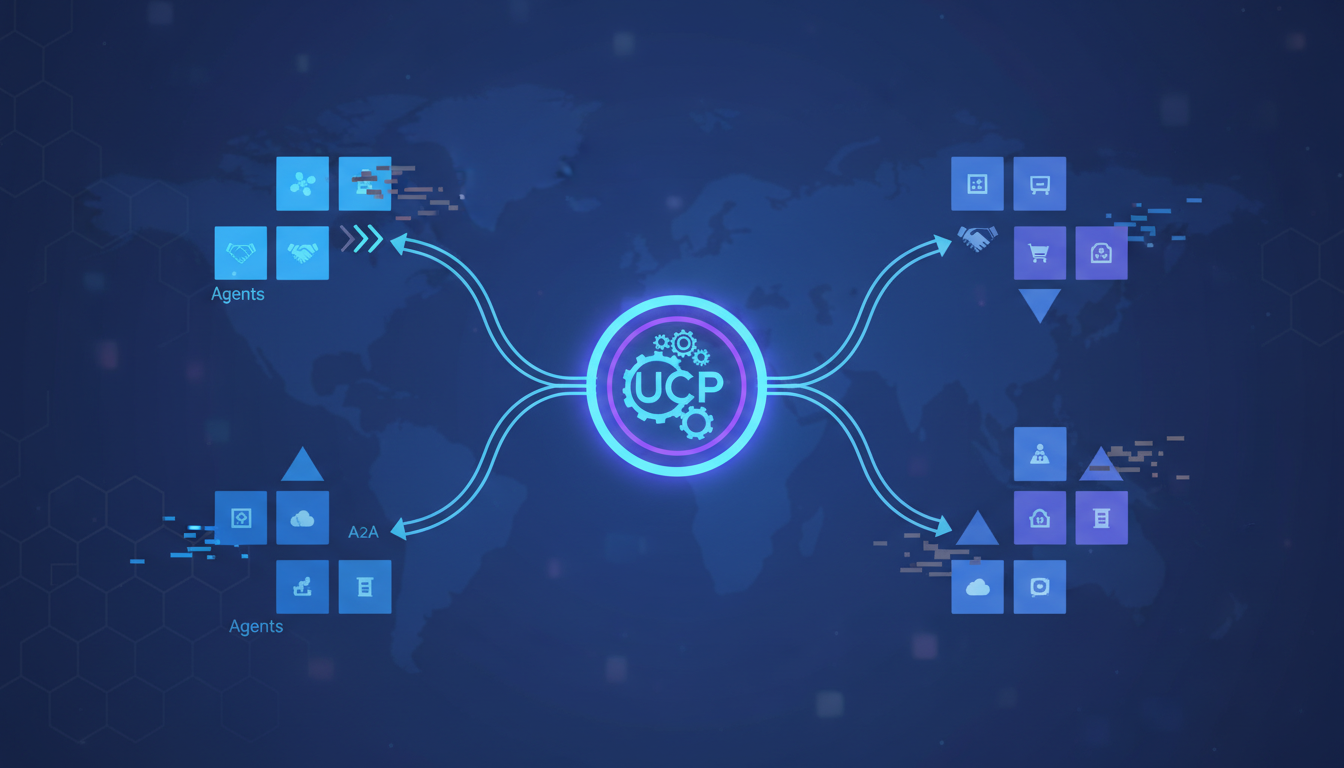
The digital commerce landscape is undergoing a fundamental shift from human-centric browsing to agent-centric execution. As Chief Technology Officers (CTOs) evaluate the next generation of customer engagement, the focus has moved beyond simple LLM integration toward building robust architectures capable of autonomous transaction. This evolution requires two distinct but complementary layers: a horizontal communication layer and a vertical commerce backbone. In the Google ecosystem, these roles are filled by the Agent-to-Agent (A2A) protocol and the Universal Commerce Protocol (UCP).
Defining the Multi-Agent Ecosystem
To understand the synergy between A2A and UCP, we must first define their specific domains. The Agent-to-Agent (A2A) protocol is primarily concerned with the ‘horizontal’ negotiation between disparate AI entities. It provides the framework for a consumer’s personal assistant (powered by Gemini) to discover, authenticate, and communicate with a merchant’s sales agent. It handles the nuances of natural language intent, intent handoff, and session management.
However, communication without a standardized transactional framework leads to friction. This is where the Universal Commerce Protocol (UCP) becomes critical. UCP provides the ‘vertical’ commerce logic—the standardized schema for product availability, real-time pricing, tax calculations (including complex requirements like California Prop 65), and checkout state machines. While A2A facilitates the conversation, UCP ensures that the data exchanged is actionable, compliant, and ready for settlement through Google Pay.
The Role of Model Context Protocol (MCP)
In this ecosystem, the Model Context Protocol (MCP) serves as the bridge between the reasoning engine (the LLM) and the external data sources (Google Merchant Center). By using MCP, a merchant’s agent can pull real-time product feeds and inventory signals directly into the A2A conversation. This ensures that when an agent-to-agent negotiation occurs, the data is not hallucinated but is grounded in the current state of the Merchant Center Supplemental Feeds.
How A2A and UCP Collaborate in Real-Time
The collaboration between these protocols follows a structured handshake that transforms a user’s high-level intent into a verified transaction. Consider a scenario where a consumer asks their AI assistant to ‘Find and buy a durable mountain bike under $2,000 that can be delivered by Friday.’
- Discovery and Intent Handoff: The consumer agent uses A2A to identify a merchant agent whose Google Merchant Center signals indicate they carry the product.
- Data Standardisation: The merchant agent provides product specifications and metadata using UCP-compliant JSON-RPC structures. This ensures the consumer agent understands the difference between a ‘base price’ and ‘total landed cost’ including shipping.
- Identity Linking and Security: Using OAuth 2.0 and Risk Signals, the two agents establish a secure trust boundary. The consumer’s identity is linked to their Google Pay profile without exposing raw credit card data to the merchant agent.
- The Transactional Execution: UCP manages the state transition from ‘Cart Created’ to ‘Payment Authorized.’ If the merchant supports Native Checkout, the transaction is completed entirely within the agent’s interface. If complex configuration is required, an Embedded Checkout path is triggered via a secure webview.
| Feature | Agent-to-Agent (A2A) Protocol | Universal Commerce Protocol (UCP) |
|---|---|---|
| Primary Function | Horizontal Communication & Negotiation | Vertical Commerce & Transactional Logic |
| Platform Alignment | Gemini & Google AI Studio | Google Merchant Center & Google Pay |
| Data Structure | Natural Language & Intent Schemas | Product Feeds & Checkout State Machines |
| Authentication | Identity Linking & OAuth 2.0 | Merchant of Record & Risk Signals |
Building for the Future: Protocol-Agnostic Commerce
For CTOs, the strategic imperative is to avoid vendor lock-in while leveraging the massive reach of the Google ecosystem. A protocol-agnostic approach means building agent architectures that treat A2A as one of several possible transport layers, while relying on UCP as the immutable source of truth for commerce data. This ensures that whether a transaction originates from a Gemini-powered smartphone, a smart home hub, or an autonomous vehicle, the business logic remains consistent.
Native vs. Embedded Checkout: A Strategic Choice
A critical decision in the A2A/UCP integration is the checkout path. Native Checkout offers the lowest friction; the UCP handles the entire payload, and Google Pay executes the transaction within the agent’s UI. This is ideal for commodity goods and rapid replenishment. Embedded Checkout, conversely, is necessary for highly regulated industries or complex product configurations where a Merchant of Record must capture specific user inputs during the flow. UCP supports both, allowing the agent to dynamically switch based on eligibility signals retrieved during the A2A negotiation.
Security, Trust, and Risk Signals
In a world of autonomous agents, trust is the currency. UCP integrates deeply with Google’s Risk Signals to provide CTOs with confidence that the ‘agent’ requesting a checkout is authorized by a verified human user. This involves multi-layered authentication where A2A provides the initial handshake, and UCP validates the transaction against historical patterns and identity linking tokens. This prevents ‘rogue agent’ scenarios where autonomous entities could inadvertently trigger unauthorized spend.
Conclusion: The Competitive Advantage of Interoperability
The synergy between A2A and UCP represents more than just a technical integration; it is the blueprint for the future of the global economy. By adopting these protocols, enterprises can transition from passive storefronts to active participants in the agentic web. For the CTO, this means lower customer acquisition costs, higher conversion rates through zero-friction checkouts, and a future-proof architecture that scales alongside the rapid advancements in Google AI. The time to implement the UCP backbone is now, ensuring that when the world’s agents start shopping, your products are not only visible but transactable.
Frequently Asked Questions
What is the Universal Commerce Protocol (UCP)?
The Universal Commerce Protocol (UCP) is an open standard developed to enable AI agents to autonomously conduct commerce transactions across any platform.
How does UCP enable agentic commerce?
UCP provides standardized APIs and protocols so AI agents can discover products, negotiate terms, and complete purchases without human intervention, working across any compatible commerce platform.
Why should businesses implement UCP?
UCP adoption reduces integration costs, opens revenue channels to AI-driven buyers, and future-proofs commerce infrastructure as agentic purchasing becomes mainstream.
Leave a Reply