The Evolution of the Interactions API
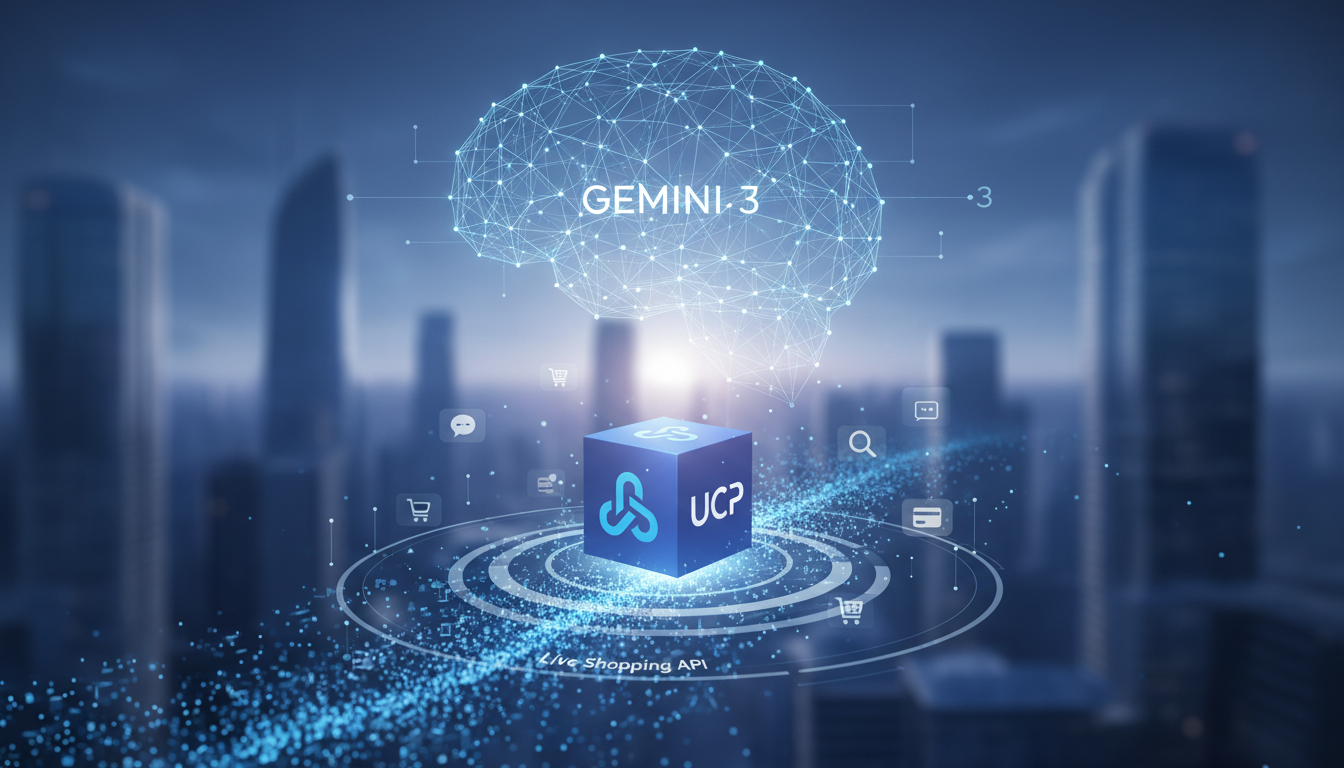
For CTOs and technical architects, the trajectory of conversational commerce has moved through three distinct eras: the primitive keyword-matching era, the transformer-based intent classification era, and now, the multimodal live reasoning era. With the release of Gemini 3, Google has introduced the Live API, a low-latency, streaming-first interface that processes audio, video, and text simultaneously. This shift necessitates a complete rethink of how commerce protocols function. We are moving away from ‘click-to-buy’ toward ‘intent-to-fulfillment.’
The Universal Commerce Protocol (UCP) acts as the essential connective tissue in this new landscape. While Gemini 3 provides the cognitive capability to understand a user’s nuance—detecting hesitation in a voice or identifying a brand from a blurry camera frame—UCP provides the deterministic execution layer. The interaction is no longer about parsing a static text string; it is about managing a live state machine where the commerce engine must respond with the same agility as the AI model.
Bridging the Latency Gap
One of the primary challenges in live shopping is the latency between intent capture and transactional confirmation. Gemini 3’s Live API minimizes the processing lag of multimodal inputs, but without a standardized protocol like UCP, the ‘back-office’ of commerce (inventory checks, shipping calculations, and identity verification) would remain a bottleneck. UCP’s JSON-RPC and REST-based endpoints are optimized for the agentic era, allowing a Gemini-powered assistant to query product eligibility and tax implications in parallel with the user’s speech.
From Speech to Spec: UCP’s Role in Voice
Translating a user’s spoken request—”Find me those running shoes I saw on the blog and get them delivered by Thursday”—into a valid transaction requires a rigorous data pipeline. This is where MCP (Model Context Protocol) and UCP converge. By using MCP, Gemini 3 can pull real-time data from Google Merchant Center, while UCP handles the specific orchestration of the checkout flow.
Structuring Intent with UCP
When the Live API captures a voice intent, UCP provides the schema to validate that intent against merchant capabilities. This includes:
- Product Resolution: Mapping natural language descriptions to specific IDs in the Google Merchant Center feed.
- Constraint Mapping: Translating phrases like “as soon as possible” into UCP shipping priority flags.
- Payment Readiness: Pre-verifying Google Pay tokens to ensure the transaction can be completed without breaking the conversational flow.
| Feature | Legacy Voice Search | Gemini 3 + UCP Integration |
|---|---|---|
| Input Type | Text-to-Speech (Serial) | Multimodal Streaming (Parallel) |
| State Management | Session-based (Fragile) | Agentic State (Persistent/Context-Aware) |
| Transaction Logic | External Redirects | Native Checkout via UCP Endpoints |
| Data Source | Static Web Scrapes | Dynamic Google Merchant Center Feeds |
By defining the transaction as a series of structured state transitions, UCP ensures that even if the AI’s generation is probabilistic, the resulting commerce action is entirely deterministic.
Native vs. Embedded: Architecting the Transaction
For the CTO, the choice between Native Checkout and Embedded Checkout is pivotal. Gemini 3 enables a level of agency that favors the Native approach. In a Native Checkout scenario, UCP allows the Gemini agent to act as the interface, leveraging Identity Linking to pull the user’s preferred shipping and payment data from their Google account, effectively bypassing the merchant’s UI entirely.
The Role of Supplemental Feeds
To power the Gemini 3 Live API effectively, merchants should leverage Supplemental Feeds within the Google ecosystem. These feeds can include specific metadata—such as ‘assembly required’ or ‘voice-command keywords’—that UCP uses to refine the transaction logic. If a user asks a question about California Prop 65 warnings during a live session, UCP can pull those specific regulatory signals and ensure the agent discloses them before the ‘buy’ signal is processed.
Case Study: Multimodal Product Discovery
Consider a user wearing augmented reality glasses or using a smartphone camera. They point their device at a piece of furniture and say, “I want this in oak, delivered to my office.”
Phase 1: Visual Reasoning. Gemini 3’s Live API processes the video stream, identifies the item’s geometry, and recognizes it as a specific brand’s mid-century table. It uses the Model Context Protocol to fetch technical specifications from the merchant’s catalog.
Phase 2: Contextual Negotiation. The agent realizes ‘oak’ is out of stock via a UCP inventory check. It suggests ‘walnut’ instead, noting the price difference. The user agrees verbally.
Phase 3: The UCP Handshake. The agent initiates a UCP transaction. It bundles the Google Pay token, the office address from the user’s profile, and the specific merchant ID. UCP validates the Risk Signals and returns a confirmation. The user never touches a button; the entire lifecycle—from discovery to payment—occurs within a single multimodal session.
Security, Trust, and Identity Linking
The transition to ‘Zero-Touch’ commerce introduces significant security concerns. How do we ensure that a voice command is authorized? UCP addresses this through Identity Linking and OAuth 2.0 integrations. By anchoring the agent’s session to a verified Google Identity, UCP ensures that high-value transactions require biometric or multi-factor re-authentication via the user’s primary device before the final fulfillment order is sent to the Merchant of Record.
Managing Risk Signals
In a live API environment, risk is fluid. UCP transmits real-time risk signals back to the merchant’s backend, including geolocation data and session duration. If a Gemini agent detects an anomaly—such as a voice pattern that doesn’t match the account holder—UCP can trigger an immediate step-up authentication requirement, pausing the live commerce session until the user is verified.
Conclusion: The Dawn of Agentic Commerce
The integration of Gemini 3 and the Universal Commerce Protocol represents the end of the “shopping cart” as we know it. We are entering an era of Agentic Commerce, where the interface is invisible, and the protocol is the product. For technical leaders, the goal is clear: prepare your data infrastructure by optimizing your Google Merchant Center feeds and adopting UCP standards. The future of commerce isn’t something you click on; it’s something you talk to, and it’s something that understands you in real-time.
Frequently Asked Questions
What is the Universal Commerce Protocol (UCP)?
The Universal Commerce Protocol (UCP) is an open standard developed to enable AI agents to autonomously conduct commerce transactions across any platform.
How does UCP enable agentic commerce?
UCP provides standardized APIs and protocols so AI agents can discover products, negotiate terms, and complete purchases without human intervention, working across any compatible commerce platform.
Why should businesses implement UCP?
UCP adoption reduces integration costs, opens revenue channels to AI-driven buyers, and future-proofs commerce infrastructure as agentic purchasing becomes mainstream.
Leave a Reply