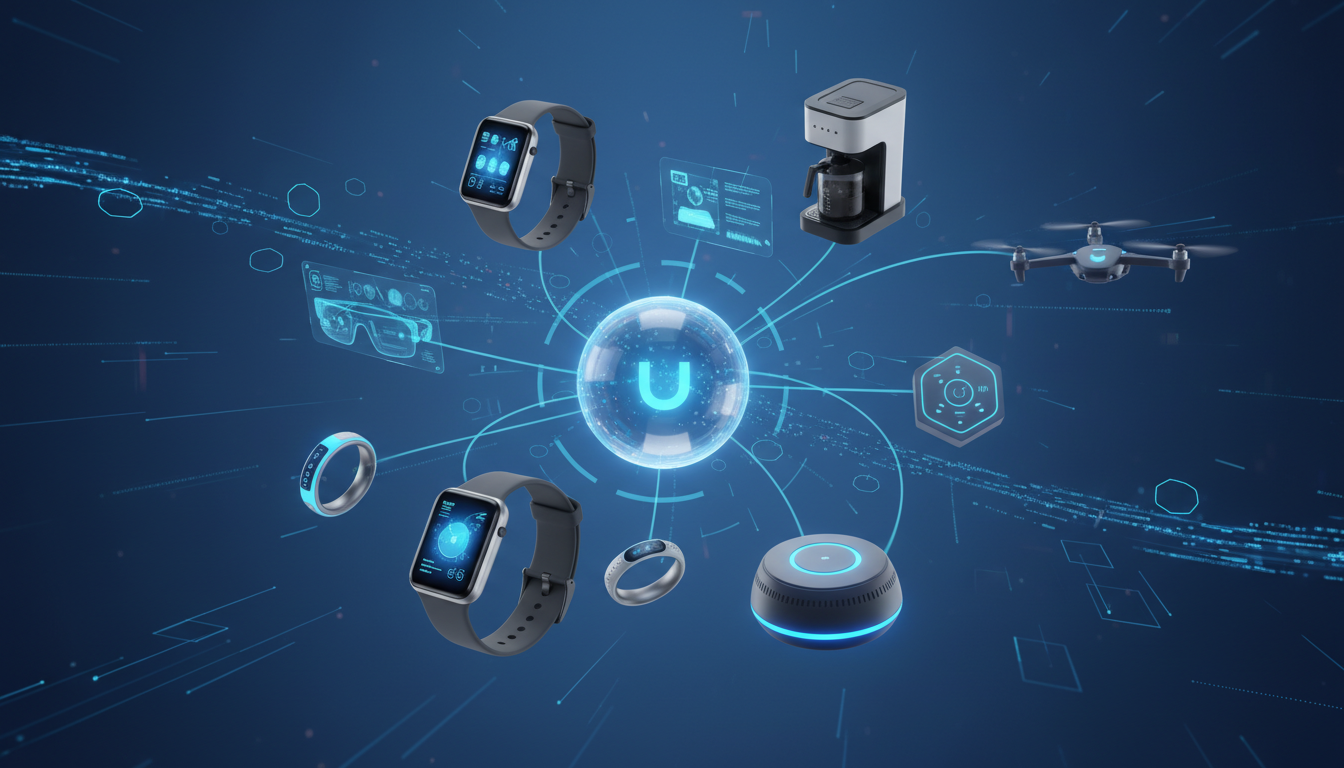
Defining Ambient Commerce
For the modern business owner, the concept of ‘going shopping’ is rapidly evolving into ‘shopping is happening.’ This is the essence of Ambient Commerce: a world where transaction capabilities are woven into the very fabric of our environment. Whether it is a pair of smart glasses identifying a product in the physical world or a smart refrigerator noticing a low supply of milk, the transition from intent to purchase must be frictionless. However, for years, the primary obstacle has been the ‘Browser Barrier.’ Most digital commerce is built on the assumption that a human is looking at a 2D web page, clicking buttons, and filling out forms. Ambient Commerce UCP (Universal Commerce Protocol) shatters this paradigm by providing a machine-readable, standardized interface that allows any device—no matter how small or specialized—to function as a high-fidelity point of sale.
The Shift from Search to Intent
In the traditional model, a user searches for a product on Google, clicks a link, and enters a merchant’s siloed environment. In an ambient world powered by UCP and Google AI models like Gemini, the ‘search’ and ‘purchase’ phases collapse into a single event. When a user wearing AR glasses looks at a pair of shoes and says, ‘Find these in my size and buy them,’ the device doesn’t just return a list of links. It uses UCP to query the Google Merchant Center, verify local or national inventory, and initiate a native checkout process immediately. This is the difference between commerce as a destination and commerce as a capability.
The Role of Gemini and Agentic Intelligence
Google Gemini plays a pivotal role in this ecosystem. As an agentic intelligence, Gemini can interpret complex user intents that lack clear visual parameters. For instance, a user might tell their smart watch, ‘I need ingredients for the lasagna recipe we made last week.’ Gemini, acting as an agent, uses UCP to interact with the merchant’s product feeds and inventory signals, selecting the specific SKUs needed and preparing a transaction manifest. This process relies on the Model Context Protocol (MCP) to ensure the AI agent has the correct context regarding the user’s preferences, loyalty status, and shipping requirements.
UCP: The Missing Link for IoT Transactions
IoT devices, such as smart appliances, wearables, and even connected vehicles, often lack the processing power or screen real estate to host a traditional web browser. This is where UCP becomes the critical infrastructure. By utilizing a standardized JSON-RPC or REST API approach, UCP allows these devices to communicate directly with commerce backends without needing to render a heavy UI.
Model Context Protocol (MCP) Integration
The integration of the Model Context Protocol (MCP) is what allows UCP to be ‘smart.’ MCP acts as a standardized bridge between the AI agent (like Gemini) and the merchant’s data sources. When a wearable device initiates a UCP request, MCP ensures that the server-side logic understands the constraints of that device. For example, a smart watch might only support voice-guided confirmation, whereas a smart display can show a summary. MCP provides the ‘context’ that informs the UCP transaction flow, ensuring that the merchant’s system provides exactly what the device needs and nothing more.
Native vs. Embedded Checkout Paths
One of the most significant strategic decisions for business owners is choosing between native and embedded checkout.
- Embedded Checkout: This involves pushing a micro-web view to a device. While flexible, it often results in poor user experiences on wearables due to scaling and input issues.
- Native Checkout: This is the gold standard for UCP. In a native path, the device uses UCP endpoints to fetch product data and Google Pay tokens directly. The ‘UI’ is rendered natively by the device’s operating system (e.g., Wear OS), leading to a lightning-fast, high-conversion experience.
By leveraging UCP, businesses can move away from clunky embedded frames and toward a future where the device itself handles the transaction logic, authenticated via Google Pay for a seamless ‘one-tap’ (or ‘zero-tap’) experience.
Securing Screenless Payments
Security is the primary concern for consumers when commerce moves away from the visible screen. If a smart fridge can buy groceries, how do we prevent unauthorized purchases? UCP addresses this through a multi-layered security framework that integrates deeply with Google’s existing infrastructure.
Google Pay and Biometric Tokens
The integration of Google Pay within the UCP framework provides a layer of abstracted security. Instead of the IoT device storing sensitive credit card information, it handles unique, single-use tokens. On wearables like the Pixel Watch, this is often paired with biometric ‘heartbeat’ authentication or on-body detection. Once the user is authenticated, the UCP transaction carries a cryptographically signed payload that confirms identity without exposing data. This ‘Identity Linking’ ensures that the person making the request on the watch is the same person verified in the Google Ecosystem.
Risk Signals and Identity Linking
UCP doesn’t just send price and SKU data; it transmits a rich set of Risk Signals. These signals include device telemetry, location data, and historical purchase patterns. If a smart coffee maker suddenly tries to buy a $2,000 espresso machine, the UCP backend, integrated with Google’s risk engines, can flag the transaction for manual approval on the user’s primary mobile device. This level of security is essential for building the ‘Trust’ component of the UCP framework.
Compliance and Data Transparency
Even in a screenless environment, regulatory requirements like California Prop 65 or GDPR still apply. UCP’s machine-readable format allows for ‘Supplemental Feeds’ in Google Merchant Center to be queried automatically. If a product requires a specific warning, the UCP-enabled device can provide that warning via text-to-speech or a notification on a paired smartphone before the purchase is finalized. This ensures that ‘Ambient’ does not mean ‘Unregulated.’
| Feature | Traditional Web Commerce | UCP Ambient Commerce |
|---|---|---|
| Interface | Visual Browser (HTML/CSS) | API-First / Voice / Gesture |
| Speed | Dependent on Page Load | Near-Instant (Native Code) |
| Intelligence | Reactive (User Searches) | Proactive (Agentic/Gemini) |
| Security | Passwords / MFA | Biometrics / Identity Linking |
| Inventory | Static Product Pages | Real-time Google Merchant Center Feeds |
Conclusion: Preparing Your Business for the Ambient Era
For business owners, the transition to Ambient Commerce via UCP is not just a technical upgrade; it is a fundamental shift in how you reach customers. To prepare, businesses must first ensure their data is ‘agent-ready.’ This means having a robust, high-fidelity presence in Google Merchant Center and adopting the Universal Commerce Protocol as the standard for all non-browser interactions. By doing so, you ensure that when the next wave of wearables and IoT devices hits the market, your products aren’t just visible—they are purchasable in the moment, in the flow, and in the environment where your customers live.
Leave a Reply