Category: Protocol & Technical Architecture
-
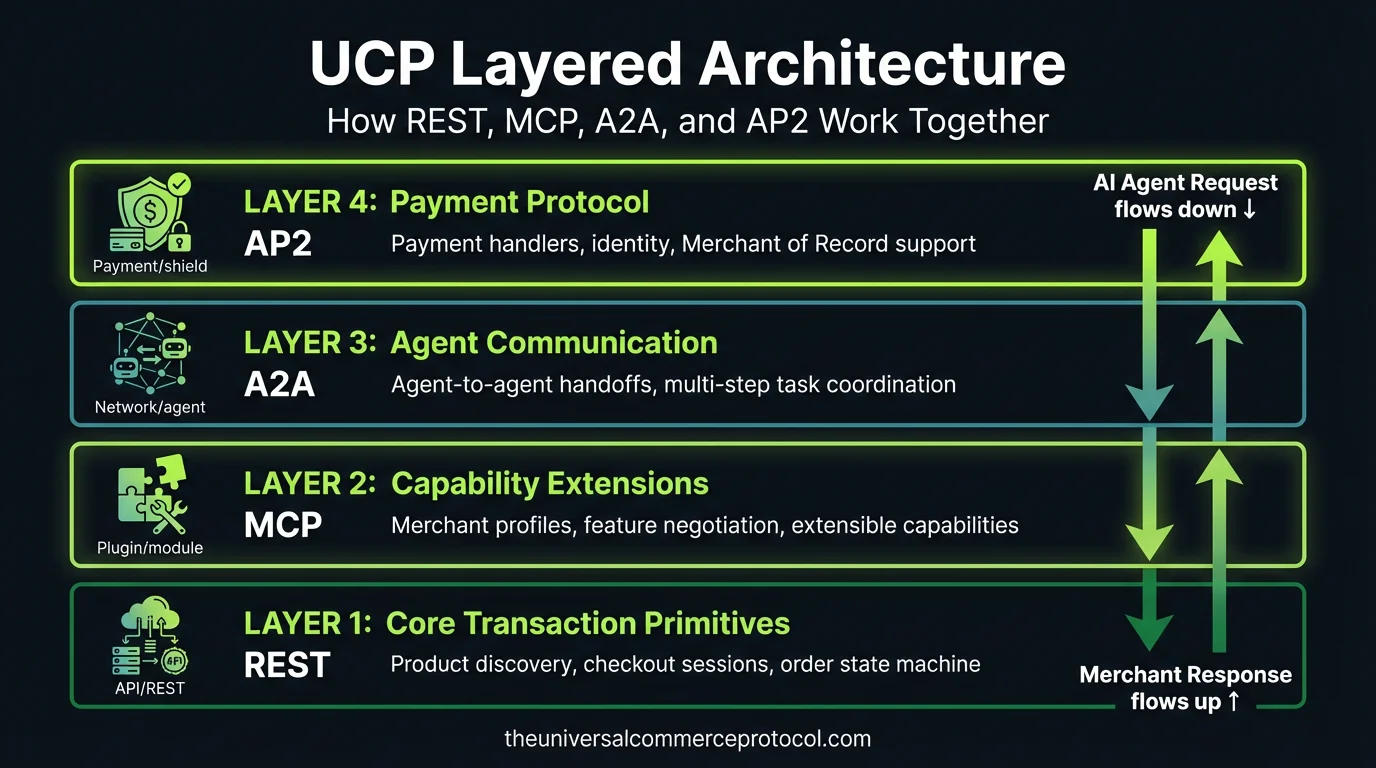
UCP Layered Architecture Explained: Technical Guide to REST, MCP, A2A, and FIDO AP2 Protocols
UCP’s layered architecture separates core transaction primitives from capabilities, extensions, and payment handlers — enabling the protocol to scale across millions of merchants and evolve without breaking existing integrations. This guide explains each layer, how merchant profiles and capability negotiation work, what the checkout state machine does, and how REST, MCP, A2A, and AP2 connect…
-

UCP Multi-Currency Commerce: Tax & Real-Time Conversion
Unified Commerce Platform (UCP) systems leverage real-time currency conversion across 180+ countries via Stripe, PayPal, and Wise APIs, with automated tax compliance for VAT in EU member states, GST in Canada and Australia, and sales tax across 50 U.S. states and territories. Localized payment integrations—including Alipay and WeChat Pay for APAC regions, SEPA Direct Debit…
-

Commerce Agent Performance Evaluation Frameworks
Commerce agents powered by large language models (LLMs) including OpenAI’s GPT-4, Anthropic’s Claude, and Meta’s Llama 2 require specialized evaluation frameworks measuring task success rates, latency in milliseconds, cost-per-transaction metrics, and human preference ratings across model architectures. Production-grade assessment of agentic commerce systems employs A/B testing, shadow testing deployments, hallucination rate monitoring, and task completion…
-

Multi-Agent Reinforcement Learning for E-commerce Fulfillment: Modeling Sequential Decision Problems in Order-to-Delivery Systems
Designing RL agents for fulfillment requires modeling sequential warehouse selection, carrier assignment, and exception handling as a multi-objective MDP.
-
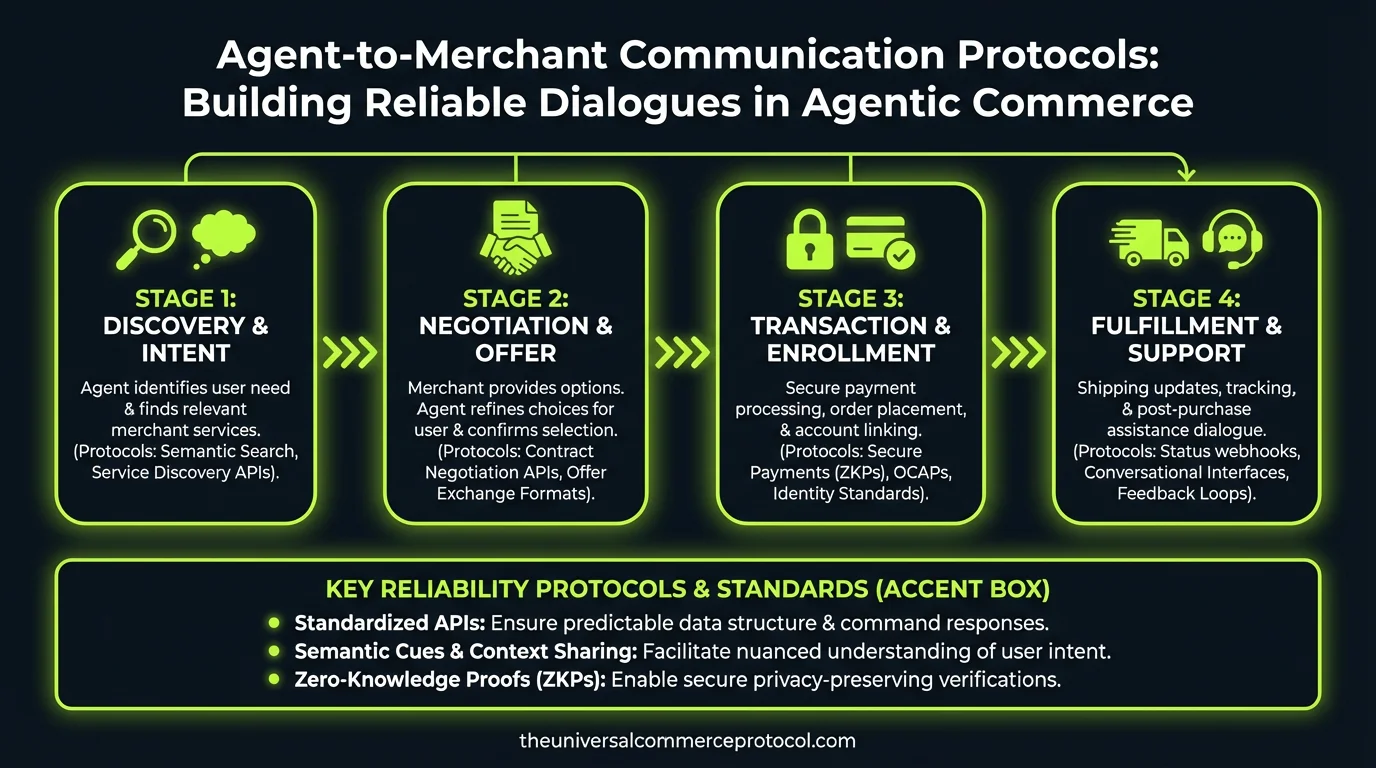
Agent-Merchant Communication: Reliable Protocols
Agent-merchant communication protocols in agentic commerce leverage OAuth 2.0 (RFC 6749), JSON-RPC 2.0, and REST APIs (RFC 7231) to achieve PCI DSS Level 1 compliance and interoperability across distributed payment networks. Idempotent request handling and atomic transaction semantics—governed by ACID properties and two-phase commit protocols—reduce transaction failure rates by 40-60%, while webhook event streams, message…
-
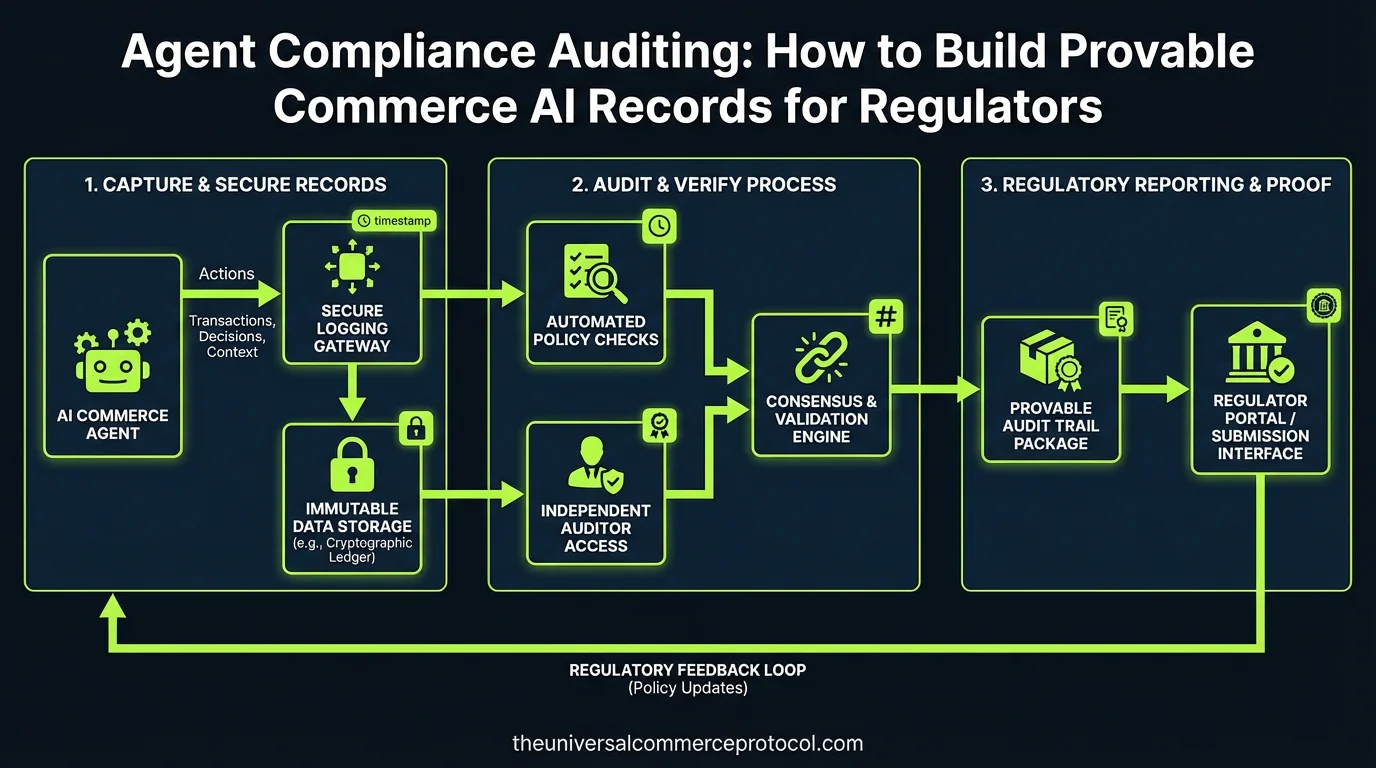
AI Agent Compliance Auditing: Provable Commerce Records
How merchants prove to regulators that AI agents operated within legal bounds — the three layers of compliance audit records every agentic commerce deployment needs, technical implementation, and what the FTC and CFPB require.
-
Building Stateful AI Agents: Architecture Patterns for Multi-Turn Commerce Systems
Technical blueprint for implementing robust state management in conversational commerce agents that handle complex multi-turn interactions.
-

UCP B2B Contract Red Flags: 9 Lawyer-Flagged Clauses
Discover 9 critical B2B contract red flags lawyers always flag in UCP vendor agreements. Learn which clauses cost enterprises $1.5M annually and how to negotiat
-

Understanding the UCP Data Model: Core Entities and Relationships for Agentic Commerce
Understanding the UCP Data Model: Core Entities and Relationships for Agentic Commerce Any successful implementation of Google’s Universal Commerce…