Category: Protocol & Technical Architecture
-

UCP Webhook Failures Cost $100K+ Annually: CFO Guide
Universal Commerce Platform (UCP) webhook failures generate documented annual revenue losses exceeding $100,000 through duplicate transaction charges, inventory synchronization errors, and order fulfillment delays across e-commerce platforms, point-of-sale (POS) systems, and order management systems (OMS). Enterprise retailers operating multi-channel commerce infrastructure in North America report per-incident losses between $10,000–$100,000 when asynchronous API communication lacks alerting…
-

UCP vs Native APIs: Which Protocol Standard Wins
Universal Commerce Platform (UCP) standards, adopted by enterprises integrating SAP Commerce Cloud, Adobe Commerce, and Salesforce Commerce Cloud, standardize API protocols to reduce fragmentation and vendor lock-in, while vendor-native APIs—including Salesforce Composable Commerce APIs and Adobe Experience Cloud’s headless commerce framework—optimize for lower latency and higher throughput in domain-specific transactions. The architectural decision between UCP…
-
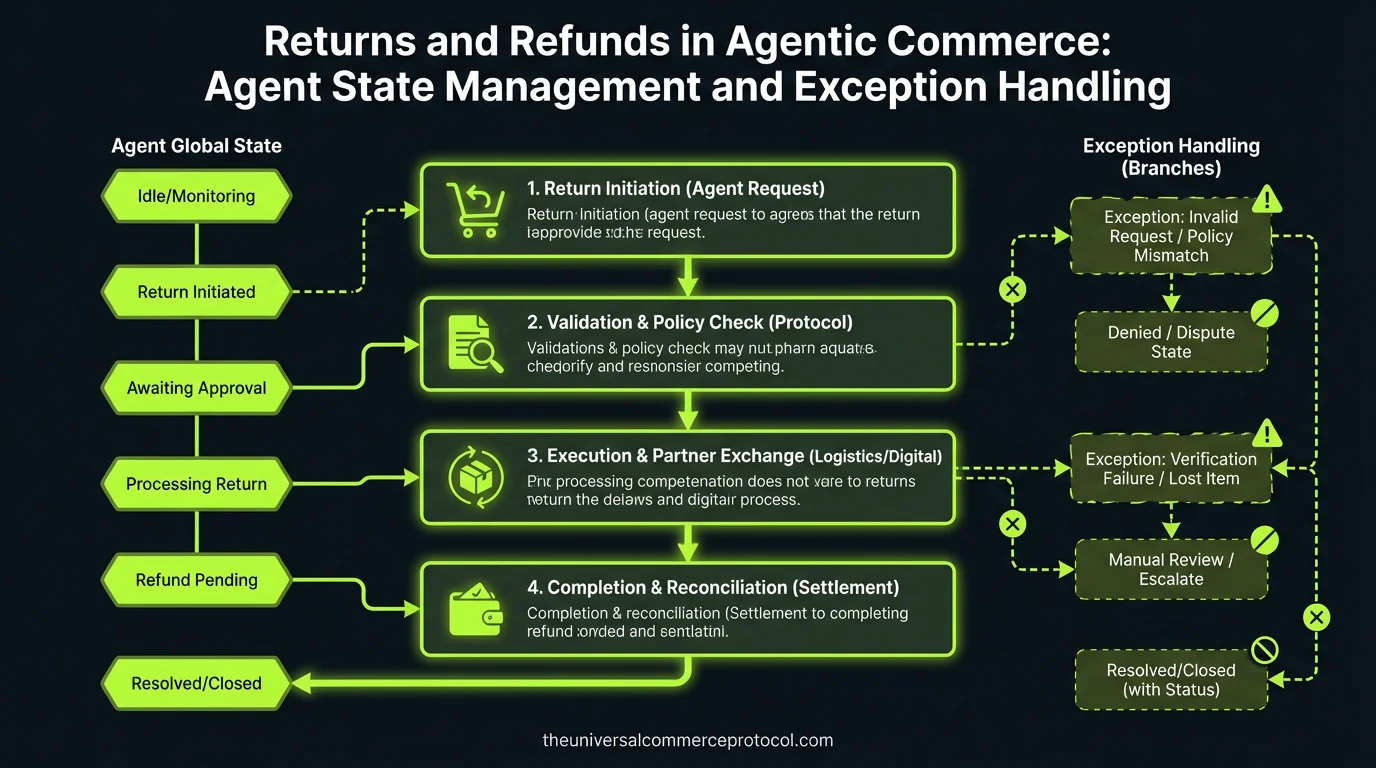
Returns and Refunds in Agentic Commerce: Agent State Management and Exception Handling
How agentic commerce systems maintain state during returns, handle refunds autonomously, and prevent revenue leakage through intelligent exception routing.
-
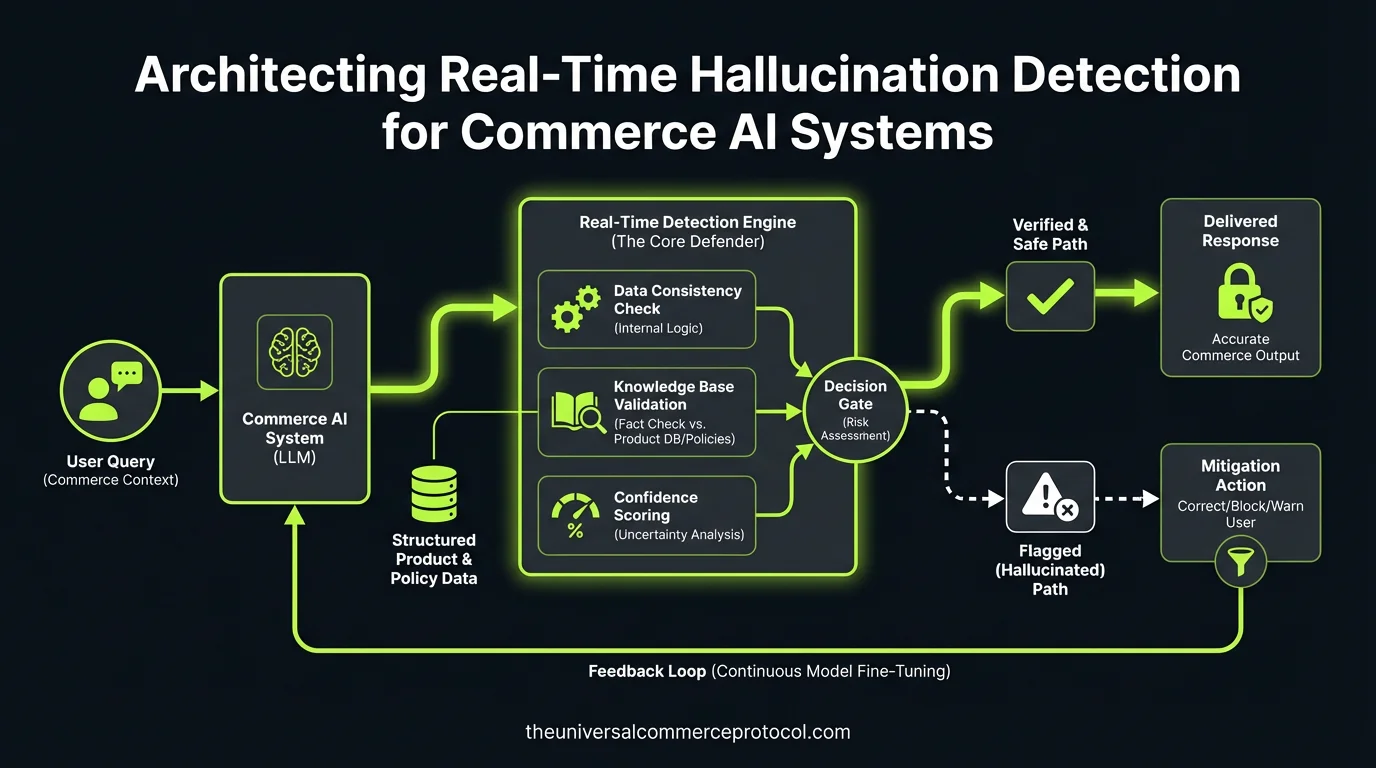
Architecting Real-Time Hallucination Detection for Commerce AI Systems
Technical blueprint for implementing three-layer hallucination detection in production commerce agents with
-
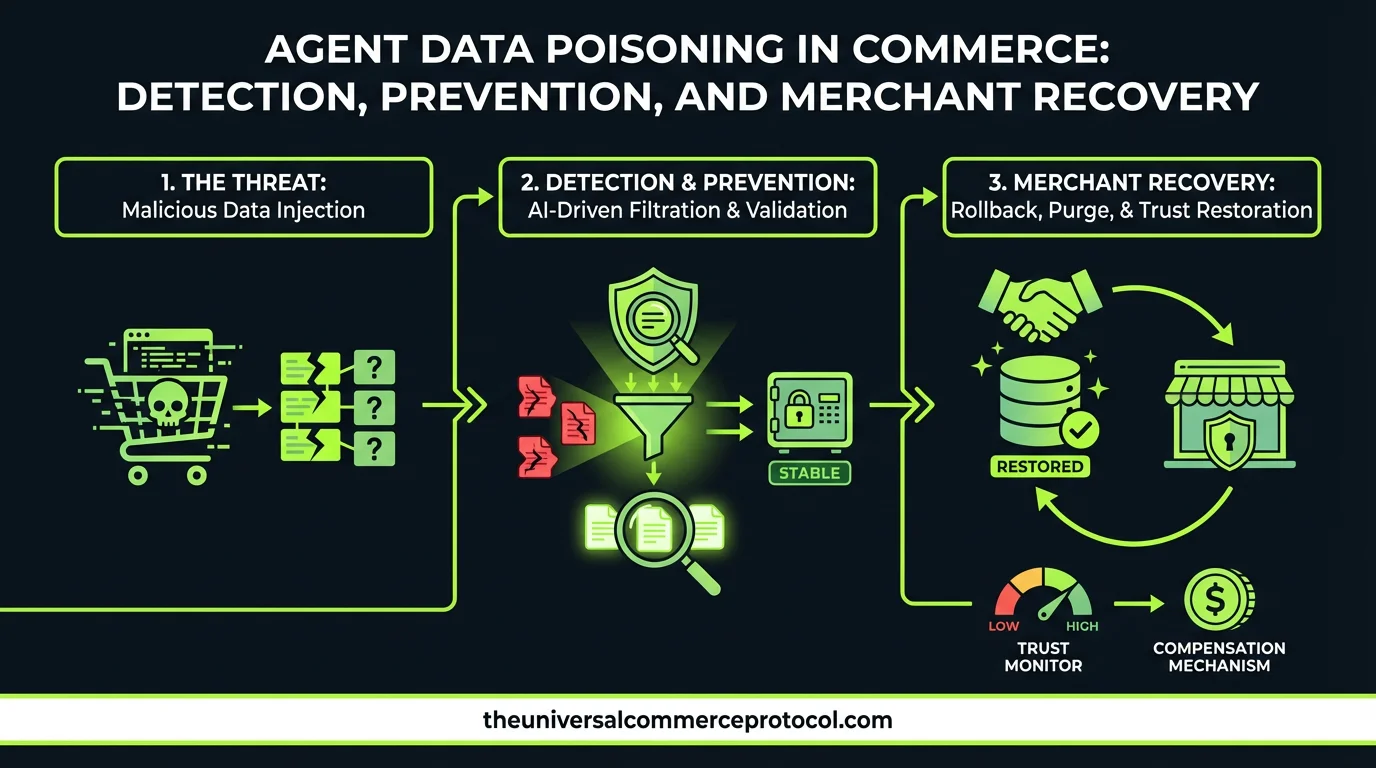
Agent Data Poisoning in Commerce: Detection Methods
Data poisoning attacks inject malicious training samples into machine learning datasets used by autonomous commerce agents, reducing decision-making accuracy by up to 40% according to the NIST AI Risk Management Framework (NIST SP 800-53B). Detection methods include statistical anomaly analysis, input validation layers, and continuous model behavior monitoring per ISO/IEC 42001 standards. Recovery protocols mandate…
-

Agent Commerce Observability: Monitoring AI Decision Trails for Merchant Accountability
How merchants can instrument agentic systems to track, debug, and defend AI commerce decisions in real time.
-

Will’s Take: The Agent Economy Doesn’t Need More Protocols. It Needs Merchants to Actually Use One.
We have plenty of protocol proposals and not enough adoption. The bottleneck in agentic commerce right now is merchant implementation, not technical specification.
-

Verifiable Intent: The Privacy Architecture Securing AI Commerce
Verifiable intent is the cryptographic mechanism that lets AI agents prove they have real authorization to transact. Built on PKI, it provides scope limitations, expiration, and revocation — privacy by architecture, not afterthought.
-

Claude vs. Google Commerce: Protect Your Digital Revenue
Claude (Anthropic) integrates natural language processing for commerce through conversational AI, enabling purchase intent recognition and product discovery via chat interfaces without native payment processing. Google Commerce—comprising Google Shopping, Google Merchant Center, Google Pay, and Google Ads—processes transactions for 2+ billion monthly active users, charging standardized merchant fees of 2–3.5%, with real-time inventory synchronization via…
-
UCP Webhook Infrastructure for Commerce Reliability
Universal Control Plane (UCP) webhook infrastructure processes commerce deployments exceeding $100,000 USD in daily transaction volume through circuit breaker patterns, dead-letter queues (DLQ), and idempotency tokens integrated with Stripe, PayPal, and enterprise order management systems (OMS). Mission-critical deployments leverage exponential backoff retry mechanisms, OpenTelemetry distributed tracing, and ACID-compliant databases (PostgreSQL, MySQL) to ensure exactly-once message…