Category: Strategy & Business Impact
-

Agent State Recovery: Commerce AI & Reinforcement Learning
Amazon, Shopify, and eBay implement Markov Decision Processes (MDPs) with Q-learning, temporal difference learning, and policy gradient methods to optimize state recovery in distributed e-commerce systems during partial infrastructure failures. These reinforcement learning frameworks use reward functions that quantify downtime costs, data consistency violations, and customer churn, enabling value iteration algorithms to minimize cumulative operational…
-

Commerce Agent Performance: Data Science Testing
Commerce agent performance frameworks evaluate NLP-driven conversational AI systems using precision metrics including conversion rate optimization (CRO), cart abandonment rates, and session-level accuracy across unified commerce platforms spanning e-commerce, omnichannel retail, and mobile commerce channels. Data science testing methodologies quantify recommendation engine performance via click-through rates (CTR) and revenue per session (RPS) metrics, while validating…
-

Architecting Cross-Border Payment Settlement for Agentic Commerce Systems
Engineering teams face complex architectural decisions when building autonomous payment systems that handle real-time FX, compliance, and multi-rail settlement.
-
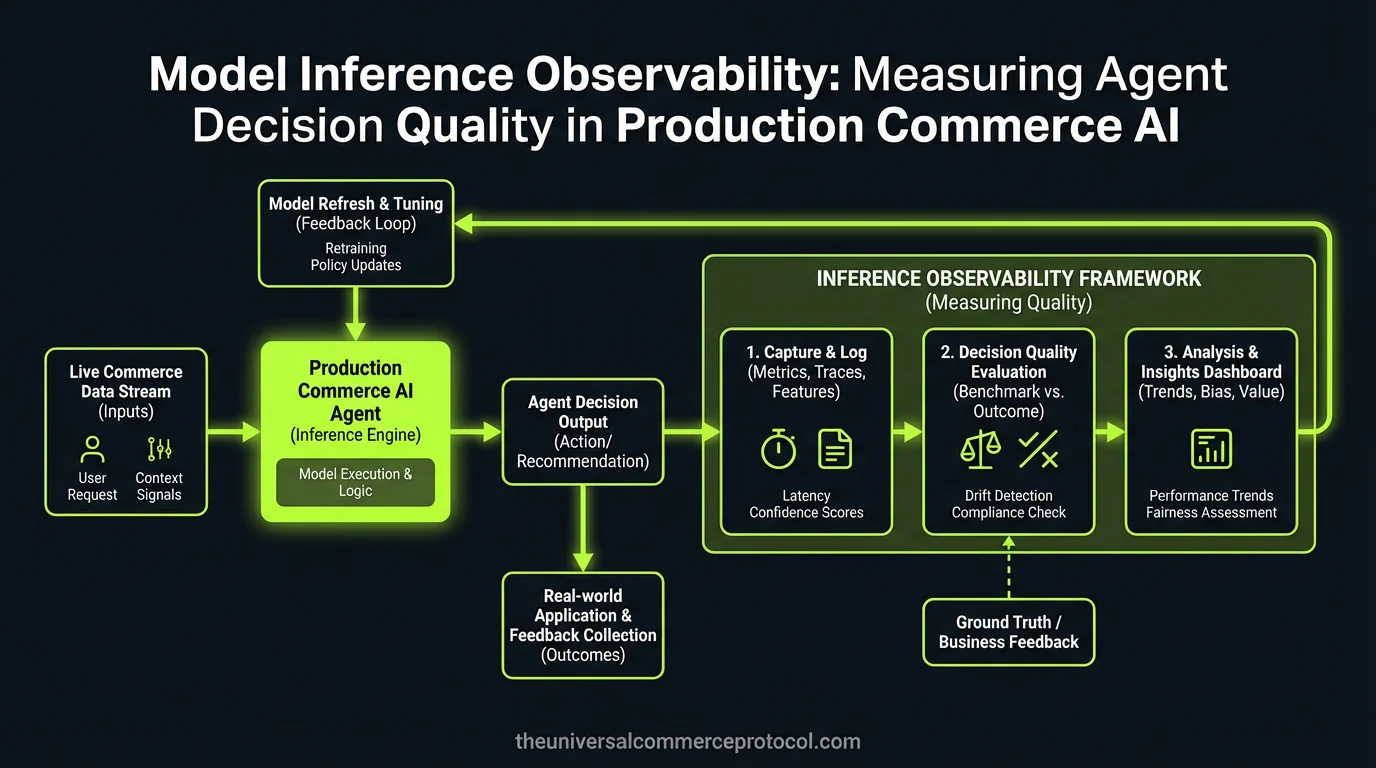
Model Inference Observability: Measuring Agent Decision Quality
Model inference observability encompasses semantic logging, latency measurement, and token-efficiency tracking for AI agents in production environments. Beyond infrastructure metrics like GPU utilization and request latency, decision quality measurement requires evaluation frameworks assessing hallucination rates, reasoning chain validity, and business outcome correlation. Organizations implementing comprehensive observability for large language model agents report 23-40% improvements in…
-
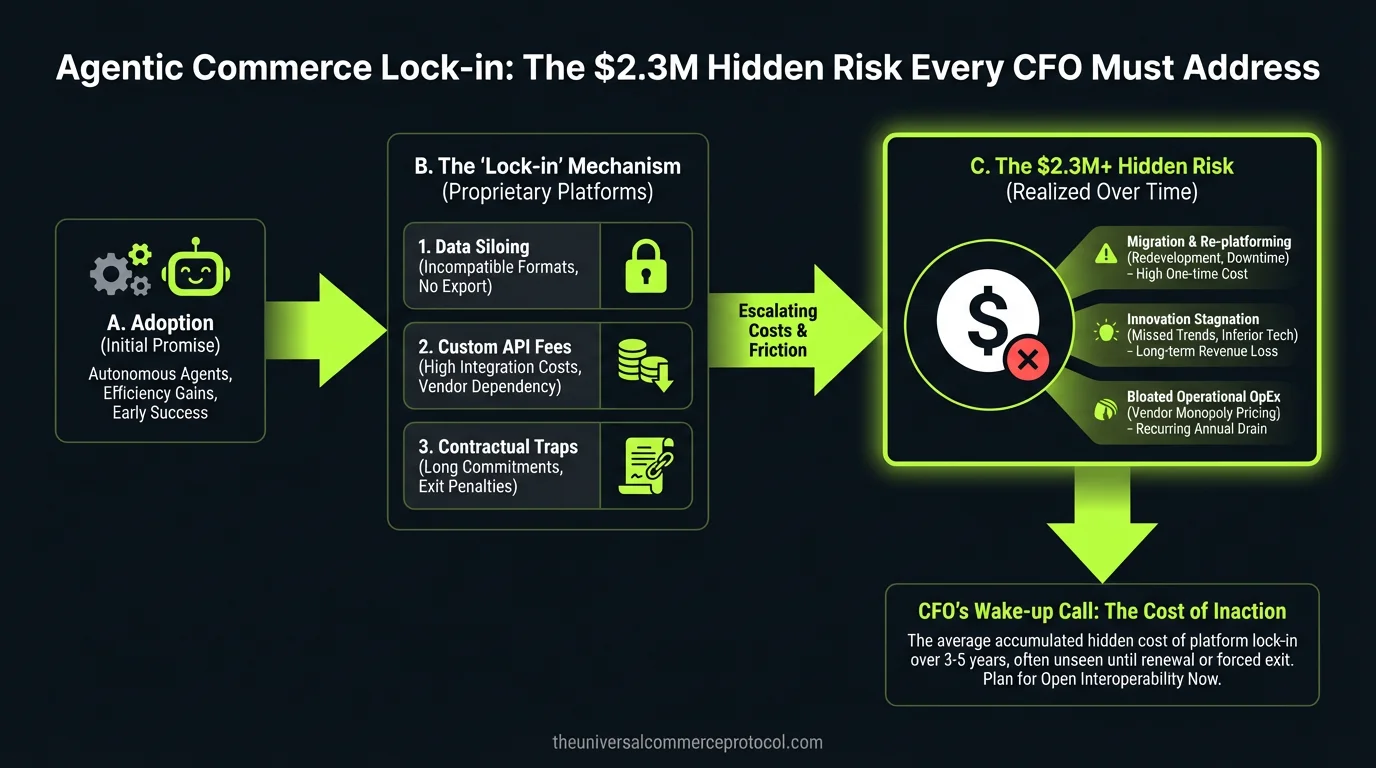
Agentic Commerce Lock-in: $2.3M CFO Risk
Agentic commerce platforms including Salesforce Einstein, Microsoft Copilot for Commerce, and custom LLM implementations impose switching costs exceeding $1.2M–$2.3M for mid-market merchants (annual revenue $50M–$500M), comprising retraining expenses, API integration rework, and operational downtime. CFOs face quantifiable vendor lock-in risk as proprietary agent frameworks become embedded across e-commerce, supply chain, and customer service operations. Organizations…
-

What Happens to Loyalty Programs When My Agent Shops for Me?
AI agents have zero brand loyalty. Loyalty programs built over decades get bypassed at the moment of purchase. Will’s take from a small operator who’s watc
-
The Banner Ad Is Already Dead
When AI agents query a merchant’s API, they don’t see banner ads — they read JSON. In the UCP era, an ad is a privileged position in a data list. If your s
-
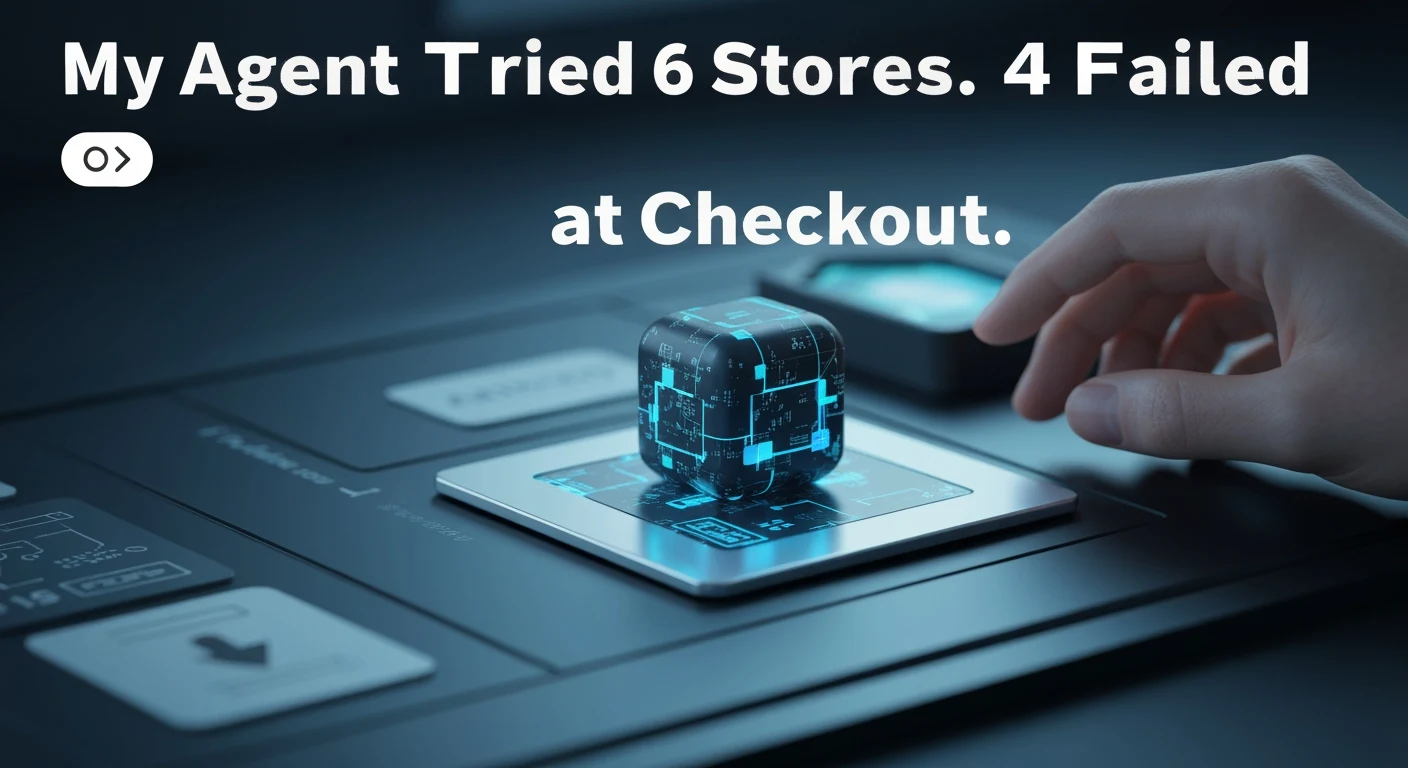
My Agent Tried 6 Stores. 4 Failed at Checkout.
Real-world agentic commerce today: agents hallucinate products, fail on CAPTCHA, loop on checkout, and give up. Will’s honest field report on the gap betwe
-

What Commerce Looks Like in 2028: A Scenario Planning Exercise
Three plausible 2028 scenarios for how agentic commerce infrastructure develops — and what decisions made in 2026 determine which scenario you are operating in.
-

The Agentic Commerce Moat: Why Queryable Knowledge Bases Will Define the Next Era of AI-Driven Business
How RAG-powered proprietary knowledge bases become commerce infrastructure in an agentic economy, enabling AI agents to evaluate vendor expertise autonomously through the Universal Commerce Protocol.