Tag: UCP
-

Returns & Refunds in Agentic Commerce: Agent State
Universal Commerce Protocol (UCP) agents orchestrate post-purchase returns through deterministic finite state machines that synchronize transactional state across Stripe, PayPal, and Square while maintaining consistency with SAP ERP, Oracle Commerce, and fulfillment platforms like ShipBob. Agent recovery mechanisms employ idempotent operations reconciling distributed ledger records against authoritative PostgreSQL and AWS DynamoDB stores under ACID compliance…
-

$18 Billion Revenue Recovery: The CFO’s Guide to AI-Driven Cart Abandonment Solutions
Cart abandonment costs merchants $18B annually. AI agents can recover 22% more revenue through real-time interventions—here’s the business case.
-
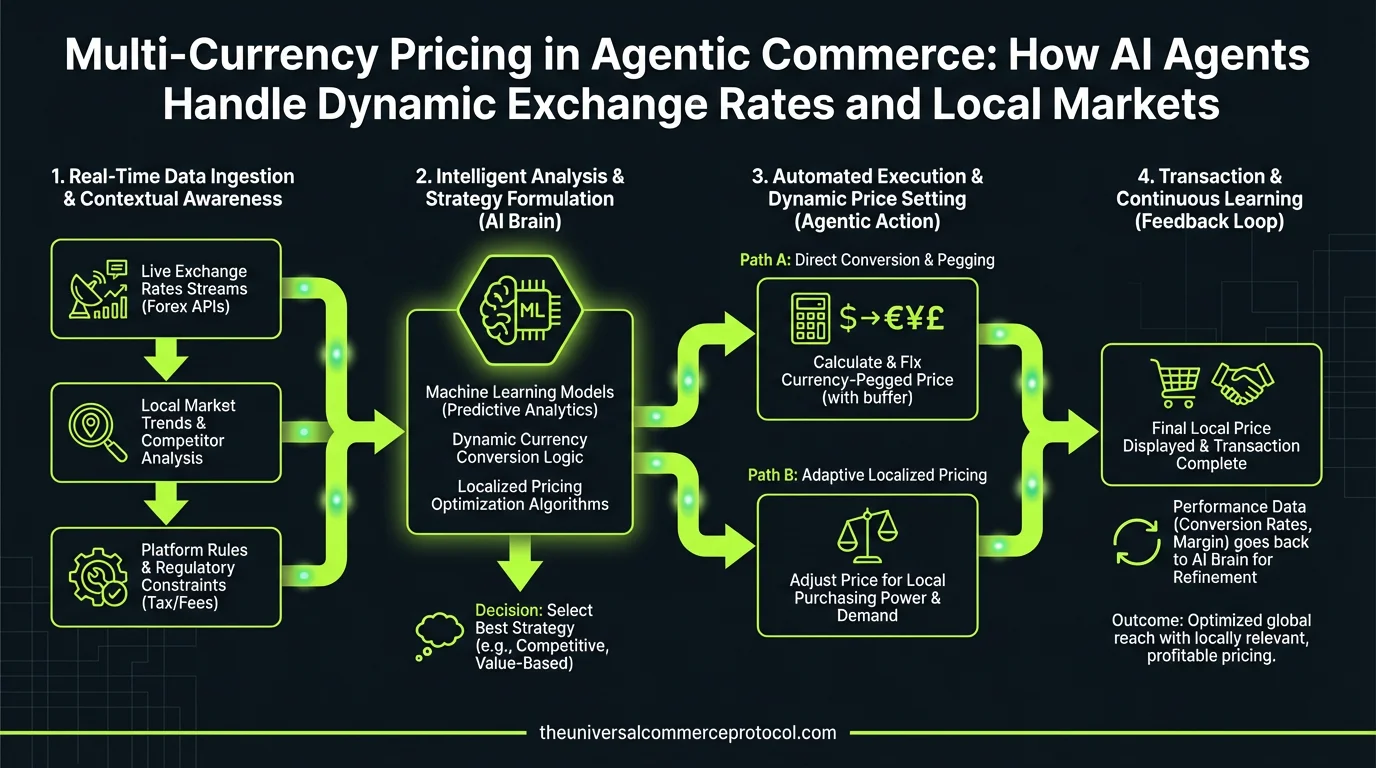
AI Agents & Multi-Currency Pricing: Dynamic Exchange Rates
AI agents in agentic commerce systems integrate real-time foreign exchange APIs—including OANDA, XE.com, and Bloomberg Terminal—to process dynamic currency conversion across major trading pairs (USD/EUR, GBP/JPY, AUD/SGD) while calculating jurisdiction-specific tax obligations such as EU VAT directives, UK VAT at 20%, German VAT at 19%, US Economic Nexus Framework sales tax, and Australian GST at…
-
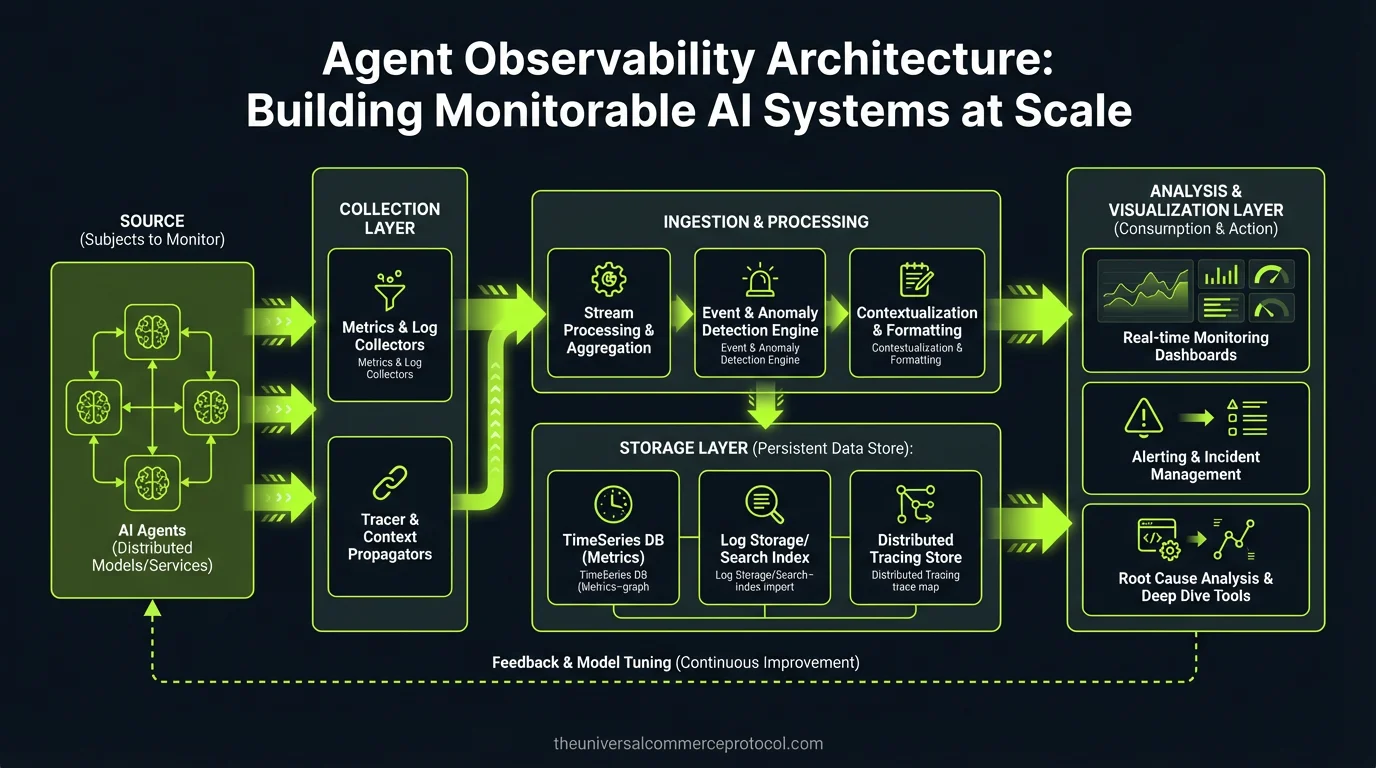
Agent Observability Architecture: Monitorable AI Systems
Enterprise AI agent systems operating in e-commerce, SaaS, and financial services sectors frequently lack comprehensive observability frameworks, forcing engineering teams at organizations like Anthropic, OpenAI, and AWS to implement post-deployment debugging practices for LLM-based decision trees and tool-use chains. Modern agentic architectures require structured logging of model invocations, token usage metrics, and tool call hierarchies…
-

Training Commercial AI Agents to Self-Monitor for Factual Accuracy: A Model-Centric Approach to Hallucination Detection
How to architect AI commerce agents that self-monitor for hallucination — confidence estimation, UCP validation layers, and continuous feedback loops that keep product data, pricing, and inventory claims accurate.
-
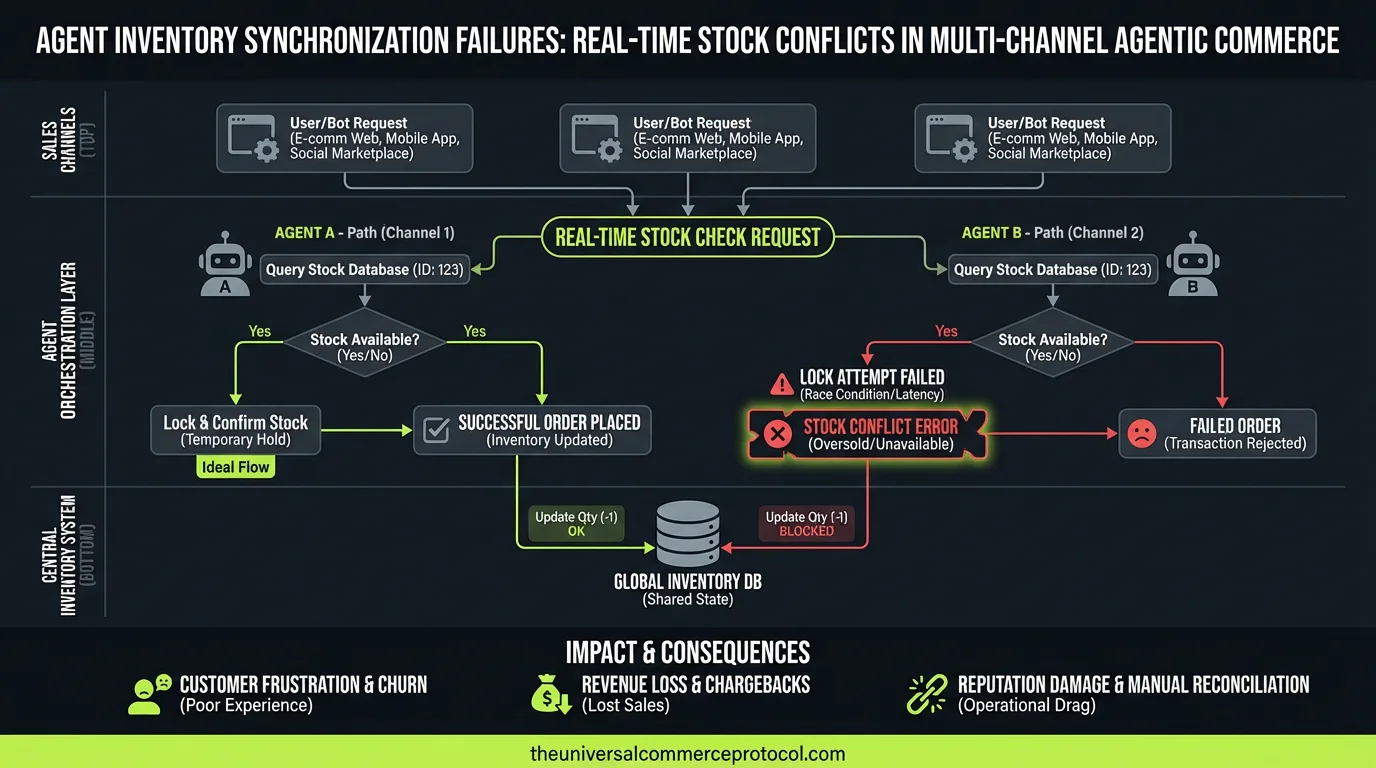
Agent Inventory Sync Failures in Multi-Channel Commerce
Agent inventory sync failures in multi-channel commerce occur when distributed AI agents executing purchases across Amazon, Shopify, WooCommerce, and BigCommerce platforms exceed backend reconciliation cycle latencies (typically 200-500ms), causing overselling cascades. Resolution requires event-driven architectures implementing sub-100ms consensus mechanisms using Apache Kafka event streaming and distributed ledger protocols (Raft, PBFT) across inventory databases. These technical…
-
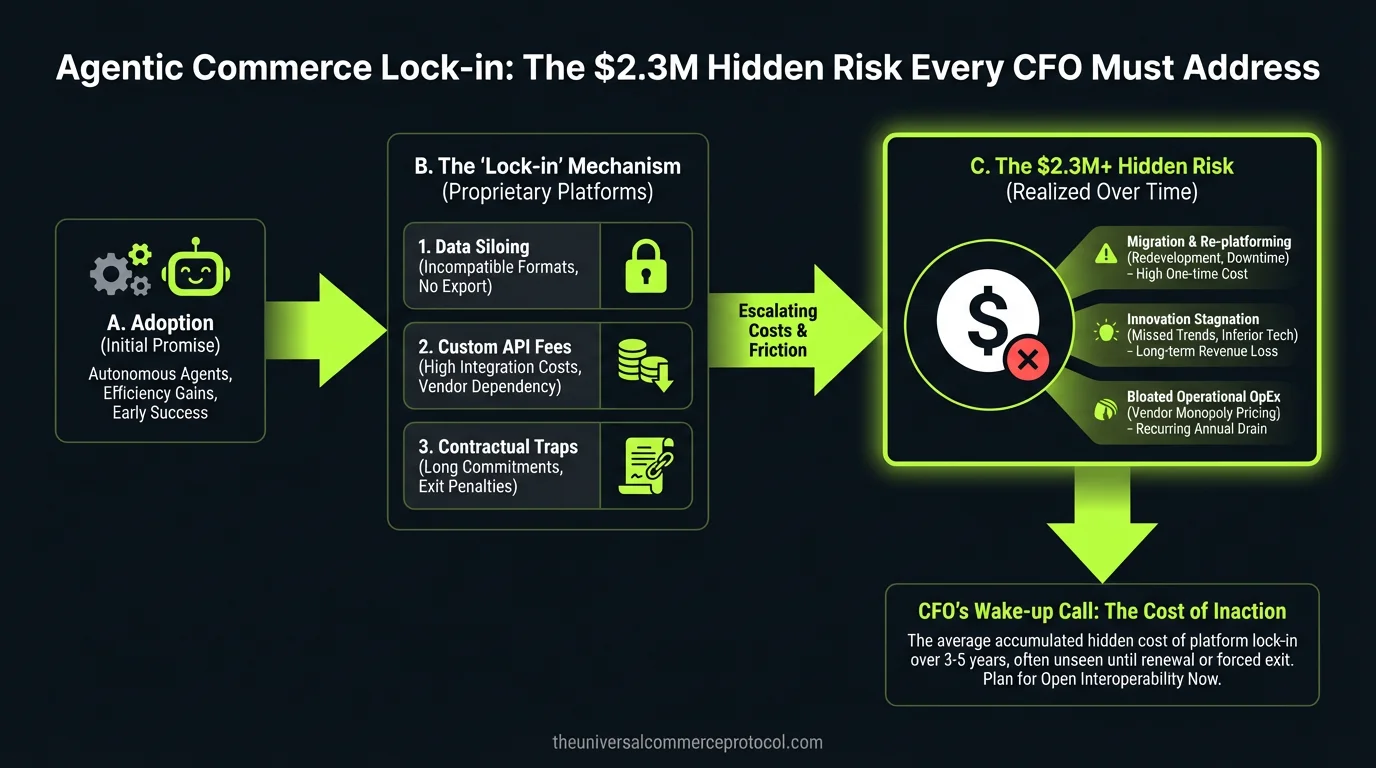
Agentic Commerce Lock-in: $2.3M CFO Risk
Agentic commerce platforms including Salesforce Einstein, Microsoft Copilot for Commerce, and custom LLM implementations impose switching costs exceeding $1.2M–$2.3M for mid-market merchants (annual revenue $50M–$500M), comprising retraining expenses, API integration rework, and operational downtime. CFOs face quantifiable vendor lock-in risk as proprietary agent frameworks become embedded across e-commerce, supply chain, and customer service operations. Organizations…
-
Agent Latency vs. Conversion: The Performance Optimization Trade-Off Merchants Are Getting Wrong
Why faster AI agents don’t always convert better—and how to measure the real ROI of speed in agentic commerce.
-

UCP in Your Kitchen
My refrigerator knows it’s running low on eggs. It doesn’t do anything about it yet. That gap — between a device that knows something and an agent that can act on it — is exactly where UCP fits in a place nobody’s talking about: your kitchen.
-

UCP vs. ACP: I Don’t Care Which Protocol Wins, and Neither Should You
Protocol tribalism between UCP and ACP is a developer sport. The contractor doesn’t care if the homeowner found them on Google or ChatGPT. Stop following t