Tag: UCP
-
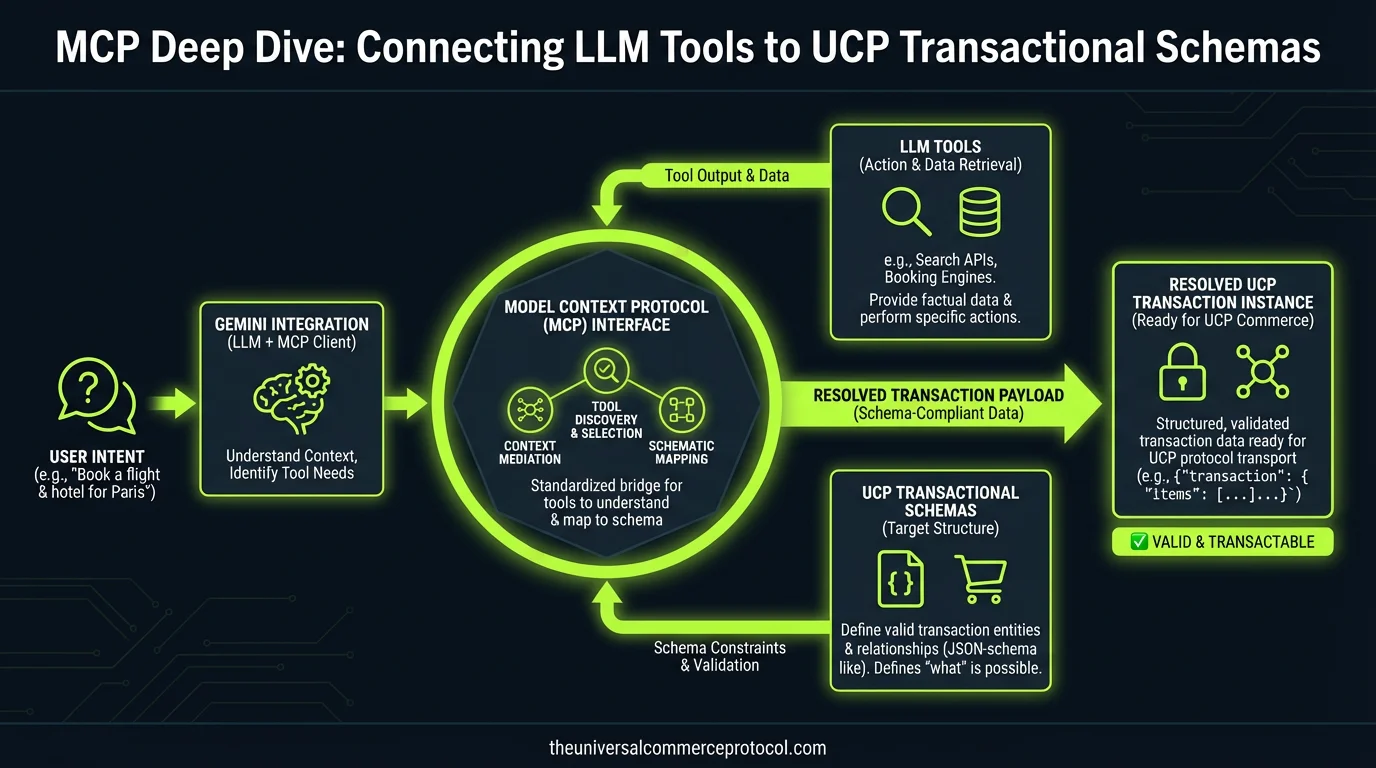
MCP Deep Dive: Connecting LLM Tools to UCP Schemas
Model Context Protocol (MCP) enables integration between Large Language Models—including Google Gemini, OpenAI GPT, and Claude—and Unified Commerce Platform (UCP) transactional systems by standardizing tool connections through schema-compliant APIs. This technical approach leverages MCP’s standardized transport layer to map LLM function calls to UCP transaction handlers, database schemas, and RESTful endpoints. Implementation requires defining JSON…
-
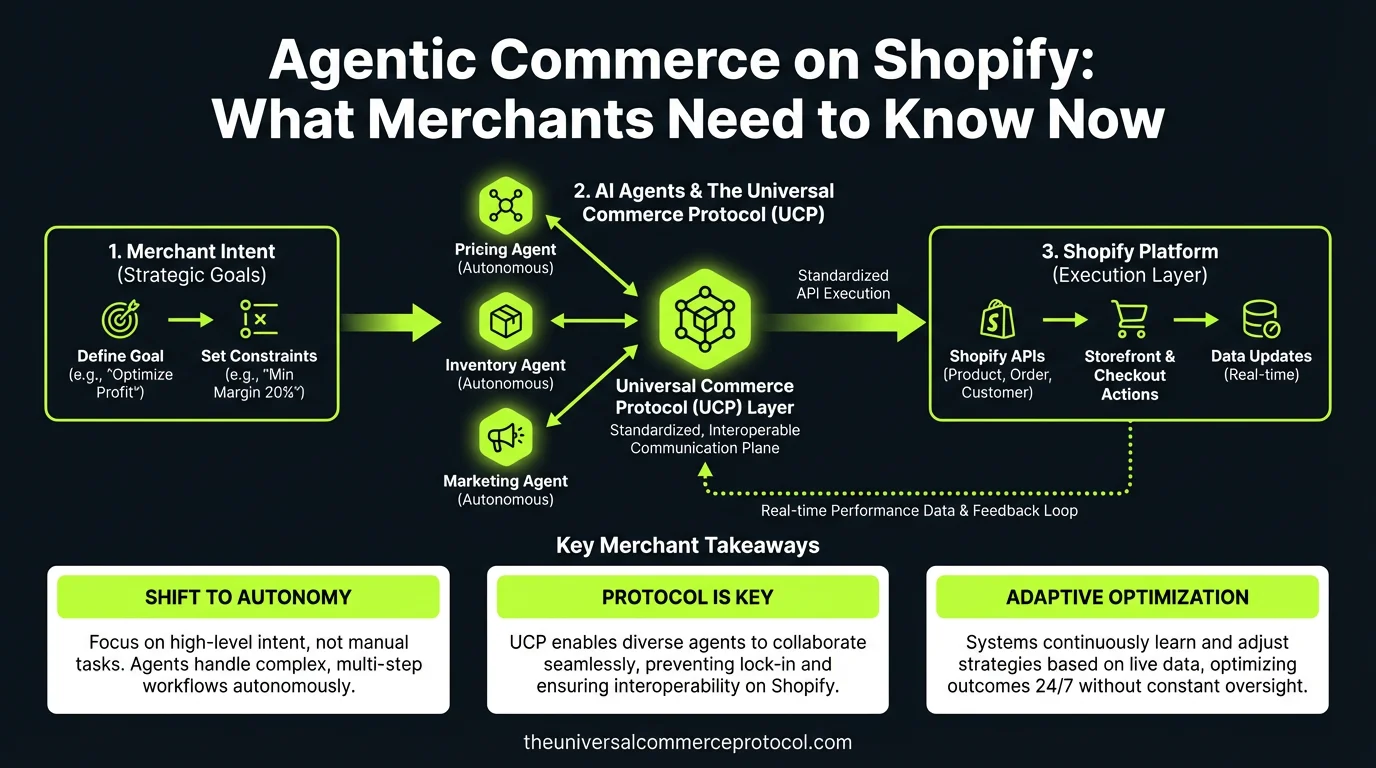
Agentic Commerce on Shopify: What Merchants Need to Know Now
Shopify is positioning itself as a core platform for agentic commerce, with native agent capabilities and Universal Commerce Protocol integration reshaping how merchants automate customer interactions. Learn the technical roadmap, UCP standards, and immediate action steps to prepare your store.
-
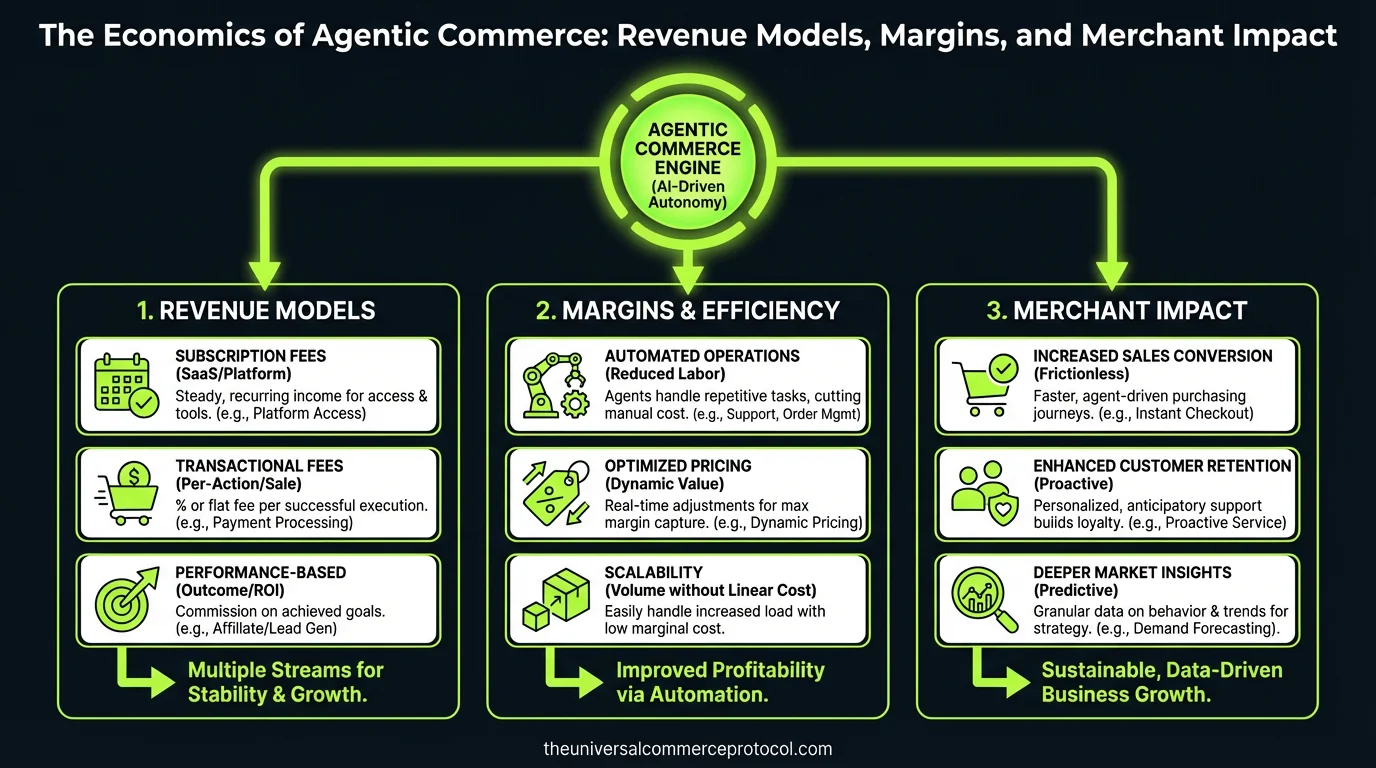
The Economics of Agentic Commerce: Revenue Models, Margins, and Merchant Impact
As agentic payments reshape commerce in 2026, merchants and platforms face new revenue opportunities and margin pressures. Understanding the economic fundamentals of agentic commerce is critical for stakeholders navigating this transformation.
-
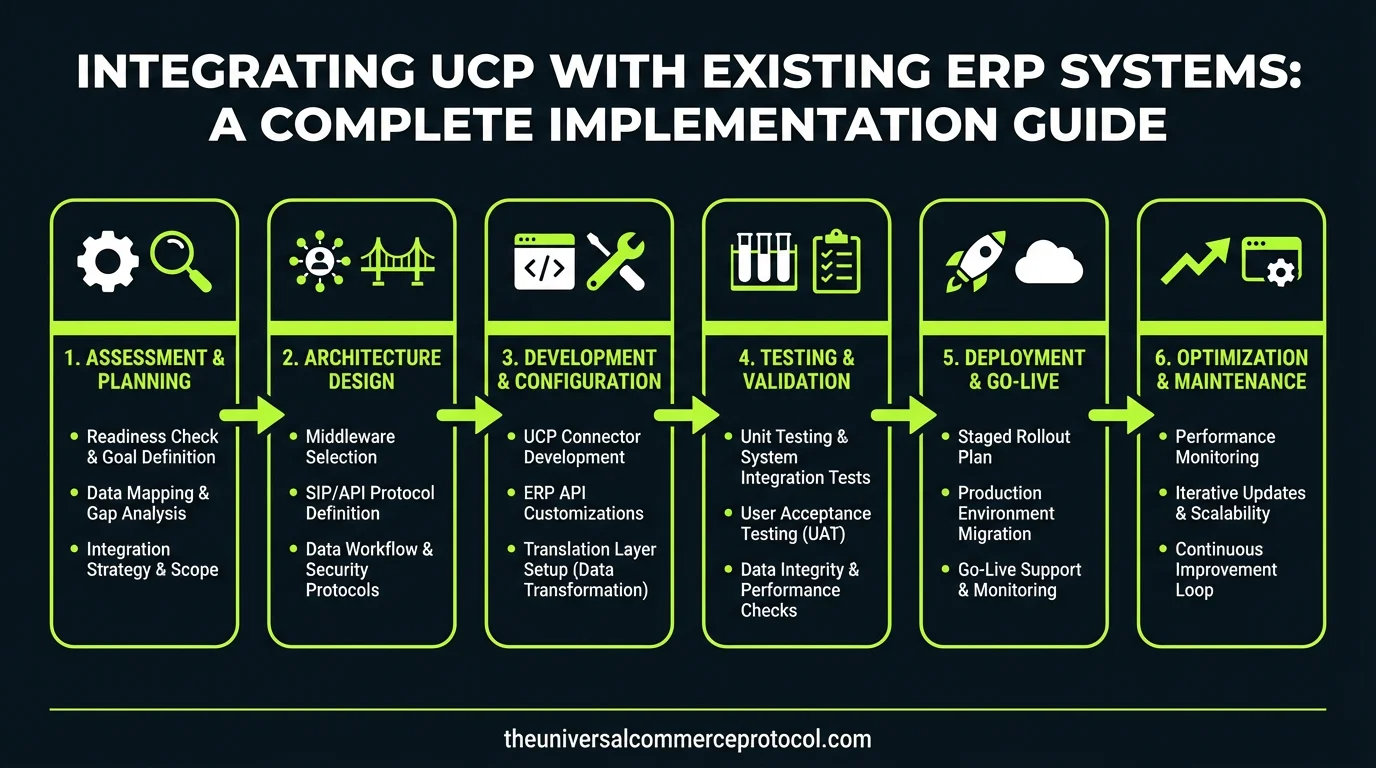
UCP ERP Integration: Complete Implementation Guide
Step-by-step guide to integrating the Universal Commerce Protocol (UCP) with SAP, Oracle NetSuite, Microsoft Dynamics 365, and legacy ERP systems. Includes compatibility table, implementation phases, architecture patterns, and FAQ.
-

Verifiable Intent: How UCP and Mastercard Build Trust in Agentic Commerce
Build trust in agentic commerce with Verifiable Intent! Learn how UCP & Mastercard are shaping secure, reliable AI agent transactions.
-
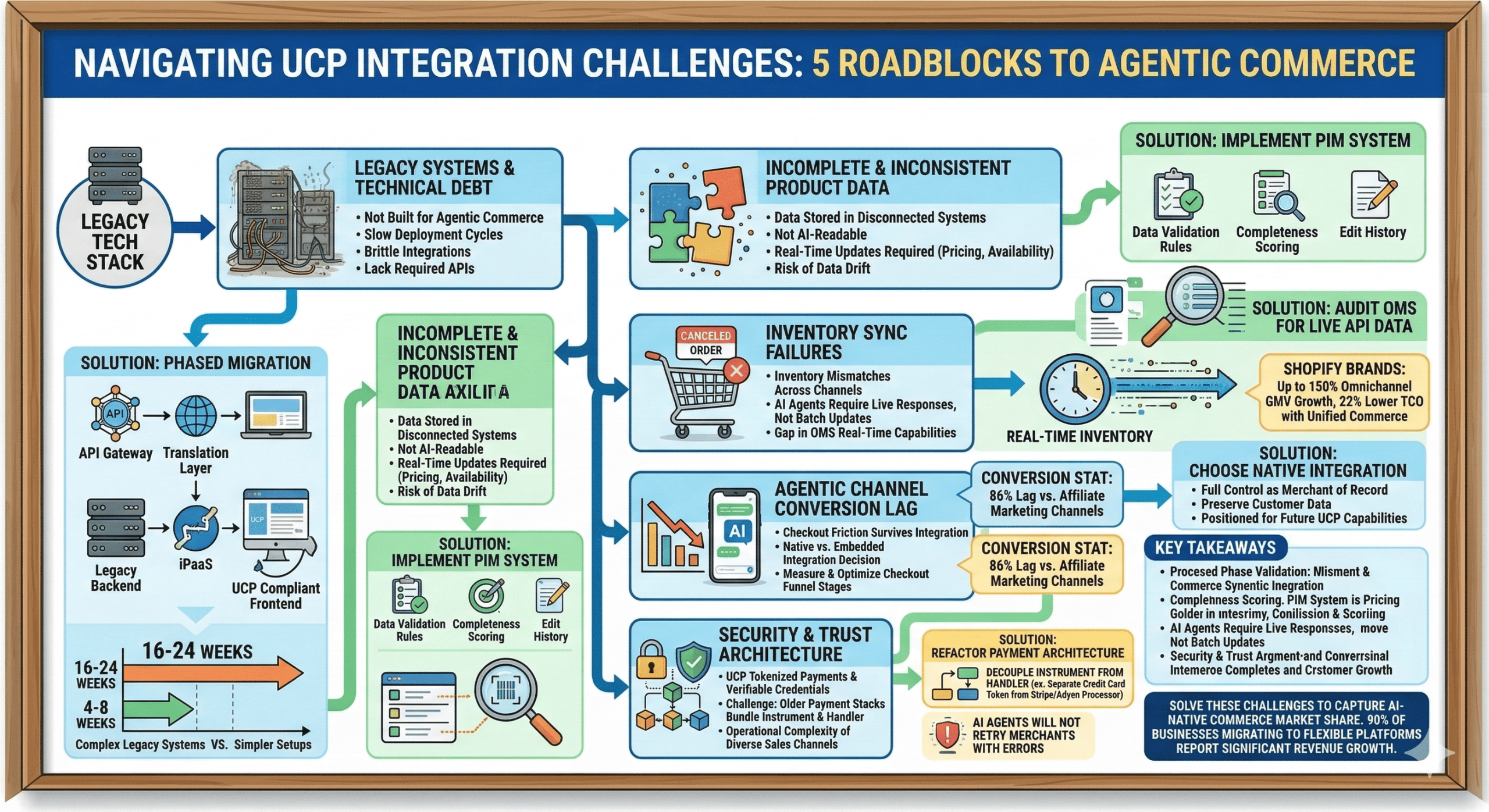
UCP Integration Problems? Top 5 E-Commerce Challenges
Universal Commerce Platform (UCP) integration failures across e-commerce retailers stem from five critical technical barriers: legacy Enterprise Resource Planning (ERP) systems incompatible with REST/GraphQL APIs, unstructured product data feeds unparseable by Large Language Models (LLMs) and AI agents, real-time inventory synchronization latency between Order Management Systems (OMS) and warehouse management software, agentic checkout experiences reducing…
-

UCP vs Claude Marketplace: Commerce Agent Architecture
The Universal Commerce Protocol (UCP) is an open-source integration standard that normalizes REST and GraphQL APIs across Shopify, WooCommerce, and BigCommerce platforms through vendor-agnostic JSON Schema definitions, while Claude Marketplace is Anthropic’s proprietary agent framework built on Claude 3 model variants (Opus, Sonnet, Haiku) accessible via the Anthropic API Console and constitutional AI training. UCP…
-
UCP Merchant Onboarding: Step-by-Step Guide
Unified Commerce Platform (UCP) merchant onboarding integrates payment processors (Stripe, Square, PayPal), enterprise inventory systems (NetSuite, SAP Commerce Cloud), and omnichannel sales channels (Shopify, Magento, WooCommerce, POS terminals) through a four-phase implementation framework requiring 8–12 weeks for mid-market retailers ($10M–$500M revenue). This standardized deployment reduces manual order processing by 40–60% while enabling real-time inventory synchronization…
-

UCP vs MCP: Choose the Right Commerce Protocol
Unified Commerce Protocol (UCP) and Merchant Commerce Protocol (MCP) are standardized commerce integration frameworks with distinct architectural paradigms: UCP implements predefined RESTful API specifications optimized for rapid omnichannel retail deployment across POS, e-commerce, and mobile commerce channels, while MCP offers extensible schema architectures engineered for enterprise multi-channel operations including marketplace connectors, real-time inventory synchronization, and…
-
UCP Agent Hallucination: Detection & Recovery
Unified Commerce Platform (UCP) agents operating in production environments experience hallucination events characterized by false inventory counts, inaccurate product pricing data, and incorrect order status information across omnichannel systems. Mitigation strategies include confidence scoring mechanisms, multi-source data validation protocols, automated rollback procedures, and human-in-the-loop verification workflows that reduce transaction errors, prevent revenue leakage, and maintain…