Will’s Take is editorial perspective — opinion, future-casting, and industry observation from Will Tygart. Not analysis. Not client work. Just how I see it.
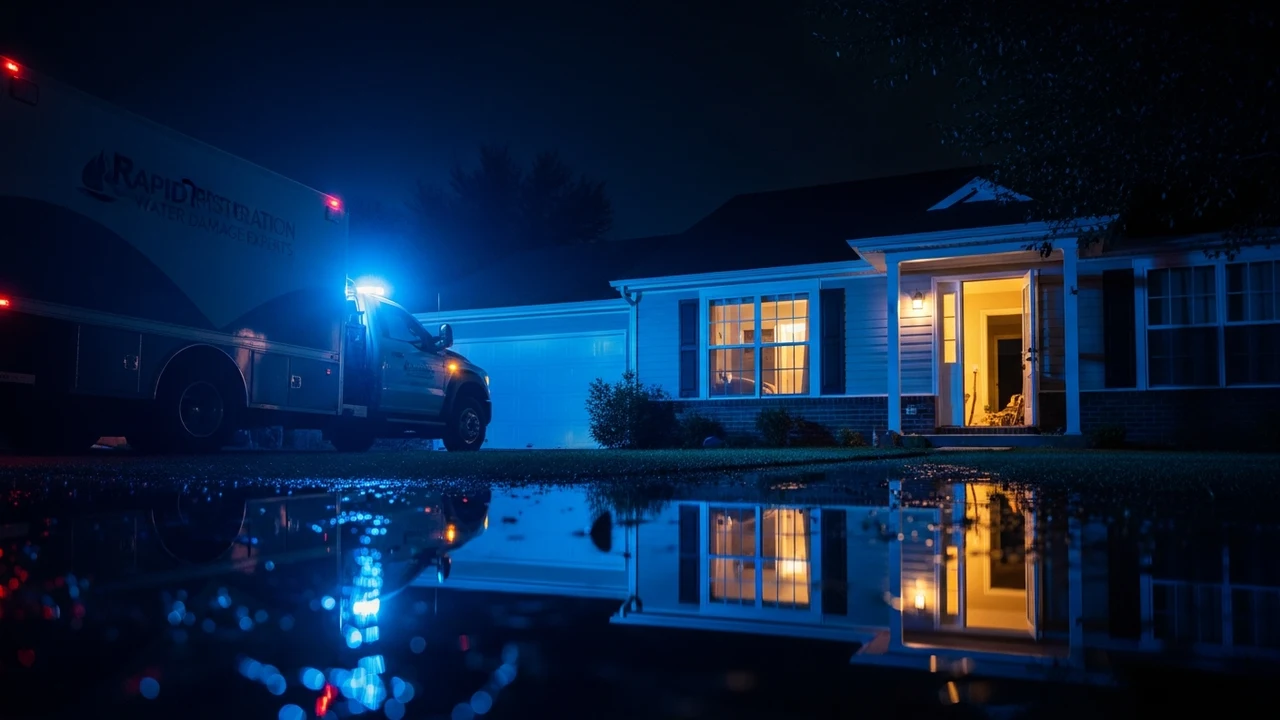
It’s 2:17am. Pipe burst in the basement. Water is moving fast.
The homeowner doesn’t call anyone. They don’t have to. Their home assistant already knows there’s a moisture event — the sensor triggered thirty seconds ago. It knows the square footage of the affected area. It knows the homeowner’s insurance carrier and policy number. It knows their preferred communication method is text, not calls.
By the time the homeowner walks downstairs and sees the water, the agent has already done this:
Queried three restoration contractors in the area against their UCP capability profiles. Checked real-time availability windows. Confirmed licensing, insurance, and response time commitments. Selected the closest available contractor with a sub-two-hour emergency response SLA. Initiated a job intake session. Captured scope parameters. Generated a preliminary FNOL packet for the insurance carrier. Sent the homeowner a confirmation text with the contractor’s name, ETA, and a summary of what was authorized.
The contractor’s dispatch system gets a structured job order — not a voicemail, not a contact form submission, not a 2am phone call that wakes someone up. A clean, structured job record with everything they need to roll a truck.
The homeowner’s only job is to unlock the front door.
That sequence exists today in pieces. UCP is what connects them.
The sensor technology is there. The insurance carrier integrations exist in fragments. The contractor management software exists. What doesn’t exist is the common capability layer that lets an agent move across all of it without custom builds at every junction.
That’s what I keep trying to explain to people in this industry.
Restoration contractors are not technology companies. They are not going to build API integrations with every insurance carrier, every home assistant platform, every property management system. They don’t have the resources and frankly they shouldn’t have to. That’s the N×N problem UCP was designed to solve — just nobody thought to apply it here.
A restoration contractor with a UCP capability profile is reachable by any agent that speaks the protocol. They declare what they do: water mitigation, fire cleanup, mold remediation. They declare where they do it: service radius, response tiers, emergency availability. They declare their intake requirements: what information they need to dispatch, what authorizations they require, what their scheduling constraints look like.
That profile sits there, queryable, at 2am when every other contractor’s website is just a contact form with a business hours caveat.
The insurance piece is where it gets really interesting.
Right now, the First Notice of Loss process is a nightmare. Homeowner calls carrier. Carrier opens a claim. Carrier calls or emails a preferred contractor. Contractor shows up, does a scope, submits documentation. Adjuster reviews. Back and forth. Weeks.
In a UCP-native workflow, the FNOL is generated at intake. The scope parameters captured during job authorization become the claim foundation. The carrier’s agent — and yes, carriers will have agents — is already pulling that data before the restoration crew walks in the door.
I’m not saying this eliminates the adjuster. I’m saying it eliminates three weeks of phone tag and document requests before the adjuster even gets involved.
That’s not a small thing in this industry. That’s the difference between a 30-day claim cycle and a 10-day claim cycle. Carriers care about that. Contractors care about that. Homeowners desperately care about that.
Nobody is building this because nobody thinks restoration is a tech problem.
That’s exactly why it’s the opportunity.
The contractors who figure out how to make themselves queryable — how to expose their capabilities in a way that agents can act on — are going to have a sourcing advantage that their competitors won’t even understand for years. They won’t know why jobs are showing up. They’ll just know the phone rings less and the dispatch board stays full.
The phone ringing less isn’t a bad thing. It means the system worked.
I’ve spent enough time in this industry to know that the best operators are drowning in administrative overhead. Intake, documentation, carrier communication, authorization chasing. That’s not why they got into the business. They got into the business because they’re good at making damaged things whole again.
Let the agents handle the rest.
Frequently Asked Questions
What is the Universal Commerce Protocol (UCP)?
The Universal Commerce Protocol (UCP) is an open standard developed to enable AI agents to autonomously conduct commerce transactions across any platform.
How does UCP enable agentic commerce?
UCP provides standardized APIs and protocols so AI agents can discover products, negotiate terms, and complete purchases without human intervention, working across any compatible commerce platform.
Why should businesses implement UCP?
UCP adoption reduces integration costs, opens revenue channels to AI-driven buyers, and future-proofs commerce infrastructure as agentic purchasing becomes mainstream.
Leave a Reply